Two trekkers can ask Hiking Nepal the same question, Manaslu or Annapurna, and walk away with opposite recommendations, and both would be correctly advised. These are not lesser and greater versions of the same trek. They are two genuinely different experiences that happen to share a country, a general altitude range, and a similar duration. The right answer depends entirely on what you are actually looking for.
This guide compares the two circuits across every factor that matters for a 2027 booking decision: crowds, scenery, difficulty, culture, cost, permits, accommodation, wildlife, and the kind of solitude each route offers. By the end, you should know which trek fits the trip you actually want to take.
The Two Circuits in Brief
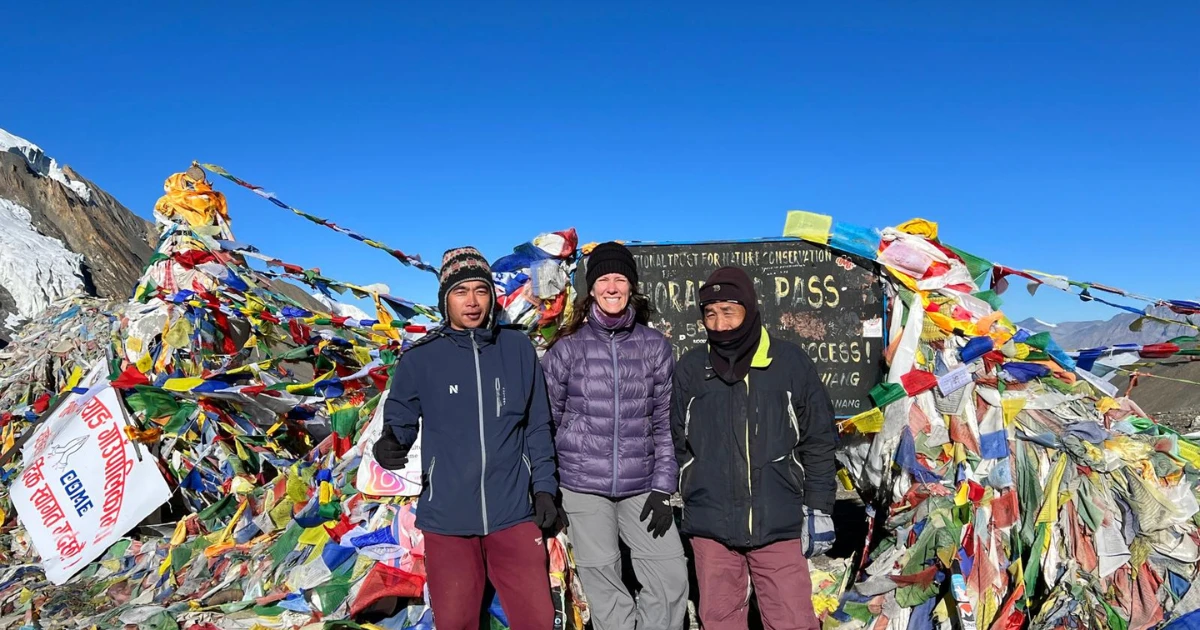
The Annapurna Circuit is one of the most celebrated trekking routes in the world, circling the Annapurna massif over twelve to eighteen days depending on the itinerary, crossing the Thorong La Pass at 5,416 metres, and passing through landscapes that shift from subtropical valley to high-altitude desert within a single circuit. It has been a fixture of Himalayan trekking since the 1970s, and the infrastructure along the route reflects five decades of continuous development.
The Manaslu Circuit circles Mount Manaslu, the eighth-highest mountain in the world, over thirteen to fifteen days, crossing the Larkya La Pass at 5,160 metres, and passing through Tibetan Buddhist villages in the upper sections that have had considerably less exposure to international trekking tourism. It opened to foreign trekkers later than Annapurna and remains a restricted area, which has kept visitor numbers lower and the trail character wilder.
Both routes deliver genuine high-altitude Himalayan trekking with a teahouse-supported circuit format. The differences begin to matter once you look past that shared description.
Side-by-Side Comparison: Manaslu vs Annapurna Circuit 2027
Factor | Manaslu Circuit | Annapurna Circuit | Verdict |
| Crowds | Significantly fewer trekkers, even in peak season | Busy, particularly around Thorong La in October | Manaslu for solitude |
| Scenery | Remote, wild, dramatic Tibetan plateau character in the upper section | More varied: forest, terraced farmland, high desert, mountain amphitheatre | Tie, depends on preference |
| Maximum altitude | Larkya La, 5,160m | Thorong La, 5,416m | Annapurna is marginally higher |
| Physical difficulty | Moderate to challenging, steep daily ascents, less developed trail surface | Moderate to challenging, more gradual overall profile, better trail conditions | Roughly comparable, Manaslu slightly harder day to day |
| Cultural experience | Tibetan Buddhist villages, active monasteries, less commercialised | Gurung, Thakali, and Hindu cultural mix, more developed but still rich | Manaslu for depth, Annapurna for variety |
| Cost (14 days, mid-range) | USD 1,400 to 1,900 | USD 1,000 to 1,500 | Annapurna is cheaper |
| Best season | March to May, September to November | March to May, September to November | Tie |
| Permits required | Manaslu Restricted Area Permit, TIMS, ACAP (USD 150 to 200) | TIMS and ACAP only (USD 50 to 60) | Annapurna is cheaper |
| Accommodation standard | Basic, particularly above Sama Gaon | More developed, private rooms widely available | Annapurna for comfort |
| Wildlife | Snow leopard territory, blue sheep, Himalayan tahr | Yaks, pheasants, and occasional blue sheep at altitude | Manaslu for serious wildlife interest |
| Solo guide requirement | Mandatory licensed guide, no independent trekking | Guide recommended, not legally mandatory for most of the route | Annapurna offers more flexibility |
| Overall solitude | High | Low to moderate, depending on season and section | Manaslu |
A Closer Look at Each Factor
Crowds and Trail Traffic
This is the single most consistent reason trekkers choose Manaslu over Annapurna. The Annapurna Circuit, even with the road development of the past fifteen years that has diverted some traffic onto jeep tracks for sections of the lower route, still sees substantial trekker volume during peak season. Thorong La in the last week of October can feel less like a wilderness pass and more like a managed queue, with trekkers from multiple teahouses converging on the same summit window simultaneously.
Manaslu, protected by its restricted area status and the mandatory guide requirement, sees a fraction of this volume. You can walk for an hour on the upper sections of the Manaslu Circuit without passing another trekking group. For travellers who have done a busy circuit before and want something quieter, this difference is not subtle. It changes the entire character of the experience.
Scenery
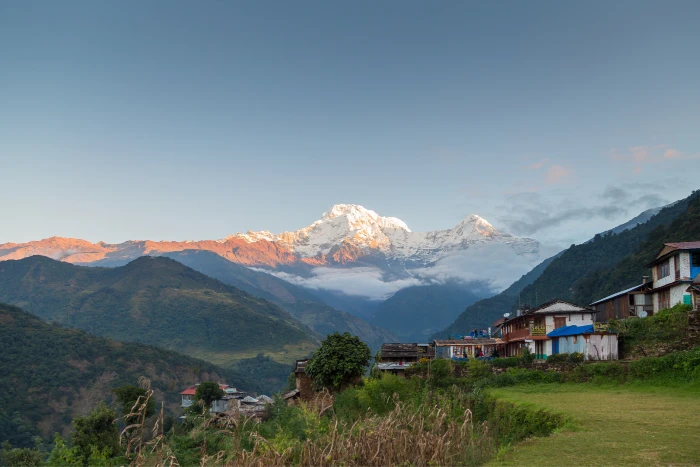
Both circuits offer genuinely spectacular and genuinely different scenery, which is why this factor is closest to a tie. The Annapurna Circuit's strength is variety within a single trek: you walk through subtropical lower valleys, climb into pine and rhododendron forest, cross into the high-altitude desert of the Manang valley with its Tibetan-influenced architecture, summit Thorong La into an entirely different landscape on the descent towards Muktinath, and finish in the arid Kali Gandaki gorge near Jomsom. Few treks in the world pack this much landscape diversity into one route.
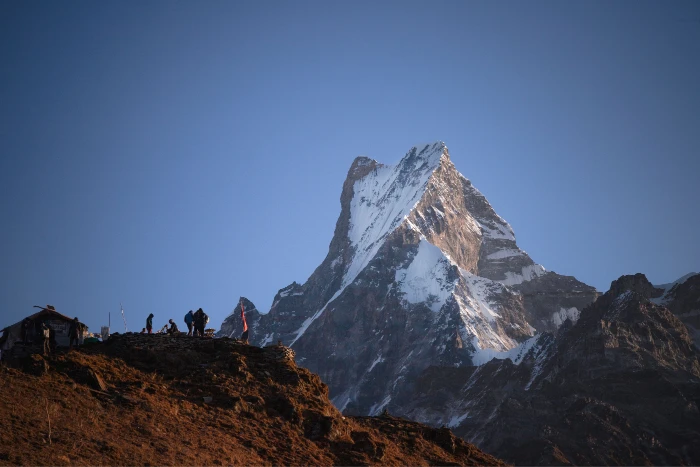
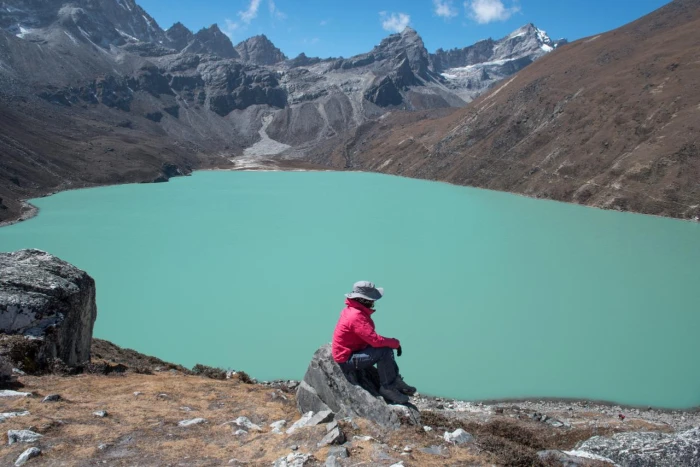
Manaslu's scenery is less varied in type but more consistently dramatic in the upper section. The approach through the Budhi Gandaki gorge gives way to high Tibetan plateau terrain around Sama Gaon and Samdo, with Manaslu itself visible at close range for several consecutive days. The Larkya La crossing delivers a 360-degree panorama of Himlung Himal, Cheo Himal, and the Larkya Glacier that ranks among the finest pass views in Nepal. What Manaslu lacks in landscape variety, it makes up for in sustained visual intensity.
Difficulty
Both passes sit within 250 metres of each other in altitude, and both circuits demand sustained fitness across multiple consecutive high-altitude days. The technical difference lies in trail development and daily profile.
The Annapurna Circuit's trail surfaces are generally better maintained, the daily ascent gradients are slightly more gradual on average, and the acclimatisation infrastructure, including teahouse availability at intermediate altitudes, gives a smoother overall adjustment curve. The Manaslu Circuit's daily ascents are steeper in several sections, particularly between Deng and Namrung, and the trail surface in the upper section is rougher, with more scree and less consistent path maintenance.
In practical terms, most experienced guides rate the two circuits as comparably difficult overall, with Annapurna having a marginal edge in summit altitude and Manaslu having a marginal edge in daily physical demand. Neither circuit is appropriate for a complete trekking beginner. Both require genuine cardiovascular fitness and prior experience with multi-day walking, ideally including at least one trek above 3,000 metres before attempting either.
Cultural Experience
The Annapurna Circuit passes through a genuinely diverse cultural landscape: Gurung villages in the lower foothills, Thakali communities around Tukuche and Marpha known for their distinctive cuisine and apple orchards, and Hindu cultural influence increasing as the route descends towards Jomsom and beyond. The cultural variety mirrors the landscape variety, and the level of development means cultural sites, including monasteries and temples, are generally more accessible with established visiting protocols.
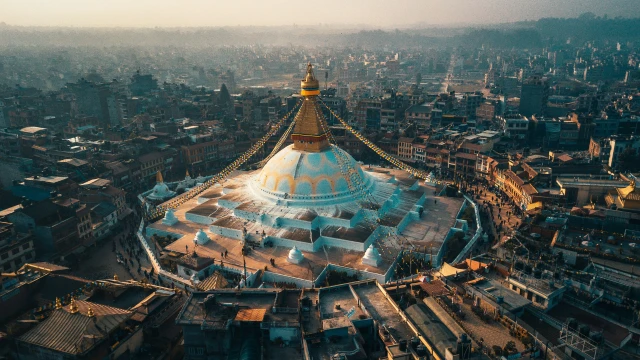
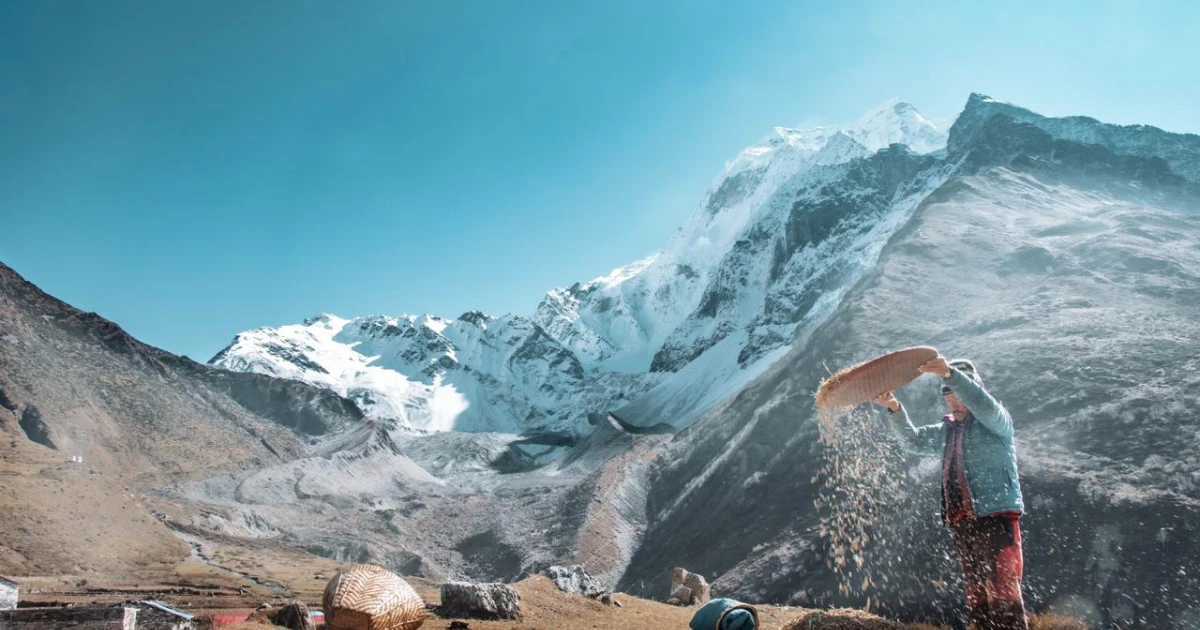
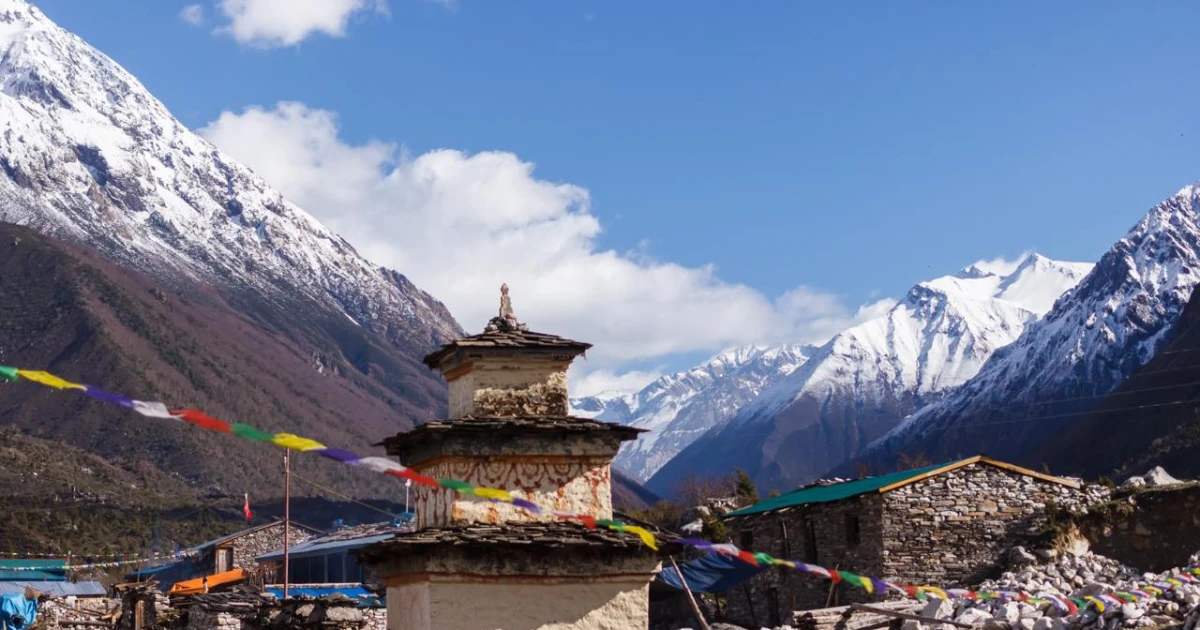
Manaslu's cultural experience is narrower in scope but deeper in character. The upper circuit from Lho through Sama Gaon and Samdo is substantially Tibetan Buddhist, with active monasteries, mani walls, and communities whose daily life has not been substantially reorganised around trekking tourism. The relative absence of high-volume tourism means interactions with local communities tend to feel less transactional and more genuinely reciprocal.
Neither is objectively superior. A traveller drawn to variety and accessibility will likely prefer the Annapurna cultural experience. A traveller drawn to depth and a sense of relatively unmediated contact with a living tradition will likely prefer Manaslu.
Cost
The Annapurna Circuit is the more affordable of the two routes by a meaningful margin, primarily because of the permit cost difference. The TIMS card and ACAP permit together cost approximately USD 50 to 60. The Manaslu Restricted Area Permit alone adds USD 100 to 150 on top of equivalent TIMS and ACAP-equivalent fees, pushing total Manaslu permit costs to USD 150 to 200.
Beyond permits, the more developed teahouse network on Annapurna generally offers lower accommodation and food costs, particularly at the budget end of the market, because competition between teahouse owners on a higher-traffic route keeps pricing more competitive. The Manaslu Circuit's thinner network gives individual teahouse owners more pricing power, particularly above Sama Gaon.
A realistic mid-range fourteen-day Annapurna Circuit in 2027 costs USD 1,000 to 1,500 per person all-in. The equivalent Manaslu Circuit costs USD 1,400 to 1,900. The difference, roughly USD 400 to 500, is a meaningful factor for budget-conscious trekkers and a less significant one for travellers prioritising the experience over the saving.
Permits and Legal Requirements
This is one of the clearest practical differences between the two routes. The Annapurna Circuit requires a TIMS card and an ACAP permit, both straightforward to arrange in Kathmandu or Pokhara, and as of 2026 a guide is required under Nepal's national park and conservation area regulations, though the bureaucratic burden remains lighter than Manaslu's restricted area system.
The Manaslu Circuit requires the additional Manaslu Restricted Area Permit, which must be processed through a registered trekking agency, cannot be obtained independently, and legally mandates a licensed guide for the entire restricted section with no exceptions. This is enforced at multiple checkpoints along the route. For travellers who value flexibility and the option to adjust their guide arrangement mid-trip, Annapurna's lighter regulatory structure is an advantage. For travellers who see the mandatory guide requirement as a feature rather than a limitation, given the safety and cultural access benefits a good guide provides, this is a non-issue.
Accommodation Standard
The Annapurna Circuit's decades of continuous development have produced a teahouse network that is, on average, more comfortable than Manaslu's. Private rooms with attached bathrooms are available at most overnight stops on the lower and middle sections of the Annapurna route. Hot showers, Wi-Fi, and varied menus are standard rather than exceptional.
Manaslu's accommodation is functional throughout the lower circuit and becomes notably basic above Samdo. Shared bathrooms, limited hot water, intermittent electricity, and narrow menus are the norm in the final days before and after the Larkya La crossing. This is not a criticism of the operators in the region, who are working with thinner supply chains and a shorter trekking season window, but a fact that should shape expectations.
Travellers who place a high value on physical comfort during a trek should weigh this factor more heavily towards Annapurna. Travellers who see basic accommodation as part of the authentic remote trekking experience will not consider it a meaningful drawback on Manaslu.
Wildlife
The Manaslu Circuit passes through genuine snow leopard habitat in the upper Tsum and Manaslu Conservation Area, alongside blue sheep, Himalayan tahr, and a healthy population of high-altitude bird species. Sightings of snow leopards themselves are rare and should not be expected, but the ecological context, including fresh tracks and scat that experienced guides can identify, is part of the upper circuit experience for attentive trekkers.
The Annapurna Circuit, with its higher trekking volume and more developed infrastructure, has a less wild wildlife profile in practical terms, though yaks, pheasants, and occasional blue sheep sightings at altitude remain part of the route. For travellers with a specific interest in wildlife and natural history, Manaslu's wilder ecological context is the stronger choice.
Solitude
This factor consolidates much of the comparison above. Manaslu offers high solitude as a near-guaranteed feature of the route, a direct consequence of the restricted area status and the lower overall trekking volume. Annapurna offers low to moderate solitude depending on the specific section and season, with the Thorong La approach and the popular Manang to Muktinath stretch being consistently busy during peak weeks.
Detailed Breakdown: Pros and Cons
Manaslu Circuit
Strengths: Significantly fewer trekkers on the trail at any given time. Deep, relatively unmediated Tibetan Buddhist cultural experience in the upper villages. Wilder scenery with strong wildlife credentials, including snow leopard habitat. A genuine sense of remoteness that is increasingly rare on Nepal's more established circuits.
Limitations: Higher permit costs, adding USD 100 to 150 relative to Annapurna. Fewer teahouses and more basic accommodation, particularly above Sama Gaon. Mandatory guide requirement removes the option of independent trekking. Booking flexibility is lower, since the restricted permit must be processed through an agency with advance notice, making genuinely last-minute Manaslu departures difficult to arrange.
Annapurna Circuit
Strengths: Lower overall cost, both in permits and in accommodation and food. More developed teahouse infrastructure with private rooms, hot showers, and varied menus widely available. Greater landscape diversity within a single circuit. More flexibility in itinerary planning and the option to join group departures more easily at short notice.
Limitations: Considerably busier, particularly during the October and April peak weeks. Less remote feeling, with motorable roads now reaching sections of the lower route on both sides of the circuit. Cultural experience, while still rich, is more developed and tourism-oriented than Manaslu's upper villages.
Which Trek is Right for You?
Choose Manaslu if solitude is a priority and you would rather walk for an hour without seeing another trekking group than save several hundred dollars. Choose Manaslu if you have a specific interest in Tibetan Buddhist culture and want an experience that feels less mediated by tourism infrastructure. Choose Manaslu if wildlife and a genuine sense of wilderness matter more to you than accommodation comfort. Choose Manaslu if you have already completed a busier circuit in Nepal and are looking for a meaningfully different second or third trek.
Choose Annapurna if budget is a significant factor in your decision and the cost difference of USD 400 to 500 matters to your overall trip planning. Choose Annapurna if comfort during the trek, including private rooms and hot showers, is important to your experience. Choose Annapurna if you want landscape variety within a single circuit rather than sustained high-altitude intensity. Choose Annapurna if this is your first major Himalayan trek and you would benefit from a more developed support infrastructure as you learn what high-altitude trekking demands of you.
Neither choice is wrong. Both circuits, done properly with an experienced guide and sensible acclimatisation planning, deliver one of the finest trekking experiences available anywhere in the world.
The Hybrid Option: Can You Do Both?
For trekkers who genuinely cannot decide, or who have the time and fitness for an extended Himalayan trip, Hiking Nepal offers a combined Manaslu and Annapurna itinerary. The standard combination links the end of the Manaslu Circuit at Dharapani directly into the Annapurna Circuit trail, since the two routes physically converge at this point. This allows a continuous trek crossing both Larkya La and Thorong La within a single extended itinerary, typically twenty to twenty-three days in total.
This combined route is among the most comprehensive high-altitude trekking experiences available in Nepal, covering two major passes, the full cultural range from Tibetan Buddhist Manaslu villages to the Thakali and Hindu-influenced lower Annapurna region, and a genuinely complete cross-section of Himalayan landscape and culture. It requires a higher level of fitness and a longer time commitment than either circuit alone, and it is not a casual undertaking, but for trekkers with three weeks available and the conditioning to support it, it resolves the Manaslu versus Annapurna question by answering both at once.
Frequently Asked Questions
Is Manaslu harder than Annapurna?
The two circuits are broadly comparable in overall difficulty. Annapurna's Thorong La Pass at 5,416 metres is marginally higher than Manaslu's Larkya La at 5,160 metres, but Manaslu's daily ascent profile is steeper in several sections and the trail surface is less developed. Most experienced guides consider Manaslu slightly more physically demanding on a day-to-day basis, while Annapurna presents a marginally higher altitude challenge on summit day.
Can I do both treks in one trip?
Yes. The two circuits connect at Dharapani, allowing a combined itinerary of twenty to twenty-three days that crosses both Larkya La and Thorong La. This requires a higher fitness level and more time than either trek individually, but it is a well-established route that Hiking Nepal regularly guides.
Which trek has better views?
This depends on what kind of views you value. Annapurna offers more landscape variety within a single circuit, moving through forest, high desert, and mountain terrain. Manaslu offers more sustained, close-range high-altitude mountain views, particularly around Sama Gaon and the Larkya La crossing itself. Neither is objectively better. They are different kinds of visual experience.
Is Manaslu more expensive than Annapurna?
Yes, by approximately USD 400 to 500 for a comparable mid-range fourteen-day trek in 2027, primarily due to the Manaslu Restricted Area Permit and the higher accommodation and food costs in the less developed upper circuit.
Do I need a guide for both treks?
A guide is legally mandatory for the entire Manaslu Circuit due to its restricted area status. For the Annapurna Circuit, a guide is strongly recommended and required under current national park and conservation area regulations introduced in 2026, though the regulatory structure around it is less stringent than Manaslu's permit system.
Which trek is better for a first-time Himalayan trekker?
The Annapurna Circuit's more developed infrastructure and slightly more gradual overall profile make it the more forgiving choice for a first major high-altitude trek. Manaslu is achievable for fit first-timers with the right preparation and guide support, but it rewards prior high-altitude experience more directly than Annapurna does.
What is the best season for both treks in 2027?
Spring, from March to May, and autumn, from September to November, are the optimal seasons for both circuits. Spring offers rhododendron blooms on the lower sections of both routes. Autumn offers the clearest post-monsoon visibility. Both circuits should be avoided during the core monsoon months of June to August and approached with full winter equipment if attempted between December and February.
Still Can't Decide?
Both circuits reward proper planning, an experienced guide, and a realistic assessment of your own fitness and priorities. The comparison in this guide should narrow the decision considerably, but if you remain genuinely torn between solitude and comfort, between cultural depth and landscape variety, between budget and remoteness, that is a conversation worth having directly with someone who has guided both routes extensively.
Hiking Nepal runs private and small group departures on both the Manaslu and Annapurna Circuits throughout 2027, along with the combined hybrid itinerary for trekkers with the time and fitness to take on both passes. Every departure includes a licensed guide with route-specific experience, contracted porters at fair welfare standards, full permit handling, and 24-hour emergency support.
Contact the Hiking Nepal team on WhatsApp at +977 9802342080 or at [email protected] to talk through your priorities and get a personalised recommendation and itinerary for whichever route, or both, ends up being right for you.