Why Consider Trekking in Nepal During Monsoon?
Most travellers hear "monsoon," and immediately picture cancelled plans. In Nepal, that instinct is understandable. From June through September, the rains arrive with purpose, transforming the hills into something altogether wilder and more alive. Yet thousands of trekkers choose this season deliberately, and many return saying it was their finest experience in the mountains.
The monsoon is not an obstacle to be overcome. For the right routes and the right traveller, it is the whole point.
At Hiking Nepal, we have been guiding trekkers through every season for decades. This guide focuses honestly on what monsoon trekking involves, particularly across the Annapurna region, Langtang Valley, and several rewarding lower-altitude circuits that come into their own when the rains arrive.
Understanding Nepal's Monsoon Season
The monsoon typically reaches Nepal by mid-June and withdraws around late September or early October. Rainfall is heaviest in the south and east of the country. The further north you travel, closer to the Tibetan Plateau, the drier the conditions become. This geographical fact is not a minor detail. It is the foundation of any sensible monsoon trekking strategy.
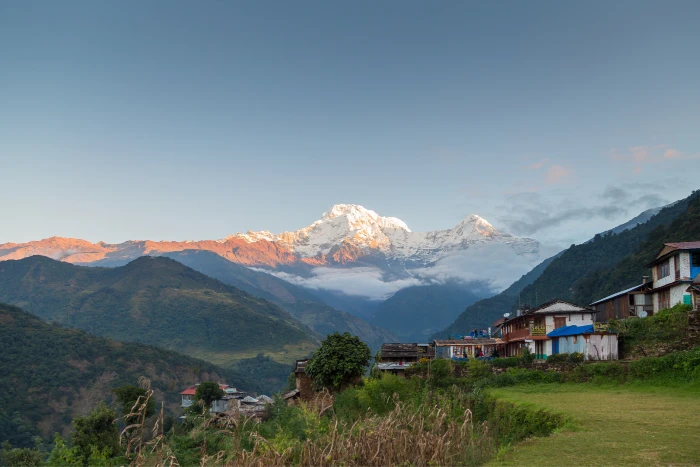
Temperatures at lower elevations sit between 20°C and 30°C. Leeches are present on forested trails below 3,000 metres. Cloud cover is frequent. But the waterfalls are extraordinary, the rhododendron forests drip with atmosphere, and the trails are almost entirely free of crowds.
The Honest Pros of Monsoon Trekking
1. Solitude on the Trail
During October and November, popular trails like the Annapurna Circuit or Langtang Valley feel like shared motorways. In the monsoon, those same paths belong almost entirely to you. Teahouses are quieter, guides give you their full attention, and there is a meditative quality to walking through mist and rain that the peak season simply cannot replicate.
2. Lower Costs Across the Board
Accommodation, domestic flights, and even some permit fees are more affordable during the monsoon. Teahouses that charge premium rates in autumn will often negotiate during the low season. For budget-conscious travellers, or those who simply dislike paying inflated prices for a crowded experience, this matters considerably.
3. Landscapes at Their Most Dramatic
Nepal's hills turn an almost theatrical shade of green. Rice paddies fill and shimmer. Rivers run fast and loud. Waterfalls appear on hillsides that are dry and unremarkable in other months. Photographers who work in this season tend to produce their most striking images precisely because the light, the mist, and the saturated colour create something that cannot be engineered in October.
4. Cultural Encounters, Unhurried
When teahouses are not overrun, conversations happen. Lodge owners have time to sit, share tea, and talk about their lives. Village festivals continue regardless of tourist seasons. Travelling during monsoon often means engaging more genuinely with local communities, which is, after all, one of the primary reasons people come to Nepal in the first place.
5. Flora and Wildlife
The monsoon is when Nepal's forests are most alive. Medicinal herbs, wildflowers, and fungi that are invisible in the dry season emerge in abundance. Birdwatchers find this period particularly rewarding. Several species that migrate through or breed in Nepal's middle hills are active and visible from June onwards.
The Honest Cons of Monsoon Trekking
1. Leeches
There is no point softening this. Below approximately 2,500 metres, leeches are a genuine nuisance on forested trails, particularly after rain. They are not dangerous, but they are unpleasant for many travellers. Gaiters, salt, and a philosophical disposition help. Above 3,000 metres, they become largely absent.
2. Slippery and Degraded Trails
Wet trails demand more attention and energy. Stone steps become slick, river crossings can be difficult after heavy rain, and some sections of the trail require care that would be unnecessary in dry conditions. Proper footwear with grip, trekking poles, and a willingness to slow down are essential.
3. Reduced Mountain Views
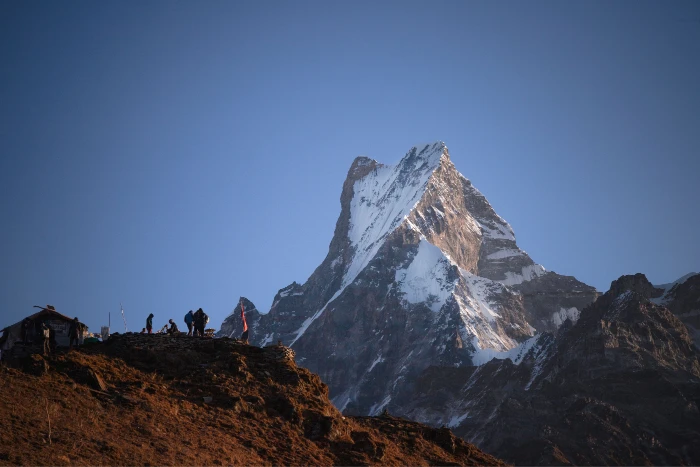
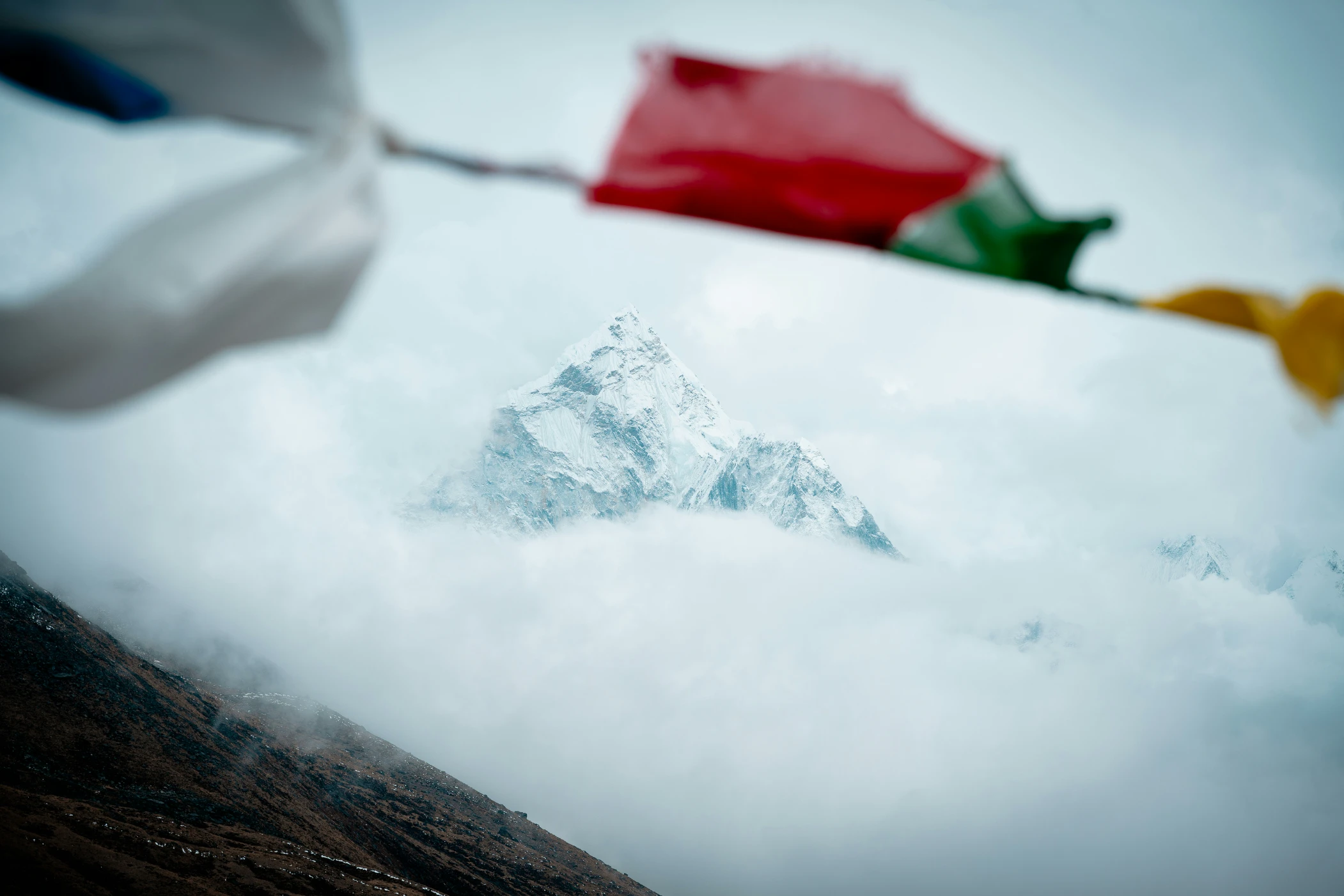
This is the most significant trade-off for many travellers. Cloud cover during monsoon means that iconic panoramic views of Annapurna, Machhapuchhre, and Langtang Ri are often obscured. Clear mornings do occur, and high-camp views can be spectacular when clouds part, but you cannot rely on the vistas that define Nepal's peak seasons. If summit views are your primary motivation, monsoon requires realistic expectations.
4. Trail Closures and Flooding
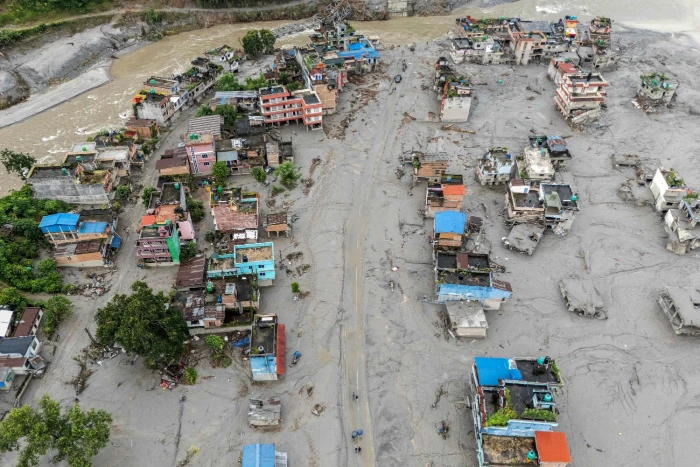
Landslides and flash floods can affect specific trail sections, occasionally forcing detours. Road access to trailheads can be disrupted. A flexible itinerary and an experienced guide who knows alternative routes are not optional extras in the monsoon; they are necessities.
5. Psychological Demands
Walking day after day in the cloud and intermittent rain requires a particular mental approach. Some travellers find it meditative. Others find it wearing. Being honest with yourself about which category you fall into is important before committing to a monsoon trek.
Best Monsoon Routes: Annapurna Region
Annapurna Circuit (Northern Sections)
The full Annapurna Circuit is a challenging undertaking in the monsoon, but the northern, higher-altitude sections are genuinely excellent during this season. The area around Manang (3,500 metres) and the approach to Thorong La Pass sit in a rain shadow, receiving considerably less precipitation than the southern flanks of the Annapurna massif.
The landscape around Manang during the monsoon is stark, open, and beautiful. The crowds of October are absent. Acclimatisation days in Manang become peaceful rather than frantic. Thorong La (5,416 metres) remains crossable on most days, though conditions must be checked daily with local guides.
Best for: Experienced trekkers comfortable with variable conditions and willing to adjust plans based on weather.
Recommended duration: 14 to 18 days for the full circuit, or 7 to 10 days for the northern section from Besisahar to Muktinath.
Annapurna Base Camp (ABC)
ABC is one of Nepal's most rewarding treks, but the monsoon presents a genuine split in experience. The lower sections, through the rhododendron and bamboo forests, are extraordinarily beautiful in the rain. The Modi Khola gorge fills with sound and mist. The forests feel prehistoric.
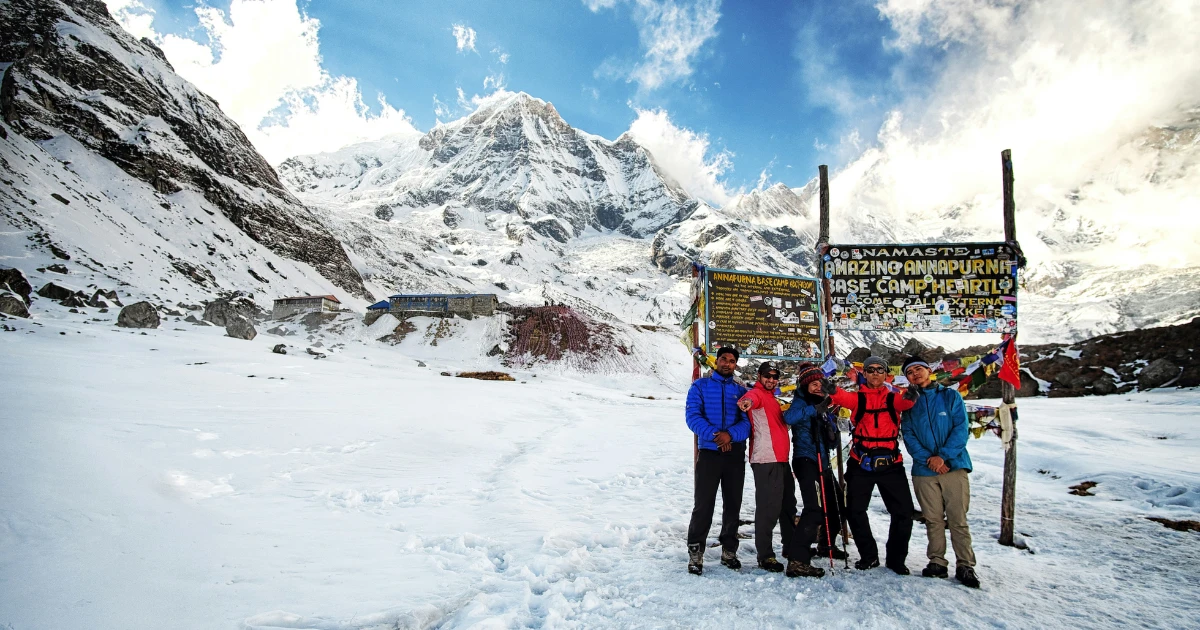
The base camp itself sits at 4,130 metres. Views of the Annapurna Sanctuary are possible, particularly in the early morning before clouds build, but they are not guaranteed. The trail requires careful navigation on wet stone and, below Chhomrong, leech awareness.
For travellers who value atmosphere and forest immersion over summit panoramas, ABC in the monsoon is genuinely exceptional.
Best for: Trekkers who appreciate moody, atmospheric landscapes and can accept that clear views are a bonus rather than a certainty.
Recommended duration: 9 to 12 days from Pokhara.
Mardi Himal Trek
Shorter, less frequented, and rising quickly above the leech line, Mardi Himal is one of the monsoon's best-kept secrets. The trail ascends through forest before opening onto high ridgelines with views, when weather permits, of Machhapuchhre and the Annapurna range.
Because it reaches altitude relatively quickly and involves less forested valley walking than ABC, the leech exposure is shorter. The high camp at approximately 4,500 metres is often above the cloud layer, particularly in the early morning. Sunrises here during the monsoon can be among the most memorable experiences Nepal offers.
Best for: Trekkers with limited time, those doing their first Nepal trek, and anyone wanting to minimise low-altitude trail difficulties while experiencing genuine high mountain terrain.
Recommended duration: 5 to 7 days from Pokhara.
Best Monsoon Routes: Langtang Region
Langtang Valley Trek
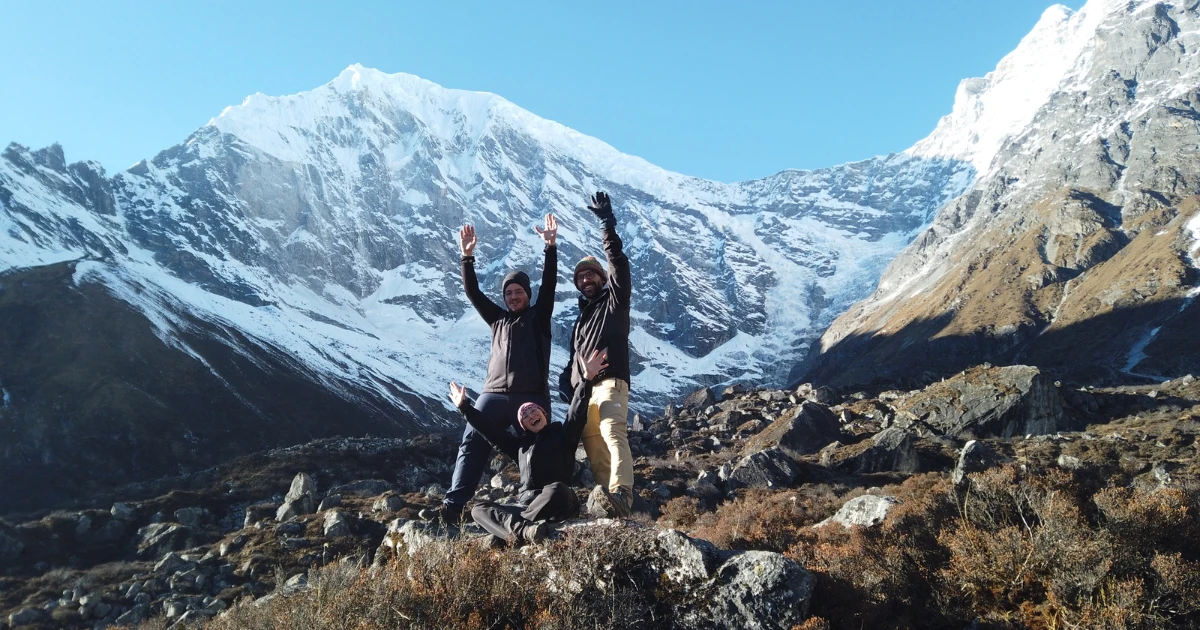
Langtang is, quite simply, one of the finest monsoon destinations in the Himalaya. The valley sits close enough to the Tibetan Plateau that the upper reaches receive considerably less rain than southern Nepal. From Kyanjin Gompa (3,870 metres) upward, conditions are often clear and dry even during the heart of the monsoon.
The lower trail from Syabrubesi involves forested sections where leeches are present. However, the gradient is manageable, and most trekkers reach Langtang village (3,430 metres) within two days, above which the terrain opens, and the rain shadow effect becomes pronounced.
The valley itself, rebuilt with considerable dignity after the 2015 earthquake, is home to a warm Tamang community. The glacial views from Kyanjin Ri (4,773 metres) or Tserko Ri (4,984 metres) are genuinely extraordinary on clear mornings. The yak pastures, stone monasteries, and high-altitude silence make Langtang one of Nepal's most complete trekking experiences regardless of season.
Best for: Any level of trekker seeking a reliable monsoon destination with strong cultural depth and high-altitude terrain.
Recommended duration: 7 to 10 days from Kathmandu (road access, avoiding the flight reliability issue entirely).
Tamang Heritage Trail
Running through Tamang villages north of Kathmandu, this trail combines cultural immersion with modest altitude and genuine off-the-beaten-path character. Most of the route sits between 1,500 and 3,500 metres. The lower sections are lush and green in monsoon, the village homestays are welcoming, and the trail connects to the Langtang Valley trek for those wishing to extend.
It is one of the few routes where the monsoon landscape is the attraction rather than something to be managed. The terraced fields in full cultivation, the prayer flags dripping after rain, the smoke from village hearths; it is Nepal at its most unperformed.
Best for: Cultural travellers, those with limited trekking experience, and anyone wanting an authentic village experience without significant altitude.
Recommended duration: 5 to 7 days.
Lower-Altitude Monsoon Treks Worth Considering
Ghorepani Poon Hill
Poon Hill at 3,210 metres sits just above the most intense leech zones and offers some of the most celebrated sunrise views in the Annapurna foothills. During the monsoon, the rhododendron forests are lush, and the trail is alive with colour and birdsong. The sunrise view from Poon Hill is weather-dependent, but the short trek itself, through Ghandruk and Tadapani, is beautiful in any conditions.
This is an ideal introductory trek for first-time visitors who want to experience Nepal's trails without committing to a long, high-altitude route.
Recommended duration: 4 to 5 days from Pokhara.
Mohare Danda Community Trek
One of Nepal's newer community-based trekking routes, Mohare Danda sits on a ridge at 3,300 metres in the Annapurna foothills. The community lodges are run by local families, the views on clear days encompass Dhaulagiri, Annapurna, and Machhapuchhre, and the trail is rarely busy in any season. During the monsoon, the ridge is often above cloud level, giving the surreal experience of walking through sunshine while the valleys below are buried in mist.
Best for: Travellers interested in sustainable, community-based tourism with a genuine desire to contribute directly to local economies.
Recommended duration: 4 to 6 days from Beni or Pokhara.
Khopra Danda and Khayer Lake
Lesser known than its neighbours, Khopra Danda (3,660 metres) is a ridge-top destination offering sweeping views of the Dhaulagiri and Annapurna ranges. The sacred Khayer Lake sits at 4,540 metres. The trail passes through Gurung villages and rhododendron forest before ascending to open alpine terrain. Even in the monsoon, the upper section frequently clears, and the sense of discovery on this trail is strong.
Recommended duration: 6 to 8 days from Pokhara.
Practical Advice for Monsoon Trekking
Hire an experienced guide. This is always sensible in Nepal; during the monsoon, it is essential. A knowledgeable guide knows which trails flood, which alternative routes exist, when to push, and when to wait. Do not attempt high-altitude or remote monsoon routes without one.
Pack with intention. A reliable waterproof jacket and pack cover are non-negotiable. Gaiters are recommended for any trail below 2,500 metres. Quick-dry clothing reduces misery considerably. Trekking poles are particularly valuable on wet stone paths.
Be flexible with your schedule. Building buffer days into your itinerary is especially important during the monsoon. A trail washed out by overnight rain may be perfectly walkable by afternoon, or may require a day's detour. Travellers who treat the itinerary as a rigid contract will find the monsoon stressful. Those who treat it as a framework will find it liberating.
Start early each day. Mornings are typically clearer than afternoons. Mountain views, when they occur, are most likely between dawn and mid-morning. Rain often intensifies in the afternoon. Adjusting your walking hours accordingly makes a significant difference to the experience.
Carry leech repellent. Salt works. So do dedicated leech repellent products. Check your body and clothing at rest stops on forested trails.
Stay in established teahouses. Monsoon is not the season for camping unless you are on a fully supported expedition. Established teahouses offer shelter, warmth, and local knowledge that are invaluable when conditions change.
A Final Word from Us
The monsoon version of Nepal is quieter, greener, and in many ways more honest than the polished experience of peak season. It asks more of you, certainly. The weather does not perform on cue. The mountains are sometimes invisible behind clouds. The trails are harder work underfoot.
But the rewards are real. Solitude matters. Cost matters. The quality of encounter with Nepal's landscapes and its people matters. Travellers who approach monsoon trekking with preparation, flexibility, and the right guide often describe it as the trip that changed how they think about mountain travel.
At Hiking Nepal, we plan monsoon treks carefully, selecting routes that maximise experience whilst managing the genuine challenges the season presents. If you are considering a monsoon trek and would like expert guidance on routes, timing, and logistics, we would be glad to help you plan something exceptional.
Hiking Nepal Pvt. Ltd. is a Kathmandu-based trekking and adventure travel company with decades of experience across Nepal's mountain regions. All itineraries are guided by licensed, experienced professionals with detailed knowledge of seasonal conditions.