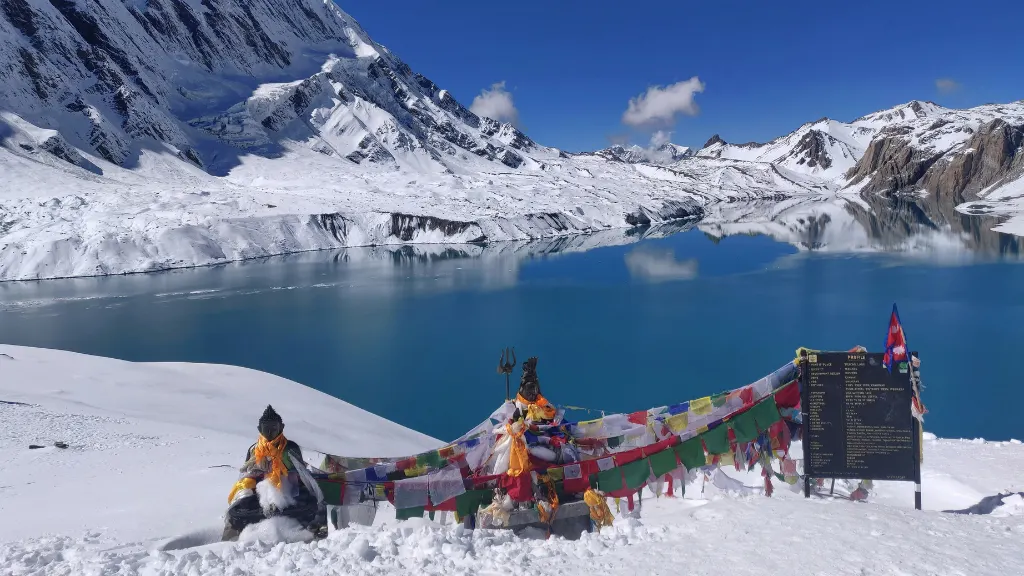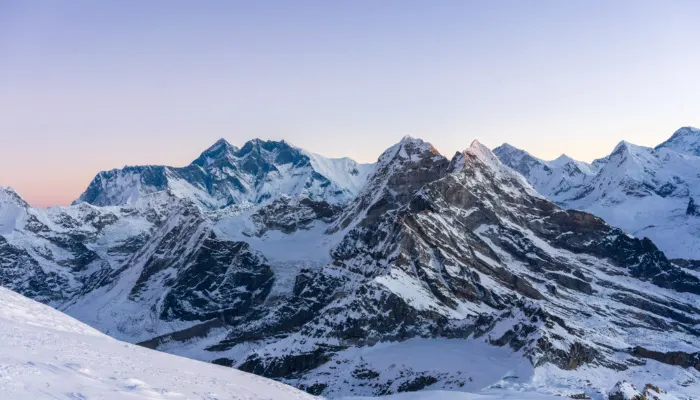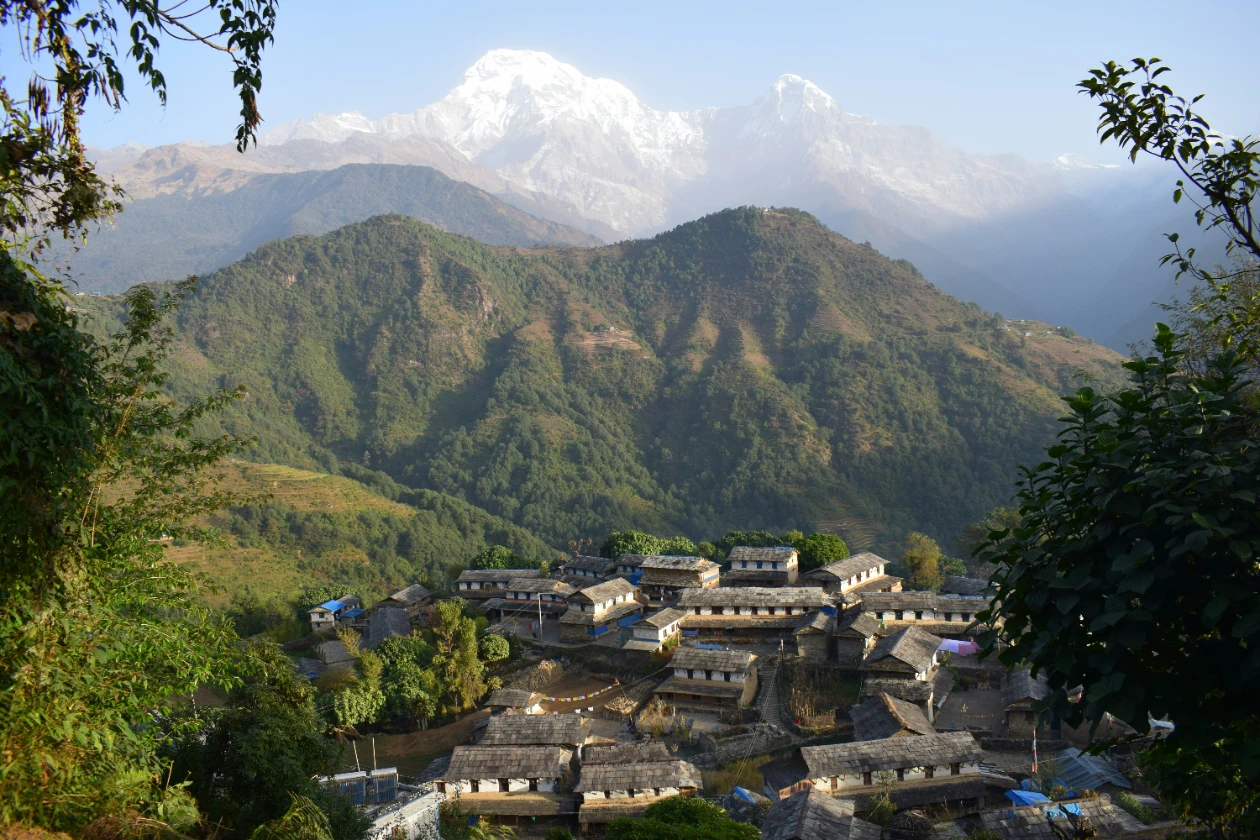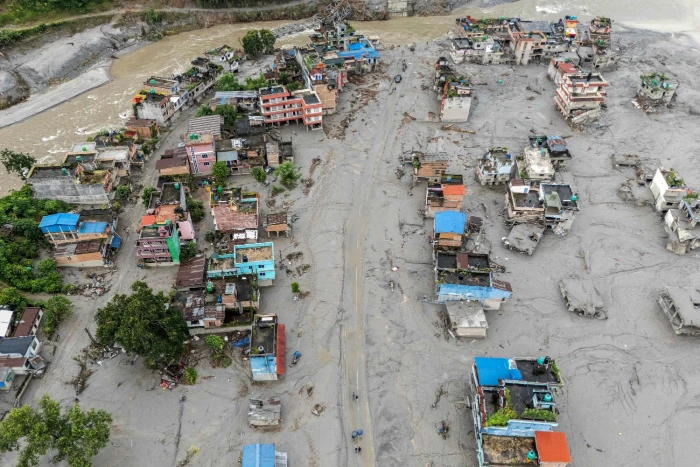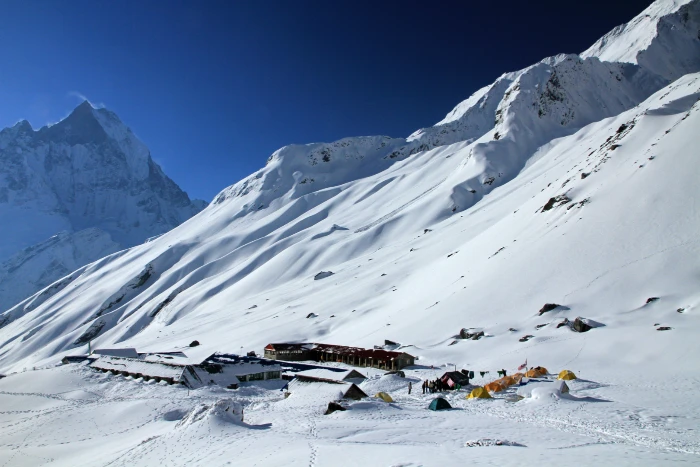
The Annapurna Sanctuary is a natural amphitheatre ringed by thirteen peaks above 6,000 metres, entered through a narrow glacial gorge that opens suddenly into one of the most dramatic high-altitude basins in the world. At 4,130 metres, surrounded on every side by walls of rock and ice rising two to four thousand metres directly above you, the sense of being inside the mountain rather than looking at it from outside is unlike anything available on a standard trekking route anywhere in Asia.
Annapurna Base Camp is the most beloved trekking destination in Nepal after Everest, and it earns that position through a different quality of experience from its more famous counterpart. Where the EBC circuit is defined by the vertical ambition of the Khumbu and the specific achievement of a named destination, the ABC circuit rewards the completeness of its natural and cultural range. From the subtropical river gorge below Nayapul to the Gurung villages of the middle hills, through the rhododendron and oak forest of the approach, up the Modi Khola gorge to the glacial sanctuary above, it is a single trek that contains multiple genuinely different worlds.
This guide covers everything you need to plan the Annapurna Base Camp trek in 2027 with confidence and precision. It is built to answer every question a trekker planning ABC actually asks, with the depth and specificity that the circuit deserves and that most planning guides fail to provide.
What Is the Annapurna Base Camp Trek?
The Annapurna Base Camp trek is a high-altitude trekking circuit in the Annapurna Conservation Area of central Nepal, in the Kaski and Myagdi districts of the Gandaki Province. The standard route begins with a drive from Pokhara to Nayapul or Hile and follows the Modi Khola river valley north through Gurung villages and rhododendron forest to the Annapurna Sanctuary, covering approximately 115 kilometres round trip over nine to twelve days.
The route reaches its high point at Annapurna Base Camp itself at 4,130 metres, sitting inside the Annapurna Sanctuary on the lateral moraine of the South Annapurna Glacier. The camp is surrounded by Annapurna I at 8,091 metres (the tenth-highest mountain in the world), Annapurna South at 7,219 metres, Hiunchuli at 6,441 metres, Machhapuchhre (Fishtail) at 6,993 metres, Gangapurna at 7,455 metres, and Annapurna III at 7,555 metres. No other accessible overnight camping or teahouse destination in Nepal places you inside an amphitheatre of this scale and altitude concentration.
The route is classified as moderate in difficulty. There is no technical climbing, no glacier travel, and no fixed rope sections. What it demands is sustained cardiovascular fitness, proper acclimatisation management above 3,500 metres, and the physical capacity for consecutive days of uphill walking through increasingly challenging terrain. It is more accessible than the EBC circuit in terms of altitude ceiling and domestic flight dependency while offering a genuinely comparable level of Himalayan experience.
The History of the Annapurna Base Camp Trek
The Annapurna massif holds a specific place in the history of Himalayan mountaineering. Annapurna I was the first 8,000-metre peak ever climbed, reached by a French expedition led by Maurice Herzog on 3 June 1950, just three years before the first Everest summit. Herzog's account of the climb and the brutal descent, published as Annapurna in 1951, became one of the bestselling mountaineering books ever written and introduced the scale and severity of the Himalayan environment to a global readership that had not previously imagined it.
The Annapurna Conservation Area, established in 1986 and expanded to cover 7,629 square kilometres, was the first conservation area in Nepal to be managed with direct community involvement and a portion of permit revenues directed to local community development. The model, which has since been applied elsewhere in Nepal, represented a significant shift from pure preservation towards sustainable development that benefited the communities living within the protected area rather than excluding them from its management.
The teahouse network in the Annapurna foothills developed from the 1970s onwards as trekking tourism expanded from the small expedition-support economy of the early post-1950 era into the large-scale international trekking industry of the modern period. The Gurung and Magar communities whose villages line the ABC approach trail were among the earliest and most effective participants in the teahouse economy, and the family-run lodges of the lower Annapurna foothills retain a quality of personal investment in the guest experience that the more heavily commercialised teahouse networks on some other circuits have partially lost.
The route to Annapurna Base Camp was formalised as an international trekking circuit in the early 1980s and has been one of the most popular trekking destinations in Nepal ever since. Approximately 70,000 to 80,000 trekkers enter the Annapurna Conservation Area each year with ABC as their primary destination, making it one of the most visited high-altitude trekking destinations in Asia.
Is the Annapurna Base Camp Trek Right for You?
The Honest Difficulty Assessment
The ABC trek is genuinely moderate. The daily walking distances range from three to seven hours depending on the day. The terrain moves from stone-paved village paths in the lower sections through forested trail to the rocky gorge approach above Deurali and the glacier moraine of the sanctuary itself. No section requires technical equipment or climbing skills.
The altitude ceiling at 4,130 metres is the most important variable for most trekkers. Spending two to three nights above 3,500 metres and one night at 4,130 metres places the ABC circuit clearly in high-altitude territory where AMS awareness is relevant but significantly below the altitude demand of the EBC circuit. For trekkers who are uncertain about their altitude response or who have a medical history that raises questions about high-altitude trekking, ABC at 4,130 metres is a substantially lower-risk proposition than EBC at 5,545 metres while still delivering a genuine Himalayan sanctuary experience.
The gorge section between Bamboo and Machhapuchhre Base Camp is the most physically committing section of the circuit. The trail through this section is narrow, steep in places, and exposed to rockfall risk in heavy rain. An experienced guide who knows the route's seasonal behaviour is specifically valuable in this section.
Who the ABC Trek Is Appropriate For
The ABC trek suits a wider range of trekkers than most Himalayan circuits. The moderate altitude ceiling, the absence of domestic flight dependency, the consistent teahouse infrastructure throughout the route, and the shorter duration compared to EBC all contribute to its accessibility for first-time Himalayan trekkers, families with older children, trekkers in their fifties and sixties, and anyone for whom the EBC circuit's altitude demands feel like a stretch beyond their current physical condition.
Trekkers who have completed a shorter Nepal circuit such as the Poon Hill or Langtang routes and are ready for a longer, higher objective will find ABC the natural progression. Its ten-day standard duration and 4,130-metre ceiling position it precisely between the introductory circuits and the full high-altitude challenge of EBC.
ABC vs EBC: Which Should You Choose?
The most common planning question from trekkers who have decided on Nepal but not on a specific route is whether to choose Annapurna Base Camp or Everest Base Camp. The honest comparison is as follows.
EBC is higher, longer, more logistically complex (requiring a domestic flight to Lukla), and more crowded in peak season. It delivers the specific experience of the Khumbu, Sherpa culture at its most concentrated, and the proximity to Everest that no other accessible route in Nepal offers. ABC is lower, shorter, logistically simpler (accessed by road from Pokhara), and less crowded. It delivers the Annapurna Sanctuary, a more varied cultural landscape through the Gurung villages, and the hot spring pools at Jhinu Danda on the descent.
For a first Himalayan trek, ABC is more accessible than EBC in almost every practical dimension while delivering an equivalent quality of Himalayan experience. For trekkers who specifically want Everest, EBC is the obvious choice. For trekkers choosing between the two on the merits of the experience rather than the name recognition, most people who have done both describe ABC as the richer circuit.
The Route: What You Walk Through
The Drive from Pokhara
The ABC circuit begins not with a flight but with a drive, which is one of its most significant practical advantages over the EBC route. From Pokhara's Lakeside district, a private jeep or taxi to Nayapul takes approximately ninety minutes along the Prithvi Highway. The alternative trailhead at Hile, reached by jeep via a different road, shortens the first day's walk and is the preferred starting point on some itineraries. Neither option involves flight booking, weather window anxiety, or the early-morning airport logistics that define EBC departures.
The drive itself is an introduction to the Annapurna foothills: terraced agricultural land, river gorges, roadside villages, and the first glimpses of the Annapurna range above the ridgeline to the north. By the time you reach the trailhead, the landscape has already established its character.
Nayapul to Tikhedhunga and Ulleri
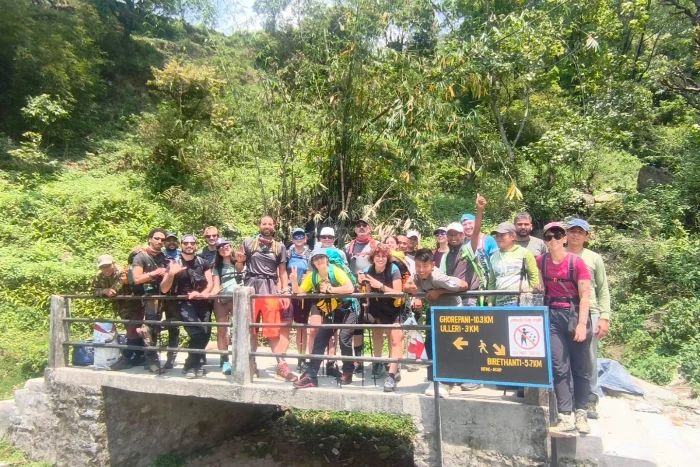
From Nayapul at 1,070 metres the trail enters the Modi Khola valley and begins the approach through the lower Annapurna foothills. The first day is a gentle introduction: flat to moderate terrain through the village of Birethanti, where the ACAP permit checkpoint is located, and along the river valley to Tikhedhunga at 1,540 metres.
Day 2 is the circuit's first significant physical challenge: the stone staircase from Tikhedhunga to Ulleri, approximately 3,000 steps of sustained ascent gaining 470 metres in roughly ninety minutes. The steps are even, well-maintained, and relentless. The top of the staircase is rarely visible from any point on the ascent. Starting before 7:30 am avoids the heat that builds on this exposed section by mid-morning and is the guide's standard recommendation.
Ulleri at 2,010 metres is a Magar village of traditional flat-roofed stone houses with the first open views of the Annapurna range from the southern approach. The community here has been hosting trekkers for forty years and the teahouses retain a family character that the more developed stops higher on the circuit partly lose to the demands of volume.
Ghorepani and Poon Hill: The Cultural and Visual Centrepiece of the Lower Circuit
The trail from Ulleri climbs through the rhododendron and oak forest that defines the mid-altitude approach to ABC, reaching Ghorepani at 2,860 metres after five to six hours from Tikhedhunga. In spring from mid-March through April, this forest section is one of the most visually extraordinary sections of any trekking route in Nepal: successive waves of rhododendron bloom at different altitude bands, red at lower elevations and pink and white higher up, covering the hillside canopy with colour for several consecutive weeks.
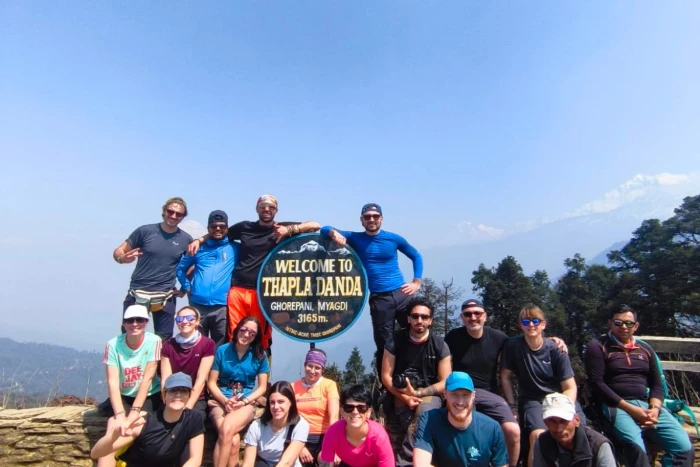
Ghorepani is where the ABC route and the Poon Hill circuit share an overnight stop, and the pre-dawn ascent of Poon Hill at 3,210 metres the following morning is one of the best viewpoints on the entire circuit. The 180-degree panorama from Poon Hill covers Dhaulagiri at 8,167 metres, Tukuche Peak, Nilgiri, Annapurna South, Hiunchuli, Machhapuchhre, Annapurna I, Annapurna III, and Gangapurna simultaneously. The light at sunrise, moving westward along the chain as the sun rises above the Tibetan plateau to the east, is the visual standard against which the rest of the circuit is measured.
This is also where the ABC route diverges from the Poon Hill circuit. Where the standard Poon Hill circuit descends southeast towards Tadapani and Ghandruk after the viewpoint, the ABC route descends northeast towards Tadapani and then continues north into the Modi Khola gorge towards the sanctuary.
Tadapani to Chhomrong
The trail from Tadapani at 2,630 metres descends to the Modi Khola river and climbs steeply to Chhomrong at 2,170 metres, a large Gurung village that serves as the last significant settlement before the upper gorge approach to the sanctuary. Chhomrong has the most comprehensive teahouse infrastructure on the circuit after Ghorepani and is the standard rest and resupply stop for trekkers adjusting gear and energy levels before the more committing upper section begins.
The Chhomrong teahouse network has been expanded and upgraded significantly in the past decade. Private rooms with attached bathrooms are available at the better establishments. The bakeries in Chhomrong, supplying goods to teahouses higher on the route by porter, are the last reliable source of Western-style baked goods before the sanctuary.
Chhomrong is also where the character of the trekker population on the circuit becomes most visibly concentrated. The village is the last junction point before the gorge and virtually every trekker heading to ABC passes through it in both directions. The communal dining rooms of the Chhomrong teahouses in peak October and April have the social energy of a transit hub: people heading up comparing notes with people heading down, guides exchanging current trail condition information, and the accumulated intelligence of dozens of simultaneous trekking experiences being shared across tables.
The Modi Khola Gorge: Bamboo to Deurali
The approach to the Annapurna Sanctuary through the Modi Khola gorge is the section of the circuit most distinctly unlike anything on the other major Nepal trekking routes. The trail enters the gorge below Chhomrong and follows the river through increasingly steep and narrowing terrain, passing through the bamboo and rhododendron forests of Bamboo at 2,310 metres, Doban at 2,520 metres, and Himalaya at 2,900 metres before reaching Deurali at 3,230 metres.
The gorge has a specific quality of enclosure that increases with altitude. The walls above the trail press in on both sides, the river audible below on the sections where the trail moves away from the bank, and the narrow sky above gradually reveals the glacier-covered peaks that the sanctuary will deliver in full. The transition from this enclosed approach to the sudden opening of the sanctuary above Machhapuchhre Base Camp is one of the most dramatic single moments of any Nepal trekking route.
The gorge section carries genuine avalanche risk in heavy snowfall periods, particularly above Deurali on the approach to Machhapuchhre Base Camp. An experienced guide monitors weather patterns and trail conditions on this section and makes the call on timing. Hiking Nepal does not push through this section in conditions that the guide assesses as unsafe.
Machhapuchhre Base Camp and the Sanctuary Entrance
Machhapuchhre Base Camp at 3,700 metres sits at the entrance to the Annapurna Sanctuary, where the gorge opens into the broad glacial basin above. The name refers to Machhapuchhre, the sacred Fishtail peak at 6,993 metres that rises directly above the camp and which is prohibited from being climbed by the Nepal government out of respect for its religious significance. The closest any climber has come to the summit was a 1957 British team that reached within fifty metres of the top before turning back in accordance with the conditions of their permit.
The view from MBC of Machhapuchhre's south face, rising two thousand metres directly above the camp, is one of the finest close-range views of a major Himalayan peak available from any accessible trekking destination. The sacred prohibition that protects the mountain from summit attempts also protects the quality of the viewpoint: there are no expedition tracks, fixed ropes, or summit infrastructure on the face visible from below.
Annapurna Base Camp
The final two hours from MBC to ABC climb gently through the sanctuary on the lateral moraine of the South Annapurna Glacier. As the trail rises into the basin, the enclosing peaks rotate into view one by one: Hiunchuli to the south, Annapurna South to the west, Annapurna I to the northwest, Gangapurna to the north, Annapurna III to the northeast, and Machhapuchhre completing the circle to the southeast.
The moment the full sanctuary becomes visible, when all thirteen enclosing peaks are simultaneously in view and the sense of being inside rather than outside the mountain is complete, is the moment that the circuit has been building towards and the one that most trekkers describe as the most powerfully unexpected experience of the route. The scale is intellectual before the eye arrives: you know the peaks are enormous because you have read the numbers. Then you are inside the amphitheatre and the numbers become irrelevant. The scale is simply what surrounds you.
The teahouses at ABC are basic by the standard of the lower circuit. The altitude, the supply logistics, and the season length all limit what is possible above 4,000 metres. What the accommodation lacks in comfort it compensates for in position: sleeping inside the Annapurna Sanctuary, with the peaks visible through the teahouse window as the light changes from the orange of late afternoon to the blue of high-altitude dark, is an experience that no amount of lower-altitude comfort replicates.
Jhinu Danda: The Descent Reward
The descent from ABC retraces the approach through the gorge and rejoins the standard circuit at Chhomrong before descending to Jhinu Danda at 1,760 metres. The natural hot spring pools at Jhinu Danda, carved stone bathing pools fed by thermal water above the Modi Khola river, are the traditional end-of-circuit reward for ABC trekkers and one of the most genuinely restorative experiences on any Nepal trekking route.
After five to seven days of high-altitude walking, cold nights, and the specific muscle fatigue of extended descent on steep terrain, forty minutes in thermal water above a glacial river with the Annapurna range visible above the valley is a quality of physical recovery that no teahouse dinner, however good, fully substitutes for. Hiking Nepal builds the Jhinu Danda hot spring stop into all ABC descents as a standard element rather than an optional side trip.
Day-by-Day ABC Trek Itinerary 2027
The following is Hiking Nepal's recommended ten-day itinerary for the Annapurna Base Camp trek, incorporating the Poon Hill sunrise viewpoint on the approach and the Jhinu Danda hot springs on the descent.
Day 1: Drive Pokhara to Hile or Nayapul, Trek to Tikhedhunga (1,540m)
Private vehicle from Pokhara Lakeside to the trailhead at Hile or Nayapul, approximately ninety minutes. Begin trekking from Nayapul at 1,070 metres through Birethanti, where ACAP permit and TIMS card are checked, and along the Modi Khola valley to Tikhedhunga. Three to four hours of walking on flat to moderate terrain. First night in the Annapurna foothills at a family teahouse in Tikhedhunga.
Day 2: Tikhedhunga to Ghorepani (2,860m)
The hardest single day of the circuit by most accounts. Depart by 7:00 am to tackle the Ulleri stone staircase before the heat builds. Full snack stop at Ulleri. Continue through the rhododendron forest via Banthanti and Nangethanti to Ghorepani. Five to six hours of walking with a net altitude gain of 1,320 metres from Tikhedhunga. Arrive at Ghorepani by mid-afternoon and confirm the 4:45 am summit departure time with the guide.
Day 3: Poon Hill Sunrise (3,210m), then Trek to Tadapani (2,630m)
Pre-dawn departure from Ghorepani at 4:45 am for the Poon Hill viewpoint. Forty-five to sixty minutes of uphill walking to the ridge. Sunrise panorama of the full western Himalayan arc. Return to Ghorepani for a full cooked breakfast. Trek through rhododendron forest via Deurali to Tadapani. Five hours of walking after the summit. Tadapani offers the first direct view of Annapurna South from the descent route.
Day 4: Tadapani to Chhomrong (2,170m)
Four to five hours of descent and ascent through forest and open hillside to the large Gurung village of Chhomrong. The descent from Tadapani to the Modi Khola is steep. The subsequent climb to Chhomrong on stone steps gains 700 metres. Arrive in Chhomrong by noon with the afternoon free to explore the village, check gear before the upper gorge, and rest before the more committing section begins tomorrow.
Day 5: Chhomrong to Himalaya (2,900m)
The first day inside the gorge approach. Trail descends from Chhomrong through the stone-stepped village path to the river at Sinuwa and enters the bamboo and rhododendron forest corridor. Pass through Bamboo and Doban on a trail that narrows as the gorge walls close in above. Five to six hours of walking with a net altitude gain of 730 metres. Overnight at Himalaya, a teahouse settlement at 2,900 metres inside the gorge.
Day 6: Himalaya to Annapurna Base Camp (4,130m) via MBC (3,700m)
The most significant day of the circuit. Depart Himalaya by 7:00 am. Trail climbs through Deurali at 3,230 metres, where the gorge narrows to its most enclosed section and the avalanche risk from the slopes above requires attention from the guide. Continue to Machhapuchhre Base Camp at 3,700 metres. Rest stop for thirty minutes with the first full view of Machhapuchhre's south face. Final two hours climb through the sanctuary to Annapurna Base Camp at 4,130 metres. Total walking time seven to eight hours. Altitude gain of 1,230 metres from Himalaya. Pay close attention to how you feel on arrival and communicate any symptoms to the guide immediately.
Day 7: Rest Day at Annapurna Base Camp (4,130m)
An optional but strongly recommended rest day at ABC for acclimatisation and full experience of the sanctuary. Morning walk around the camp perimeter in the early light, when the peaks are at their most sharply illuminated and the glacier surface catches the sunrise. The day spent inside the sanctuary rather than passing through it changes the qualitative experience of the circuit significantly. Afternoon cloud is common in the sanctuary; the clearest views are in the early morning before 9:00 am and in the late afternoon as the cloud clears.
Day 8: ABC to Bamboo (2,310m)
Descent from the sanctuary. The route retraces through MBC and the gorge to Bamboo, covering approximately 1,820 metres of altitude loss in five to six hours. The descent through the gorge moves faster than the ascent and requires consistent attention on the steeper sections. Arriving at Bamboo at the lower gorge elevation feels noticeably warmer and more oxygenated after the sanctuary nights.
Day 9: Bamboo to Jhinu Danda (1,760m) via Chhomrong
Full descent from Bamboo back through Sinuwa and the Chhomrong approach to Jhinu Danda. Four to five hours of walking. Afternoon at the Jhinu Danda hot spring pools: a standard two-hour soak in thermal water above the Modi Khola river. Overnight at Jhinu Danda.
Day 10: Jhinu Danda to Nayapul, Drive to Pokhara
Final walking day descends through Ghandruk or directly to Nayapul depending on the preferred return route. The Ghandruk option adds two to three hours and includes the Gurung Heritage Museum visit and full village exploration. Direct descent to Nayapul takes two to three hours. Private vehicle from Nayapul to Pokhara Lakeside, arriving in time for a late lunch. Trek complete.
ABC Trek Variations and Extensions
The Poon Hill Approach vs the Direct Route
The itinerary above includes the Poon Hill sunrise on the approach, which adds one day to the minimum circuit duration but delivers a viewpoint and a sunrise experience that the ABC sanctuary itself does not replace. Some trekkers on tighter schedules take the direct approach via Ulleri and Ghorepani without the Poon Hill summit detour, reducing the circuit to nine days. Hiking Nepal recommends retaining the Poon Hill visit unless the schedule genuinely does not allow it.
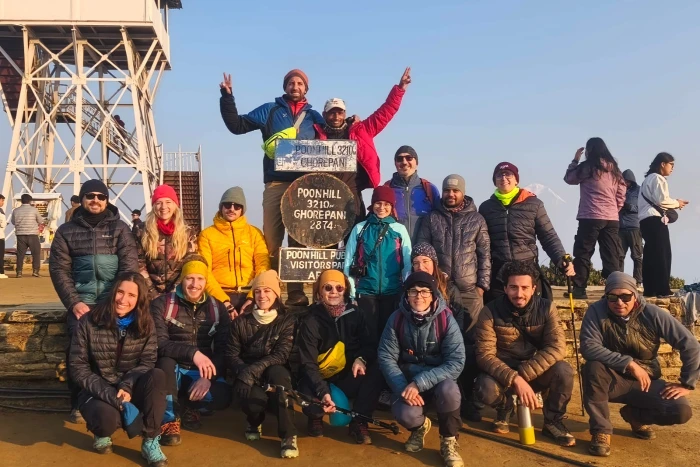
The Ghandruk Cultural Extension
Adding a full afternoon and evening in Ghandruk on the descent gives the circuit a cultural depth that the direct return to Nayapul omits. Ghandruk at 1,940 metres is the largest Gurung village accessible on the ABC descent and contains the Gurung Heritage Museum, traditional stone architecture, household weaving demonstrations, and the community life of a settlement that has maintained its cultural identity through fifty years of trekking tourism better than most comparable villages in Nepal. Hiking Nepal builds the Ghandruk stop into the standard ten-day itinerary and recommends it specifically for trekkers with a cultural interest alongside the mountain objective.
ABC with Mardi Himal Extension
For trekkers with twelve to fourteen days available, the Mardi Himal route can be combined with ABC for a circuit that approaches ABC via the Mardi Himal ridge and returns via the standard gorge descent or vice versa. The Mardi Himal ridge at 4,500 metres provides a close-range perspective on Machhapuchhre from the east that no other accessible vantage point in the Annapurna region delivers. This is Hiking Nepal's recommended extension for ABC trekkers with prior experience who want more altitude and a less-visited approach.
ABC with Annapurna Circuit Connection
Advanced trekkers with eighteen or more days can connect the ABC circuit to the Annapurna Circuit at Jomsom or Muktinath by ascending through the sanctuary and crossing the Mesokanto La pass at 5,099 metres on the circuit's northern boundary. This is a technically demanding high-altitude crossing that requires experience and a guide with current route knowledge of the pass conditions. It is not available to most trekkers but for those who qualify it combines the two most celebrated trekking destinations in the Annapurna region in a single extended itinerary.
ABC Trek Permits 2027
Annapurna Conservation Area Permit (ACAP)
Required for all trekkers entering the Annapurna Conservation Area, which covers the entire ABC route from Nayapul onwards. Cost: NPR 3,000 per person, approximately USD 23. Available at the Nepal Tourism Board office in Kathmandu, the ACAP office in Pokhara Lakeside, or at the Birethanti checkpoint on the trail. Children under 10 years are exempt.
The ACAP permit revenue is one of the primary funding mechanisms for conservation and community development across the Annapurna Conservation Area. The programme has invested in school building, forest management, alternative energy, and community health across the 200-plus villages within the protected area. Choosing to trek the ABC circuit in 2027 contributes directly to this programme through the permit fee.
TIMS Card (Trekkers' Information Management System)
Required for all trekkers on the ABC route. Cost: NPR 2,000 per person through a registered agency (NPR 4,000 for independent trekkers), approximately USD 15. Available at the Nepal Tourism Board and TAAN offices in Kathmandu and Pokhara. The TIMS card registers your trek and personal details for safety and statistical purposes.
Total Permit Cost 2027
Permit | Cost (NPR) | Cost (USD approximate) |
| ACAP Permit | NPR 3,000 | USD 23 |
| TIMS Card (agency rate) | NPR 2,000 | USD 15 |
| Total | NPR 5,000 | USD 38 |
Hiking Nepal handles all permit applications for every ABC departure. Clients provide passport copies and two passport-sized photographs and permits are collected before the trek begins.
Annapurna Base Camp Trek Cost 2027: The Complete Breakdown
The following is an honest, all-in cost breakdown for the standard ten-day ABC circuit with Hiking Nepal in 2027. These figures are not headline prices: they include every cost a trekker will actually incur from departure to return.
The Hiking Nepal ABC Package
Cost Category | Amount (USD) | Notes |
| Hiking Nepal ABC package (guide, porter, all accommodation, all meals, all permits, transfers) | From USD 1,100 per person | Private departure, 2 persons sharing |
| ACAP permit | Included | USD 23 per person |
| TIMS card | Included | USD 15 per person |
| Private vehicle Pokhara to trailhead and return | Included | No domestic flight required |
| Travel insurance | USD 100 to 180 | Must cover helicopter evacuation to 5,000m and trekking |
| Nepal visa (15 days) | USD 0 | On arrival Kathmandu airport |
| Equipment hire (down jacket, trekking poles) | USD 50 to 120 | From Thamel or Pokhara Lakeside |
| Tips for guide and porter | 5-20% of the trip cost | NPR 500 to 1,000 per person per day |
| Personal expenses on trail | USD 60 to 120 | Hot showers, Wi-Fi, battery charging, personal snacks |
| Pre and post-trek accommodation Pokhara | USD 60 to 200 | Two nights each end, budget to mid-range |
| Total realistic all-in per person | USD 1,550 to 1,950 | Private departure, spring or autumn 2027 |
What the Package Includes
Every Hiking Nepal ABC private departure includes: a licensed WAFA-certified guide dedicated to your group throughout; a contracted porter on full IPPG welfare standards carrying a maximum of 20 kilograms; all accommodation at pre-selected and pre-booked teahouses; all meals from the first overnight to the final morning; all permit fees including ACAP and TIMS; private vehicle transfers from Pokhara to the trailhead and return; a calibrated pulse oximeter for twice-daily altitude monitoring; supplemental oxygen; a full first-aid kit with altitude medications; and 24-hour emergency coordination from the Hiking Nepal operations team.
What Is Not Included
International flights. Nepal visa fees. Travel insurance. Equipment hire. Tips for guides and porters. Personal trail spending on hot showers, Wi-Fi, battery charging, personal snacks, and alcohol. Pokhara hotel accommodation before and after the trek.
Cost Comparison: ABC vs EBC
The ABC circuit is meaningfully less expensive than EBC when the domestic flight to Lukla is removed from the EBC cost. The realistic all-in cost difference for a comparable private guided departure is approximately USD 800 to 1,200 per person. For trekkers choosing between the two routes on budget as well as experience grounds, ABC delivers an equivalent quality of Himalayan experience at a lower total cost, with no flight dependency risk.
Group Joining vs Private Departure
Departure Type | Price Per Person (From) | Notes |
| Group joining, 4 to 6 trekkers | USD 850 | Shared guide, standard porter allocation |
| Private, 2 persons sharing | USD 1,100 | Dedicated guide and porter |
| Private, solo | USD 1,350 | Full cost of guide and porter borne by one person |
Group joining departures on the ABC circuit are available on fixed dates in spring and autumn and are the most cost-effective option for solo travellers or couples willing to share the circuit with other trekkers. Private departures are available on any date throughout the trekking seasons.
Best Time to Do the Annapurna Base Camp Trek in 2027
Spring: Mid-March to May
Spring is the premium season for the ABC circuit and the most popular departure window by volume. The reasons are specific and compounding. The rhododendron bloom on the approach between Tikhedhunga and Ghorepani, which runs from mid-March at lower altitudes through late April at the highest band, is the most visually extraordinary natural feature of the lower circuit and one of the finest seasonal landscape events accessible on any Nepal trekking route. The morning visibility from both the Poon Hill viewpoint and the Annapurna Sanctuary is statistically best in late March and early April before pre-monsoon haze builds in the valleys. Temperatures at Ghorepani and above are cold but manageable with appropriate layering.
The peak within spring is the last week of March through the second week of April, when rhododendron blooms overlap across all altitude bands and the weather is most reliably settled. Hiking Nepal's spring ABC departures from this window book out well in advance. For spring 2027, contact Hiking Nepal by December 2026 to secure preferred dates.
May offers a longer daylight window and warmer temperatures at lower altitudes but the pre-monsoon weather becomes less predictable from mid-May and cloud builds earlier in the day around the sanctuary peaks.
Autumn: September to November
Post-monsoon autumn delivers the best overall mountain visibility of the year. The monsoon washes the atmosphere clean through August and the air above 3,000 metres from late September through mid-November has a clarity that makes mountain photography at its most effective. The sanctuary at 4,130 metres in early October, with the freshly snow-covered peaks reflecting the morning light, is the most visually dramatic version of the ABC destination available in any season.
October is the busiest month on the ABC circuit as on all major Nepal routes. The trail between Chhomrong and the sanctuary is shared with the Machhapuchhre Base Camp trekkers and the significant autumn volume, and the teahouses at Deurali and MBC can be crowded in the first two weeks of October. Late October through early November is the preferred autumn window for trekkers who value trail quietness alongside visibility.
November brings colder nights with temperatures at MBC and ABC reaching minus 5 to minus 12 degrees Celsius after dark. The sleeping bag rating requirement moves up to minus ten degrees Celsius for November departures. Teahouses remain open through mid-November on the ABC route, which stays accessible later in the autumn than some higher-altitude circuits.
Monsoon: June to August
The monsoon from June through August brings persistent cloud and intermittent heavy rain to the Annapurna foothills. The gorge section between Bamboo and Deurali carries elevated landslide and rockfall risk during the monsoon and the approach from the south is significantly wetter and muddier than in the main seasons. The sanctuary views are compromised by cloud for the majority of the monsoon period.
Hiking Nepal does not recommend the ABC circuit during the core monsoon months of July and August. The lower circuit below Chhomrong including the Poon Hill route is manageable in June and early August on clear days with appropriate waterproofs, but the full ABC is not.
Winter: December to February
The lower sections of the ABC approach including the Poon Hill route and the Ghorepani area are accessible and enjoyable in winter with appropriate cold-weather gear. The full ABC circuit above Chhomrong becomes increasingly challenging in December through February as snowfall on the gorge approach and the sanctuary can make the trail above Deurali impassable without specialist equipment. Hiking Nepal does not offer standard ABC departures in the core winter months but can assess specific winter window options on enquiry.
Month by Month Summary for 2027
Month | Conditions | ABC Circuit Verdict |
| January | Cold, quiet, possible snow above 3,000m | Lower circuit only |
| February | Cold improving, less snow than January | Lower circuit recommended |
| March | Spring begins, rhododendrons at lower altitude | Excellent from mid-March |
| April | Peak spring, bloom in full, best weather | Premium window |
| May | Pre-monsoon haze building, still good | Good in first two weeks |
| June | Monsoon beginning | Not recommended above Chhomrong |
| July | Heaviest rain | Not recommended |
| August | Rain tapering | Not recommended above Chhomrong |
| September | Autumn beginning, conditions improving | Good from late September |
| October | Post-monsoon clarity, busiest month | Premium window, book early |
| November | Clear and cold, quieter than October | Excellent in first two weeks |
| December | Winter setting in, colder at altitude | Lower circuit only |
Altitude Safety on the Annapurna Base Camp Trek
The Altitude Profile
The ABC circuit's altitude profile is more compressed than EBC: the highest overnight stop at 4,130 metres is the Base Camp itself and the approach gains altitude relatively quickly in the gorge section above Deurali. The transition from Deurali at 3,230 metres to ABC at 4,130 metres in a single day, which the standard itinerary achieves via MBC, represents a 900-metre altitude gain on a day that already involves a 1,230-metre total gain from Himalaya.
This compressed profile makes the acclimatisation day at Base Camp particularly valuable. Spending two nights at 4,130 metres rather than one gives the body the time it needs to adjust to the sanctuary altitude before the descent begins. Trekkers who press through ABC in a single night and begin the descent the following morning are consistently the ones who describe feeling unwell at Base Camp without adequate time to resolve it.
AMS Risk on ABC
The altitude ceiling at 4,130 metres places the ABC circuit in the range where mild AMS is possible and worth monitoring, while serious altitude conditions including HAPE and HACE are substantially less common than on circuits that spend multiple nights above 4,500 metres. The risk profile is meaningfully lower than EBC but not zero, and the same monitoring discipline applies.
Hiking Nepal guides conduct twice-daily oxygen saturation monitoring on all ABC departures from Ghorepani upwards. The guide's assessment of each trekker's altitude response is the primary safety indicator and supersedes the trekker's self-assessment in any disagreement about whether to ascend or rest.
Emergency Access
The Annapurna region has helicopter landing zones at Chhomrong, at the open area near the Modi Khola river below Bamboo, and at MBC in suitable conditions. Helicopter evacuation from the ABC area to Pokhara takes approximately 20 to 30 minutes and to Kathmandu approximately 45 minutes. The cost is approximately USD 2,500 to 4,000 depending on the pickup location.
Travel insurance for the ABC trek must cover helicopter evacuation from trekking altitudes. Hiking Nepal verifies this coverage at the pre-trek briefing for every departure.
Gurung Culture: The Human Landscape of the ABC Circuit
Who the Gurung Are
The Gurung, also known as Tamu in their own language, are a Tibeto-Burman people indigenous to the Gandaki region of central Nepal whose villages line the lower and middle sections of the ABC approach. The Gurung supplied a significant proportion of the Gurkha regiments that served in the British and Indian armies from the mid-nineteenth century onwards, a heritage that shapes the community's cultural self-understanding and economic relationship with the outside world to this day.
Gurung villages are architecturally distinctive: flat-roofed stone houses arranged on south-facing slopes to maximise winter sun, with narrow stone-paved lanes and communal water sources fed by mountain springs. The larger Gurung settlements on the ABC circuit, including Ulleri, Ghorepani, Tadapani, Chhomrong, and Ghandruk, retain the substance of traditional community life alongside the teahouse economy that has developed around them.
Ghandruk: The Cultural Heart of the Circuit
Ghandruk at 1,940 metres is the largest and most architecturally intact Gurung village accessible on the ABC circuit and one of the most significant traditional settlements in the Annapurna foothills. The village has been continuously inhabited for over 400 years and has maintained its stone architecture, community governance, and cultural calendar through five decades of trekking tourism with considerably more success than many comparable villages on other circuits.
The Gurung Heritage Museum in the village centre occupies a restored traditional house and covers traditional tools, jewellery, clothing, weapons, and household objects with a curation that reflects genuine community investment in preserving cultural memory. Entry is NPR 200 and the visit takes forty-five to sixty minutes comfortably. The Gurkha Museum adjacent to the heritage museum covers the military history of Gurung service in the British and Indian armies with photographs, equipment, and personal accounts.
Weaving demonstrations at household looms are available at several family houses in Ghandruk where Gurung women continue to produce the traditional wool fabric used for local clothing and blankets. The invitation to try the loom is consistently offered and the five minutes of instruction that follows is one of those cultural exchanges that costs nothing in time and returns significantly in understanding.
The Magar Communities of the Upper Approach
Above Chhomrong and into the gorge section, the community transitions from primarily Gurung to Magar, another indigenous group of the Annapurna foothills with a distinct language, cultural calendar, and relationship to the high mountains. The Magar communities that manage the teahouses in Bamboo, Doban, and Himalaya are smaller and less visited than the Gurung settlements of the lower circuit and the interactions they facilitate have a quality of genuine connection rather than practised hospitality.
Your guide's role in facilitating these cultural interactions is one of the most significant values they provide on the ABC circuit. A Hiking Nepal guide with personal connections to communities along the route facilitates introductions and conversations that a guidebook reference or a general cultural curiosity cannot independently access.
The Annapurna Sanctuary: Understanding What You Are Standing Inside
The Geology of the Sanctuary
The Annapurna Sanctuary is a glacial basin formed over millions of years by the erosive action of ice on the Annapurna massif. The basin sits at the convergence of the Modi Khola, South Annapurna, and East Annapurna glaciers, whose retreat over the past century has exposed the moraine landscape on which the Base Camp teahouses and tents now sit. The scale of the glaciers in their historical extent is visible in the U-shaped valley profile of the gorge approach and in the terminal moraine ridges that mark the sanctuary's southern boundary above MBC.
The enclosing peaks of the sanctuary represent one of the highest concentrations of extreme altitude in a single geographical unit anywhere in the world. Within a horizontal radius of approximately five kilometres from ABC, eleven peaks exceed 6,000 metres and three exceed 7,000 metres.
Annapurna I: The Peak Above the Camp
Annapurna I at 8,091 metres is the tenth-highest mountain on earth and the first 8,000-metre peak ever climbed. Its summit is visible from the western edge of the sanctuary on clear days as a massive snow-covered wall rising 3,961 metres directly above the camp. The scale of the vertical interval between the camp where you sleep and the summit above it is not a number that means anything until you are standing inside the sanctuary looking at it.
The normal route to the summit follows the northwest face and does not approach through the sanctuary, which means the south face visible from ABC carries no expedition infrastructure. What you see from the camp is the mountain in its uninterrupted natural form.
Machhapuchhre: The Sacred Peak
Machhapuchhre at 6,993 metres dominates the southeastern view from the sanctuary and is prohibited from being climbed by the Nepal government in recognition of its sacred status as the abode of the god Shiva in local Hindu tradition. The mountain's Fishtail silhouette, visible from Pokhara over one hundred kilometres to the south, is one of the most recognisable Himalayan profiles in Nepal. From inside the sanctuary, the south face rises directly above the camp in a way that makes its scale visceral rather than statistical.
The prohibition on climbing Machhapuchhre is one of the few examples in Nepal's conservation history where religious and cultural values have been successfully used to protect a natural environment from the summit-oriented pressure that affects virtually every other accessible high peak in the Himalaya. The result is a mountain that has never been fully climbed and a viewpoint that has never been altered by the infrastructure of expedition climbing.
ABC Trek Packing List 2027
The Packing Principle
Porters carry your main luggage duffel on all Hiking Nepal ABC departures. Your daypack carries the items you need immediate access to on the trail. The packing division should be clear before departure: duffel is for overnight gear and clean clothes, daypack is for layers, water, snacks, documents, and medical kit.
Clothing
Base layers: two sets of merino wool or synthetic thermal top and bottom. The rotation allows one set to air-dry overnight. Merino manages odour better over multiple days without washing.
Mid-layer: fleece jacket, easy to add and remove independently.
Insulation layer: down jacket rated to minus ten degrees Celsius minimum. Essential for Ghorepani and above and non-negotiable for the sanctuary nights. Available for hire in Pokhara and Kathmandu at USD 3 to 6 per day.
Outer shell: waterproof and windproof jacket with a hood. The gorge section between Bamboo and Deurali can be wet and the hood is specifically important on exposed sections.
Trekking trousers: two pairs, quick-dry. One pair of lightweight waterproof over-trousers for the gorge approach in wet conditions.
Warm hat covering the ears for the pre-dawn Poon Hill ascent and the sanctuary mornings. Wide-brimmed sun hat for daytime UV protection. Neck gaiter or buff.
Gloves: liner gloves plus windproof outer gloves. The pre-dawn Poon Hill departure and the sanctuary mornings require gloves that genuinely insulate.
Socks: four to five pairs of merino wool trekking socks. Bring more than seems necessary.
Footwear
Waterproof trekking boots, fully broken in before departure. The gorge section is wet in all seasons and the sanctuary moraine is rocky and uneven. Boots that are not broken in produce blisters within the first two days. Camp sandals or lightweight shoes for teahouse evenings.
Equipment
Daypack fifteen to twenty litres with a rain cover. Sleeping bag rated to minus ten degrees Celsius for the Ghorepani and sanctuary nights (available for hire in Pokhara). Trekking poles, adjustable, specifically recommended for the steep Tikhedhunga to Ulleri staircase and the descent from the sanctuary. Headtorch with spare batteries. Reusable one-litre water bottle. Sunglasses with UV400 protection. Portable power bank minimum 10,000 mAh. Small padlock for teahouse room security.
Health and Medical
Sunscreen SPF 50 minimum, applied daily above 2,000 metres. Lip balm with SPF protection. Blister plasters in larger quantities than seem necessary. Paracetamol and ibuprofen. Antihistamine. Oral rehydration sachets. Diamox if prescribed by your GP. Personal prescription medications with a three-day buffer.
What to Leave at Home
Cotton clothing in any form. Anything that has not been tested and confirmed to work in difficult conditions. Luxury items beyond one small personal comfort. Books that can be replaced with a downloaded reading device.
Teahouse Accommodation and Food on the ABC Circuit
The Teahouse Standard by Section
The lower circuit from Nayapul to Ghorepani has the most developed teahouse infrastructure on the ABC route. Private rooms with attached bathrooms are available at the larger stops. Hot showers on solar-heated systems are standard. Wi-Fi is available at lower-altitude teahouses at NPR 200 to 500 per day, with reliability decreasing above Chhomrong.
Chhomrong marks the point above which the teahouse standard begins to simplify. The gorge stops including Bamboo, Doban, and Himalaya are smaller operations with shared bathrooms, limited hot water, and simpler menus. They are clean and functional but should not be approached with the comfort expectations of the lower circuit.
Machhapuchhre Base Camp and Annapurna Base Camp have the most basic teahouse accommodation on the circuit: cold bedrooms, shared facilities, and limited menus driven by the logistics of supplying food and fuel above 3,700 metres by porter. The sleeping bag and down jacket are the primary comfort resources in the sanctuary. The position more than compensates for the comfort limitations.
Food on the Circuit
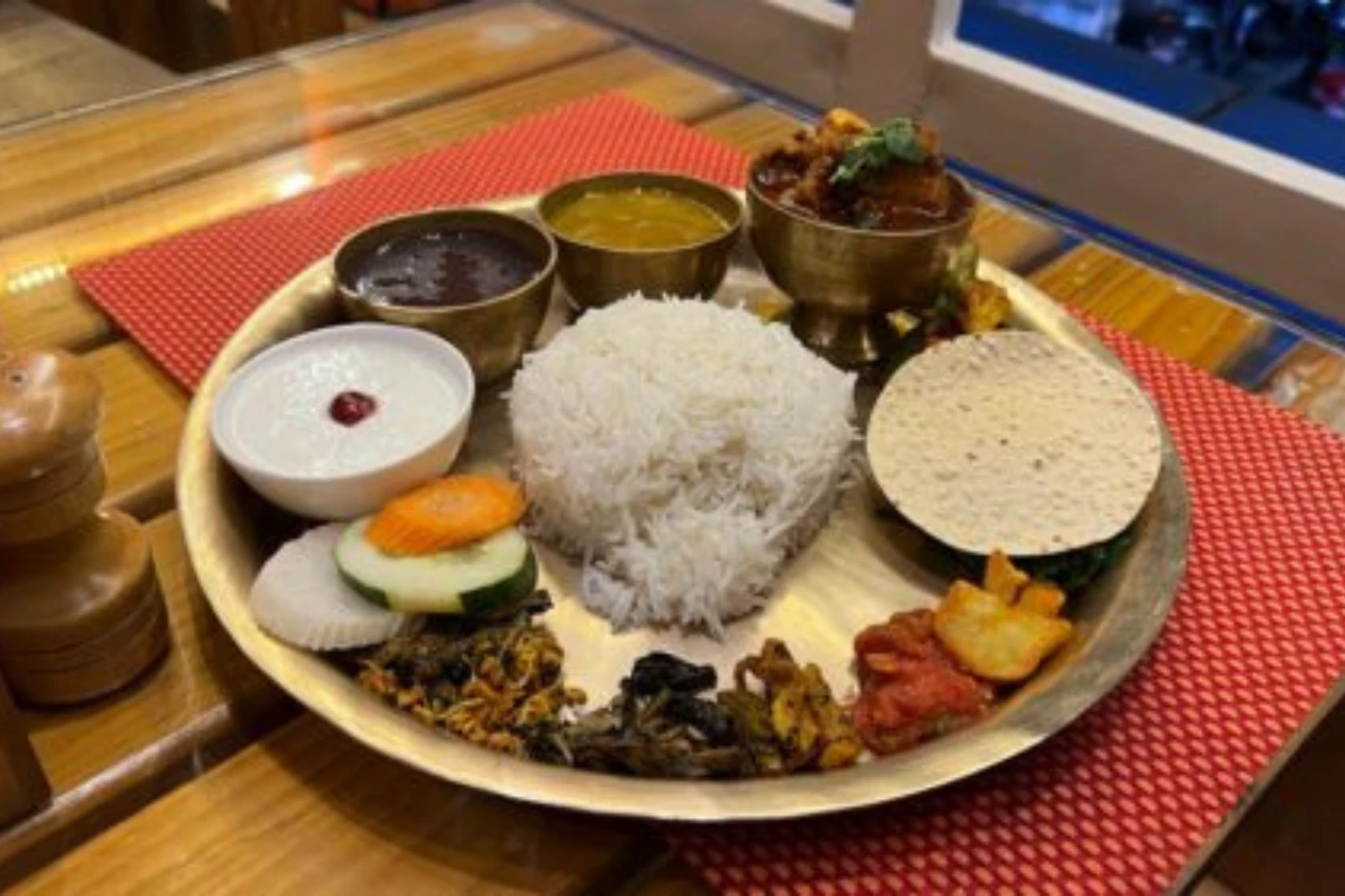
Dal bhat is universally available on the ABC circuit and is the recommended main meal for all active trekking days. The unlimited refill convention makes it the most caloric-efficient meal available on the trail. Above Chhomrong, food options narrow significantly: noodle soup, fried rice, omelettes, porridge, and dal bhat cover the available range at most gorge teahouses. Pasta, pizza, and Western options available in Ghorepani and Chhomrong are not reliably available above.
Carry personal snacks from Pokhara rather than the trail. Energy bars, dried fruit, nuts, and chocolate cost two to three times their Pokhara price at teahouses above Chhomrong. A ten-day snack supply purchased before departure saves NPR 4,000 to 7,000.
Meat is not recommended above 3,000 metres for the same food safety reasons that apply on all Nepal high-altitude routes: the cold chain is unreliable at altitude and food poisoning at 3,500 metres is considerably more serious than the same episode at lower elevations.
The hot spring pools at Jhinu Danda do not serve food but the teahouses adjacent to the pool serve tea, coffee, and basic snacks to soaking trekkers. Budget for an hour of hot drink consumption as a standard part of the experience.
Frequently Asked Questions
How hard is the Annapurna Base Camp trek?
The ABC trek is classified as moderate. It requires the ability to walk four to six hours on consecutive days on terrain that includes steep stone sections, forest path, and rocky gorge trail. The altitude ceiling at 4,130 metres places it firmly in high-altitude territory where AMS awareness is relevant. It is more accessible than EBC in terms of altitude demand and logistical complexity but should not be underestimated as a physical undertaking.
How long does the Annapurna Base Camp trek take?
The standard itinerary runs nine to twelve days depending on the approach chosen and whether the Poon Hill viewpoint and Ghandruk cultural stop are included. The ten-day version described in this guide, including both Poon Hill and Jhinu Danda, is the recommended duration for most trekkers. A seven-day minimum version is available for trekkers with severe time constraints but involves daily distances and altitude gains that sacrifice the acclimatisation margin.
Do I need a guide for the ABC trek?
Under Nepal's 2026 No Solo Trekking regulation, a licensed guide is required for all foreign nationals trekking within the Annapurna Conservation Area, which covers the entire ABC route from Nayapul northwards. Beyond the regulatory requirement, a licensed guide on ABC adds altitude monitoring, gorge section safety judgment, cultural context for the Gurung villages, teahouse pre-booking, and emergency coordination that have real value independent of the regulation.
Is the ABC trek better than EBC?
They are different experiences rather than comparable ones. ABC is more accessible, less expensive, and logistically simpler, with a richer cultural landscape through the Gurung foothills and the specific experience of sleeping inside the Annapurna Sanctuary. EBC is higher, longer, and more logistically complex, with the specific experience of the Khumbu and Sherpa culture and the proximity to Everest. Most trekkers who have done both describe them as complementary rather than competitive. For a first Himalayan trek, ABC is the more accessible entry point with comparable qualitative reward.
What is the best time to do the ABC trek?
Late March to mid-April for the spring rhododendron bloom and best pre-summit visibility. Late September to early November for the post-monsoon clarity. The specific optimal windows within each season are detailed in the Best Time section above.
Is there a risk of avalanche on the ABC route?
The gorge section between Bamboo and Deurali carries genuine avalanche risk in heavy snowfall periods, particularly the section immediately above Deurali on the approach to MBC. An experienced guide monitors weather and trail conditions on this section and timing decisions are made accordingly. Hiking Nepal does not push through this section in conditions the guide assesses as unsafe. The risk is real but manageable with a guide who knows the route's seasonal behaviour.
What does the hot spring at Jhinu Danda cost?
Entry to the Jhinu Danda hot spring pools costs NPR 200 to 300 per person. The pools are open during daylight hours throughout the trekking season. No reservation is required. Bring a towel and a change of clothes. The walk from Jhinu Danda village to the pool takes approximately fifteen minutes on a stone path descending to the river.
Can I do the ABC trek without previous trekking experience?
Yes, but fitness preparation is essential rather than optional. The ten-day circuit involves consecutive days of four to six hours walking at altitudes up to 4,130 metres. Trekkers who arrive without adequate fitness preparation are the most common cause of unsuccessful circuits. A twelve-week preparation programme including regular uphill walks with a loaded pack, strengthening exercises for the quadriceps and calves, and at least two extended day walks of six or more hours is the recommended minimum preparation for a first-time trekker attempting ABC.
How do I get from Kathmandu to Pokhara for the ABC trek?
Domestic flights from Kathmandu to Pokhara take 25 minutes on Buddha Air or Yeti Airlines and cost approximately USD 80 to 120 one way. Tourist buses from Kathmandu take seven to eight hours along the Prithvi Highway and cost NPR 800 to 1,500 per person. Private vehicles take five to six hours and suit groups or families. Hiking Nepal coordinates transport from Kathmandu to Pokhara and then from Pokhara to the trailhead as part of the package logistics.
Book Your Annapurna Base Camp Trek with Hiking Nepal
Hiking Nepal runs private guided and group joining departures on the Annapurna Base Camp circuit throughout the spring and autumn seasons of 2027. Every departure includes a licensed WAFA-certified guide, contracted porter at IPPG welfare standards, all accommodation at pre-selected and pre-booked teahouses, all meals, all permit fees, private vehicle transfers from Pokhara, altitude monitoring, supplemental oxygen, a full first-aid kit with altitude medications, and 24-hour emergency coordination throughout the trek.
Spring 2027 departures run from mid-March through early May. The late March to mid-April rhododendron window fills first. Autumn 2027 departures run from late September through mid-November. The early October clarity window books out earliest.
Female-only group departure dates for the ABC circuit are available in spring and autumn 2027. Female guide requests are accommodated where availability allows.
Contact Hiking Nepal on WhatsApp at +977 9802342080 or at [email protected] with your preferred dates, group size, fitness level, and any specific requirements. A full personalised itinerary and cost proposal is provided within 48 hours of your initial message.
The Annapurna Sanctuary has been taking trekkers by surprise for forty years. The photographs prepare you for the peaks. The scale of the amphitheatre does not prepare you for the feeling of being inside it. That is the part you have to walk to.