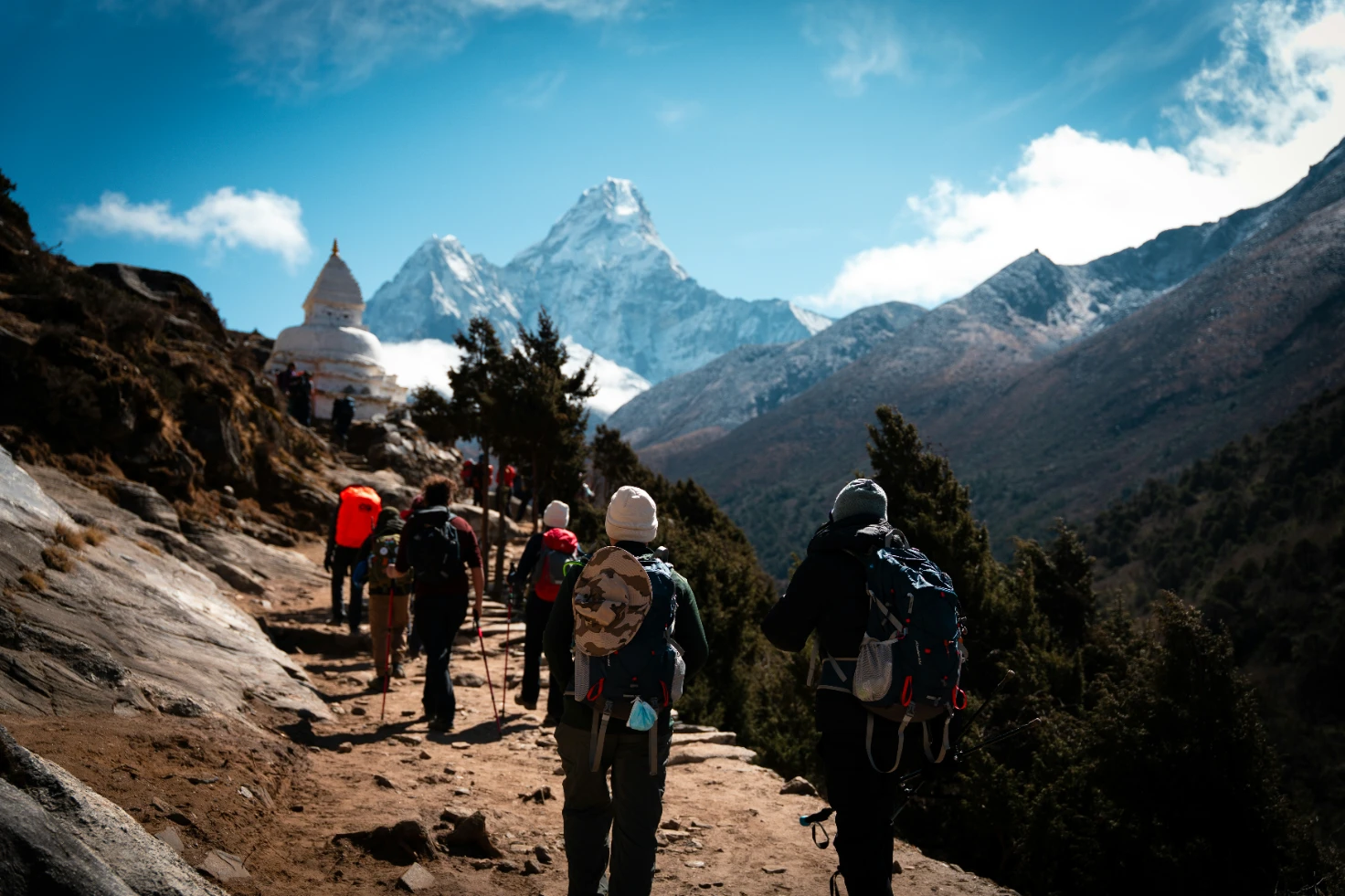
You don't need three weeks and an expedition-grade duffel bag to stand somewhere that makes you stop talking mid-sentence. Some of Nepal's finest mountain views are a two-hour drive and a day's walk from Pokhara. Others take a week at most and still deliver the kind of sunrise over an 8,000-metre peak that people save years to see. If your holiday calendar runs to five days rather than twenty-five, here are ten treks that genuinely deliver, chosen for how good they actually are rather than how well known they happen to be.
Who this guide is for
This list is built for a specific kind of traveller: the business trip that has a free weekend attached, the family holiday with one adventurous afternoon carved out, the honeymoon that wants one unforgettable sunrise without three weeks of blisters, and the first-timer who wants proof that Nepal delivers before committing to something longer. None of the treks below require prior high-altitude experience. All of them can be arranged with a few days' notice.
What counts as a short trek in Nepal
For this guide, a short trek is anything from a single day out of Kathmandu or Pokhara to a maximum of six or seven days on the trail, staying below altitudes where acclimatisation days become mandatory. That cut-off matters. Most classic long treks, Everest Base Camp or the Annapurna Circuit, need built-in rest days above 3,500 metres to manage altitude safely. Every trek on this list can be done without one, which is exactly what makes them fit into a limited window without cutting corners on safety.
How we chose these ten
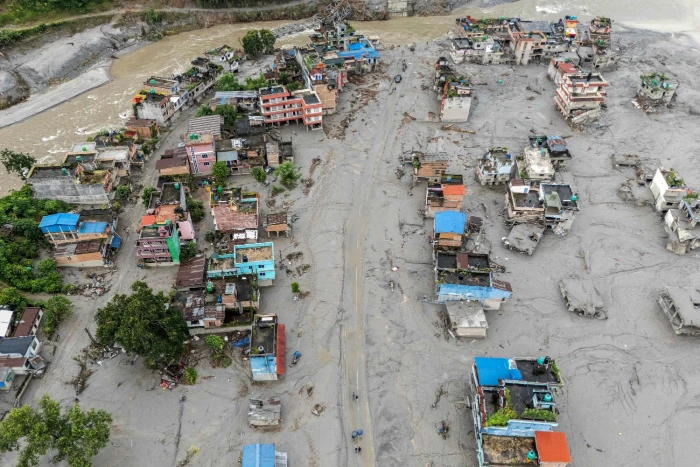
Selection criteria were duration, difficulty relative to reward, ease of access from Kathmandu or Pokhara, and how consistently each route delivers on views and cultural experience regardless of the season you travel in. We have deliberately left out routes currently affected by trail or road closures. As of this writing, Langtang Valley and the Tamang Heritage Trail remain inaccessible following flood damage to the Rasuwa corridor in August 2026, so neither appears on this list. Both are excellent short treks in ordinary conditions and we will add them back once the region has reopened and been properly assessed.
Quick comparison table
Trek: Duration | Difficulty | Max altitude | Best season | Starting point | Permit needed
Poon Hill: 3-5 days | Easy | 3,210m | Oct-Nov, Mar-Apr | Pokhara | TIMS, ACAP
Mardi Himal: 4-6 days | Moderate | 4,500m | Oct-Nov, Mar-May | Pokhara | TIMS, ACAP
Australian Camp & Dhampus: 1-2 days | Easy | 2,100m | Year-round except monsoon | Pokhara | ACAP
Pikey Peak: 5-6 days | Moderate | 4,065m | Oct-Dec, Mar-May | Kathmandu (Jiri or Phaplu) | TIMS
Annapurna Panorama: 5-6 days | Moderate | 2,200m | Oct-Nov, Mar-May | Pokhara | TIMS, ACAP
Sirubari Village: 2-3 days | Easy | 1,700m | Year-round except monsoon | Pokhara | TIMS
Ghandruk Loop: 2-3 days | Easy | 2,012m | Year-round except monsoon | Pokhara | TIMS, ACAP
Chisapani-Nagarkot: 2 days | Easy | 2,175m | Year-round except monsoon | Kathmandu | None required
Khopra Ridge: 5-6 days | Moderate-hard | 3,660m | Oct-Nov, Mar-May | Pokhara | TIMS, ACAP
Panchase: 3-4 days | Easy-moderate | 2,517m | Oct-Nov, Mar-May | Pokhara | TIMS, ACAP
Top 10 treks that we have handpicked.
- Poon Hill Trek
If you have seen one photograph of Nepal with a wall of white peaks lined up behind a hillside town, there is a decent chance it was taken from Poon Hill. At 3,210 metres, the viewpoint delivers Dhaulagiri, Annapurna South, and Machhapuchhre without asking much of your lungs in return.
Duration and itinerary: three to five days, typically Nayapul to Tikhedhunga on day one, up Ulleri's stone staircase to Ghorepani on day two, the pre-dawn summit push to Poon Hill on day three, then down through Tadapani or back to Nayapul.
Difficulty and altitude: easy by Nepal trekking standards, with the steep staircase to Ulleri being the only genuinely demanding stretch. Maximum altitude of 3,210 metres sits well below the range where altitude sickness becomes a serious concern for most trekkers.
Best season: October to November and March to April, when visibility is highest and the rhododendron forests around Ghorepani are either crisp with autumn air or in full spring bloom.
Permits: a TIMS card and an Annapurna Conservation Area Project permit, both straightforward to arrange in Pokhara or through your operator.
Cost range: roughly USD 25 to 35 a day covering teahouse lodging, meals, and a local guide.
Best suited for: first-time trekkers who want proof, within 48 hours, that Nepal delivers on its reputation.
Getting there: a one to two hour drive from Pokhara to Nayapul, the standard trailhead.
Mardi Himal Trek
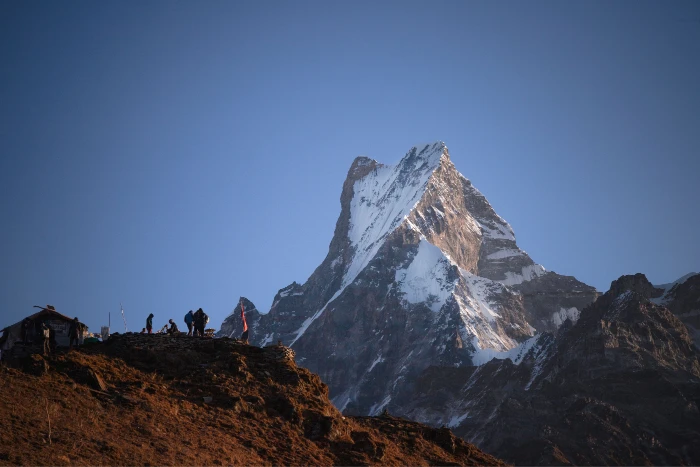
Less photographed than Poon Hill and considerably quieter on the trail, Mardi Himal climbs through rhododendron and oak forest before opening onto a narrow ridge with Machhapuchhre's fishtail summit close enough to feel personal.
Duration and itinerary: four to six days from Kande, through Forest Camp and Low Camp, to High Camp at 4,500 metres, with most trekkers pushing to the viewpoint above High Camp before dawn.
Difficulty and altitude: moderate. The altitude gain to 4,500 metres is enough that pacing matters more here than on Poon Hill, and a slightly slower ascent schedule is worth building in if you are not used to elevation.
Best season: October to November for the clearest mountain views, March to May for rhododendron blooms and milder overnight temperatures at High Camp.
Permits: TIMS card and ACAP permit.
Cost range: USD 25 to 40 a day.
Best suited for: trekkers who have done at least one previous trek and want fewer people on the trail and a bigger altitude payoff.
Getting there: roughly 45 minutes by road from Pokhara to Kande, the usual starting point.
- Australian Camp and Dhampus
This is the trek for someone with a single free day in Pokhara and no interest in overnighting on a mountain. A short drive to Kande, a few hours through farm terraces and forest, and you are at Australian Camp with the Annapurna range laid out in front of you, back in Pokhara in time for dinner.
Duration and itinerary: a single day round trip, or two days with an overnight in Dhampus village for a proper sunrise.
Difficulty and altitude: easy, with a maximum altitude of around 2,100 metres, well within reach of anyone reasonably fit.
Best season: available year-round outside the core monsoon months of June to September.
Permits: an ACAP entry fee only.
Cost range: minimal, often under USD 20 for a guided day trip including lunch.
Best suited for: business travellers, families with young children, or anyone wanting a taste of the mountains without committing to a multi-day itinerary.
Getting there: about 45 minutes by road from Pokhara to Kande.
- Pikey Peak Trek
Sir Edmund Hillary reportedly called the Everest view from Pikey Peak the best in the region, and having stood there, it is hard to argue. At 4,065 metres you get the full eastern Himalayan skyline, Everest, Lhotse, Makalu, and Kanchenjunga, without the crowds or flight uncertainty of the main Everest Base Camp trail.
Duration and itinerary: five to six days from Jiri, or shorter with a flight into Phaplu, through Sherpa and Rai villages that see a fraction of the footfall of the Khumbu.
Difficulty and altitude: moderate, with a well-graded ascent to 4,065 metres that rarely causes altitude issues given the gradual daily elevation gain.
Best season: October to December and March to May.
Permits: a standard TIMS card, with no restricted area fees required.
Cost range: USD 30 to 45 a day, slightly higher than Annapurna-region treks due to the longer road or flight approach.
Best suited for: trekkers who want an authentic Everest-region experience without the time, cost, or altitude exposure of the full Everest Base Camp trek.
Getting there: a long day's drive from Kathmandu to Jiri, or a short domestic flight to Phaplu followed by a shorter approach.
- Annapurna Panorama Trek
A gentler cousin of the full Annapurna Circuit, this route threads through the lower Annapurna foothills, taking in Sarangkot, Australian Camp, and villages like Landruk and Tolka, with steady views of Annapurna South and Machhapuchhre throughout.
Duration and itinerary: five to six days, combining forested ridgeline walking with terraced farmland and Gurung village stays.
Difficulty and altitude: moderate, staying below 2,200 metres throughout, which keeps altitude concerns off the table entirely.
Best season: October to November and March to May.
Permits: TIMS card and ACAP permit.
Cost range: USD 25 to 35 a day.
Best suited for: trekkers who want more trail time and cultural variety than Poon Hill offers, without the altitude of Mardi Himal.
Getting there: starts and ends within an hour of Pokhara.
- Sirubari Village Trek
Sirubari was Nepal's first designated community homestay village, and it remains one of the best ways to see rural Gurung life up close rather than through a teahouse window.
Duration and itinerary: two to three days from Pokhara, with nights spent in family homestays rather than lodges, home-cooked dal bhat, and, most evenings, a demonstration of local music and dance.
Difficulty and altitude: easy, with minimal elevation gain and a maximum altitude of around 1,700 metres.
Best season: available year-round outside the monsoon.
Permits: TIMS card only.
Cost range: USD 25 to 35 a day, occasionally slightly higher due to homestay hosting fees that go directly to the village community.
Best suited for: travellers who care more about culture and hospitality than mountain panoramas, though on a clear day the views hold up too.
Getting there: around three hours by road from Pokhara.
- Ghandruk Loop
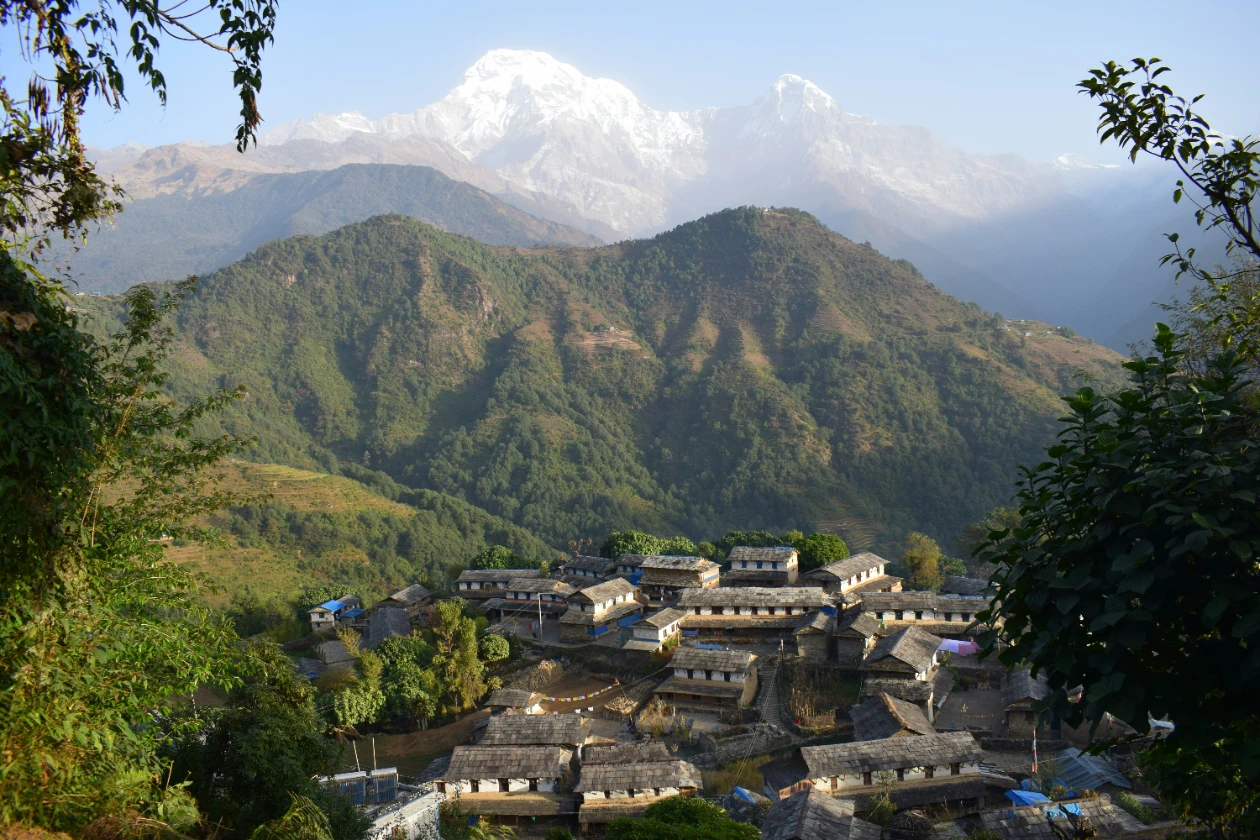
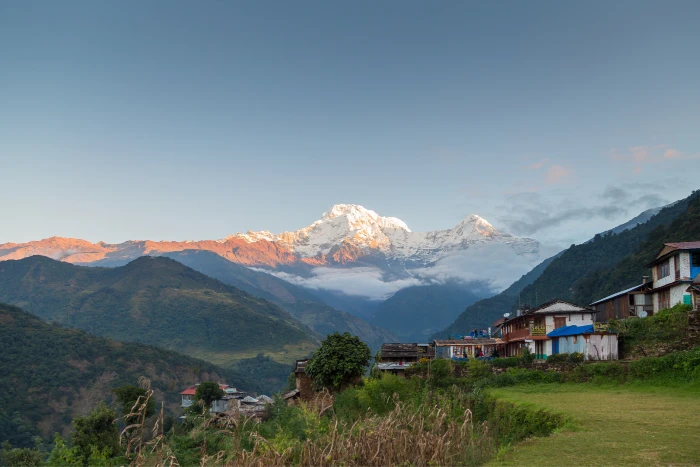
Ghandruk is one of the most photogenic Gurung villages in the Annapurna region, all slate roofs and stone paths with Annapurna South rising directly behind it.
Duration and itinerary: two to three days via Kande or Nayapul, taking in the village, its Gurung Museum, and a gentle loop back.
Difficulty and altitude: easy, topping out at roughly 2,012 metres.
Best season: available year-round outside the monsoon.
Permits: TIMS card and ACAP permit.
Cost range: USD 25 to 35 a day.
Best suited for: families or anyone easing into their first Nepal trek without a steep learning curve.
Getting there: around two hours by road from Pokhara.
- Chisapani-Nagarkot Trek
This is the trek for someone based in Kathmandu who wants mountain views without leaving the valley rim.
Duration and itinerary: two days, walking from Sundarijal or Chisapani to Nagarkot through forest trails and small villages.
Difficulty and altitude: easy, with a maximum altitude around 2,175 metres at Nagarkot itself.
Best season: available year-round outside the monsoon, though the clearest Himalayan views come in the dry autumn and winter months.
Permits: none required beyond standard entry fees for any local conservation areas passed through.
Cost range: minimal, often under USD 30 a day.
Best suited for: anyone short on time in Kathmandu, including children and first-time hikers, who wants a genuine sunrise view stretching from Dhaulagiri to Everest on a clear day.
Getting there: Sundarijal is roughly 45 minutes from central Kathmandu.
- Khopra Ridge Trek
The hardest trek on this list, and the reward matches the effort. Khopra Ridge sits above 3,600 metres with a near 360-degree view taking in Dhaulagiri, Annapurna South, Nilgiri, and Machhapuchhre from a single vantage point.
Duration and itinerary: five to six days, with the option to add an extra day for the side trip to the sacred Khayer Lake.
Difficulty and altitude: moderate to hard, with a steeper daily elevation gain than Poon Hill or Mardi Himal and a maximum altitude of 3,660 metres.
Best season: October to November and March to May.
Permits: TIMS card and ACAP permit.
Cost range: USD 30 to 40 a day.
Best suited for: trekkers who have completed at least one Nepal trek before and want more solitude and a bigger visual payoff.
Getting there: roughly two to three hours by road from Pokhara to the trailhead.
- Panchase Trek
A quieter alternative in the Annapurna foothills, Panchase climbs through dense rhododendron and oak forest, past a small Hindu temple at the summit, to a 360-degree view taking in the Annapurna range, Machhapuchhre, and, on a clear day, Dhaulagiri.
Duration and itinerary: three to four days from Pokhara.
Difficulty and altitude: easy to moderate, with a maximum altitude of 2,517 metres.
Best season: October to November and March to May.
Permits: TIMS card and ACAP permit.
Cost range: USD 25 to 35 a day.
Best suited for: trekkers who have already done Poon Hill and want a similarly accessible experience without repeating the same trail.
Getting there: around two hours by road from Pokhara.
Comparing your options
Short trek versus long trek: which should you choose with limited time
If you have under a week, any trek on this list will give you a complete, satisfying experience rather than a rushed version of a longer route. Trying to compress Everest Base Camp or the full Annapurna Circuit into five days is not a shortcut, it is a different and considerably riskier trip due to inadequate acclimatisation time. Choose a route built to be short rather than a long route squeezed short.
Poon Hill versus Mardi Himal: which is better for first-timers
Poon Hill is the gentler introduction, with a well-established teahouse trail and lower altitude. Mardi Himal suits someone who already has one trek behind them and wants a quieter trail and a higher, more dramatic high camp.
Ghandruk Loop versus Chisapani-Nagarkot: best for a single day off
Chisapani-Nagarkot wins if you are based in Kathmandu. Ghandruk Loop wins if you are based in or near Pokhara and want a richer cultural stop alongside the views.
Short treks near Pokhara versus short treks near Kathmandu
Pokhara is the better base for altitude and mountain-panorama treks, given its direct access into the Annapurna foothills. Kathmandu suits single-day or two-day options like Chisapani-Nagarkot that do not require a long transfer first.
Short trek versus day hike: what is the real difference
A day hike returns you to your starting point by evening. A short trek involves at least one night on the trail in a teahouse or homestay, which is where the real shift in pace and perspective tends to happen. If your schedule allows even one overnight, it is worth choosing a trek over a day hike for that reason alone.
Which short trek suits you
If you have only a weekend Chisapani-Nagarkot or Australian Camp and Dhampus deliver genuine mountain views without eating into a working week.
If you want mountain views without high altitude risk
Sirubari, Ghandruk Loop, and Chisapani-Nagarkot all stay below 2,200 metres, removing altitude sickness from the list of things to think about entirely.
If you want a taste of Everest or Annapurna without the full trek
Pikey Peak delivers the Everest panorama, and Annapurna Panorama or Khopra Ridge deliver a genuine slice of the Annapurna experience, both without the multi-week commitment of the classic routes.
If you are trekking with children or beginners
Ghandruk Loop, Sirubari Village, and Chisapani-Nagarkot are the safest, gentlest starting points.
If you are a solo female traveller
Poon Hill and Ghandruk Loop are two of the most established and well-trodden routes in Nepal, with a steady flow of other trekkers, well-known teahouses, and guides experienced in solo female clients. Booking a female guide is possible on request through most reputable operators, including us.
If you are trekking over 50
Sirubari, Ghandruk Loop, and Chisapani-Nagarkot offer a genuinely manageable daily walking pace, generally under five hours a day, with comfortable teahouse or homestay stops.
If you want to combine trekking with a Pokhara or Chitwan holiday
Any of the Pokhara-based treks on this list slot neatly before or after a few relaxed days on Phewa Lake or a Chitwan safari, without needing a separate trip.
If photography and sunrise views are your priority
Poon Hill and Khopra Ridge both deliver dawn light across the Annapurna range that is difficult to match anywhere else on a short itinerary.
Best time of year to go
Autumn, September to November
The clearest skies and most stable weather of the year, and the busiest season on routes like Poon Hill. Book teahouse accommodation a few days ahead during peak October and November weeks.
Spring, March to May
Rhododendron forests in bloom across the Annapurna foothills, slightly warmer nights at altitude, and marginally quieter trails than autumn.
Winter, December to February
Cold at higher points like Mardi Himal's High Camp or Khopra Ridge, but clear, dry days and near-empty trails on routes like Ghandruk Loop and Sirubari, which stay at lower, more comfortable altitudes year-round.
Can you trek during monsoon
June to September brings daily rain, leeches on lower forest trails, and reduced visibility, which affects every route on this list to some degree. If you have no other window, Chisapani-Nagarkot and Sirubari are the most monsoon-tolerant given their lower altitude and shorter exposure time, though visibility on summit or viewpoint mornings cannot be guaranteed.
Best short trek for a long weekend from Kathmandu
Chisapani-Nagarkot remains the standout choice, requiring no long transfer before you start walking.
Practical planning
Permits needed for each short trek
Every route on this list requires at minimum a TIMS card. Annapurna-region routes, Poon Hill, Mardi Himal, Ghandruk Loop, Annapurna Panorama, Khopra Ridge, and Panchase, also require an ACAP permit. Chisapani-Nagarkot needs no formal trekking permit. None of these routes require restricted area permits of the kind needed for Upper Mustang or Manaslu.
How to combine two short treks into one longer trip
Poon Hill and Ghandruk Loop share enough trail overlap that they can be combined into a single six to seven day circuit out of Pokhara. Mardi Himal and Annapurna Panorama can similarly be linked with an extra transfer day, giving a longer trip without the altitude commitment of a classic long trek.
Getting to trailheads from Kathmandu and Pokhara
Pokhara-based trailheads, Kande, Nayapul, and the Sirubari and Ghandruk approaches, are all within one to three hours by local jeep or private car. Kathmandu-based trailheads for Chisapani-Nagarkot are around 45 minutes away, and Pikey Peak requires either a full day's drive to Jiri or a short domestic flight to Phaplu.
What to pack for a 2 to 6 day Nepal trek
Layered clothing for temperature swings between valley floor and ridge line, a proper rain shell regardless of season, sturdy broken-in boots, a headlamp for pre-dawn summit pushes, and a basic first aid kit. None of these treks require the specialised down gear needed for high-altitude expeditions.
Do you need a guide or porter for a short trek
Not legally required on any route in this list, but strongly recommended on anything above Ghandruk Loop or Sirubari in difficulty, both for pace management and for local knowledge of which teahouse actually has hot water that evening. A porter is optional and inexpensive, and worth considering if you are trekking with a full pack in humid conditions.
Budget breakdown for a short Nepal trek
Expect USD 25 to 45 a day covering teahouse lodging, three meals, a local guide, and permit costs, with homestay routes like Sirubari occasionally running slightly higher due to community hosting fees that support the village directly.
Fitness requirements and how to prepare
Most of these treks involve four to six hours of walking a day on uneven terrain. Two to four weeks of regular walking or stair climbing beforehand is enough preparation for anyone starting from reasonable general fitness. Khopra Ridge and Mardi Himal benefit from slightly more preparation given their steeper daily ascents.
Where a short trek can take you next
From short trek to classic trek
Poon Hill and Mardi Himal both work well as a natural first step before a longer Annapurna Circuit or Annapurna Base Camp trek in a future season, giving you a realistic sense of teahouse life and trekking pace before committing to something longer.
Combining a short trek with Everest or Annapurna Base Camp later
Pikey Peak in particular works well as a standalone trip now and a preview of the Everest region before a full Everest Base Camp trek later, since it shares the same cultural region without the same time or altitude demands.
Using a short trek as an acclimatisation warm-up
For trekkers already planning a longer, higher expedition, a short trek like Mardi Himal or Khopra Ridge two to three weeks beforehand is a genuinely useful way to test gear, pace, and general readiness at altitude before the real climb begins.
Frequently asked questions
#@#What is the shortest trek in Nepal?
#@#Chisapani-Nagarkot and Australian Camp and Dhampus can both be done in a single day for a fit walker, or extended to two days for a proper overnight and sunrise.
#@#Can I trek in Nepal in three days?
#@#Yes. Poon Hill, Ghandruk Loop, and Sirubari Village can all be completed in three days or fewer depending on your pace and starting point.
#@#Which short trek has the best mountain views?
#@#Khopra Ridge offers the widest panorama of any trek on this list, though Poon Hill remains the most reliably spectacular for the effort required.
#@#Are short treks in Nepal suitable for beginners?
#@#Most of them, yes. Chisapani-Nagarkot, Ghandruk Loop, Sirubari, and Australian Camp and Dhampus are all realistic for a first-time trekker with basic fitness.
#@#Do short treks require a permit?
#@#Yes, a TIMS card at minimum, with an ACAP permit added for Annapurna-region routes. None of these require restricted area permits.
#@#Is altitude sickness a risk on short treks?
#@#Generally minimal. Only Mardi Himal, Pikey Peak, and Khopra Ridge climb high enough, above 3,500 metres, for altitude to be a genuine consideration, and even then the gradual daily ascent on these routes keeps risk low for most trekkers.
#@#What is the cheapest short trek in Nepal?
#@#Chisapani-Nagarkot and Australian Camp and Dhampus are the most affordable, often under USD 30 a day including a guide.
#@#Can I do a short trek without a guide?
#@#Yes, on well-marked routes like Ghandruk Loop or Chisapani-Nagarkot, though a guide is strongly advised on Mardi Himal, Khopra Ridge, and Pikey Peak given less obvious trail junctions and greater altitude exposure.
#@#Which short trek is closest to Kathmandu?
#@#Chisapani-Nagarkot, starting around 45 minutes from central Kathmandu.
#@#Which short trek is closest to Pokhara?
#@#Australian Camp and Dhampus, with a trailhead around 45 minutes from the city.
#@#What is the best short trek for someone with no trekking experience?
#@#Ghandruk Loop or Chisapani-Nagarkot, both easy, well-supported, and forgiving of a slower pace.
Whichever one you choose
Treat a short trek as its own trip rather than a smaller version of Everest Base Camp. Pick the right one for your time, fitness, and what you actually want from the walk, culture, altitude, or simply a clear morning with mountains in front of you, and it will hold its own against any three-week itinerary. Get in touch with Hiking Nepal at +977 9802342080 or [email protected] and we will match you to the right route, build the logistics around your actual dates, and put a guide on the ground who knows these trails properly.