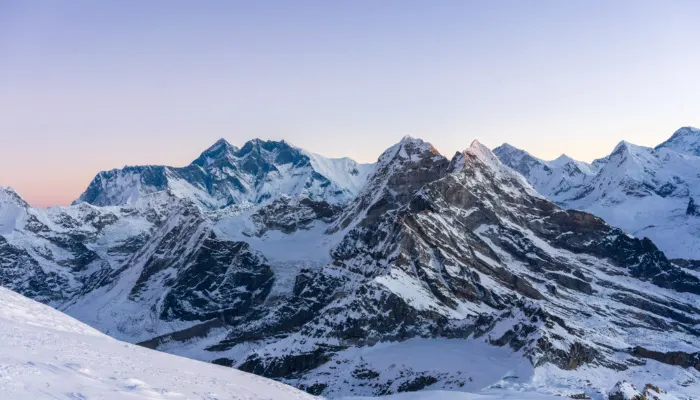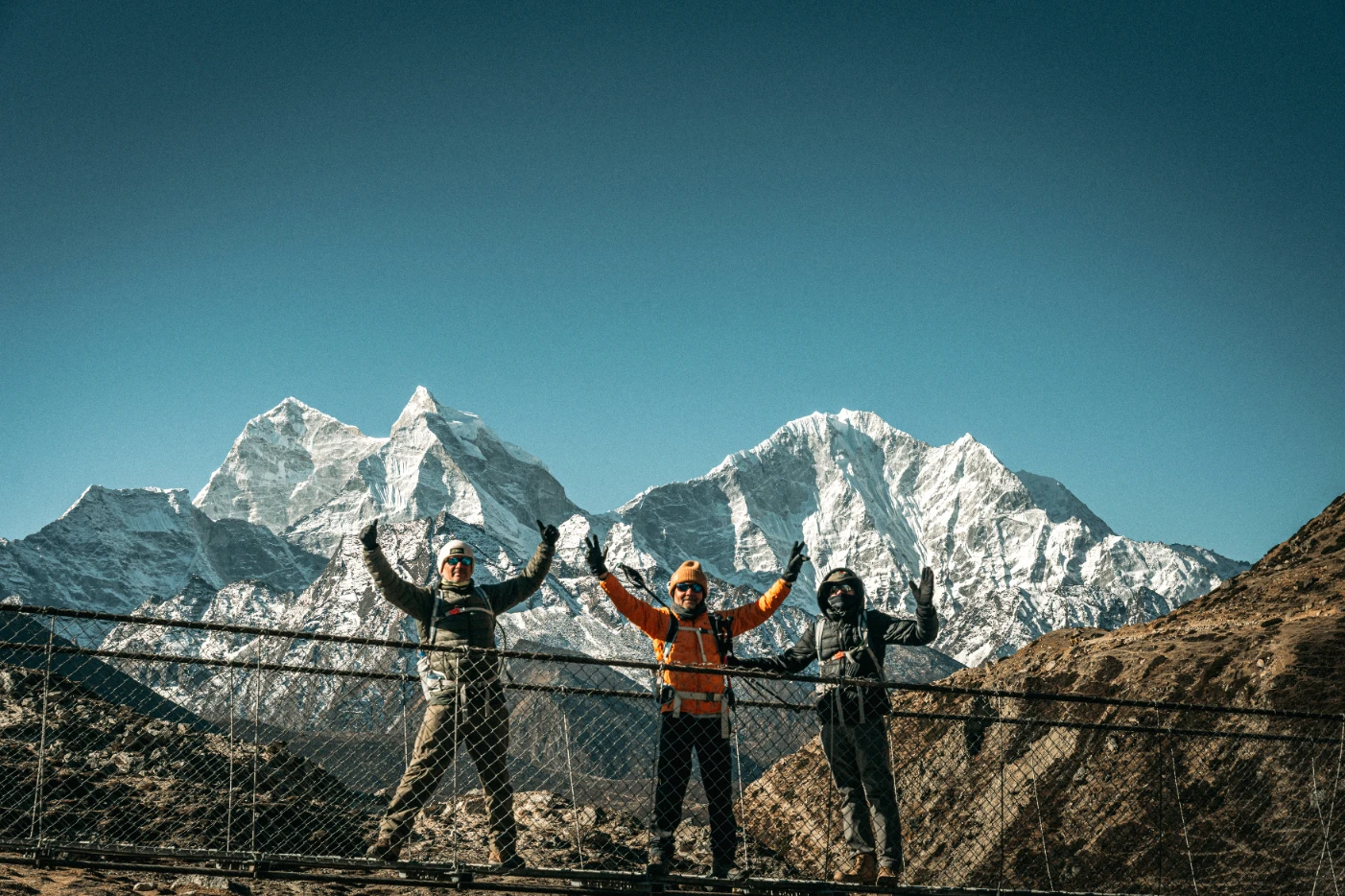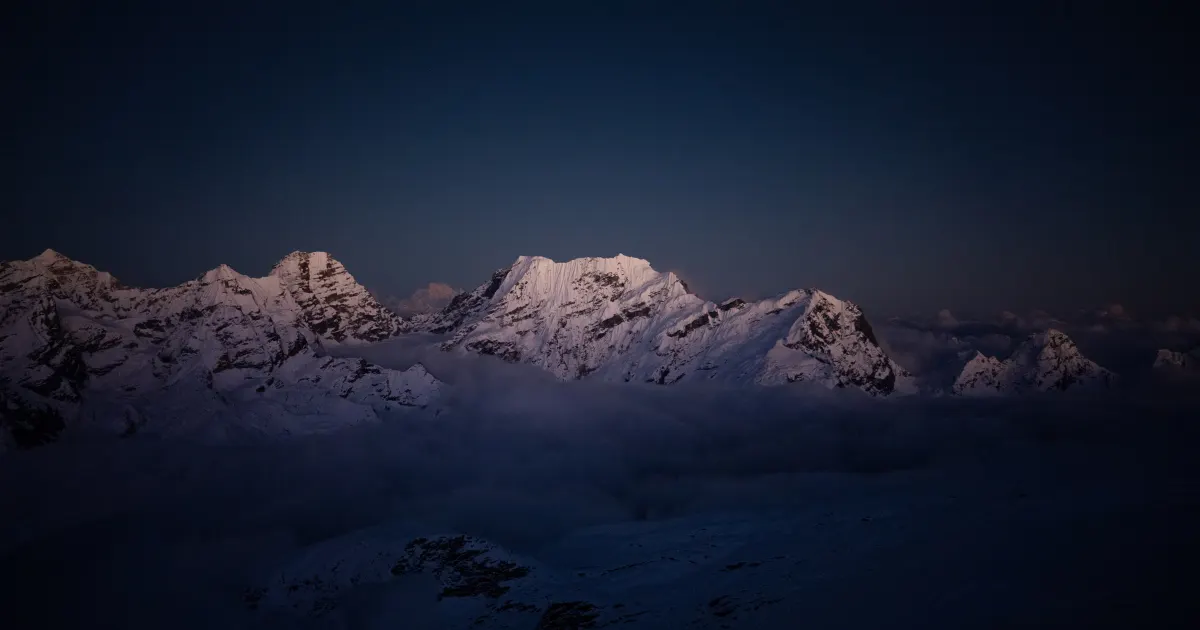
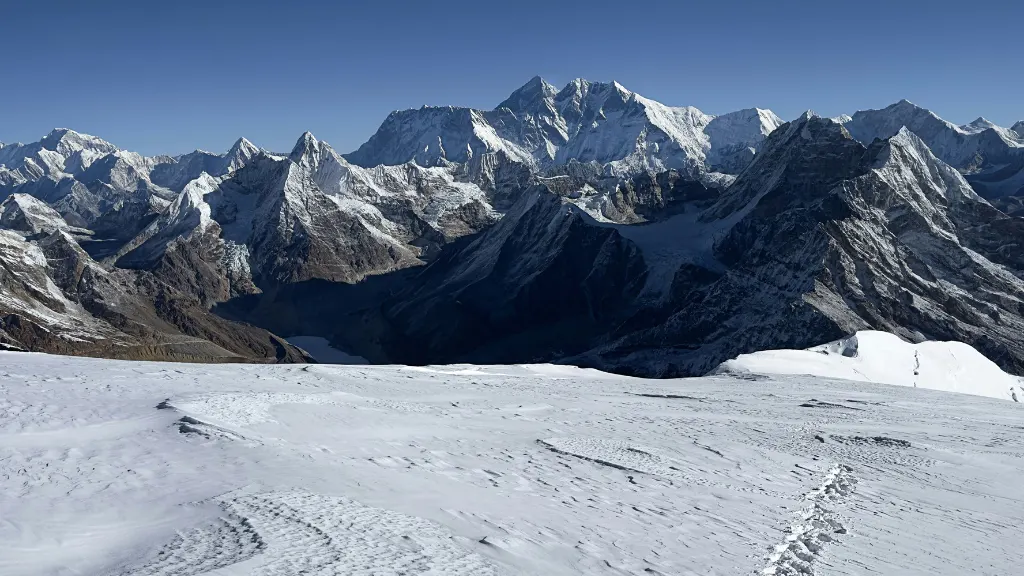
There's a particular moment on Mera Peak's summit ridge, three to four hours into an alpine start that began at 2am, when the horizon stops making sense. Everest, Lhotse, Makalu, Kanchenjunga, and Cho Oyu, five of the world's fourteen 8,000 metre peaks, arranged across a single unbroken view at 6,476 metres. No other trekking peak in Nepal offers that particular panorama, and it's the reason Mera Peak has become the mountain our clients most often ask about once they've decided they're ready to go higher than a standard trek allows.
This guide is built around our own 18-day Mera Peak Climbing itinerary, the one we actually run, not a generic template. We'll walk through it day by day, what it costs with us, what's included and what isn't, how it compares with Island Peak and Lobuche East, and, honestly, whether it's the right mountain for you specifically.
Who this guide is for
Most of our Mera Peak clients have already done at least one high-altitude trek in Nepal, Everest Base Camp or Annapurna Base Camp most commonly, and came home from it wanting more rather than less. Some have no technical climbing background at all. Others have done a bit of via ferrata or indoor ice climbing and want to know if that translates. If either of those describes you, keep reading. If you've never trekked above 4,000 metres, we'd have an honest conversation with you before booking this specific climb, and we'll explain exactly why further down.
What Mera Peak is
Mera Peak sits in the Hinku Valley, in the Makalu Barun National Park, south of the main Khumbu trail most trekkers associate with Everest. The mountain has three summits, Mera North, Mera Central, and Mera South, and Mera Central, at 6,476 metres, is the one our itinerary, and nearly every commercial climb, attempts. It's officially Nepal's highest trekking peak, a classification issued by the Nepal Mountaineering Association that separates it, both administratively and in terms of permit cost, from the country's larger expedition peaks above 6,500 metres.
Why Mera Peak is often called the easiest 6,000 metre peak in Nepal
This label gets repeated constantly across trekking sites, and it's not wrong exactly, but it needs context most of those sites skip. Our own package description calls Mera Peak "technically straightforward," and that's accurate as far as it goes, there's no narrow, heavily exposed summit ridge like Lobuche's, and less crevasse-laden glacier travel than Island Peak's approach. What makes Mera Peak hard instead is altitude, cold, and a long summit day, full stop. At 6,476 metres, it's higher than both Island Peak and Lobuche East, and our guides consistently tell us this is what catches climbers off guard, they arrive expecting the "easy" peak and find the altitude every bit as demanding as anywhere else.
The view from the summit
This is worth dwelling on properly, because it's the actual reason to choose this mountain over a technically similar alternative. From Mera Peak's summit, on a clear day, our climbing Sherpas point out Mount Everest at 8,848 metres, Kanchenjunga at 8,586 metres, Lhotse at 8,516 metres, Makalu at 8,485 metres, and Cho Oyu at 8,201 metres, a five-eight-thousander panorama that no other standard trekking peak in Nepal matches, alongside Nuptse, Lobuche, Chamlang, and a wall of other 6,000 metre peaks closer at hand.
Quick answer: is Mera Peak a good first climbing peak?
Yes, provided you come into it with solid prior high-altitude trekking experience and realistic expectations about cold and summit day length, rather than genuine mountaineering experience, which isn't required. Our itinerary includes basic mountaineering training before summit day, rope work, crampon technique, and other pre-climbing essentials, specifically because a large proportion of our clients are first-time climbers. It's not, however, a good first high-altitude experience of any kind. Think of it as an excellent second step after a trek like Everest Base Camp, not a first step into the mountains generally.
Quick Comparision Table
| Feature | Mera peak |
| Duration | 18 days |
| Difficulty | Technically straightfoward,strenuous overall |
| Max altitude | 6,476m |
| Best season | Autumn,Spring |
| Group size | Min 2, Max 10+,solo travellers accepted |
| Price | USD 2,690 per person(2-7 people: USD2599pp, 8+ people:USD 2,499pp |
| Permits | Mera Peak climbing permit, Makalu Barun National Park |
We rate Mera Peak as technically straightforward but physically and mentally demanding, fitness level strenuous on our own package listing, and we think that split matters more here than on almost any other trekking peak we run. The approach trek to Khare is long but not technically difficult, well within reach of any reasonably fit trekker. The route above Khare involves glacier travel and some crevasse maneuvering, which our itinerary addresses directly with a dedicated ice climbing practice day before you ever set foot on the summit route itself. Where Mera Peak genuinely earns its reputation is the combination of its height, the highest of any trekking peak in Nepal, and the length and cold of summit day, an 8 to 9 hour round trip starting at 2am.
Full itinerary for Mera, day by day
This is our actual 18-day Mera Peak Climbing itinerary, run from Kathmandu.
Day 1: Arrival in Kathmandu, 1,300m. Our representative meets you at the airport and transfers you to the hotel. After a briefing on the days ahead, we host a welcome dinner introducing Nepalese cuisine and culture.
Day 2: Kathmandu, 1,300m. A day built in to recover from your flight before the trek begins, with your choice of a Kathmandu cultural heritage tour or an indoor climbing course, depending on your interest and experience level.
Day 3: Fly to Lukla, trek to Chutanga, 3,450m. A scenic 35 minute flight to Lukla at 2,800 metres, where your guides and porters join you for the trek. A three to four hour walk through silver fir, birch, pine, and rhododendron forest, crossing ridges and streams, brings you to Chutanga, a summer yak pasture, for your first night.
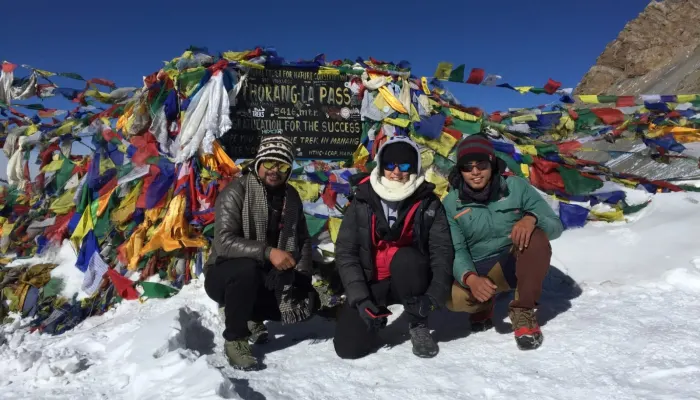
Day 4: Trek to Tuli Kharka via Zatrwa La, 4,250m. A steep climb crosses the Kalo Himal ridge in the Nau Lekh range, the geographic divide between the Khumbu and Hinku valleys, reaching the prayer-flag-strewn Zatrwa La at 4,600 metres before a steep descent to Tuli Kharka. Five to six hours.
Day 5: Trek to Gothey, 3,600m. A descending trail crosses several ridges down to the Hinku River, then climbs gently into Gothey, where several seasonal teahouses give you a first proper look at local Hinku valley life. Five to six hours.
Day 6: Trek to Thagnag, 4,350m. Following the Hinku River in Mera Peak's shadow, you'll stop for lunch at Gondishung, a summer herders' settlement, and pass the roughly 200 year old Lungsumgba Gompa, where tradition holds that offering juniper incense here helps ensure a successful summit. A short walk from there brings you to Thagnag. Five to six hours.
Day 7: Acclimatisation day at Thagnag, 4,350m. This is where the climb starts asking more of you technically, and we use the day accordingly: basic climbing technique with your guide, a short practice hike, and an excursion to the huge moraine north of Thagnag and the glacial lake Sabai Tsho. A cairn at 5,270 metres on the flanks of Kusum Kangguru offers a further acclimatisation boost for those who want it.
Day 8: Trek to Khare, 5,025m. Following the lateral moraine of the Dig Glacier to Dig Kharka, with views of Charpate Himal, the trail turns rockier along the moraine to the snout of the Hinku Nup and Shar glaciers before a steeper final push to Khare, where you'll camp. Three to four hours.
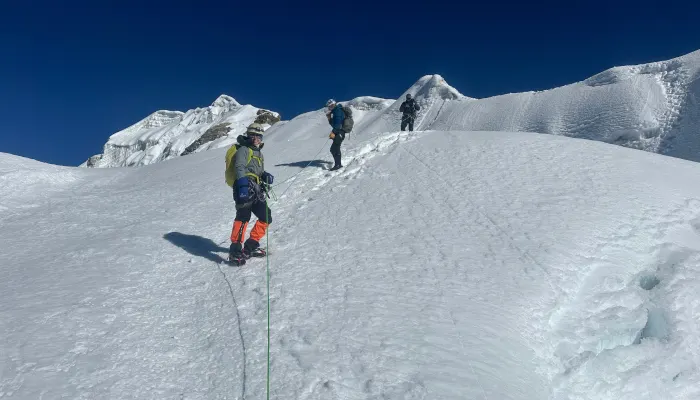
Day 9: Ice climbing practice near Khare, 5,025m. A genuine training day, not a token gesture. After breakfast, your group prepares individual gear and walks a couple of hours from Khare to a point with a clear view of Mera La and the route ahead, where you'll practice ice climbing under your guide's instruction for several hours before returning to camp. If seasonal ice conditions aren't suitable, this becomes a rest and acclimatisation day instead.
Day 10: Trek to Mera Base Camp, 5,350m, via Mera La, 5,415m. A short day that doubles as acclimatisation, climbing the moraine crest and a steep slope of scree or snow to a boulder-strewn bowl below the Mera Glacier's lower tongue. From Mera La itself you get a real sense of the scale ahead before descending toward the Hongu side to set up base camp. Three to four hours.
Day 11: Climb to Mera High Camp, 5,750m. This stretch demands real care, recent snowfall can make the crevasse-laden route genuinely hazardous. The route climbs to the top of a rock band marked by a large cairn, where High Camp is established, your final stop before the summit, with mountain views stretching across the skyline.
Day 12: Summit day, 6,476m, descend to Khare. The day the entire trip has been building toward. Wake around 2am, gear up with crampons and rope, and a well-acclimatised group typically reaches the summit in three to four hours from High Camp. At the top, our climbing Sherpas will point out Everest, Cho Oyu, Lhotse, Makalu, Kanchenjunga, Nuptse, Lobuche, Chamlang, and more. After time at the summit and a rest with hot soup at High Camp on the way down, you'll continue back to Khare for the night. Eight to nine hours total.
Day 13: Contingency day. Himalayan weather is genuinely unpredictable, and this day exists specifically to absorb a delayed summit attempt or any other obstruction. If the group summits on schedule and everything goes smoothly, this day is simply cut from the itinerary.
Day 14: Trek to Gothey, 3,600m. Descending the Hinku valley on the same trail, with a chance to celebrate the summit with a local drink, or however you prefer to unwind. Four to five hours.
Day 15: Trek to Tuli Kharka, 4,250m. Climbing back up through rhododendron, bamboo, and pine forest on the Hinku valley's west side. Four to five hours.
Day 16: Trek to Lukla, 2,800m. Your last full trekking day, walking up to the Zatrwa La top once more before descending all the way to Lukla via Chutanga. An evening to celebrate properly with your group and crew. Three to four hours.
Day 17: Fly back to Kathmandu, 1,350m. A 30 minute flight back, transfer to your hotel, and a free afternoon, shopping, a massage, or simply resting. We host a farewell dinner at an authentic restaurant in the evening to hear how the trip went.
Day 18: Departure from Kathmandu. Transfer to the airport for your flight home, or let us know if you'd like to extend your stay and we'll help arrange it.
Why the contingency day matters specifically here
Mera Peak's summit window is more weather-dependent than a lot of climbers expect, given how exposed the final slope is to wind and snowfall. Day 13 in our itinerary exists for exactly this reason, and we'd treat any Mera Peak package without a built-in contingency day as one that's quietly betting your summit chance on perfect weather, which the Himalayas don't reliably provide.
Altitude and acclimatisation
Mera Peak's altitude profile is genuinely its own thing. You'll cross the Zatrwa La at 4,600 metres by day four, a fast initial altitude gain, before a more gradual climb through the Hinku valley toward Khare at 5,025 metres and finally the summit at 6,476 metres. This is exactly why our day 7 acclimatisation stop at Thagnag and the short, acclimatisation-focused days at Khare, Mera La, and base camp aren't padding, they're the itinerary doing its actual job.
Acute Mountain Sickness, and its more serious forms, High Altitude Pulmonary Oedema and High Altitude Cerebral Oedema, are consistently the primary medical risk on this climb, more common in practice than any injury from the technical sections. Know the early symptoms, headache, nausea, unusual fatigue, disturbed sleep, loss of appetite, and treat a worsening symptom as an immediate reason to stop ascending, not something to push through because the summit is close. If you see a Mera Peak package significantly shorter than our 18 days, ask exactly which acclimatisation day has been cut, because one has.
Best season to climb
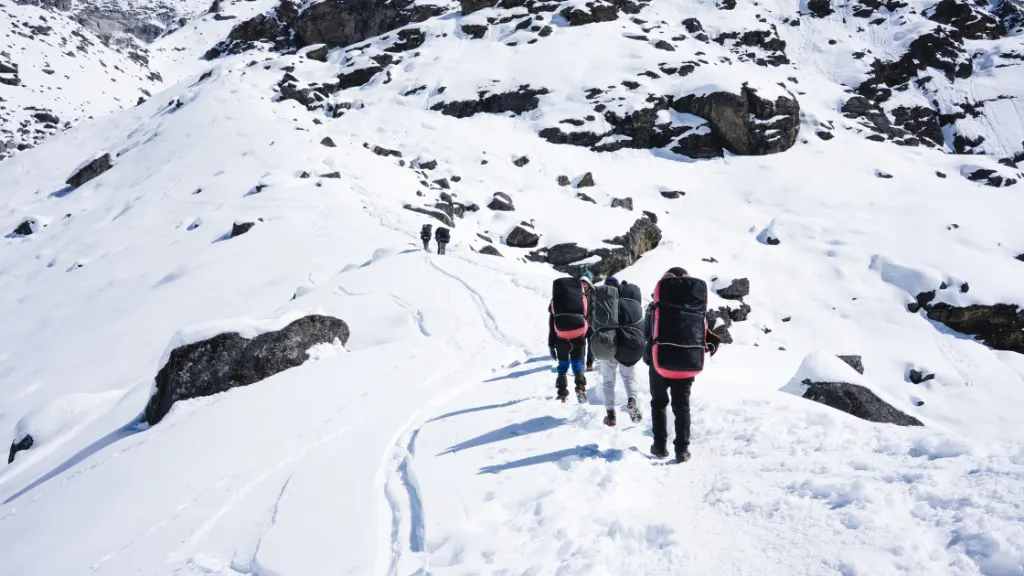
Our package runs departures across autumn, spring, summer, and winter, though autumn, September to November, and spring, March to May, are genuinely the two strongest windows, offering the most stable weather and clearest long-distance visibility for that five-eight-thousander summit view. Our listed autumn 2027 departures run from early October through mid-November, with groups departing roughly every five days through that window, giving you real flexibility in choosing dates. Winter and summer climbs are possible and occasionally arranged for experienced, flexible clients, but the cold at altitude in winter and the unstable monsoon snow conditions in summer make either a specialist request rather than a first recommendation.
Permits required
Mera Peak requires a climbing permit arranged through the Nepal Mountaineering Association, plus Makalu Barun National Park entry, since the Hinku valley route falls within that park's boundary rather than Sagarmatha National Park. Both are fully handled as part of our package, along with the applicable local and government taxes and VAT, so there's nothing separate for you to arrange beyond your Nepal visa.
What it actually costs
Our Mera Peak Climbing package runs USD 2,690 per person, with group pricing bringing that down to USD 2,599 per person for groups of two to seven, and USD 2,499 per person for groups of eight or more. Solo travellers are welcome at the standard rate.
What's included: airport transfers with an escort, three nights at a tourist standard Kathmandu hotel with breakfast, domestic flights for Kathmandu to Lukla and back, 12 to 13 nights' accommodation with meals en route, teahouse lodging where available and fully catered camping during the summit stretch, an English-speaking, first aid and eco-trained guide plus an assistant guide depending on group size, porters at a 2:1 ratio, your Mera Peak climbing permit, general group climbing equipment, rope, ice screws, snow bars, and the like, a medical kit, duffel bag, trekking t-shirt, and an adventure certificate, equipment for your guide and porters, helicopter rescue and accidental medical insurance for your climbing Sherpa, and all applicable local and government taxes.
What's not included: your Nepal visa, USD 30 for 15 days or USD 50 for 30 days, lunch and dinner while in Kathmandu, your own travel insurance, personal expenses, drinks, extra snacks, phone or internet costs, laundry, the cost of any emergency evacuation specific to you, and tips for your guide, porters, and driver.
Gear and equipment
Your personal climbing gear list for this trip: an ice axe, crampons, a harness, two tape slings, two screwgate karabiners, split between locking and unlocking, a descender or abseil device, plastic mountaineering boots, an ascender, and a helmet, optional but recommended. Group climbing gear, snow bars, rope, an ice hammer, and ice screws, is provided as part of your package. Most of our clients rent their personal climbing gear in Kathmandu rather than bringing it from home, both for cost and because rental gear arrives already fitted to the boots you'll actually be issued.
Physical preparation
You don't need a mountaineering background for Mera Peak, but you do need genuine cardiovascular fitness and solid leg strength, arguably more than Island Peak or Lobuche given the longer approach and the sustained nature of summit day itself. We generally recommend eight to twelve weeks of preparation beforehand: regular hiking with a loaded pack on varied terrain, stair climbing or a stair machine for leg endurance, and cardiovascular work three to four times a week. If you can comfortably manage a six to eight hour hiking day with a daypack and still have energy left over, you're roughly at the right baseline. Prior climbing experience is a genuine bonus for rope-handling comfort, which is exactly why we offer the optional indoor climbing course on day 2 for clients who'd like a refresher before flying to Lukla.
Safety considerations
Altitude illness remains the single biggest risk on this climb. Our guides are trained in first aid and eco-awareness and are experienced in making the call on whether to continue, delay, or descend, and we ask every client to accept that call as final before departure, not something to negotiate at 2am on summit morning.
Travel insurance isn't included in our package and is entirely your responsibility to arrange, but it's genuinely essential here, specifically a policy that covers helicopter evacuation above 6,000 metres, since many standard travel policies cap coverage or exclude mountaineering activities well below that height. We do provide helicopter rescue and accidental medical insurance for your climbing Sherpa as part of the package, but that covers our staff, not you, so please don't assume it extends to clients.
Mera Peak versus Island Peak
Both sit in the Everest region and get compared constantly. Island Peak, at 6,189 metres, is lower than Mera's 6,476 metres but demands more technical glacier skill, ladder crossings over crevasses, and a steeper final headwall. Mera Peak's climbing is gentler overall, a longer, steadier route rather than a short, sharp technical crux, but its greater altitude and colder, longer summit day make it the more physically demanding of the two in practice. We also run an Island Peak climbing package via Chukkung, so if you're genuinely torn between the two, it's worth a direct conversation with our team about which suits your experience and goals better.
Mera Peak versus Lobuche East
Lobuche East, at 6,119 metres, run via our Lobuche Peak Climbing Via EBC package, is the more technically demanding of the two despite being lower, with a narrow, exposed summit ridge and steep final headwall Mera simply doesn't have. Mera suits a climber who wants the highest trekking peak achievement and the most extraordinary summit panorama without heavy ridge exposure, while Lobuche suits a climber more comfortable with genuine exposure wanting a shorter, sharper technical challenge.
Three-way comparison table
Feature: Mera Peak | Island Peak | Lobuche East
Altitude: 6,476m | 6,189m | 6,119m
Difficulty: Technically straightforward, strenuous overall | Moderate-challenging | Moderate-challenging
Key technical challenge: Long sustained summit route, altitude and cold | Glacier travel, ladder crevasse crossings | Exposed summit ridge, steep headwall
Trip length: 18 days | 17-19 days | 20 days (via EBC)
Starting price: USD 2,690 | USD 2,700-4,200 | USD 2,650
Best for: Highest trekking peak, widest summit panorama | Climbers comfortable with glacier/crevasse travel | Climbers comfortable with ridge exposure
Who Mera Peak is right for
Most of the climbers we take up Mera Peak have already completed at least one high-altitude trek in Nepal, handled altitude above 4,500 metres without serious symptoms, and are reasonably fit without necessarily being athletes. If you've never trekked above 4,000 metres, we'd steer you toward Everest Base Camp or Annapurna Base Camp first, not as an upsell but because it genuinely tests your altitude tolerance and builds the fitness base this climb assumes you already have. And worth being honest about: if cold genuinely affects you badly, Mera's summit day is longer and colder than Island Peak's or Lobuche's, worth weighing against the gentler technical demands.
What our guides wish climbers knew before booking
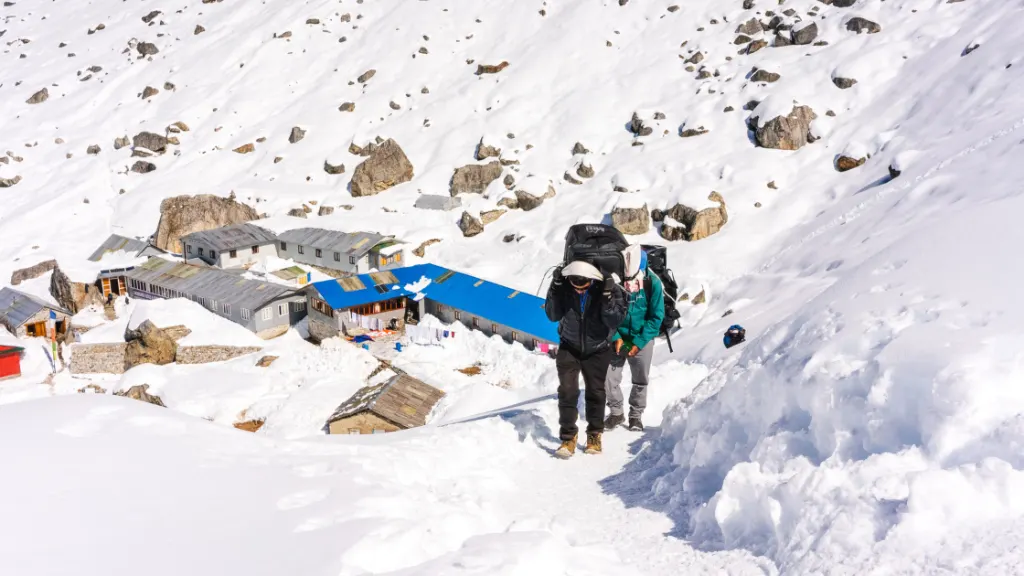
"Technically straightforward" refers to the climbing, not the overall difficulty, and conflating the two is the single most common mismatch between expectation and reality we see on this climb. Summit day is genuinely long, eight to nine hours round trip, and the cold in the hours before dawn is more mentally and physically draining for most clients than any single technical section. And the Khare ice climbing practice day matters more than it might seem walking into it, treat it as a real lesson rather than a formality, since it's exactly what you'll rely on at 2am on summit day when you're tired and the headlamp beam is the only thing you can see by.
Frequently asked questions
How hard is it to climb Mera Peak?
Technically straightforward, the easiest of Nepal's major trekking peaks in terms of required climbing skill, but strenuous overall given its height, the longest summit day among comparable peaks, and sustained cold at altitude.
Do I need climbing experience for Mera Peak?
No. Our itinerary includes basic mountaineering training, ropes, crampons, and other pre-climb essentials, before summit day, and first-timers with no mountaineering experience summit successfully every season following their guide's instruction.
How much does climbing Mera Peak cost?
Our 18-day package runs USD 2,690 per person, dropping to USD 2,599 per person for groups of two to seven and USD 2,499 per person for groups of eight or more.
What is the best season to climb Mera Peak?
Autumn, September to November, and spring, March to May, are the strongest windows for stable weather and clear summit views.
Is Mera Peak harder or easier than Island Peak?
Mera Peak is technically gentler but higher and colder, making summit day more physically demanding overall. Island Peak demands more glacier and crevasse-crossing skill at a somewhat lower altitude.
How long does the Mera Peak climb take?
18 days from Kathmandu, including the approach trek through the Hinku valley, acclimatisation days, ice climbing practice at Khare, and the return journey, with a built-in contingency day for weather.
What permits are required for Mera Peak?
A Mera Peak climbing permit and Makalu Barun National Park entry, both handled fully as part of our package.
What's not included in the Mera Peak package price?
Your Nepal visa, lunch and dinner in Kathmandu, travel insurance, personal expenses, and tips for your guide, porters, and driver.
What happens if weather closes the summit window?
Our itinerary includes a built-in contingency day, day 13, specifically for this. If the group summits on schedule, this day is simply cut from the trip.
Let's plan your Mera Peak climb
If you've already stood at Everest Base Camp or Annapurna Base Camp and found yourself wondering what it would take to go higher, Mera Peak is very likely your answer, the highest trekking peak in Nepal, with a summit view that genuinely earns that distinction. Our 18-day itinerary builds in the acclimatisation and training days that actually matter, not trimmed down to hit a shorter package price.
Hiking Nepal is a registered trekking operator based at Dabali Marga, Thamel, Kathmandu, with all the necessary affiliations and government registrations in place. Message Nava directly on WhatsApp at +977 9802342080, or email us at [email protected], and we'll start planning your climb.