In 2019, the NMA issued 1,707 Mera Peak climbing permits. Only 428 summit certificates were claimed. The realistic industry-wide success rate sits between 50 and 60 percent, not the 80 to 90 percent most operators advertise.
We are telling you this because it is the most important fact about Mera Peak that nobody mentions before you book.
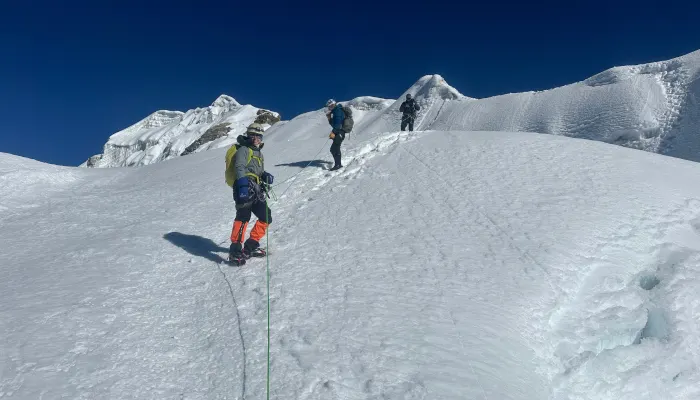
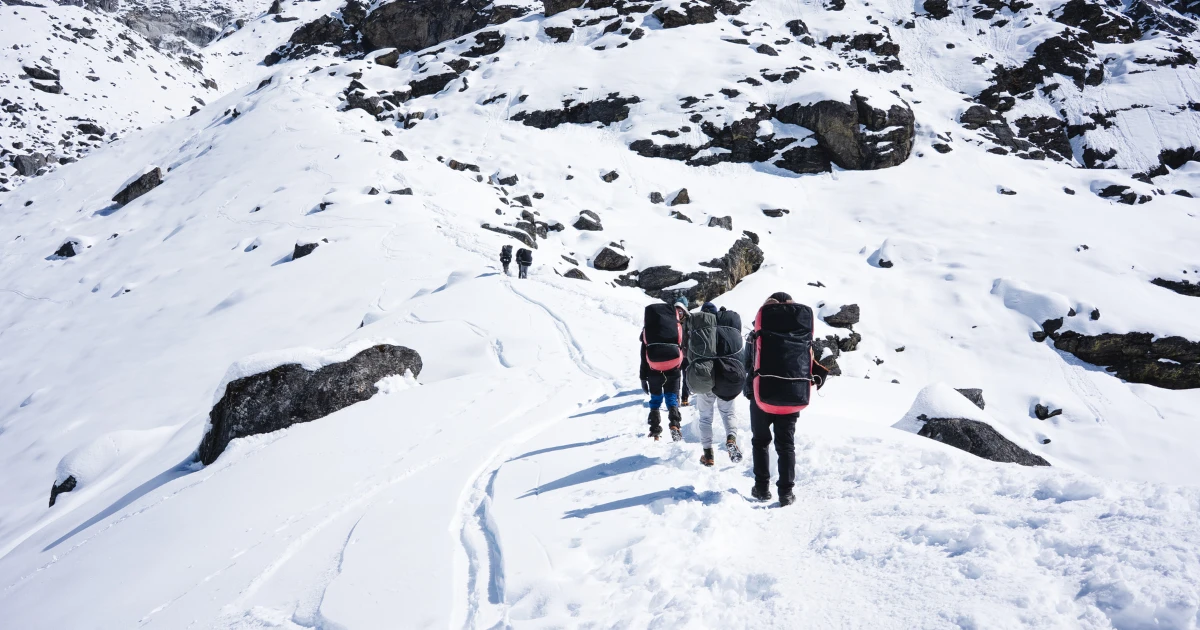
Mera Peak at 6,476 metres is Nepal's highest trekking peak. The standard northern route involves glacier walking, crampons, an ice axe, and fixed ropes for the final 40 to 50 metres. No rock climbing. No extreme exposure. In good conditions, with a fit and properly acclimatised climber and an experienced guide, the summit is absolutely achievable.
But the gap between achievable and actually achieved is almost entirely explained by one thing: how the operator structures your approach. The wrong itinerary sends you home without standing on the summit.
We are Hiking Nepal Pvt Ltd. We have been running Mera Peak expeditions for years. We are going to tell you exactly what separates responsible operators from the rest, and exactly why the climbers who go with us reach the top.
Contact Hiking Nepal at +977 9802342080 for a call or WhatsApp now to check 2026 departure dates. Spring and autumn seasons are both open for booking.
What Mera Peak Actually Is
Mera Peak sits in the Mahalangur Himalaya, in Nepal's Solukhumbu district. The remote Hinku Valley, east of the Khumbu, is its home. Three summits: Mera South (6,065m), Mera Central (6,461m), and Mera North (6,476m). Mera North is your objective. The mountain was first climbed on 20 May 1953, three days before the first ascent of Everest, by Col. Jimmy Roberts and Tenzing Norgay. It carries Alpine PD grading, meaning there are some technical elements on the final push, but altitude is the primary challenge.
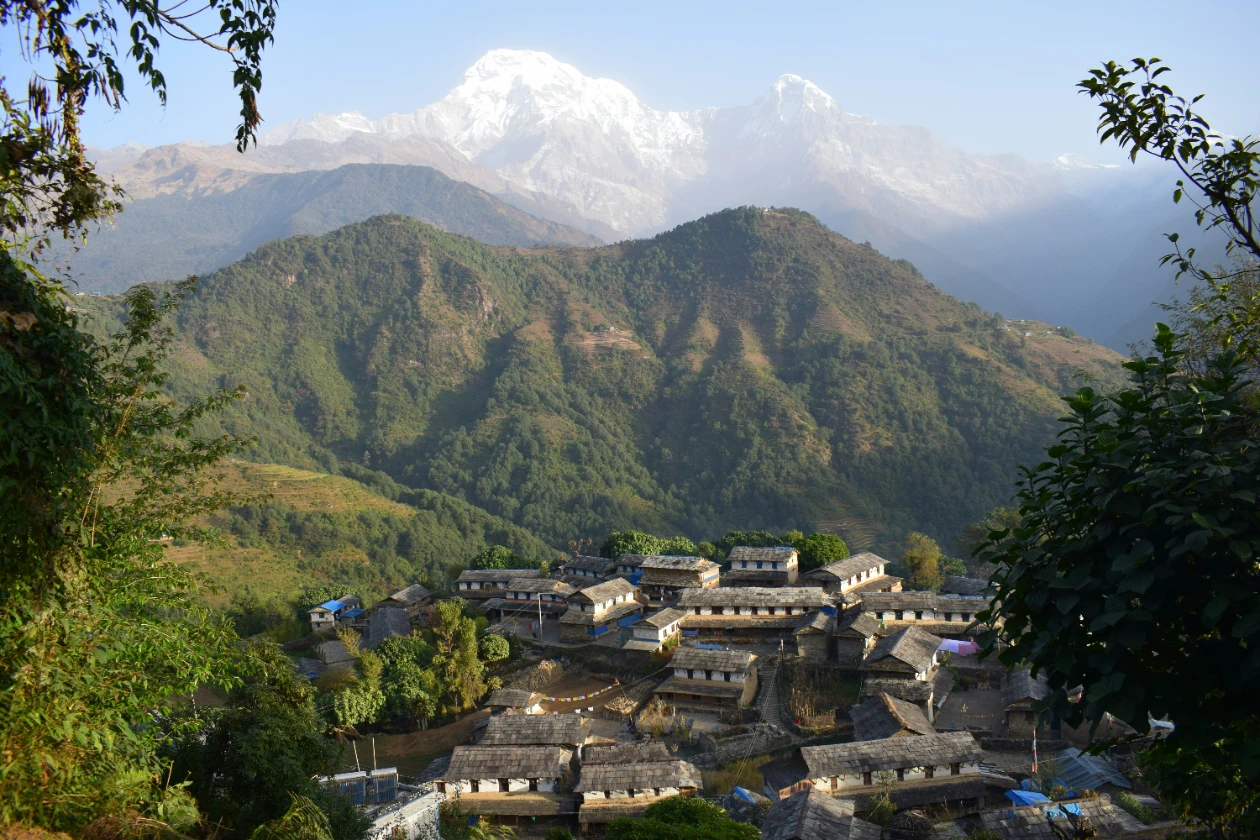
The approach runs six to eight days from Lukla through Makalu Barun National Park, rhododendron forests, Sherpa villages, glacial moraine, and high ridgeline. The Hinku Valley sees far fewer people than the main Everest corridor. Clients who trek with Hiking Nepal consistently describe the approach as one of the finest walks they have done in Nepal.
This approach is not an inconvenient preamble. It is the acclimatisation. It determines whether you stand on the summit. Budget operators shorten it. We do not.
The View From the Top
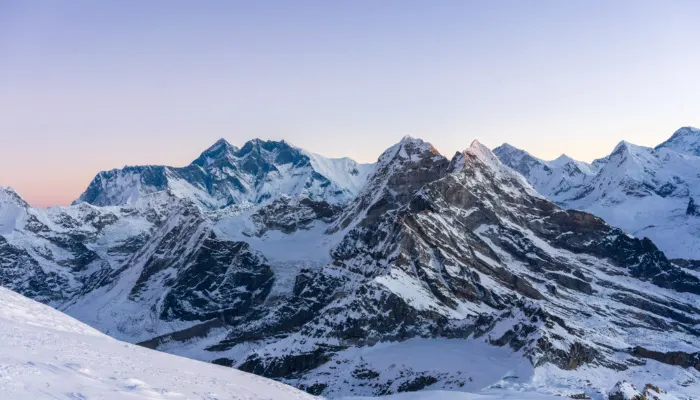
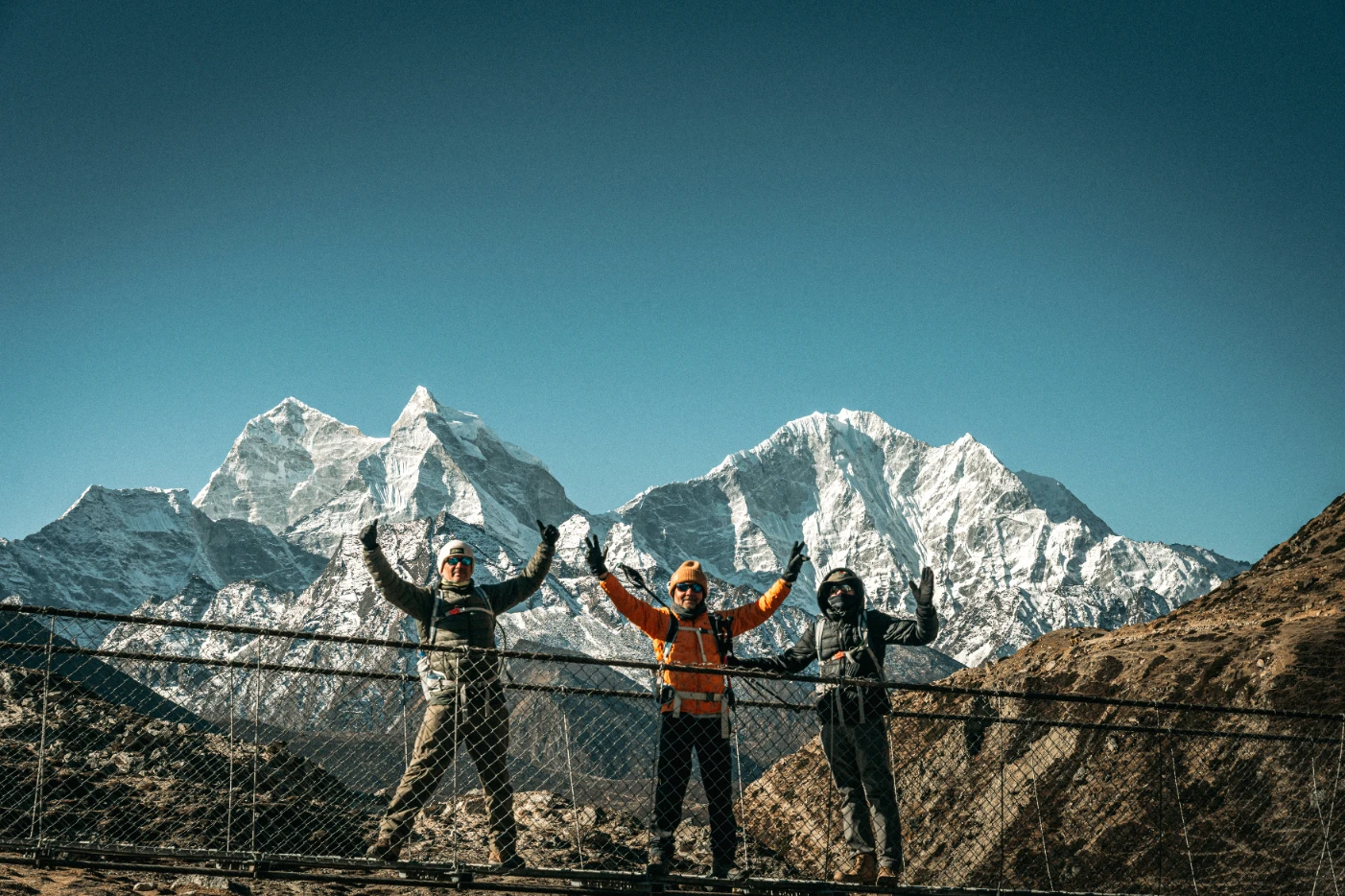
Every Mera Peak page lists the same five mountains: Everest, Lhotse, Makalu, Kanchenjunga, and Cho Oyu. The list is accurate. What no page properly describes is standing at 6,476 metres and seeing five of the six highest peaks on earth at once.
You have been walking for two weeks. The air at this altitude carries roughly 47 percent of the oxygen present at sea level. You have been moving slowly and deliberately for days. And then you are on the summit, and the sky is immense, and rising from the flatness of the world below are the five biggest mountains on earth in a single unbroken arc.
Everest directly north, its dark pyramid unmistakeable. Lhotse is beside it, barely separated. Makalu to the east, sharper and more elegant than photographs suggest. Kanchenjunga far to the right. Cho Oyu to the west, broad and white. No description fully prepares you. When you book with Hiking Nepal, we build your itinerary around giving you the best possible chance of standing here.
Why the Operator You Choose Changes Everything
The Zatrwa La Pass Problem
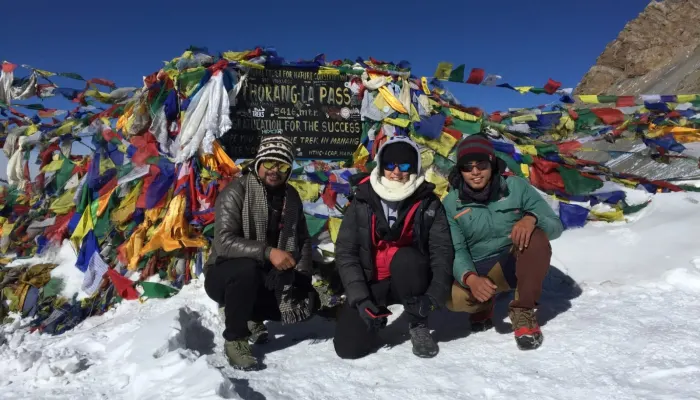
Zatrwa La Pass sits at 4,610 metres. It connects Lukla to the Hinku Valley and appears on day two or three of most operators' itineraries. Crossing a 4,610-metre pass 48 hours after arriving in Lukla at 2,840 metres, before your body has had meaningful time above 3,000 metres, is physiologically aggressive.
A responsible itinerary crosses Zatrwa La no earlier than day three, preferably day four. These extra days cost money. They also add significantly to your summit chances. This is precisely where budget packages compress the schedule, and precisely where success rates fall. Our itinerary crosses Zatrwa La on day four, after nights at Chutok and Chhatra Khola at 2,800 metres.
The Khare Training Days
Khare at 5,045 metres is the last inhabited stop before the glacier. One acclimatisation day here is common. Two is the responsible standard. The difference is whether your climbers arrive at High Camp (5,780m) having already moved on glacier terrain with crampons, having practised rope-team movement, and having already tested their response at this altitude.
Our Khare programme includes a full training day on the Mera Glacier. Not a thirty-minute gear briefing. A full day with rope teams, crampons, and ice axe practice, run by an Expedition-level guide. This is a large part of what separates Hiking Nepal from cheaper alternatives.
Guide Certification at This Altitude
A trekking guide licence is not a climbing guide licence. Nepal's NTB system has three levels: Basic (up to 4,000m), Advanced (up to 5,500m), and Expedition (above 5,500m). Mera Peak summits at 6,476 metres. Your guide needs Expedition-level certification and personal summit experience on Mera Peak itself.
Ask any company: what specific certification does our assigned guide hold, and how many times have they personally summited Mera Peak? All lead guides on Hiking Nepal Mera departures hold Expedition-level NTB certifications and have summited Mera multiple times. They carry pulse oximeters, wilderness first aid kits, and satellite communication equipment. They make the summit call, and that call is never overridden by commercial pressure.
Six Questions to Ask Any Mera Peak Operator
1. Itinerary length: Is it 17 to 18 days minimum? Anything shorter has cut the acclimatisation.
2. Zatrwa La timing: Day one or two from Lukla is a red flag. Day four is the responsible standard.
3. Khare programme: Two nights with a full glacier training day. One night with a gear briefing is not enough.
4. Guide certification: Expedition-level NTB. Personal Mera Peak summit experience. Specific numbers.
5. All three permits included: NMA Climbing Permit, Makalu Barun National Park, Khumbu Municipality. All before departure.
6. Package price: USD 1,800 to USD 2,700 for full service. Below USD 1,500, something important has been removed.
Hiking Nepal's Mera Peak Programme
We do not offer a quick version of this expedition because there is no quick version that consistently gets people to the summit.
Our recommended programme is 18 days from Kathmandu arrival to return. We cross Zatrwa La on day four. Two nights at Khare with a full glacier training day. One contingency day in the summit window for weather. This is the structure our summit record is built on.
Guides take evening pulse oximeter readings from Khare onwards and adjust the following day based on the numbers, not the calendar. If a climber reads 85 percent blood oxygen saturation, we rest. The schedule serves the climber.
High camp equipment includes expedition-grade tents and sleeping bags rated to minus 30 degrees Celsius. We carry supplemental oxygen for emergency use on all departures above 5,500 metres. We hold a face-to-face pre-departure briefing in Kathmandu the day before the trek begins, covering altitude sickness, the acclimatisation schedule, summit logistics, and emergency protocol.
We check every climber's travel insurance before departure. Your policy must cover helicopter evacuation to 6,476 metres. If it does not, we will not start the climb. This is not bureaucracy. It is how we make sure you get home.
Book Mera Peak with Hiking Nepal. Contact us for 2026 departure dates, group joining options, and private expedition pricing. We respond within four hours.
Training for Mera Peak: What do you need to do?
Start four to six months before departure, not four weeks. The physiological adaptations that allow your body to perform at altitude take months to develop.
Months four to six: build baseline aerobic fitness. Long runs, cycles, and swims. Five to six hours of sustained cardiovascular effort per week.
Months two to four: introduce loaded hill walking with a pack. The approach involves multiple consecutive days with 500 to 800 metres of elevation gain, carrying eight to ten kilograms. Train this specifically.
Final four to six weeks: maintain fitness, reduce mileage, prioritise sleep and nutrition.
Previous altitude experience matters more than anything else. A trek to Everest Base Camp before Mera Peak is the single most useful preparation. You will learn how your body responds to altitude, whether Diamox helps you, and whether 5,300 metres feels manageable. Both answers are valuable before committing to a 6,476-metre summit attempt. If you have done EBC and want to combine it with Mera Peak, we run combined programmes, and they are excellent value.
The Best Time to Climb Mera Peak
Two windows. Spring (late March through May) and Autumn (October through mid-November). Everything else is marginal.
Spring brings stable weather, clear visibility, and rhododendron forests in bloom on the approach. April and May are the prime months. Autumn, particularly October, brings exceptional post-monsoon air clarity. High Camp nights in October regularly drop to minus 20 degrees Celsius. Bring the right sleeping bag.
Our recommendation: the second half of October. Stable weather, clear summit views, the Hinku Valley at its finest. We have fixed departures in both seasons. Contact us for the current availability calendar.
Mera Peak Permits: We Handle Everything
NMA Climbing Permit: USD 250 in spring, USD 125 in autumn. Issued by the Nepal Mountaineering Association.
Makalu Barun National Park Entry Permit: approximately USD 23 for foreign nationals.
Khumbu Pasang Lhamu Rural Municipality Entry Permit: approximately USD 15, checked at multiple trail points.
All three are included in our package price, processed before your departure date, and carried by your guide throughout the expedition. You do not queue at any government office.
Mera Peak vs Island Peak
Island Peak (6,189m) in the Khumbu is more technically demanding, with a steep headwall on the summit push requiring genuine confidence on steep terrain. It is also more crowded. Mera is higher, quieter, and less technical on the approach.
For first-time 6,000-metre climbers without prior glacier experience, Mera Peak is the stronger starting choice. For climbers who want more technical challenge, Island Peak is excellent. We also run a combined Mera Peak and Island Peak expedition over 25 to 28 days. Ask us about it.
Mera Peak and Everest Base Camp: The Combined Expedition
Combining Mera Peak with Everest Base Camp is one of the best non-technical Himalayan expeditions available, and Hiking Nepal runs it as a structured programme. The most effective approach runs EBC first, using the progressive altitude gain of the Khumbu as acclimatisation preparation for the Mera summit attempt. The combined programme runs 28 to 32 days. One guide team manages both legs. These departures fill early. Contact us soon.
Frequently Asked Questions
Which company is best for Mera Peak climbing in Nepal?
The best company structures a 17 to 18-day itinerary with Zatrwa La no earlier than day four, two nights at Khare with a full glacier training day, an Expedition-level NTB guide with personal Mera summit experience, all three permits in the package, and 24-hour support from Kathmandu. Hiking Nepal Pvt Ltd meets all of these criteria. Verify each one before you book.
How hard is Mera Peak?
Mera Peak is graded Alpine PD. The standard northern route involves glacier walking with crampons and an ice axe, and fixed ropes on the final 40 to 50 metres. The main challenge is altitude, not technical skill. With proper preparation and a responsibly paced itinerary, most fit adults without prior mountaineering experience can reach the summit.
What is the real success rate on Mera Peak?
Industry-wide, the realistic figure is 50 to 60 percent, significantly lower than the 80 to 90 percent many operators advertise. The variable that most directly determines success is acclimatisation structure. Climbers on properly paced itineraries summit at significantly higher rates.
How much does a Mera Peak climbing package cost?
Full-service packages from reputable local operators run USD 1,800 to USD 2,700 per person. This covers domestic flights, accommodation, meals, all three permits, an Expedition-level climbing guide, a porter, and operations support. Packages below USD 1,500 have removed something important, usually guide certification quality or porter support.
What permits are required for Mera Peak?
Three: NMA Climbing Permit (USD 250 spring, USD 125 autumn), Makalu Barun National Park Entry Permit (approximately USD 23), and Khumbu Pasang Lhamu Rural Municipality Entry Permit (approximately USD 15). Hiking Nepal processes all three before your departure.
What is the best time to climb Mera Peak?
April and May for spring, October and November for autumn. October is the single best month for summit visibility. Avoid December through February unless specifically prepared for extreme cold.
Can a beginner climb Mera Peak?
Yes, with the right preparation. You need good cardiovascular fitness, four to six months of targeted training, and previous experience above 4,000 metres. You do not need prior technical mountaineering experience. A properly paced itinerary and an Expedition-level guide do the rest.
Book Your Mera Peak Expedition with Hiking Nepal
We have 2026 departures open for both spring and autumn. Group joining is available for solo travellers and small groups. Private departures are available for groups of four or more with flexible start dates.
After you contact us, we respond within four hours with a full itinerary, a line-by-line cost breakdown, the name and credentials of your guide, and answers to every question you have before committing to a deposit. Our deposit is ten percent of the package cost.
We know the Hinku Valley the way you know your own neighbourhood: the teahouses worth staying in, the ridgelines worth taking, the timing that gives your body the best possible chance on summit day. We have walked that glacier dozens of times in every season. We want you to reach that summit. We have built everything we do around making it as likely as possible.
The Hinku Valley does not get many visitors. Walking into it, day after day, watching Mera Peak grow from a distant white wedge into something that fills the entire sky, then climbing it and standing at 6,476 metres in a silence that contains five of the six highest mountains on earth, is not an experience that requires superlatives. It speaks for itself. We have been bringing people here for years. We would like to bring you.
Contact Hiking Nepal now at +977 9802342080 or [email protected]. The 2026 spring season is filling. Do not leave it too long.