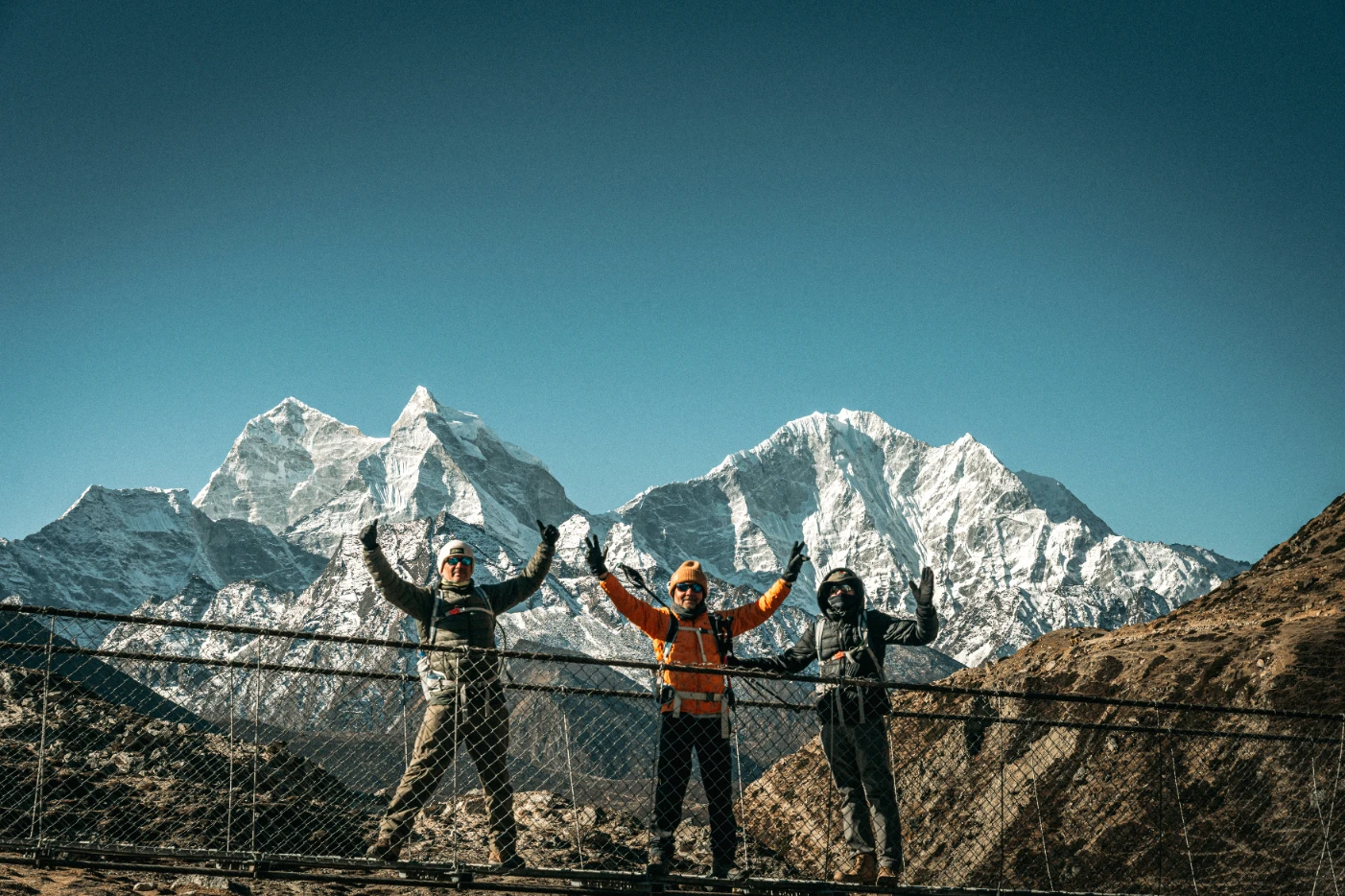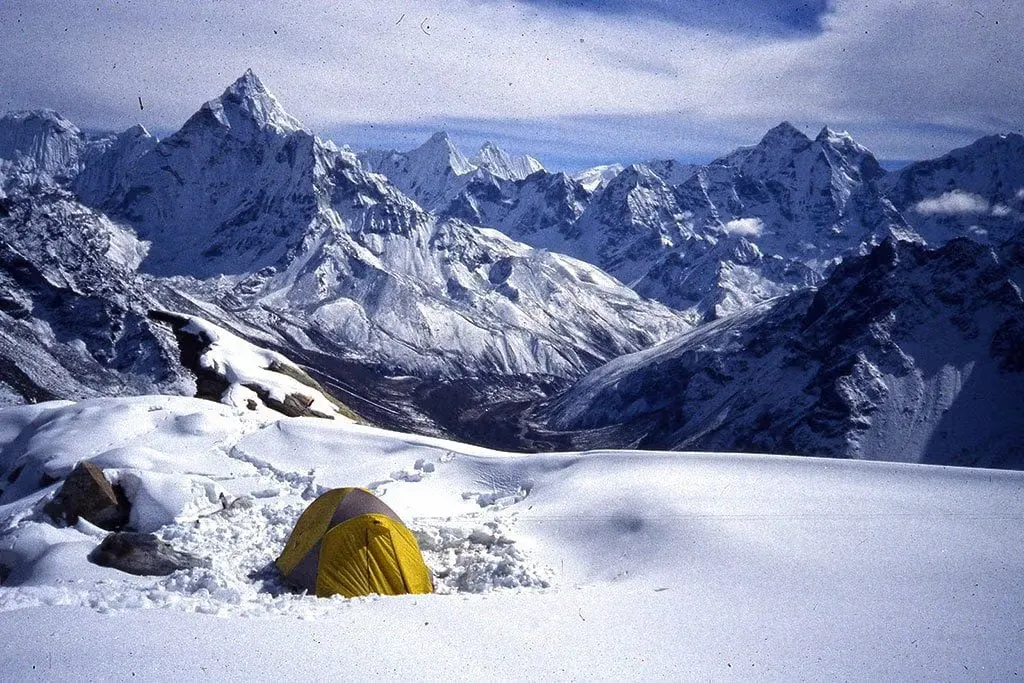
There's a specific moment on Lobuche East's summit ridge, somewhere around 5:30 in the morning, where you stop thinking about your crampons and just look up. Everest is right there, close enough that Nuptse's icefall seems to be spilling toward you, and Lhotse's south face catches the first orange light before anything else does. At 6,119 metres, this is a height most people on the Everest Base Camp trail below will never reach, and yet it's a summit that a reasonably fit trekker with zero prior climbing experience can genuinely train into. That combination, real mountaineering without a real mountaineering resume, is exactly why Lobuche has become the go-to next step for our clients who've done Everest Base Camp and come home asking what's next.
This guide is built from what our climbing guides actually tell clients before, during, and after this trip, not a marketing summary of what the brochure says. We'll cover what the climb involves day by day, what it actually costs once you strip out the vague ranges other sites quote, how it stacks up against Island Peak, and, honestly, whether it's the right call for you at all.
Which Lobuche you mean
Before anything else: Lobuche has two summits, and the confusion between them causes more misbooked trips than almost anything else on this mountain. Lobuche East, at 6,119 metres, is what nearly every commercial climb refers to, and it's what this guide covers. Lobuche Far East, at 6,145 metres, is a separate and considerably harder technical objective, attempted by a small number of experienced alpine climbers each year, involving sustained ice climbing well beyond what a trekking peak permit and a base camp training day prepare you for. If an itinerary you've been quoted doesn't specify East, ask. We've had climbers turn up at base camp having booked the wrong one through a third party, and it's not a conversation anyone wants to have at 4,900 metres.
A bit of context on the name and the mountain
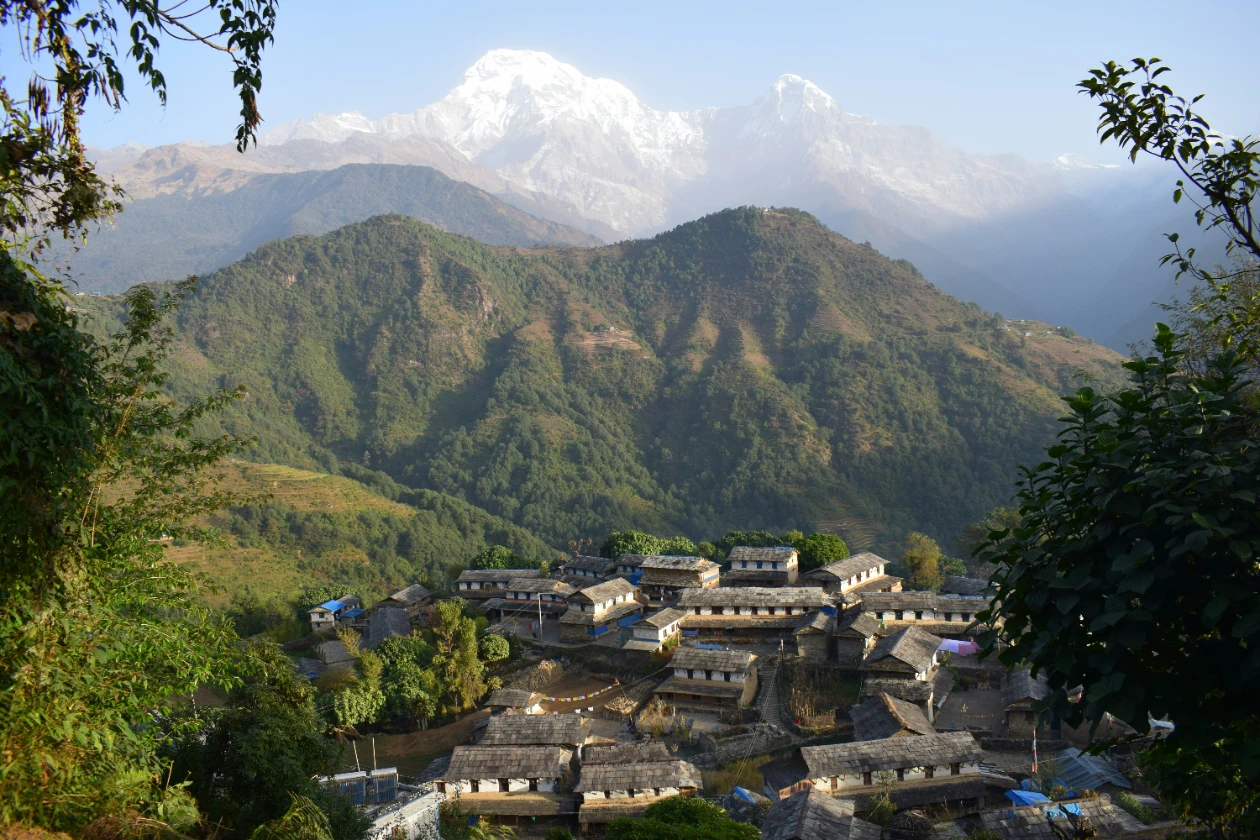
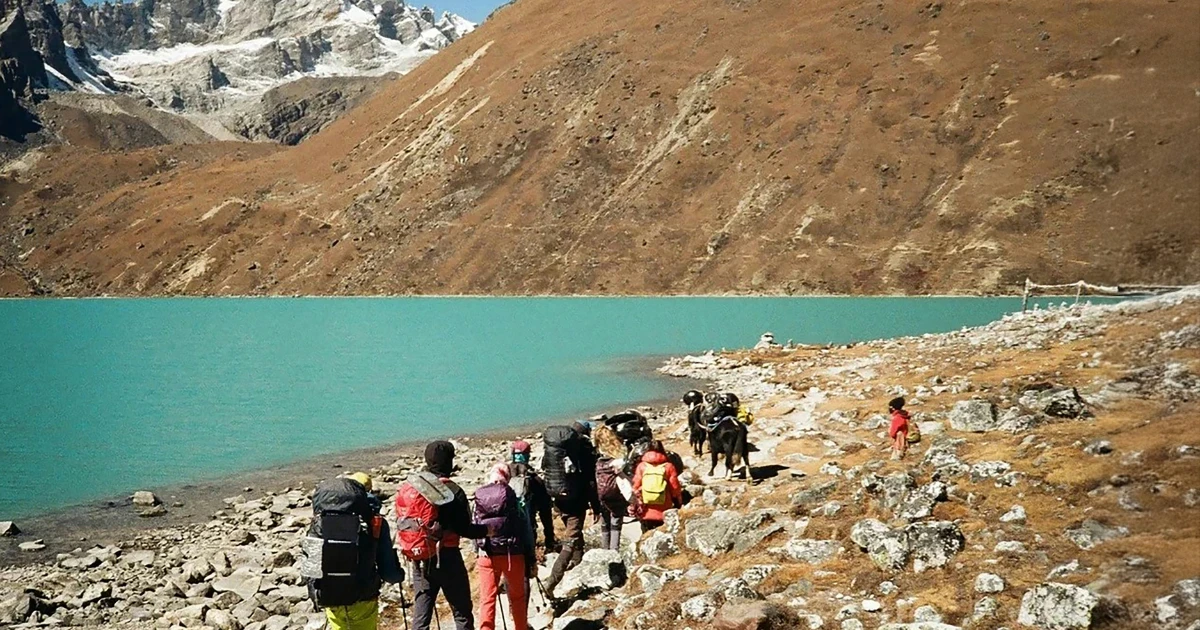
Lobuche sits in the Khumbu region of the Sagarmatha National Park, its name shared with the small settlement, Lobuche village, that most Everest Base Camp trekkers pass through without giving it much thought beyond a lodge stop before Gorak Shep. The peak itself rises above the Khumbu Glacier's western moraine, close enough to the main EBC trail that its base camp is a natural, logical diversion rather than a separate expedition into unfamiliar territory. This geography is a big part of why it's such a popular first climb: the approach uses infrastructure, teahouses, lodges, a well-worn trail, that's already there for the thousands of trekkers heading to base camp every season, and the climbing-specific section only begins in the final few days.
Difficulty rating, and what that classification actually means
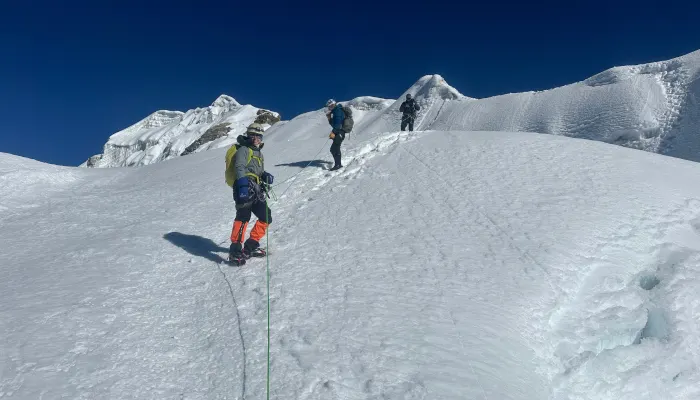
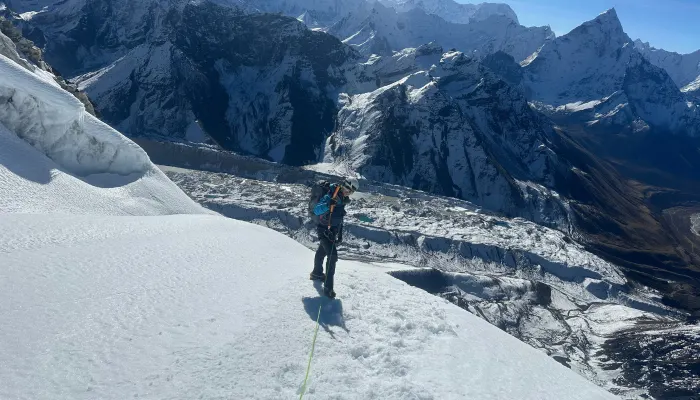
The Nepal Mountaineering Association classifies Lobuche East as a trekking peak, a category that exists mainly to distinguish it, administratively and in terms of permit cost, from Nepal's larger expedition peaks over 6,500 metres. Don't let that bureaucratic label undersell what summit day actually asks of you. The approach to base camp is standard, if long, teahouse trekking, nothing a fit hiker hasn't handled before. Summit day is where the character of the trip changes entirely and without much warning if you haven't been told what to expect: a steep snow and ice slope rising directly above high camp, a narrow and genuinely exposed summit ridge with real drop-off on both sides in places, and a final headwall that typically demands front-pointing on crampons with fixed-rope support for the last pitch.
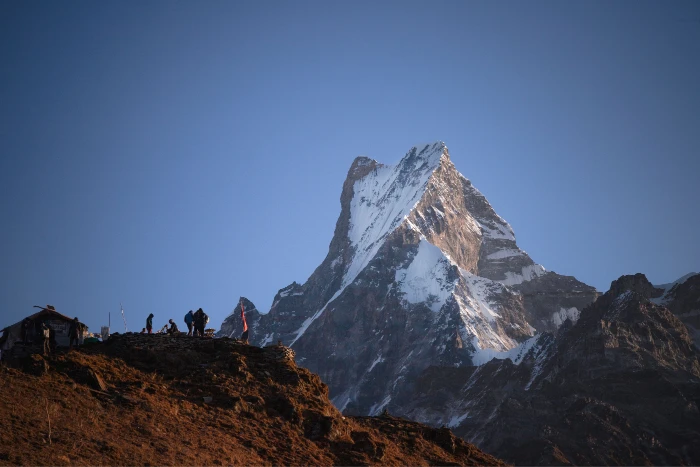
Our guides consistently rate it moderate to challenging, a fair description for a peak that's absolutely appropriate as an introduction to mountaineering, but not appropriate as a first serious high-altitude experience of any kind. If your only exposure to altitude is a weekend at a ski resort, this isn't where that story starts. If you've stood at Everest Base Camp, Annapurna Base Camp, or on the Mardi Himal high camp ridge and felt strong and clear-headed rather than wrecked, you're in the right ballpark.
Feature | Lobuche East | Island Peak | Mera Peak |
| Altitude | 6,119m | 6,189m | 6,476m |
| Difficulty | Moderate-challenging | Moderate-challenging | Moderate |
| Key technical challenge | Exposed summit ridge, steep final headwall | Glacier travel, ladder crevasse crossings, summit headwall | Longer glacier walk, less technical terrain |
| Trip length | 16-18 days | 17-19 days | 17-19 days |
| Cost range | USD 2,500-4,000 | USD 2,700-4,200 | USD 2,800-4,300 |
| Best season | Spring, Autumn | Spring, Autumn | Spring, Autumn |
| Permit | NMA trekking peak permit + Sagarmatha National Park + Khumbu Rural Municipality | NMA trekking peak permit + Sagarmatha National Park + Khumbu Rural Municipality | NMA trekking peak permit + Makalu Barun National Park |
| Best suited for | Climbers comfortable with ridge exposure | Climbers comfortable with glacier/crevasse travel | Climbers wanting altitude with less technical terrain |
Full route and itinerary breakdown
A realistic Lobuche East itinerary runs sixteen to eighteen days from Kathmandu, and we'd treat anything meaningfully shorter than that as a red flag rather than a bargain, for reasons we'll come back to under acclimatisation.
Day 1: Arrive in Kathmandu, gear check and briefing at our office, last-minute rental sorted if needed.
Day 2: Fly Kathmandu to Lukla, trek to Phakding. Short first day, deliberately easy, mostly about settling into the rhythm.
Day 3: Phakding to Namche Bazaar, the long climb up through the pine forest and across the high suspension bridge over the Dudh Koshi.
Day 4: Acclimatisation day in Namche, with a walk up to the Everest View Hotel or Khumjung village rather than a rest day spent lying in a lodge.
Day 5: Namche to Tengboche, past the monastery with its own quietly spectacular Ama Dablam backdrop.
Day 6: Tengboche to Dingboche, dropping into the Imja Khola valley and climbing again on the far side.
Day 7: Second acclimatisation day in Dingboche, usually a walk up Nangkartshang Peak for the view and the altitude exposure.
Day 8: Dingboche to Lobuche village, this is where the route splits from the standard EBC trail's Gorak Shep detour, though some of our itineraries build in a same-trip base camp visit for clients wanting both.
Day 9: Lobuche village to Lobuche base camp, a shorter day that leaves energy for the training session.
Day 10: Training day at base camp. This is not a token gesture. Our climbing guides run through crampon technique on a nearby snow slope, ice axe self-arrest, jumar and fixed-rope movement, and rope team basics, and we treat this as essential even for clients who've done via ferrata routes or indoor ice walls at home, since real Himalayan snow and ice behave differently under boot and axe than anything you've likely trained on.
Day 11: Move to high camp, a shorter but steeper day at higher altitude, tents rather than teahouses from here.
Day 12: Summit day. An alpine start around 1 to 2am, headlamps and cold hands for the first few hours, the steep climb to the ridge, the exposed traverse, the final ice headwall on fixed rope, and a summit window that our guides watch closely, since it typically closes by mid-morning as the snow softens and rockfall risk on the lower slopes increases. Descent back to base camp the same day, which makes for a genuinely long one.
Day 13: Rest and buffer day, built in deliberately in case weather pushed the summit attempt back a day, or simply because everyone needs it after day 12.
Days 14 to 17: Retrace the trail back through Pheriche, Namche, and down to Lukla for the flight out, or extend into Gorak Shep and Everest Base Camp itself if that wasn't already covered on the way up.
Day 18: Fly Lukla to Kathmandu, contingency day built in given how often Lukla flights get weather-delayed.
Altitude and acclimatisation, the part worth taking seriously
Here's the thing about Lobuche that doesn't get said clearly enough on a lot of trekking sites: the technical climbing is not the main danger. The altitude is. Summit day tops out above 6,100 metres, comfortably high enough for Acute Mountain Sickness to develop, and in more serious cases for High Altitude Pulmonary Oedema or High Altitude Cerebral Oedema, either of which can turn a climb into a medical emergency fast if acclimatisation has been skipped or rushed. Because the approach follows the same trail as the standard EBC trek, a properly built itinerary includes the same rest days at Namche and Dingboche that a base camp trek uses, and this genuinely isn't a place to negotiate on time to save money.
If an operator quotes you a Lobuche package at twelve or thirteen days, ask exactly which acclimatisation day they've cut, because they've cut one, and it's very likely not the walking days that got shortened. Our own guides won't run a Lobuche itinerary shorter than sixteen days, and we'd encourage you to treat that as a baseline when comparing quotes elsewhere, not just a Hiking Nepal preference.
Best season to climb Lobuche
Spring, April to May, and autumn, late September through November, are the two genuinely viable windows. Autumn generally offers more stable, consolidated snow on the summit ridge, which our guides tend to prefer for the technical section, while spring brings warmer approach trekking with the trade-off of more frequent afternoon cloud buildup that can occasionally affect summit day timing. Winter climbing is technically possible and occasionally arranged for experienced clients specifically wanting quieter trails and colder, often more stable snow conditions, but it's a specialist request rather than something we'd recommend as a first attempt. Monsoon season, June through September, is avoided entirely, poor visibility and unstable, wet snow make the technical sections genuinely more dangerous, not just less pleasant.
Permits required for Lobuche Peak
Lobuche East requires a trekking peak permit issued through the Nepal Mountaineering Association, priced by season and generally most expensive in spring, cheaper in autumn, cheapest in winter. Alongside this you'll need a Sagarmatha National Park entry permit and a local Khumbu Rural Municipality entry permit, both standard requirements for anyone trekking in the Everest region regardless of whether a peak climb is involved. A separate TIMS card isn't required within Sagarmatha National Park itself, since the park entry permit performs that function in this specific region, though permit structures in Nepal do shift from time to time and we always confirm current requirements with clients at the point of booking rather than relying on last season's figures.
Cost for Lobuche Peak Climbing
Budget realistically for USD 2,500 to 4,000 for a full Lobuche East package with a reputable operator. That range covers the NMA climbing permit, national park and rural municipality fees, a qualified climbing guide in addition to your regular trekking guide, group climbing equipment such as fixed ropes, anchors, and ice screws, teahouse accommodation for the approach trek, and tented accommodation and food at base camp and high camp.
What it typically doesn't cover: your personal climbing gear rental, which most clients hire in Kathmandu rather than bring from home, domestic flights to and from Lukla, and rescue insurance, which we'll come back to below since it matters more here than on a standard trek. Climbing-specific gear rental, plastic mountaineering boots, crampons fitted to those boots, a climbing harness, an ice axe, and a helmet, typically runs an additional USD 100 to 150 for the full trip, and we'd rather quote that separately and honestly than fold it into a headline price that looks better on a comparison table.
Where the wider price range comes from: solo versus group climbing guide ratios, the number of porters carrying group climbing gear versus personal loads, and whether an operator is padding the itinerary with unnecessary extra nights in Kathmandu at either end. A genuinely cheap Lobuche quote is worth asking hard questions about, specifically whether it's cutting the training day, the acclimatisation days, or the guide-to-client ratio on summit day.
Gear and equipment, beyond your standard trekking kit
You'll need your usual Everest region trekking gear for the approach, down jacket, layered thermal base and mid layers, a good waterproof and windproof shell, sturdy broken-in trekking boots, and a warm sleeping bag rated to at least minus twenty. On top of that, summit day demands mountaineering-specific equipment: high-altitude plastic or double boots, crampons fitted precisely to those boots, not to your trekking boots, a climbing harness, an ice axe sized appropriately for your height, a helmet, and a jumar for ascending sections of fixed rope.
Nearly all our clients rent this in Kathmandu rather than shipping their own, both because it saves on baggage and because rental gear arrives already fitted to the specific boots you'll be issued on arrival, which matters more than it sounds. We'll confirm with you well before departure whether gear rental is bundled into your package price or arranged separately, since this is one of the most common points of confusion between operators quoting seemingly similar packages.
Physical preparation
You don't need a mountaineering background, but you do need genuine cardiovascular fitness and some load-bearing leg strength going in. We generally recommend eight to twelve weeks of preparation before departure: regular hiking with a loaded pack, ideally on varied and steep terrain if you have access to it, stair climbing or a stair machine for leg endurance, and some general cardiovascular work, running, cycling, or swimming, three to four times a week. If you can comfortably do a six to eight hour hiking day with a daypack and still have energy left over, you're at roughly the right fitness baseline. The technical skills, crampon work, rope handling, ice axe use, are taught at base camp regardless of your background, so prior climbing experience is a bonus rather than a requirement, but it doesn't substitute for basic fitness, which nobody can teach you in three days at 4,900 metres.
Safety considerations our guides take seriously
Altitude illness remains the primary medical risk on this climb, more so than the technical terrain itself. Know the early symptoms, headache, nausea, unusual fatigue, loss of appetite, and treat any worsening symptom as an immediate reason to stop ascending or descend, not something to push through because you're close to a milestone. Our guides are trained to make that call decisively, and we ask every client to agree, before departure, that the guide's decision on descent is final, not a discussion to be had halfway up a fixed rope.
Rescue insurance that specifically covers helicopter evacuation above 6,000 metres is essential, and we mean specifically, because a lot of standard travel insurance policies either cap their altitude coverage well below this height or exclude mountaineering activities from coverage entirely regardless of altitude. We check this with every client before departure, not as a formality but because we've seen policies that looked fine on paper turn out to exclude exactly the scenario a client ended up needing.
On the mountain itself, a qualified climbing guide, ideally NMA or IFMGA-certified, isn't optional the way it might be a genuinely debatable choice on an easier trek. The fixed-rope sections and the crevasse-adjacent terrain near the glacier make an under-guided attempt a bad idea even for climbers with some prior experience on other mountains. This is one of the areas where we won't compromise on ratios, regardless of what a client requests to save cost.
Lobuche East versus Island Peak, the comparison everyone asks about
These two are the most commonly compared trekking peaks in the Everest region, and it's a fair comparison to make directly since a lot of climbers are genuinely choosing between them for the same trip window rather than planning to do both.
Peak: Altitude | Difficulty | Key technical challenge | Typical trip length | Cost range
Lobuche East: 6,119m | Moderate-challenging | Exposed summit ridge, steep final headwall | 16-18 days | USD 2,500-4,000
Island Peak (Imja Tse): 6,189m | Moderate-challenging | Glacier travel, ladder crevasse crossings, summit headwall | 17-19 days | USD 2,700-4,200
Mera Peak: 6,476m | Moderate | Longer glacier walk, less technical terrain, higher altitude | 17-19 days | USD 2,800-4,300
Island Peak, known locally as Imja Tse, sits slightly higher than Lobuche East and is arguably the more famous of the two, with a longer glacier walk and ladder crossings over crevasses before its own summit headwall. Lobuche East's summit day is shorter in duration, but our guides generally consider its final ridge and headwall steeper and more exposed than Island Peak's equivalent section. In practice, most operators, us included, rate the two as broadly comparable in overall difficulty, with Island Peak demanding more comfort with glacier travel and crevasse crossings, and Lobuche demanding more comfort with sustained exposure on a narrow ridge. It's genuinely common for a client who's done one to come back and do the other in a later season, specifically because the skill sets overlap without being identical, and there's real satisfaction in comparing the two once you've done both.
Mera Peak, for context since it comes up in the same conversations, is technically the least demanding of the three despite being the highest, with a longer but gentler glacier approach and less exposed terrain near the summit, making it a common alternative for climbers who want the altitude bragging rights without quite as much exposure on summit day.
What a typical Lobuche client looks like, and whether that's you
Most of the climbers we take up Lobuche East have already done at least one high-altitude trek in Nepal, Everest Base Camp or Annapurna Base Camp most commonly, and came away from it thinking they wanted more rather than less. They've handled altitude above 5,000 metres without serious symptoms, they're reasonably fit without necessarily being athletes, and they're drawn by the idea of learning real climbing skills rather than just walking further and higher.
If you've never trekked above 4,000 metres, we'd steer you toward a full Everest Base Camp trek first, not as a sales upsell but because it genuinely tests your own altitude tolerance and builds the fitness base a peak like this assumes you already have. It's also worth being honest with yourself about exposure specifically. The summit ridge is narrow enough, with real drop on both sides in sections, that a genuine fear of heights rather than ordinary nervousness can turn summit day into something closer to an ordeal than an achievement, and three days of base camp training doesn't fully resolve that for everyone. We'd rather have that conversation with you before you book than have you discover it at high camp.
What our guides wish clients knew before booking
A few things come up often enough in our pre-departure briefings that they're worth including here directly. First, summit day is long, typically twelve to fourteen hours round trip from high camp, and the cold in the first few hours before sunrise is more physically and mentally draining than the technical climbing itself. Second, the training day at base camp matters more than most clients expect going in, treat it as a real lesson rather than a formality to get through, since the muscle memory it builds is what you'll rely on at 4am on summit day when you're tired and the light is bad. Third, weather windows on Lobuche can shift with less warning than on Everest Base Camp itself, since you're higher and more exposed, so build genuine flexibility into your return flight bookings rather than a tight connection the same week.
Frequently asked questions
##How hard is it to climb Lobuche Peak?
Moderate to challenging. The trek to base camp is standard Everest Base Camp-level walking, but summit day involves genuine technical climbing on snow and ice along an exposed ridge, using crampon and fixed-rope skills taught during a short training period at base camp.
##Do I need climbing experience to attempt Lobuche East?
No prior technical climbing experience is required, but a fit trekker should expect a few days of hands-on training at base camp before summit day, and comfort at high altitude from a previous trek is strongly recommended rather than optional.
##How much does climbing Lobuche Peak cost?
A full package with a reputable operator typically runs USD 2,500 to 4,000, covering permits, guides, and camp logistics, with personal climbing gear rental adding roughly USD 100 to 150.
##What is the best season to climb Lobuche Peak?
Spring, April to May, and autumn, late September to November, offer the most stable conditions, with autumn generally favoured by our guides for more consistent summit ridge snow.
##Is Lobuche East or Island Peak easier?
Neither is significantly easier overall. Island Peak involves more glacier and crevasse travel with ladder crossings, while Lobuche East's summit ridge and final headwall are generally steeper and more exposed.
##How long does the Lobuche Peak climbing trip take?
Sixteen to eighteen days from Kathmandu, including the standard Everest Base Camp approach trek, two acclimatisation days, base camp training, and the return journey.
##What permits are required for Lobuche Peak?
A Nepal Mountaineering Association trekking peak permit, a Sagarmatha National Park entry permit, and a Khumbu Rural Municipality entry permit.
##Can beginners climb Lobuche Peak?
Yes, provided "beginner" means new to technical climbing rather than new to high altitude. Genuine mountaineering beginners with solid prior high-altitude trekking experience do this climb successfully every season with proper training and guiding.
##What happens if the weather closes the summit window?
A properly built itinerary includes at least one buffer day at base camp specifically for this. If weather pushes the attempt back further than that, your guide will make the call on whether to wait it out or descend, prioritising safety over a fixed schedule.
##Do I need a separate climbing guide in addition to my trekking guide?
Yes. A qualified climbing guide handles the technical sections and rope work specifically, working alongside your trekking guide rather than replacing them, and this is not an area where we'd recommend cutting costs.
Ready to take the next step past base camp
If you've already stood at Everest Base Camp and found yourself looking up at the surrounding peaks wondering what it would actually take to go higher, Lobuche East is very likely your answer. It's one of the most accessible ways to find out whether real mountaineering suits you, without committing months and a small fortune to an 8,000 metre expedition first. Get in touch with our team and we'll walk you through a proper sixteen to eighteen day itinerary with the acclimatisation built in properly, not trimmed down to hit a shorter, cheaper-looking package.