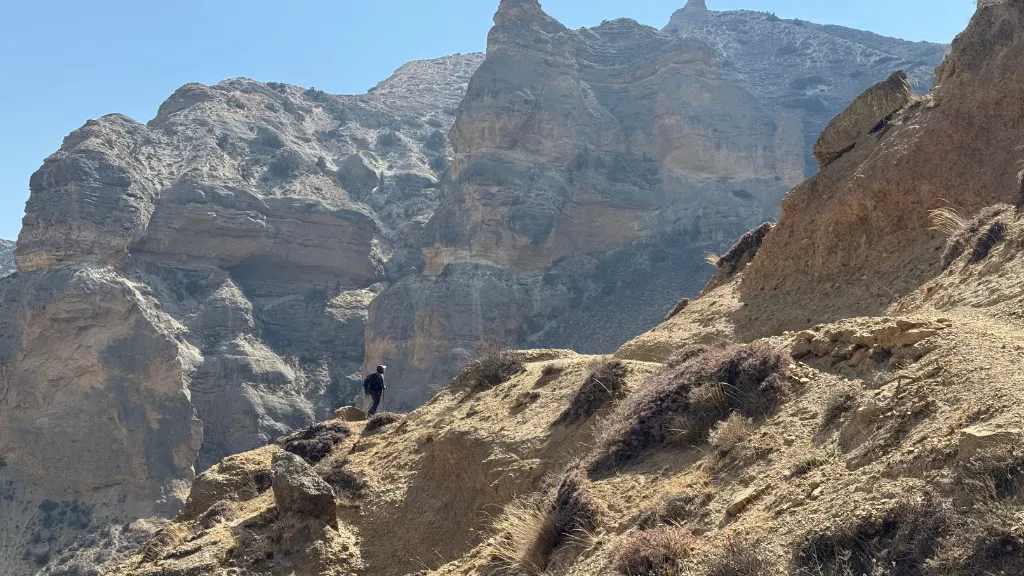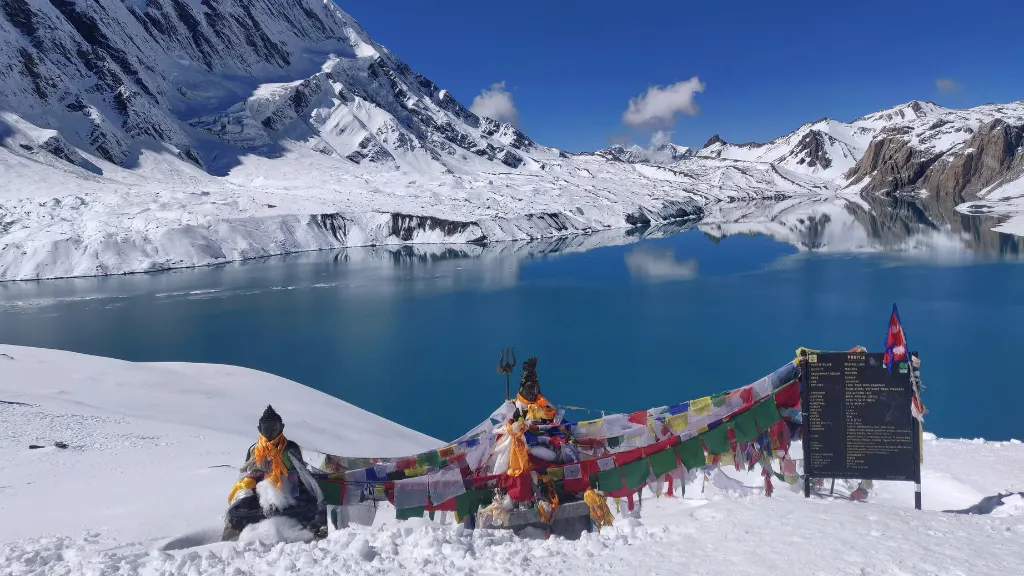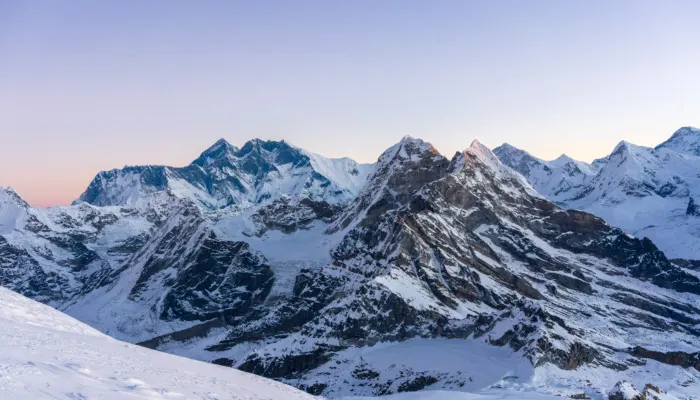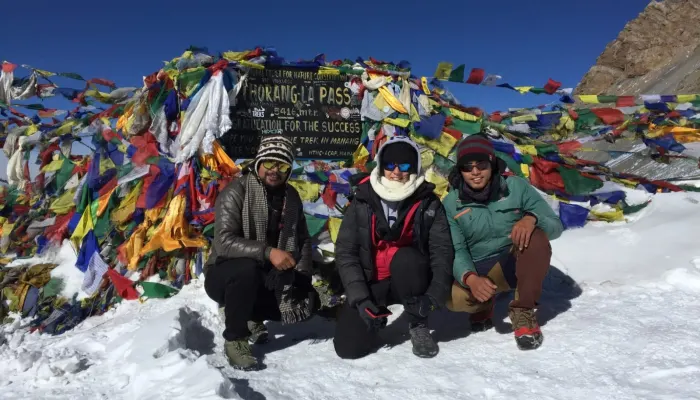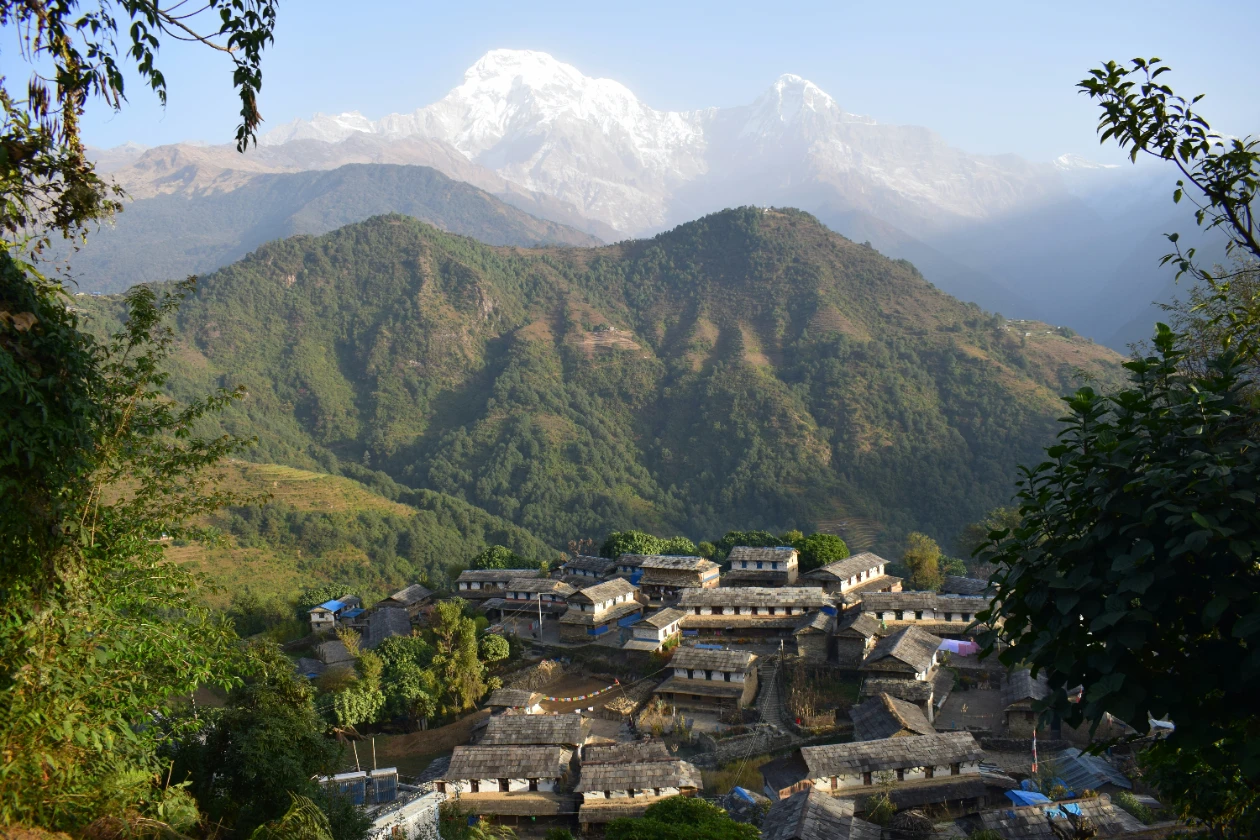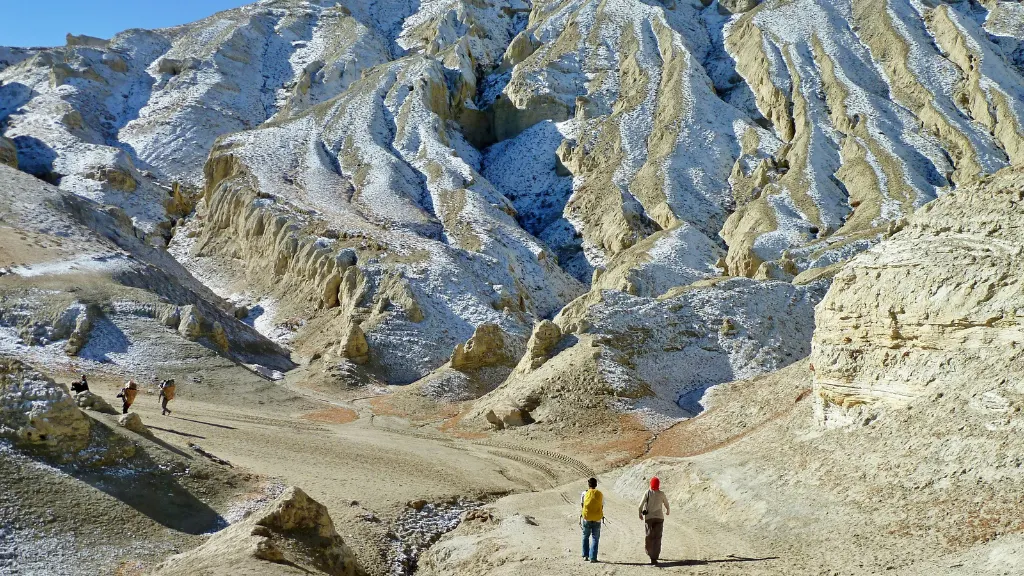
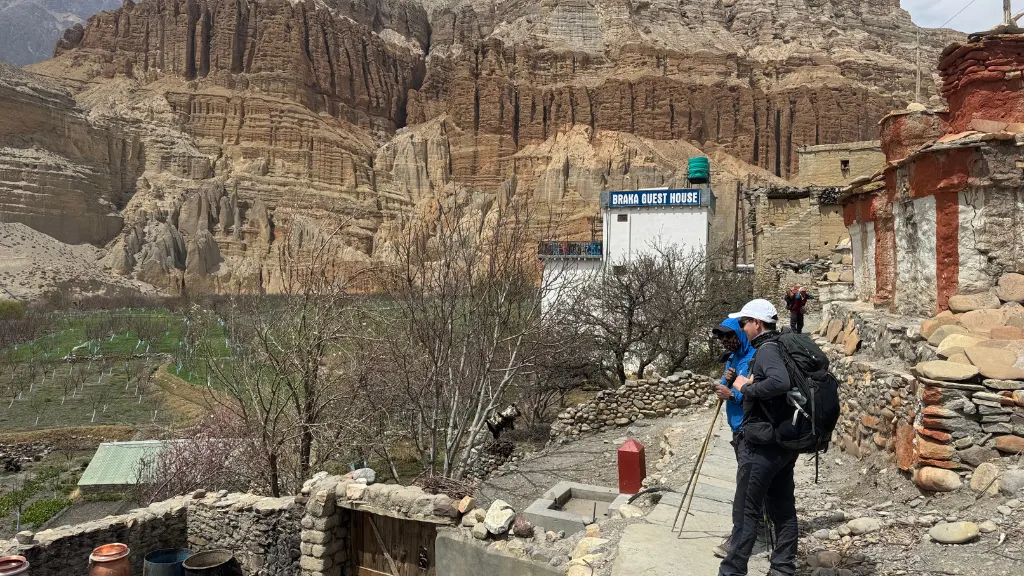
The first thing you notice in Upper Mustang is the quiet. Somewhere past Kagbeni the Kali Gandaki stops sounding like a river and starts sounding like wind, and the trail narrows into a ribbon of ochre dust between cliffs that look as though someone has carved them with a spoon. There are no trees to soften the view. There is a chorten, a line of prayer flags, a mule train kicking up dust, and beyond them a wall of eroded rock in red, orange and grey.
If you are planning an Upper Mustang trek in 2027, the timing is good. The restricted area permit now costs USD 50 per person per day instead of a flat USD 500, solo travellers can hold a permit, and the trail to Lo Manthang is easier to plan than it has ever been. This guide covers everything you need: a day-by-day itinerary, permits, costs, the best season, altitude, safety and the questions our guests ask most often.
What is the Upper Mustang trek?
The Upper Mustang trek is a walk through the northern part of the former Kingdom of Lo, a restricted area in the Annapurna region that runs from Kagbeni to the walled city of Lo Manthang, a few kilometres short of the Tibetan border. The route follows an old salt trading corridor through a high desert in the rain shadow of the Himalayas. Most itineraries take 12 to 17 days from Kathmandu and reach a highest sleeping altitude of about 3,840 metres.
Three things set it apart from other Nepal treks. First, it is genuinely Tibetan in culture, with Sakya and Kagyu monasteries, mani walls and communities that still speak Loke. Second, it is one of the few Nepal treks that works well in the summer monsoon, because the Dhaulagiri and Annapurna ranges block most of the rain. Third, it requires a special permit and a licensed guide, which keeps numbers low.
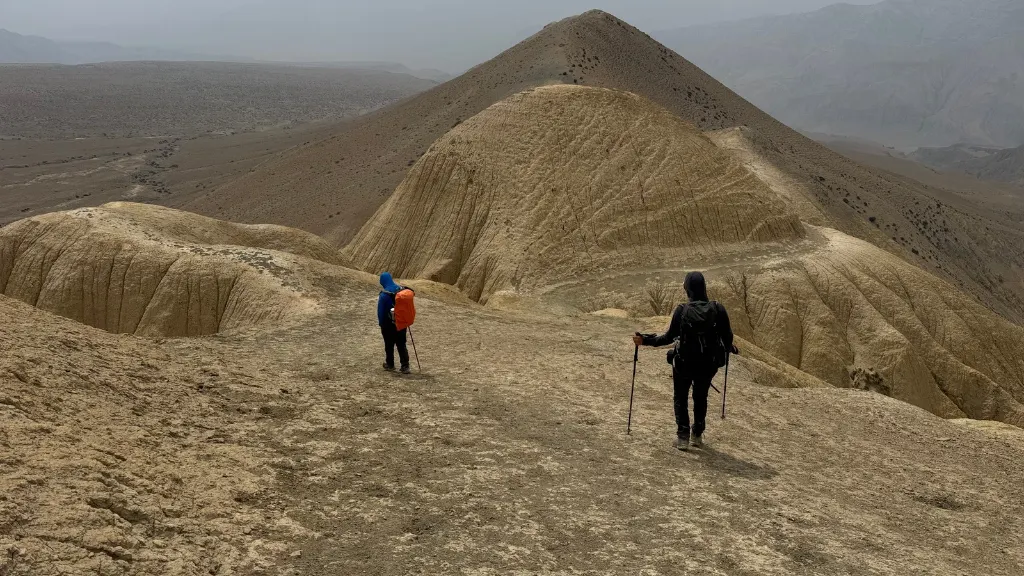
Upper Mustang trek 2027 at glance ( Feature Table )
Feature | Details |
| Trek name | Upper Mustang Trek |
| Region | Mustang, Gandaki Province, Nepal (restricted area north of Kagbeni) |
| Duration | 14 days from Kathmandu to Kathmandu (12 to 16 day versions available) |
| Trekking days | 10 days on the trail, including 1 rest day in Lo Manthang |
| Trek start and end | Jomsom (flight from Pokhara) |
| Highest sleeping point | Lo Manthang, about 3,840 m |
| Highest pass | Nyi La, about 4,010 m (up to about 4,200 m on the alternative return route) |
| Difficulty | Moderate |
| Daily walking time | 4 to 7 hours |
| Best seasons | March to November, with May to June and September to October the most popular |
| Accommodation | Teahouses and lodges, twin sharing |
| Meals | Full board on the trek (breakfast, lunch and dinner) |
| Permits needed | Upper Mustang Restricted Area Permit (USD 50 per person per day), Annapurna Conservation Area Permit (NPR 3,000), TIMS card |
| Group size | From 1 traveller upwards, with a licensed guide |
| Cultural highlights | Lo Manthang, Chhoser caves, Ghar Gompa, Thubchen and Jampa temples, Tiji Festival (optional timing) |
| Tiji Festival 2027 | Provisionally 1 to 3 June 2027 (to be confirmed by Choede Monastery) |
| Departures | Any date, private or small group |
Why trek Upper Mustang with Hiking Nepal
Upper Mustang punishes bad planning. Flights to Jomsom are weather dependent, the best lodges in Lo Manthang fill early in the Tiji season, and the permit paperwork has to be right before you leave Kathmandu. A local operator earns its fee here.
Hiking Nepal is a Kathmandu company with its office in Thamel, registered with the relevant government bodies in Nepal, and our permits are processed in person with the Department of Immigration. That means no agents of agents and no surprises at the Kagbeni checkpoint. Our guides know which teahouses have a working stove, which stretches of the jeep track are best avoided on foot, and how to build a buffer day into your itinerary so a cancelled flight does not wreck your trip.
You can also talk to a real person before you commit. Nava, who looks after bookings, answers WhatsApp messages on +977 9802342080, and you can email [email protected]. We will tell you honestly if a date, a route or a fitness level is a poor match.
A short story from the trail
I remember the first time I walked into Lo Manthang. It was late afternoon, the wind had been in our faces since Tsarang, and a group of us were arguing about whether the line on the horizon was a cloud or a wall. It was a wall. The city appeared all at once, flat-roofed and whitewashed, with the red and ochre monastery buildings stacked against the sky.
A shopkeeper sitting in a doorway looked at our dust-covered boots, nodded, and handed over a glass of butter tea without a word. A boy of about ten, doing his homework on the step beside him, asked in careful English where we had come from. When we said Kathmandu, he asked if it was far. I said it was about two weeks on foot, and a long flight and a bumpy road the other way. He thought about it and said, "Then you must be very tired." We were. That glass of tea was the best thing I drank all year.
Upper Mustang trek itinerary 2027: 14 days, day by day
This is the standard Hiking Nepal itinerary. We adjust it for fitness, festival dates and flight schedules. Altitudes are approximate and times are walking times.
Day 1: Arrive in Kathmandu (1,400 m)
Our team meets you at Tribhuvan International Airport and transfers you to your hotel in Thamel. In the evening you meet your guide for a short briefing, check your gear and hand over your passport copies and photographs for the permits.
Day 2: Permits and preparation in Kathmandu
This day is for paperwork, last-minute gear hire and a short walk through Thamel or Boudhanath. If you want to see more of the city, Swayambhunath and Patan Durbar Square both fit in an easy half day. We use this day to process or confirm your Upper Mustang permit and Annapurna Conservation Area Permit.
Day 3: Kathmandu to Pokhara (820 m)
You can take the 25-minute flight or a tourist bus along the Prithvi Highway, which takes six to seven hours. Most guests choose the flight and use the extra time to rest beside Phewa Lake. Pokhara is where the Jomsom flights leave from, and an early start is essential, because the winds in the Kali Gandaki valley build through the morning.
Day 4: Fly to Jomsom, walk to Kagbeni (2,810 m)
The Pokhara to Jomsom flight takes about 20 minutes and runs between Dhaulagiri and Annapurna, two of the world's deepest valley walls. From Jomsom (2,720 m) you walk about three hours north along the Kali Gandaki riverbed to Kagbeni, a mud-walled village with a monastery, apple orchards and the checkpoint that marks the start of the restricted area. Walk in the morning if the wind allows. It usually gets fierce after noon.
Day 5: Kagbeni to Chele (3,050 m)
You register your permit at the Kagbeni checkpoint, then follow the river to Tangbe, a village of whitewashed houses with buckwheat and barley terraces, and on to Chhusang. A short climb brings you to Chele, set above a deep red canyon. The walk takes five to six hours. Expect your first proper views of the Mustang gorge and some steep sections as the trail climbs above the river.
Day 6: Chele to Syanbochen (3,800 m)
This is a day of passes. You cross Taklam La (about 3,624 m) and Dajori La (about 3,735 m), with a descent through Samar (3,620 m), where a grove of poplars is a welcome shade. Beyond Samar the trail climbs again towards Syanbochen. It is a long day of six to seven hours with a big altitude gain, so go slowly, drink plenty and eat properly. Your guide will check your oxygen saturation and symptoms in the evening.
Day 7: Syanbochen to Ghami (3,520 m)
After the Yamda La pass (about 3,850 m) you descend to Geling (3,570 m), one of the larger villages on the route, then climb gently to Ghami. The trail passes the Mustang's longest mani wall, a 300 metre stretch of carved stones. Ghami has a fine whitewashed monastery and a well-run teahouse where you will probably be served a very good thukpa.
Day 8: Ghami to Tsarang (3,560 m)
You cross the Nyi La pass (about 4,010 m), the highest point of the classic route, and descend to Charang, home to the Tsarang Gompa and a ruined dzong that was once the seat of the Mustang kings. Look for the old prayer wheels in the courtyard and the giant manuscripts in the library, a collection that few trekkers know about. It is a good day to practise slow walking: the climb is steady, the air thin, and the distances are shorter than yesterday's.
Day 9: Tsarang to Lo Manthang (3,840 m)
This is the day everyone has been waiting for. The trail climbs through the Charang Chu canyon to the Lo La pass (about 3,950 m). From the top you see the whole Lo Manthang plain, the walled city set against a backdrop of snow peaks. Allow four hours of walking, then take the afternoon to settle in. Wander the narrow lanes, buy a cup of tea in a shop that has been selling it for decades, and watch the light turn the city walls pink.
Day 10: Explore Lo Manthang (rest day)
Lo Manthang has about 150 houses inside its walls and three major temples: Jampa Lhakhang, Thubchen Gompa and Choede Gompa. Your guide arranges visits, and if you want to see the royal palace from the outside, we can walk past it. In the afternoon you can ride or walk to Namgyal Gompa and the Chhoser caves, or take the shorter walk to Tingkhar village. This rest day is also your insurance against flight delays on the way out.
Day 11: Lo Manthang to Drakmar (3,810 m) via Ghar Gompa
You can return the way you came, but we usually choose the alternative trail via the Ghar Gompa (Lo Gekar), one of the oldest monasteries in Nepal and said to date from the 8th century. The route crosses the Marang La (about 4,200 m) and descends to Drakmar, famous for its red cliffs and the pointed rock formations that look like a giant's cathedral. Expect six to seven hours.
Day 12: Drakmar to Ghiling, then Chhuksang (3,050 m)
You descend through Ghiling (3,570 m) and the Kali Gandaki valley to Chhuksang. The walk is long but mostly downhill, and you gain richer air at every step. The Chhuksang gorge is at its best in the late afternoon.
Day 13: Chhuksang to Jomsom (2,720 m)
You pass through Kagbeni, return your permit paperwork at the checkpoint and walk the last stretch to Jomsom. A final celebration dinner with your crew is a tradition. Fly or drive to Pokhara the next morning, depending on the weather.
Day 14: Jomsom to Pokhara and Kathmandu
Fly to Pokhara in the morning, then connect to Kathmandu by air or by road. Our team transfers you to your hotel in Thamel, and you can spend the evening on gifts, tea and stories.
Short and long variations
If you have less time, you can do a 10 or 11 day trek by taking a jeep for part of the route between Jomsom and Chele or between Lo Manthang and Ghami. If you have more, we can add a day in Lo Manthang for the caves and Namgyal Gompa, or extend to Muktinath via Lubra for a pilgrimage finish. Tell us what you want and we will build a route to match.
Upper Mustang permit 2027: what you need and how it works
You need three documents to trek legally in Upper Mustang: the Restricted Area Permit, the Annapurna Conservation Area Permit and a TIMS card.
Restricted Area Permit (RAP)
The RAP is issued by the Department of Immigration in Kathmandu. Since late 2025 the old USD 500 flat fee for ten days has been replaced by a charge of USD 50 per person for each day spent in the restricted area, which starts at Kagbeni. There is no longer a ten-day minimum, so a shorter trip costs less, and a 12-day itinerary with 10 days inside the zone costs about USD 500, which is the same as before. Extensions are charged at the same daily rate.
Annapurna Conservation Area Permit (ACAP)
Upper Mustang lies inside the Annapurna Conservation Area, so you need an ACAP. For non-SAARC nationals the fee is NPR 3,000, which is roughly USD 23 to 30 depending on the exchange rate.
TIMS card
The Trekkers' Information Management System card is a registration that helps authorities track trekkers. Hiking Nepal arranges this for you as part of the permit package.
Do you need a guide, and can you go alone?
You must trek with a licensed guide through a registered Nepali trekking company. Independent trekking is not permitted in Upper Mustang. In March 2026 the Department of Immigration also removed the old rule that two foreigners had to apply together, so a single traveller can now hold a permit, provided the licensed guide is included.
How the permit process works with Hiking Nepal
Step 1: Send us a scan of your passport, a passport photograph and your arrival date.
Step 2: We confirm the dates and prepare the permit application.
Step 3: You arrive in Kathmandu, and we submit the application in person at the Department of Immigration.
Step 4: We collect the permit, which usually takes one to two working days.
Step 5: Your guide carries the originals and shows them at each checkpoint.
Because the rules have changed twice in the past year, we recommend confirming the latest fee with us before you pay for flights.
Upper Mustang trek cost in 2027
The cost of an Upper Mustang trek depends on how many days you walk, how many of you travel together and whether you use jeep sections. Across Nepal, operators typically price this route between USD 1,800 and USD 3,500 per person for a fully guided 12 to 16 day package. Hiking Nepal quotes a fixed price per departure so that you know the total before you leave home. Contact us for the current 2027 figure for your group size.
What the package includes
Airport transfers in Kathmandu and Pokhara
Hotel accommodation in Kathmandu and Pokhara with breakfast
Upper Mustang Restricted Area Permit, ACAP and TIMS card
Licensed English-speaking trekking guide and porter support
Teahouse accommodation and three meals a day during the trek
Domestic flights between Pokhara and Jomsom (or an agreed alternative)
Guide and porter wages, insurance and equipment
All government taxes and our service charge
What it does not include
International flights to Nepal and your Nepal visa
Travel and rescue insurance
Lunch and dinner in Kathmandu and Pokhara
Hot showers, battery charging and bottled drinks on the trail
Personal gear, such as a sleeping bag if you do not have one
Tips for your guide and porter
Typical costs at a glance
Restricted Area Permit: USD 50 per day inside the zone
ACAP: NPR 3,000
Jomsom flight: around USD 150 to 200 each way
Guide: around USD 30 to 40 per day
Porter: around USD 20 to 30 per day
Tea or hot drinks: USD 2 to 3 per cup
Spending money: USD 10 to 20 per day for snacks, showers, charging and tips
Ways to reduce the cost without cutting safety
Travel as a group. Guide and porter costs are shared, so a group of four will pay noticeably less each than a solo traveller. Walk shorter days inside the restricted area if you have limited time. Choose shoulder seasons, when lodges are cheaper and flights are easier to book. Never save money by skipping insurance, a licensed guide or an acclimatisation day.
Best time to trek Upper Mustang in 2027
Upper Mustang is open all year, but the weather changes the experience a lot.
Spring (March to May)
Spring is warm in the valleys and cool at night, with clear mornings and strong afternoon winds. March can still be cold above 3,500 metres, and the wind is the main challenge. April and May are comfortable and the apple blossom around Marpha and Kagbeni is at its best.
Monsoon (June to August)
Because Upper Mustang sits in the rain shadow, it receives only a fraction of the monsoon rain that falls elsewhere in Nepal. You will still see occasional showers and cloudy mornings, and flights to Jomsom are sometimes delayed by weather in Pokhara. In return the trails are quiet, the fields are green and the temperatures are comfortable. It is the best option for people who want to trek in July or August.
Autumn (September to November)
Autumn offers the clearest skies, steady weather and the most comfortable walking temperatures. September and October are the busiest months, so book Jomsom flights and Lo Manthang lodges early. November is colder but still good, and the crowds thin out.
Winter (December to February)
Winter is cold, with snow on the passes and some lodges closed. The trek is possible for experienced trekkers with proper gear, but it is not our recommended season. Many locals move to lower altitudes for the winter.
Tiji Festival 2027
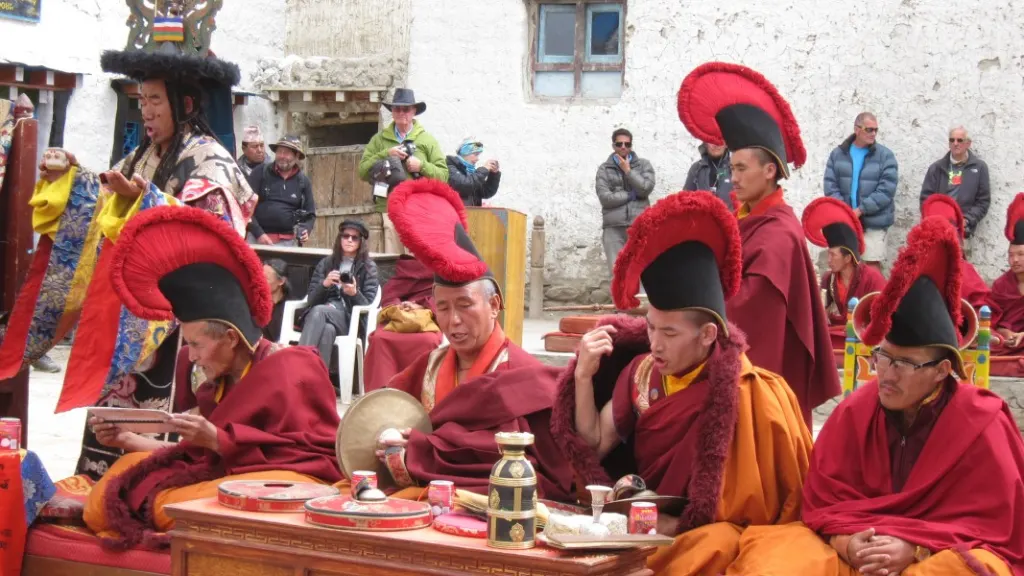
The Tiji Festival is a three-day Buddhist ceremony in Lo Manthang, a masked dance in which monks re-enact the victory of the deity Dorje Jono over a demon who brought drought and storms to the valley. The dates follow the Tibetan lunar calendar and are confirmed by Choede Monastery in the months before the event. For 2027 the dates are provisionally 1 to 3 June, though several operators list different dates, so check with us before you book flights. Rooms inside the walled city sell out months in advance, so if you want to attend we recommend booking at least six months ahead.
How difficult is the Upper Mustang trek?
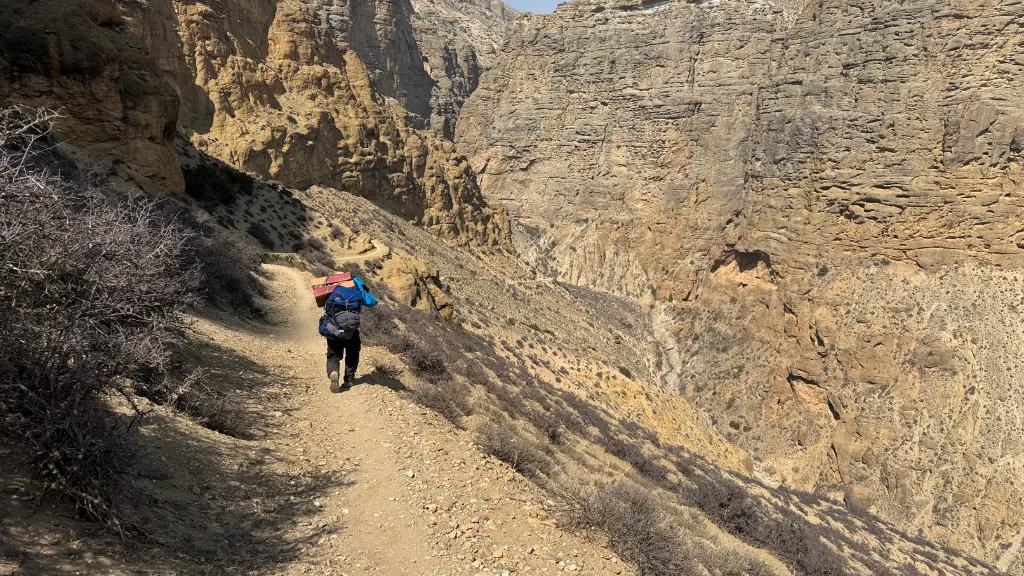
The Upper Mustang trek is moderate. The daily distances are manageable, the trails are well marked and you do not need technical skills. The challenges are altitude, wind, dust and long days on some sections.
You will sleep above 3,000 metres every night from Chele onwards, and cross several passes between 3,600 and 4,200 metres. Walking days average four to seven hours. If you can walk six hours a day on hills with a daypack, you can do this trek. We recommend a month of cardiovascular training before you arrive, with hill walks carrying a loaded pack if you can manage it.
Altitude and acclimatisation
The itinerary is designed so that you gain height gradually, with only one significant jump between Chele and Syanbochen. We build in a rest day at Lo Manthang and keep a flexible schedule for the return. Follow three simple rules. Walk slowly. Drink three to four litres of water a day. Never ignore a persistent headache.
Altitude sickness (AMS) symptoms to watch
Mild symptoms include headache, nausea, dizziness, poor sleep and loss of appetite. If your headache is getting worse, you are vomiting, you feel confused or you struggle to walk in a straight line, you must descend. Your guide carries a pulse oximeter and a first aid kit and makes the final call. Do not argue with the guide's decision. Descent is the only effective treatment for severe altitude sickness.
Wind and dust
The Kali Gandaki valley is one of the windiest in the world. Winds begin around 10 am and can reach gale force by the afternoon, so we start early. Dust is the second challenge: a buff or scarf, sunglasses with side protection and lip balm are essential.
Getting to Upper Mustang
The standard route is a flight from Pokhara to Jomsom, followed by a walk to Kagbeni. Flights run in the morning only because the wind builds after midday, and delays are common. Allow at least one spare day at the end of your trip if you have an international flight to catch.
A road now runs from Jomsom through Kagbeni to Lo Manthang, and jeeps can make the journey in a day. This changes the trek in two ways. First, some sections of the old trail run alongside the dirt road and carry jeep dust. Second, you can shorten the trip by using a jeep for part of the route. Our guides use the original footpaths wherever possible and cut the road sections out of the walking itinerary. If you want a shorter journey, we can arrange jeep support on the return.
Food and accommodation on the Upper Mustang trek
You stay in teahouses and small guesthouses, usually twin sharing, with simple beds, blankets and shared bathrooms. Rooms in Lo Manthang have improved in the last few years, and some now have attached bathrooms. Bring a sleeping bag rated to at least minus 10 degrees Celsius, because nights are cold above 3,500 metres.
The food is simple and filling. Expect dal bhat, thukpa, momos, fried rice, potatoes, eggs and Tibetan bread, plus apples and apple brandy from the valley. Vegetarian options are easy to find. We recommend carrying your own electrolytes and snacks, because supplies are limited once you leave Kagbeni.
Hot showers are available in some villages for a small fee. Charging points exist in most lodges but cost extra, and mobile coverage is patchy beyond Kagbeni. Bring a power bank and download offline maps.
What to pack for Upper Mustang
Your pack should cover three conditions: cold nights, hot days and constant wind. Essentials include a warm down jacket, a windproof shell, base layers, a fleece, trekking trousers, a sun hat, a warm hat, gloves, a buff, sunglasses, broken-in boots, a daypack, trekking poles, a headtorch, a sleeping bag, a water bottle or hydration bladder, water purification tablets, high-factor sun cream, lip balm and a basic first aid kit. If you need gear, Thamel has plenty of shops, and we can help you choose or hire quality items on Day 2.
Culture and etiquette in the Kingdom of Lo
Mustang is a living Tibetan Buddhist culture, not a museum. A few simple habits go a long way. Walk clockwise around chortens, mani walls and monasteries. Ask permission before taking photographs of people, and never photograph inside monasteries unless your guide says it is allowed. Dress modestly in villages and monasteries. Do not touch religious objects or step over prayer flags.
The people of Mustang call themselves Lobas, and many families still herd yaks and goats, grow barley and trade with Tibet. Buying handicrafts, tea or a meal directly supports local households, and a polite greeting in Tibetan or Nepali is always appreciated.
Safety, insurance and responsible trekking
Your safety is the main thing we plan around. Our guides are licensed, first aid trained and experienced in altitude management. We carry a first aid kit and a pulse oximeter on every trek, and we check you daily for symptoms.
You must buy travel insurance that covers trekking up to 4,500 metres and helicopter evacuation. Without it, we cannot take you above Kagbeni. Rescue from Lo Manthang by helicopter can cost several thousand dollars and is difficult to arrange without insurance, so do not take chances.
Drink only boiled, filtered or treated water, avoid salads and raw foods at altitude, and carry hand sanitiser. Pack out your plastic, and use refillable bottles where possible. Responsible trekking protects the fragile environment that makes Upper Mustang special.
Frequently asked questions about the Upper Mustang trek
1. How much does the Upper Mustang permit cost in 2027?
The Upper Mustang Restricted Area Permit costs USD 50 per person per day spent inside the restricted area, which begins at Kagbeni. This replaced the old flat fee of USD 500 for ten days. You also need an Annapurna Conservation Area Permit (NPR 3,000) and a TIMS card. Hiking Nepal arranges all three.
2. How many days do you need for the Upper Mustang trek?
Most itineraries take 12 to 16 days from Kathmandu. Our standard route takes 14 days, with 10 days on the trail. If you use jeeps for part of the route, you can reduce this to 10 or 11 days, but we recommend keeping at least one rest day in Lo Manthang.
3. When is the best time to trek Upper Mustang?
The best months are March to November. May and June offer warm days and the Tiji Festival, and September to October offer the clearest skies. Because Upper Mustang lies in the rain shadow, it is also one of the best treks in Nepal during the monsoon. Winter is cold and not recommended.
4. Can you trek Upper Mustang without a guide, or alone?
No, you cannot trek independently. You must travel with a licensed guide arranged by a registered Nepali trekking agency. Since March 2026 a solo traveller can hold a permit, so you no longer need to find another foreigner to apply with, but the guide requirement remains.
5. How difficult is the Upper Mustang trek, and is altitude sickness a risk?
It is a moderate trek with no technical sections. Walking days run four to seven hours, and you sleep above 3,000 metres from Chele onwards. Altitude sickness is possible, particularly after the climb to Syanbochen, so you should walk slowly, drink plenty of water and tell your guide about any symptoms immediately.
6. Is Upper Mustang harder than the Everest Base Camp trek?
Most trekkers find Upper Mustang easier. The highest sleeping point is around 3,840 metres, compared with about 5,164 metres at Gorak Shep on the Everest Base Camp route. The challenge in Upper Mustang is wind, dust and long days rather than extreme altitude.
7. What is included in the Hiking Nepal Upper Mustang trek package?
The package covers airport transfers, hotels in Kathmandu and Pokhara, all permits, a licensed guide and porter, teahouse accommodation and meals on the trek, domestic flights to and from Jomsom, and all taxes. International flights, visas, insurance, personal gear and tips are not included.
Ready to trek Upper Mustang in 2027?
Upper Mustang is one of the few places in Nepal where you can still walk for days without meeting another group. The walled city of Lo Manthang, the cliffs of Drakmar and the old salt trails reward anyone who goes slowly and pays attention.
Hiking Nepal builds every Upper Mustang trek around your dates, fitness and budget. Message Nava on WhatsApp at +977 9802342080, email [email protected], or visit our office at Dabali Marga, Thamel, Kathmandu, to check availability for 2027. Early booking is the best way to secure Jomsom flights and Lo Manthang lodges, especially around the Tiji Festival.