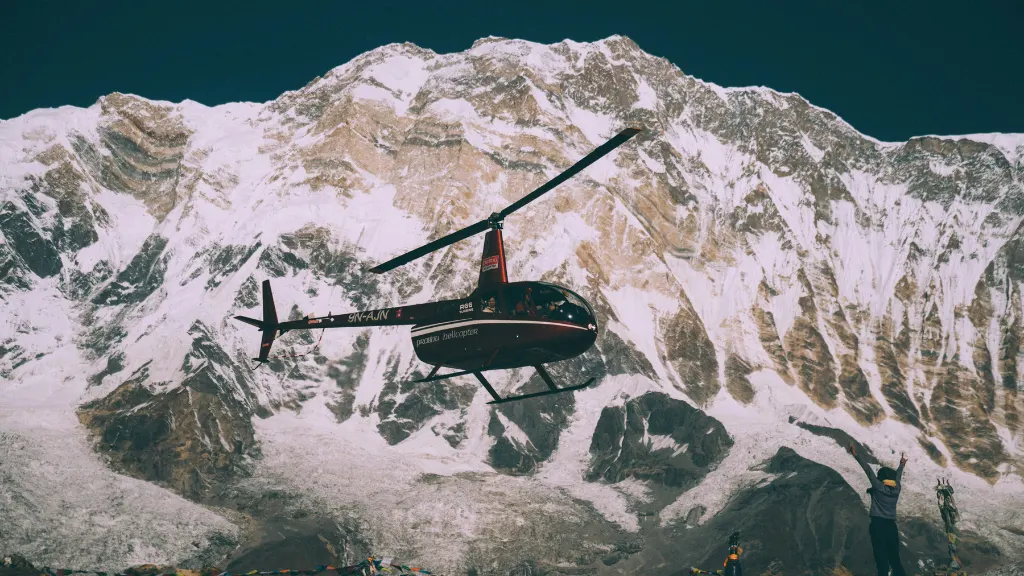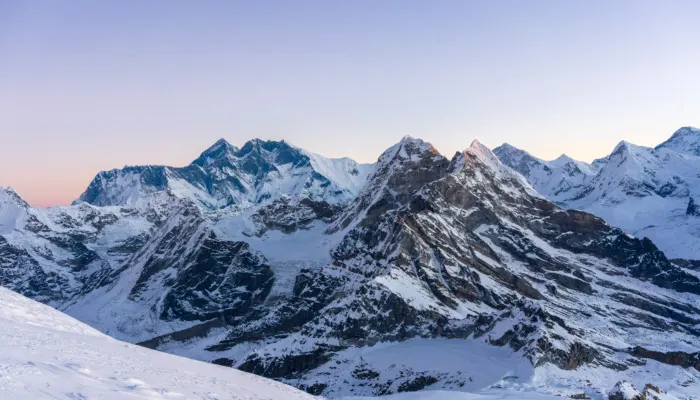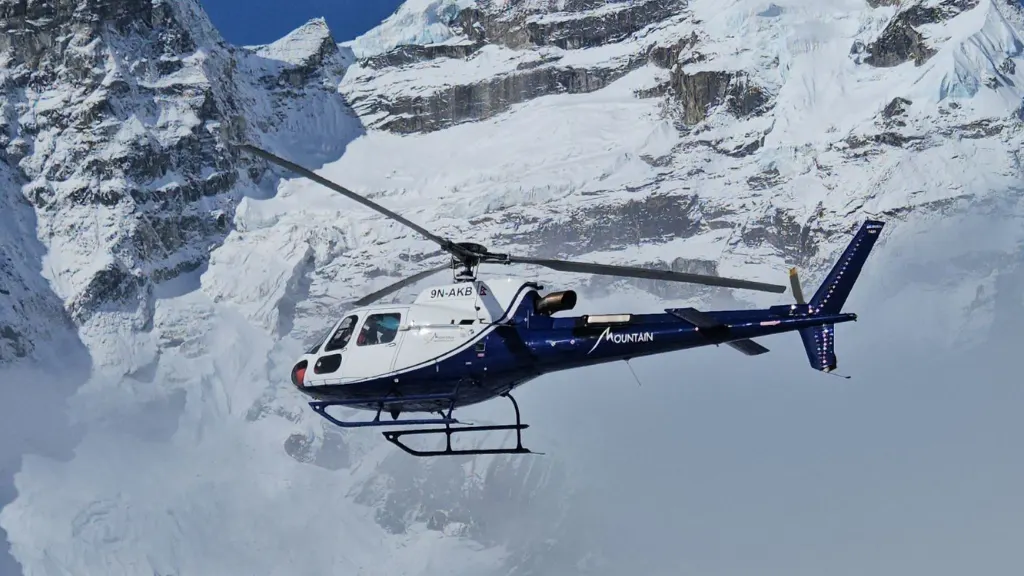
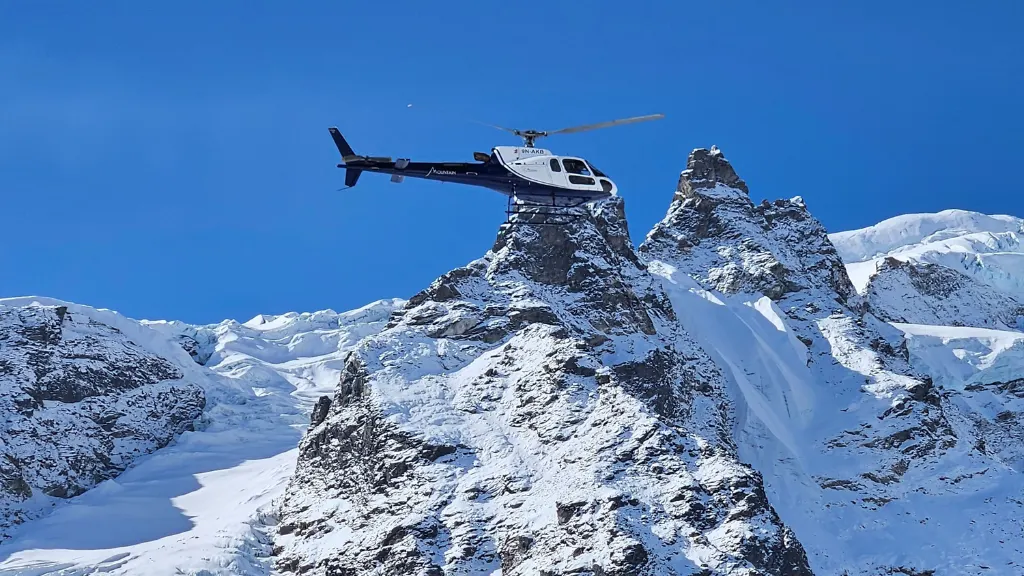
At 6:43 on a clear November morning, a helicopter lifted off from Kathmandu with five passengers, three flasks of tea and one very quiet retired school teacher from Leeds. She had wanted to see Everest for forty years, and had never been able to face the walk. Forty minutes later the pilot set the aircraft down at Lukla, refuelled, and climbed again up the Dudh Koshi valley. Namche Bazaar slid underneath. Then Ama Dablam appeared on the left, close enough to see wind blowing snow off its ridge, and the pilot turned to say, over the headset, "Everest is next."
She did not speak for the next ten minutes. When the skids touched down on Kala Patthar at 5,545 metres and the door opened to a wall of cold, clean air, she stepped out, looked up, and said only, "Well. That was worth waiting for."
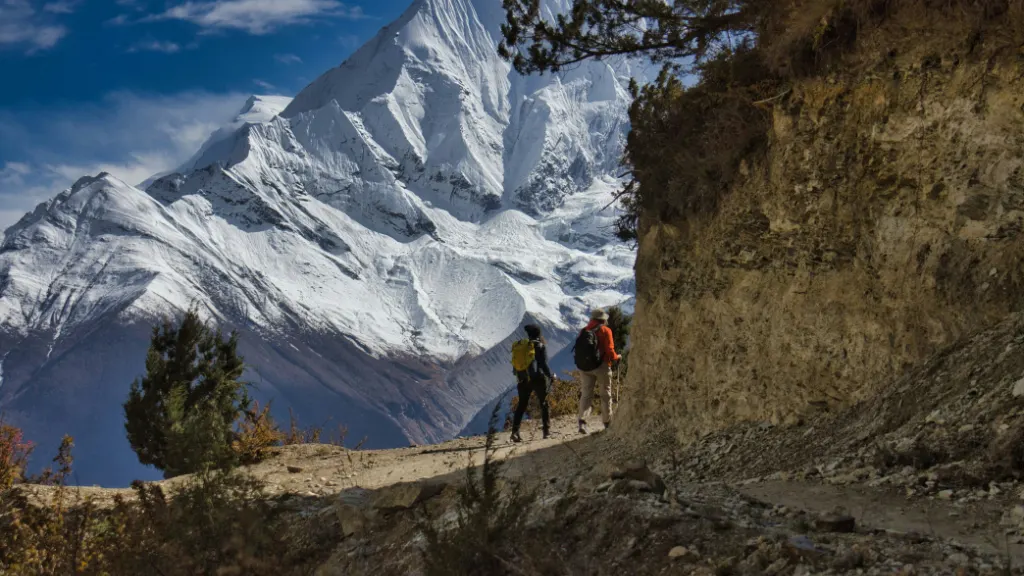
That is what a helicopter tour in Nepal offers: the Himalaya on a schedule that fits a long weekend, a bad knee or a tight itinerary. It is not a replacement for walking in. It is a different way of seeing the same mountains, and for many travellers it is the only way. This guide covers the best helicopter tours in Nepal, from the famous Everest flight to quieter options around Annapurna, Mustang, Langtang and the far west. You will find honest costs, safety advice, seasonal timing, altitude warnings and a checklist for choosing an operator.
What is the best helicopter tour in Nepal?
The best helicopter tour in Nepal for most travellers is the Everest Base Camp helicopter tour from Kathmandu, with a landing at Kala Patthar or Syangboche and breakfast at the Everest View Hotel. It takes four to five hours, passes over Namche Bazaar, Tengboche and the Khumbu glacier, and ends the same morning in Kathmandu. For a shorter, cheaper option, the Annapurna Base Camp helicopter tour from Pokhara takes about 90 minutes, lands at 4,130 metres and costs a fraction of the Everest flight.
Helicopter tours in Nepal at a glance
Tour | Departs from | Flight time | Highest point | Typical shared price per person | Best season |
| Everest Base Camp scenic tour (Hotel Everest View breakfast) | Kathmandu | 4 to 5 hours | about 5,364 m (flyover) | USD 1,250 to 1,450 | Mar to May, Oct to Nov |
| Everest tour with Kala Patthar landing | Kathmandu | 4 to 5 hours | 5,545 m | USD 1,800 to 2,100 (landing add-on about USD 600 to 700) | Mar to May, Oct to Nov |
| Everest Base Camp trek with helicopter return | Gorak Shep or Pheriche | 30 to 40 minutes | 5,545 m on foot | Added to trek cost | Mar to May, Oct to Nov |
| Annapurna Base Camp tour | Pokhara | 1.5 to 3 hours | 4,130 m | USD 350 to 550 | Mar to May, Sep to Nov |
| Mardi Himal tour | Pokhara | 1.5 hours | about 4,500 m | USD 450 to 550 | Mar to May, Oct to Nov |
| Muktinath and Mustang tour | Pokhara | 2.5 to 4 hours | 3,710 m | USD 700 to 1,100 | Mar to Jun, Sep to Nov |
| Langtang and Gosaikunda tour | Kathmandu | 2 to 3 hours | about 4,380 m | USD 400 to 700 | Mar to May, Oct to Nov |
| Manang and Tilicho tour | Pokhara | 3 hours | about 3,540 m (Manang) | from USD 700 | Mar to May, Sep to Nov |
| Rara Lake tour | Nepalgunj or Kathmandu (charter) | full day | 2,990 m | private charter only | Apr to Jun, Sep to Nov |
| Organiser | Hiking Nepal Pvt Ltd, Dabali Marga, Thamel, Kathmandu | ||||
| Contact | +977 9802342080 (Nava), [email protected] |
Prices are indicative market ranges and change with season, fuel and group size. Ask for a written quote when you inquire with us.
How helicopter tours work in Nepal
Shared tours and private charters
There are two ways to book. On a shared (group joining) tour you buy one or two seats on a scheduled departure and fly with other travellers, usually four or five to a helicopter. On a private charter you rent the whole aircraft for your own group, which costs far more in total but gives you control over timing, route and stops.
A standard helicopter carries up to five passengers or about 480 to 500 kilograms of combined weight. Shared tours are cheaper because the aircraft cost is split, and private charters work out well for families, honeymooners and photographers who want flexibility.
Which helicopter is used
Most Himalayan tours use the Airbus H125, known in Nepal as the AS350 B3e, which is built for high-altitude performance. Above about 4,400 metres, payload falls sharply because the air is thin. That is why operators use shuttle flights for landings at places such as Kala Patthar, carrying only two passengers at a time at the highest points.
A typical tour day
Most flights depart in the early morning, between 6 and 8 am, because mountain weather is clearest before cloud builds. Your operator collects you from your hotel, drives you to the domestic terminal at Tribhuvan International Airport, and briefs you on safety. You board, fly, land for a short stop or breakfast, and return to your hotel by late morning.
Why flights are weather dependent
Helicopter operations in Nepal run under visual flight rules. Cloud, wind and poor visibility can delay or cancel a flight, even in the best season. A reputable operator will tell you honestly if conditions are marginal, and will rebook you for the next available slot or refund the unused portion according to its policy. Build at least one spare day into your schedule.
The best helicopter tours in Nepal
1. Everest Base Camp helicopter tour from Kathmandu
Duration: 4 to 5 hours
Highest point: about 5,364 m (base camp flyover), 5,545 m with a Kala Patthar landing
Typical price: USD 1,250 to 1,450 shared
This is the signature helicopter tour in Nepal. The helicopter flies from Kathmandu to Lukla (about 45 minutes) where it refuels, then climbs north over Phakding, Namche Bazaar, Tengboche monastery, Dingboche, Lobuche and Gorak Shep. You get close views of Everest, Lhotse, Nuptse, Ama Dablam and the Khumbu glacier, and the flight includes a landing at either the Everest View Hotel near Syangboche or a viewpoint such as Kala Patthar or Pheriche.
Landing rules matter here. Landing at Everest Base Camp itself is generally not offered, and most tours land at Syangboche (for breakfast at the Everest View Hotel), at Pheriche, or at Kala Patthar if permissions, weather and payload allow. A landing at Kala Patthar is often sold as an add-on, usually around USD 600 to 700 extra per person, because the high altitude limits how many passengers the helicopter can carry. Landings are never guaranteed. If weather or wind prevents it, your operator should tell you what happens to the extra cost before you book.
The standard shared tour typically includes the round-trip helicopter flight from Kathmandu, airport taxes, a refuelling stop at Lukla and a stop for breakfast at Everest View Hotel (breakfast is sometimes extra). Some quotes list national park and local municipality fees separately, so ask whether the price is all-inclusive.
Who it suits: travellers with one morning to spare, people who cannot trek, couples and families celebrating something, and photographers.
2. Everest View Hotel and Syangboche tour
Duration: 3 to 4 hours
Highest point: about 3,880 m
Typical price: from about USD 900 to 1,300 shared
If you want Everest scenery without the altitude of a Kala Patthar landing, this shorter route flies to Syangboche, lands near the Everest View Hotel (at around 3,880 metres), and returns via Lukla. You get a panorama of Everest, Lhotse and Ama Dablam over breakfast, with far less altitude exposure than at 5,500 metres. For many first-time visitors, this is the best balance of view, comfort and risk.
Who it suits: families, older travellers, anyone who worries about altitude, and those on a smaller budget.
3. Everest Base Camp trek with helicopter return
Duration: 9 to 11 days in total
Highest point: 5,545 m (Kala Patthar on foot)
Typical price: roughly USD 2,200 to 3,200 per person for a trek with a shared helicopter return
If you want to walk to Everest Base Camp but do not want to walk back, this is the popular middle route. You trek up, acclimatising properly, reach Gorak Shep and Kala Patthar, then fly from Gorak Shep or Pheriche to Lukla or Kathmandu by helicopter. This saves four or five days and gives you a sense of achievement and a comfortable exit if you are tired or the weather turns.
It costs about USD 700 to 1,200 more than the standard trek with a walking return, depending on group size and season. The helicopter return is not guaranteed on a fixed day, because weather and demand affect departure times, so allow a buffer day at the end. Hiking Nepal offers this style of itinerary as an Everest Base Camp helicopter return package.
Who it suits: trekkers with limited time, people who want to avoid the Lukla flight queue, and anyone who prefers to arrive in Kathmandu fresh.
4. Annapurna Base Camp helicopter tour from Pokhara
Duration: 1.5 to 3 hours
Highest point: 4,130 m
Typical price: USD 350 to 550 shared, USD 1,500 to 2,750 private charter
The Annapurna Base Camp helicopter tour is the best value flight in Nepal. It takes off from Pokhara, flies up the Modi Khola valley past Ghandruk and the lower slopes of Machhapuchhre, and lands in the Annapurna sanctuary at 4,130 metres, where you stand inside a ring of 7,000 and 8,000 metre peaks. Annapurna I, Annapurna South, Hiunchuli, Gangapurna and Machhapuchhre are all in view, and you typically spend 20 to 30 minutes on the ground.
The flight takes about 40 to 50 minutes each way. A group of five usually shares the cost, which is why shared prices can be as low as USD 350 to 500. Because the sanctuary is deep in a valley, cloud often builds by mid-morning, so early departures are best.
A permit is needed for the Annapurna Conservation Area, and a quality operator includes the ACAP fee in the price. Ask to confirm.
Who it suits: travellers based in Pokhara, families, honeymooners and anyone who wants to see Annapurna without a week of walking.
5. Mardi Himal helicopter tour
Duration: about 1.5 hours
Highest point: around 4,500 m
Typical price: USD 450 to 550 shared, about USD 2,000 private charter
Mardi Himal is Annapurna's quieter cousin, a high ridge with Machhapuchhre rising almost directly above it. A helicopter from Pokhara reaches the viewpoint in about 20 minutes, lands briefly and returns. It suits travellers who want to see the Mardi ridge without trekking it, and as a nice add-on if you have trekked the lower sections.
6. Muktinath, Jomsom and Mustang helicopter tour
Duration: 2.5 to 4 hours
Highest point: Muktinath at about 3,710 m
Typical price: from about USD 700 shared (Pokhara), higher from Kathmandu
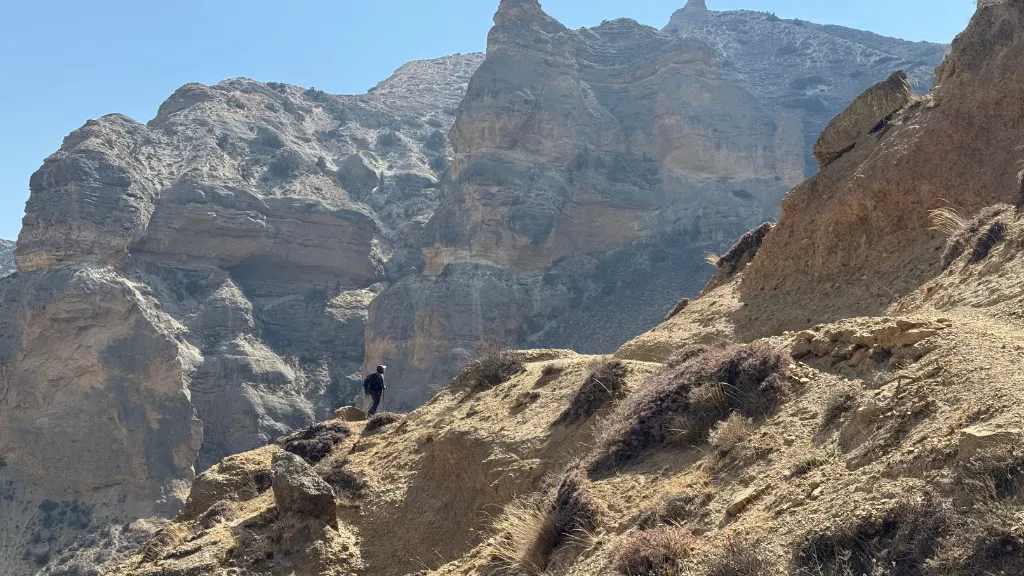
Muktinath is a pilgrimage site sacred to both Hindus and Buddhists, set in the dry landscape of Lower Mustang. A helicopter from Pokhara flies up the Kali Gandaki gorge, the deepest in the world, past Marpha, Jomsom and Kagbeni. You land at Muktinath for a visit to the temple and its 108 water spouts, and return via Jomsom.
Operators also offer longer private charters to Upper Mustang and Lo Manthang, which is a good way to see the Kingdom of Lo if you cannot trek. The mountain winds in the Kali Gandaki valley build quickly in the afternoon, so flights run in the morning.
Who it suits: pilgrims, older travellers, and anyone who wants to see Mustang without the long walk. Our Upper Mustang trek guide covers the walking alternative.
7. Langtang and Gosaikunda helicopter tour
Duration: 2 to 3 hours
Highest point: Gosaikunda at about 4,380 m
Typical price: USD 400 to 700 shared
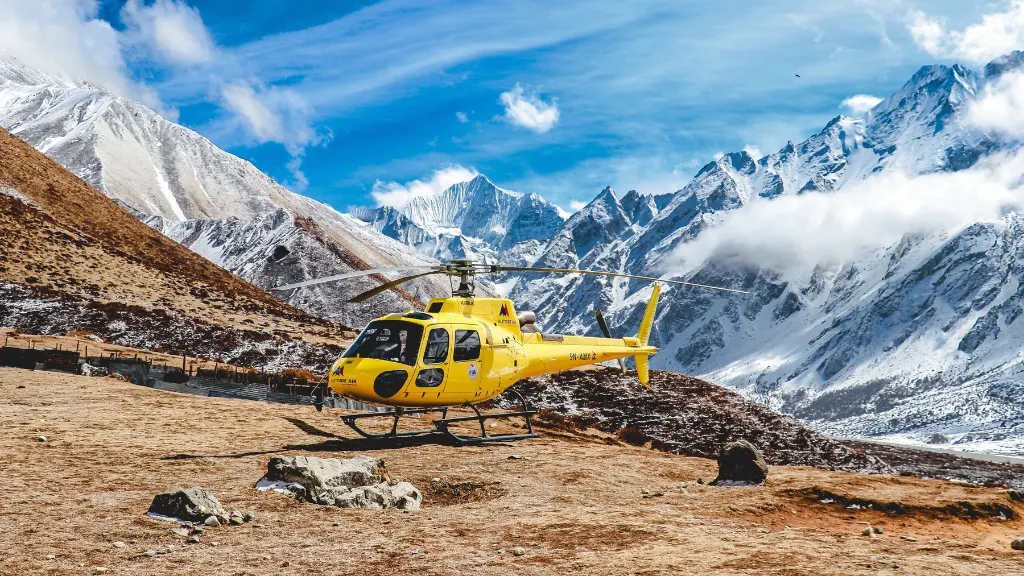
This is one of the shortest ways to reach high mountain scenery from Kathmandu. The helicopter flies north over the Langtang range, lands near Gosaikunda lake, a sacred alpine lake that is the focus of a huge Hindu pilgrimage each August, and can continue to Kyanjin Gompa in Langtang. The flight from Kathmandu takes only about 15 minutes to reach the first lake area, and the tour as a whole usually takes two to three hours.
Who it suits: travellers short on time, pilgrims and families who want a mountain lake without a week of walking.
8. Manang and Tilicho helicopter tour
Duration: about 3 hours
Highest point: Manang at about 3,540 m
Typical price: from about USD 700 shared
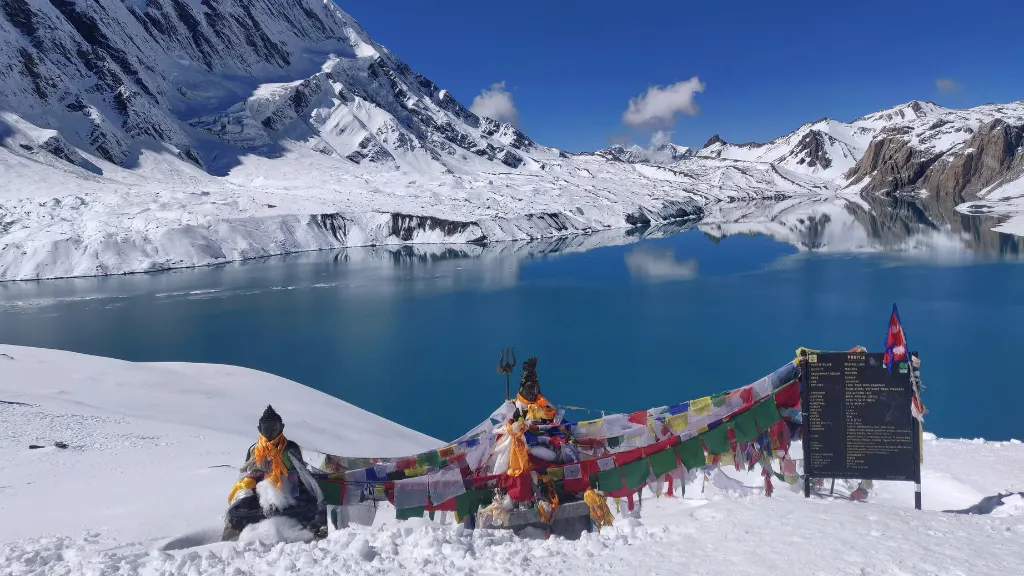
For travellers interested in the Annapurna Circuit region, a helicopter from Pokhara can fly into Manang, with a view of Annapurna II, Gangapurna and the Manang valley, and sometimes continue towards Tilicho Lake. Flights to Manang are weather dependent and usually run in the morning. It is a good option for people who want to see the Circuit without walking it, and it complements our Annapurna Circuit and Tilicho Lake guides.
9. Manaslu helicopter tour
Duration: 2 to 3 hours
Highest point: around 4,000 m
Typical price: from about USD 700 shared, charter prices vary
Flights to Manaslu depart from Kathmandu or Pokhara and fly over the Gorkha region to the base of Manaslu (8,163 m), the eighth highest mountain in the world. They are less commonly requested than Everest or Annapurna, so availability is more limited and private charters are the norm.
10. Rara Lake and far west tours
Duration: a full day
Highest point: Rara Lake at about 2,990 m
Typical price: private charter only
Rara is Nepal's largest lake, in a quiet national park in the far west. A helicopter charter from Nepalgunj or Kathmandu is the easiest way to see it. This is an expedition style flight for a private group, and costs reflect the long distance and logistical planning.
11. Kathmandu Valley and Pokhara scenic flights
Duration: 30 to 60 minutes
Typical price: from about NPR 25,000 to 40,000 per person
These shorter tours suit travellers who want to see the Kathmandu Valley or Pokhara lake region from above, often with a view of the Langtang or Annapurna range. They are less popular with international visitors, but they work well as a romantic surprise or a quick photo flight.
12. Helicopter tours for honeymooners and special occasions
Many couples add a helicopter flight to a honeymoon in Nepal, usually an Annapurna Base Camp flight from Pokhara or an Everest breakfast flight from Kathmandu. A private charter gives you the whole aircraft, a flexible landing time and the option of a champagne breakfast at the Everest View Hotel. We cover romantic add-ons in our honeymoon trip in Nepal guide.
Helicopter tour vs mountain flight
People often confuse the two. A mountain flight is a fixed-wing aircraft that flies parallel to the Himalayan range for about an hour from Kathmandu. A helicopter tour flies closer, can land, and takes longer.
Feature | Helicopter tour | Mountain flight |
| Duration | 3 to 5 hours (Everest) | about 1 hour |
| Landing | Yes, at selected viewpoints | No |
| Closeness to peaks | Very close, flexible altitude | Distance view through window |
| Window seats | Yes (5 passengers) | Guaranteed for each passenger |
| Price per person | USD 350 to 2,100 depending on route | Typically USD 200 to 300 |
| Altitude exposure | High if you land at 5,000 m or more | None |
| Weather sensitivity | High | High |
| Best for | Close views, photography, special occasions | Budget views, short schedule |
If your budget is tight or you worry about altitude, a mountain flight is a good value way to see Everest. If you want to stand in the mountains, choose a helicopter.
How much does a helicopter tour in Nepal cost?
Prices vary widely, and some operators advertise very low figures that do not include landings, taxes or breakfast. As a rough guide for shared tours in 2026 and 2027:
Everest tours
A shared scenic flight from Kathmandu with a breakfast stop at the Everest View Hotel typically costs USD 1,250 to 1,450 per person. A landing at Kala Patthar adds roughly USD 600 to 700. A private charter for up to five passengers typically costs USD 4,800 to 8,500 for the whole helicopter, depending on landing options, season and permissions.
Annapurna and Pokhara tours
An Annapurna Base Camp group flight from Pokhara usually costs USD 350 to 550 per person, and a private charter costs around USD 1,500 to 2,750 per helicopter. Muktinath flights from Pokhara start at around USD 700 shared.
Langtang, Gosaikunda and Manang
Group flights generally cost USD 400 to 700, with private charters from USD 1,500 upwards.
What affects the price
Group size, season, landing permissions, fuel cost, the helicopter type, distance, waiting time and extras such as breakfast. Prices are higher in October and November, when demand peaks.
What to check is included
Ask whether the price includes airport and hotel transfers, airport taxes, national park or conservation area fees, local municipality fees, breakfast at Everest View, insurance, the Kala Patthar landing and a refund policy if weather cancels the flight. Some operators list an extra NPR 7,000 or more per person for taxes and fees on top of the headline price.
How to avoid hidden costs
Request a written itemised quote. Compare like with like (landing or no landing, breakfast or no breakfast), and be cautious of any price far below the market average, because it often excludes something important.
Best time for a helicopter tour in Nepal
Spring (March to May)
Spring offers warm weather, good morning visibility and green hills. Cloud builds earlier in the day by May, so early departures matter.
Autumn (October and November)
Autumn is the best and busiest season. The sky is clear and dry, and the Himalayas are at their sharpest. Book weeks ahead, because shared departures fill up.
Winter (December to February)
Winter flights are possible, with crisp visibility, but it is cold at altitude and strong winds can delay or cancel landings. Prices are often lower.
Monsoon (June to September)
Monsoon flying is limited. Cloud, rain and poor visibility cancel many flights, although Mustang stays dry in the rain shadow and Muktinath is flyable on many monsoon mornings.
Time of day
Always fly in the morning. Visibility is best from about 6 to 10 am, before cloud and wind build.
Safety on helicopter tours in Nepal
Helicopter flying in Nepal is demanding, with high altitude, rapidly changing weather and short airstrips. Choosing a responsible operator matters.
What to check before you book
Ask whether the operator uses a licensed company with a valid air operator certificate from the Civil Aviation Authority of Nepal, what helicopter types it flies, how experienced the pilots are, and what its weather cancellation policy is. Check recent reviews from independent sources. Reputable operators brief passengers before departure, explain seatbelt use and give clear emergency instructions.
Weight and balance
Pilots must weigh passengers and baggage to keep the helicopter within safe limits. Do not be offended if you are asked your weight, and be honest. At higher altitudes the limit drops, which is why shuttle landings carry fewer people.
Weather decisions
A good pilot will turn back or cancel when conditions are unsafe. Never pressure a pilot to land or continue. Safety comes first, and a cancelled flight is a better outcome than a risky one.
Insurance
Check that your travel insurance covers helicopter sightseeing as a passenger, and that it covers altitude up to the height of your planned landing. Many policies exclude or limit helicopter activities, so read the wording. Emergency evacuation cover is essential if you combine a heli tour with trekking.
Rescue fraud and responsible evacuations
Unnecessary or inflated helicopter rescue claims have been reported in Nepal, and insurers have tightened their checks as a result. Use a reputable operator, keep records of any evacuation, and avoid anyone who pushes for an evacuation without a clear medical reason.
Altitude and health on helicopter tours
A helicopter takes you from 1,400 metres to over 5,000 metres in less than an hour, with no time to acclimatise. For most people a 10 to 20 minute landing is fine, but it carries real risks.
Altitude sickness
You can develop symptoms such as headache, nausea, dizziness, breathlessness or fatigue within minutes at 5,500 metres. Most people feel only mild effects during a short stay, but the risk is higher for anyone with a heart or lung condition, anaemia or a previous history of altitude illness.
Tips for a safe landing
Move slowly, breathe deeply and do not run or climb. Drink water, avoid alcohol the night before and keep your landing short. Tell your pilot or guide immediately if you feel unwell, and be ready to descend at once. Descent is the only reliable treatment.
Who should avoid landing at high altitude
Travellers with serious heart or lung disease, uncontrolled high blood pressure, pregnancy or recent illness should speak to a doctor before booking. Children and older travellers can take part, but should avoid Kala Patthar and choose the Everest View Hotel landing at 3,880 metres.
Fitness requirements
No fitness is needed to fly, but you should be able to stand and walk slowly on uneven ground at altitude for a few minutes.
What to wear and bring
Dress in layers. It may be 12 degrees Celsius in Kathmandu and well below zero at Kala Patthar, even in sunshine. Bring a down jacket, a warm hat, gloves, sunglasses with UV protection, sun cream and sturdy shoes. Carry your camera on a strap, a spare battery (cold drains them fast) and a small bottle of water. Leave bulky bags at your hotel, because baggage allowances on helicopters are small.
Photography tips
Sit on the side with the best view if you can, but accept that the pilot decides. Photograph through a clean, uncovered window, switch off flash, use a fast shutter speed to avoid vibration blur and shoot in the first hours of light. Do not lean out of the door or open windows during flight.
A sample Everest helicopter tour timeline
6.00 am: Hotel pickup in Thamel and transfer to the airport.
6.45 am: Safety briefing and boarding.
7.00 am: Fly Kathmandu to Lukla, about 45 minutes, passing over the Kathmandu Valley and the foothills.
7.50 am: Refuel at Lukla.
8.10 am: Fly over Namche Bazaar, Tengboche and Dingboche to Everest Base Camp and Kala Patthar. Land for 10 to 15 minutes if conditions allow.
9.00 am: Fly to Syangboche and the Everest View Hotel for breakfast and a rest.
10.00 am: Return to Lukla and on to Kathmandu.
11.00 am: Arrive at Kathmandu airport, transfer to the hotel.
Times vary with weather and operator, so treat them as a guide.
How to choose and book a helicopter tour
Ask these questions
What helicopter and pilot experience does the operator use? What exactly is included in the price? Is the Kala Patthar landing guaranteed, and what happens if it is not possible? What is the refund policy if weather cancels the flight? How many passengers will be on board? Is there a minimum group size, and what happens if the group does not fill?
Red flags
Very low prices that exclude landing, taxes or breakfast. Operators who cannot name the helicopter company they use. Pressure to pay in full immediately by cash. No written confirmation, no itinerary and no cancellation terms.
Book through a local operator
A Kathmandu-based operator can handle the booking, permits, hotel transfers and any weather rescheduling. If a flight is cancelled, a person on the ground can rebook you, which is much harder when you book through a distant intermediary.
How far ahead to book
For October and November, book several weeks ahead. For spring, two to four weeks is usually enough. Last minute bookings are sometimes possible, but you cannot count on them.
Responsible helicopter travel
Helicopters burn fuel and make noise, particularly in quiet mountain valleys and sacred sites. You can reduce your impact by sharing a flight rather than chartering, avoiding unnecessary landings, respecting local rules and no-fly requests near monasteries, packing out any rubbish and supporting local lodges and restaurants. Never fly a drone near a helicopter or in restricted areas.
Why book your helicopter tour with Hiking Nepal
Hiking Nepal is a Kathmandu-based operator with its office in Thamel at Dabali Marga. We build helicopter tours into trekking, honeymoon and cultural itineraries, and handle airport transfers, permits, hotels and weather backup. Whether you want a single morning flight, an Everest trek with a helicopter return, or a private charter for a special occasion, we will explain your options honestly, including when a mountain flight or a shorter landing is a better fit.
You can reach Nava on WhatsApp at +977 9802342080, or email [email protected], and talk to a real person who knows the routes.
Frequently asked questions about helicopter tours in Nepal
How much does an Everest helicopter tour cost?
A shared Everest Base Camp helicopter tour from Kathmandu with a breakfast stop usually costs USD 1,250 to 1,450 per person. A Kala Patthar landing adds roughly USD 600 to 700, and a private charter typically costs USD 4,800 to 8,500 for the whole helicopter.
Can you land at Everest Base Camp by helicopter?
Most tours do not land at Everest Base Camp itself. The usual landings are at Syangboche (for Everest View Hotel), Pheriche or Kala Patthar, which sits at 5,545 metres and offers a better view than base camp. Landings depend on weather, permissions and payload and are never guaranteed.
How long is the Everest helicopter tour?
The tour takes about four to five hours from hotel pickup to return. Flying time is roughly two and a half to three hours, including a refuelling stop at Lukla and a breakfast stop at the Everest View Hotel.
What is the best helicopter tour in Nepal for beginners?
The Annapurna Base Camp helicopter tour from Pokhara is the best value and the easiest to fit into a schedule. The Everest View Hotel and Syangboche tour is the best choice if you want Everest scenery with minimal altitude.
Is it safe to take a helicopter tour in Nepal?
Helicopter tours carry real risks, because of altitude, weather and terrain. Choosing a licensed operator with experienced pilots, flying only in good morning weather and carrying adequate insurance reduces the risk. Do not pressure pilots to fly in poor conditions.
Will I get altitude sickness on a helicopter tour?
You may feel mild symptoms during a landing at 5,000 metres or above, because there is no acclimatisation. Keep landings short, move slowly, drink water and tell the pilot or guide at once if you feel unwell. Travellers with heart or lung conditions should consult a doctor first.
What is the best time of year for a helicopter tour in Nepal?
March to May and October to November have the clearest weather and best visibility, with morning flights recommended. The monsoon (June to September) is the least reliable, though Mustang and Muktinath flights are often possible.
What is the difference between a helicopter tour and a mountain flight?
A mountain flight is a one-hour fixed-wing flight that flies alongside the Himalayas without landing. A helicopter tour flies closer, can land at viewpoints, and takes three to five hours. Helicopter tours cost much more but offer a very different experience.
Plan your Nepal helicopter tour with Hiking Nepal
A helicopter tour is a small number of hours that you remember for a long time. Tell us your dates, your group size and what you most want to see, and we will match you with the right flight, the right landing and the right time of day.
Message Nava on WhatsApp at +977 9802342080, email [email protected], or visit our office at Dabali Marga, Thamel, Kathmandu.