At 5,364 metres above sea level, at the foot of the Khumbu Icefall, on a moraine of grey glacial rock surrounded by the highest concentration of extreme altitude on earth, there is a moment that most people who have been there describe the same way. Not with superlatives. With silence. The scale of what surrounds you, Everest at 8,849 metres directly above, Lhotse at 8,516 metres to the right, Nuptse at 7,861 metres closing the valley to the left, simply exceeds the vocabulary available for it.
Everest Base Camp is the most famous trekking destination in the world. It has been walked by hundreds of thousands of people since the Khumbu region opened to foreign trekkers in 1950. It has been written about, filmed, photographed, and described more thoroughly than almost any other place on earth. And yet, reliably and consistently, the people who complete the circuit describe arriving there as something they were not prepared for.
This guide covers everything you need to plan the Everest Base Camp trek in 2027 with clarity and confidence. It is written to rank, to answer, and to be genuinely useful rather than to impress. Every section addresses a specific question that a trekker planning EBC in 2027 is actually asking. By the time you finish reading it, you should know exactly what the trek involves, what it costs, what it requires of you, and how to plan it properly.
What Is the Everest Base Camp Trek?
The Everest Base Camp trek is a high-altitude trekking circuit in the Khumbu region of northeastern Nepal, in the Solukhumbu district of the Sagarmatha Zone. The standard route begins with a domestic flight from Kathmandu to Lukla at 2,840 metres and follows the Dudh Koshi river valley north through the Sherpa heartland to the foot of Mount Everest, covering approximately 130 kilometres round trip over twelve to fourteen days.
The trek reaches two primary high points. Everest Base Camp itself at 5,364 metres is the campsite used by commercial and expedition climbing teams attempting the standard South Col route on Everest. Kalapatthar, at 5,545 metres, is the rocky summit above Gorak Shep that provides the most direct and photographically celebrated view of Everest's south face available on foot. Most EBC trekkers visit both on consecutive days near the end of the outbound journey.
The route passes through the Sagarmatha National Park, a UNESCO World Heritage Site, through the villages and monasteries of Sherpa Nepal, past the Tengboche monastery at 3,860 metres, through the high-altitude settlements of Dingboche and Lobuche, and alongside the lateral moraine of the Khumbu Glacier for the final approach to Base Camp.
It is classified as a moderate trekking route in terms of technical difficulty. There is no technical climbing, no glacier travel, and no fixed rope sections. What it requires is sustained cardiovascular fitness, the discipline to follow an acclimatisation schedule, and the mental resilience to perform consistently over twelve to fourteen consecutive days of high-altitude walking.
The History of the Everest Base Camp Trek
The Khumbu region was closed to foreign visitors until 1950, when the newly democratised Nepal government opened its borders to outsiders for the first time. The first foreign trekkers followed the same routes used by the early Everest reconnaissance and expedition teams of 1951, 1952, and 1953, walking from the lowland road heads into the Khumbu on paths that had served Sherpa trade routes for centuries.
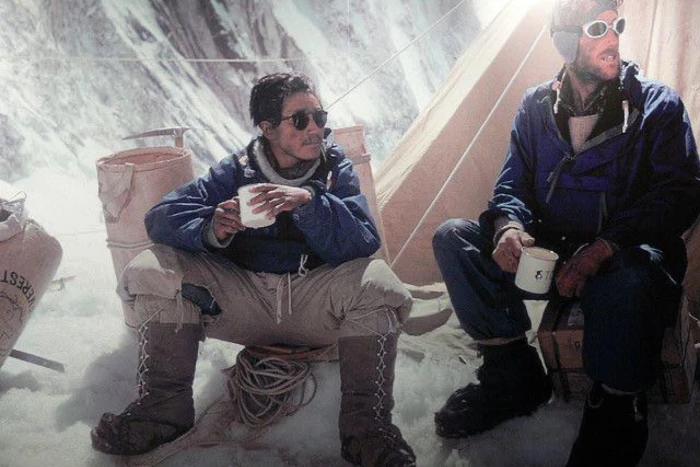
Sir Edmund Hillary and Tenzing Norgay Sherpa reached the summit of Everest on 29 May 1953, an event that transformed the global perception of the Khumbu and triggered a sustained interest in the region from climbers, trekkers, and adventure travellers. The first commercial trekking groups arrived in the late 1960s and the teahouse infrastructure that now supports the modern EBC circuit began to develop in response to the growing visitor numbers through the 1970s and 1980s.
The Sagarmatha National Park was established in 1976 and designated a UNESCO World Heritage Site in 1979, providing the conservation framework within which the trekking industry has since operated. The park designation imposed the permit system that still governs entry to the Khumbu and the environmental standards that, imperfectly but meaningfully, limit the degradation that high-volume tourism inevitably produces.
Sir Edmund Hillary's connection to the region extended well beyond the 1953 summit. Through the Himalayan Trust, which Hillary founded in 1960, New Zealand and international funding built the schools, hospitals, and infrastructure that transformed daily life in Sherpa communities throughout the Khumbu. The Lukla airport, now the gateway to the EBC trek for virtually every international trekker, was built in 1964 with Hillary's direct involvement and named in his honour after his death in 2008.
The EBC trek as it exists in 2027 is the product of seven decades of accumulated infrastructure development, cultural exchange, environmental management, and the specific character that the Sherpa community brings to the hosting of international visitors in their homeland. Understanding this history is not incidental to the trekking experience. It is part of the experience itself.
Is the Everest Base Camp Trek Right for You?
The Honest Difficulty Assessment
The EBC trek is classified as moderate, which in the context of Himalayan trekking means it is within range for a fit and motivated adult without prior mountaineering experience but demands genuine physical preparation and a realistic attitude to altitude.
The daily walking distances on the standard itinerary run from three to seven hours depending on the day. The terrain is a mix of stone-paved trail sections, rocky path, and lateral moraine in the upper sections near Lobuche and Gorak Shep. There is no technical climbing, no glacier travel, and no section that requires specialist equipment. What the route demands is the ability to walk uphill at altitude for multiple consecutive days without the physical recovery that sea-level exercise allows between sessions.
The altitude is the defining challenge. Spending five nights above 4,000 metres, three nights above 4,500 metres, and the summit day at 5,545 metres is a cumulative physiological demand that fitness alone does not fully address. The body's adaptation to reduced oxygen availability takes time regardless of physical condition. The acclimatisation days built into the standard itinerary are not optional enhancements: they are the physiological foundation on which the upper sections of the route are safely possible.
Who the EBC Trek Is Appropriate For
Any reasonably fit adult who can walk for four to six hours on consecutive days on uneven terrain, who has no significant cardiovascular or respiratory contraindications to altitude, and who is willing to follow an acclimatisation schedule rather than pushing pace based on how they feel on good days, can complete the EBC trek with proper preparation and a good guide.
Prior trekking experience above 3,000 metres is helpful but not strictly required. What is required is an honest fitness baseline. If your current exercise routine includes sustained cardiovascular activity three or more times per week, you can walk uphill with a loaded daypack for three hours without significant distress, and you have at least two months before your departure to build your fitness, you are a plausible EBC trekker.
If you are largely sedentary, have not exercised regularly in the past year, or have a medical history that includes heart conditions, chronic respiratory illness, or a previous serious episode of altitude sickness, speak to a travel medicine physician before booking. None of these automatically preclude the EBC trek but all of them require specific medical input before committing.
Who Should Consider an Alternative First
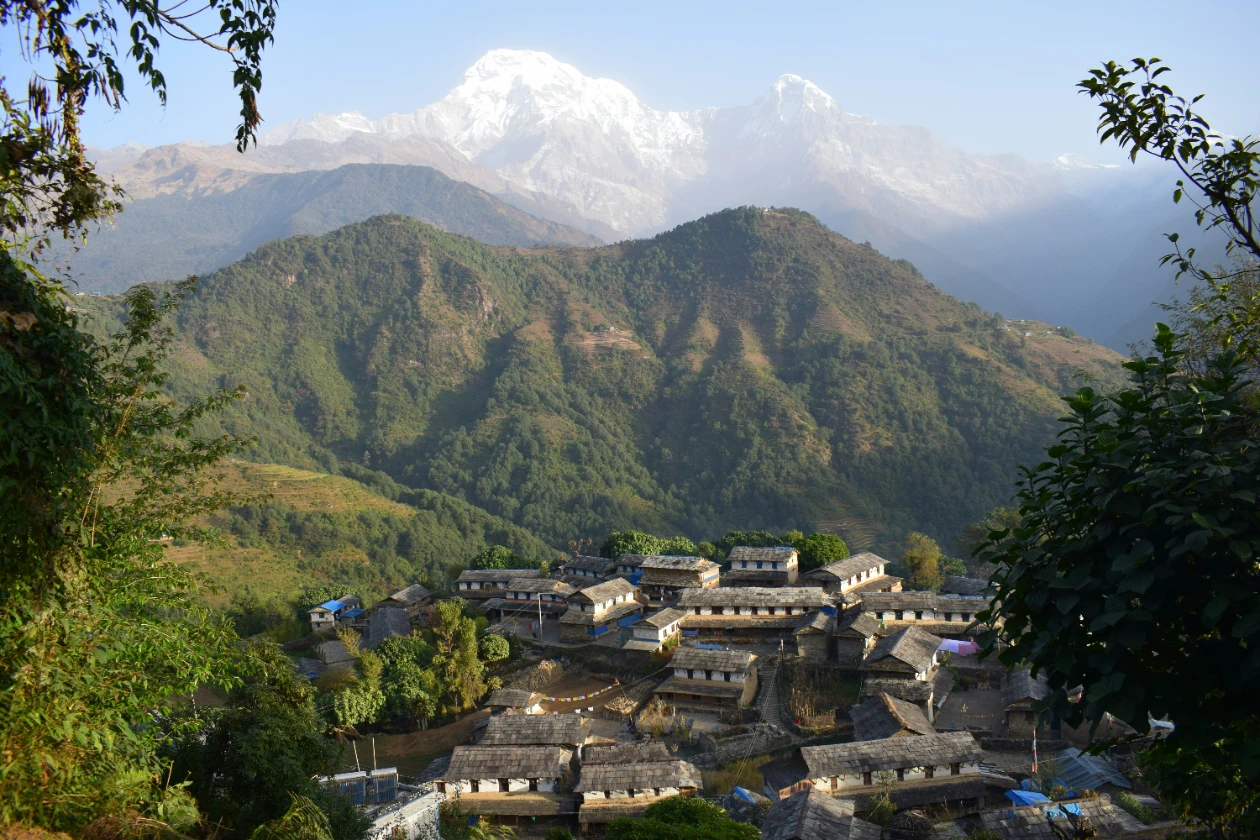
The EBC trek is not the right first Himalayan trek for everyone, and there is no shame in this. Trekkers whose fitness is still developing are better served by the Poon Hill circuit or the Langtang Valley as a first circuit, building altitude tolerance and trekking technique before committing to a fourteen-day high-altitude route. Families with children under twelve are generally better placed on the lower Khumbu sections or on the Annapurna region circuits before attempting EBC with younger members. Travellers with two weeks available who are more interested in landscape variety and cultural depth than the specific achievement of Base Camp may be better served by the Gokyo Lakes circuit or the Annapurna Circuit.
The EBC trek is one of the world's great trekking experiences. It is also one of the world's most specific ones. The people who get the most from it are the people who are genuinely motivated by the Khumbu, by Sherpa culture, by the specific quality of being at the foot of Everest, rather than by the general appeal of a famous name on a bucket list.
The Route: What You Walk Through
Lukla to Namche Bazaar
The trek begins at Lukla's Tenzing-Hillary Airport at 2,840 metres, a 35-minute domestic flight from Kathmandu. From Lukla the trail descends to Phakding at 2,610 metres on Day 1, a deliberate acclimatisation decision that starts the circuit slightly below the arrival altitude rather than ascending immediately.
The walk from Phakding to Namche Bazaar on Day 2 is the most consistently described introduction to Khumbu trekking in the accumulated literature of the route. The trail follows the Dudh Koshi river through subtropical lower forest, crosses a series of suspension bridges above the river gorge, passes through the national park checkpoint at Monjo, and climbs steeply from the river to the hillside town of Namche Bazaar at 3,440 metres.
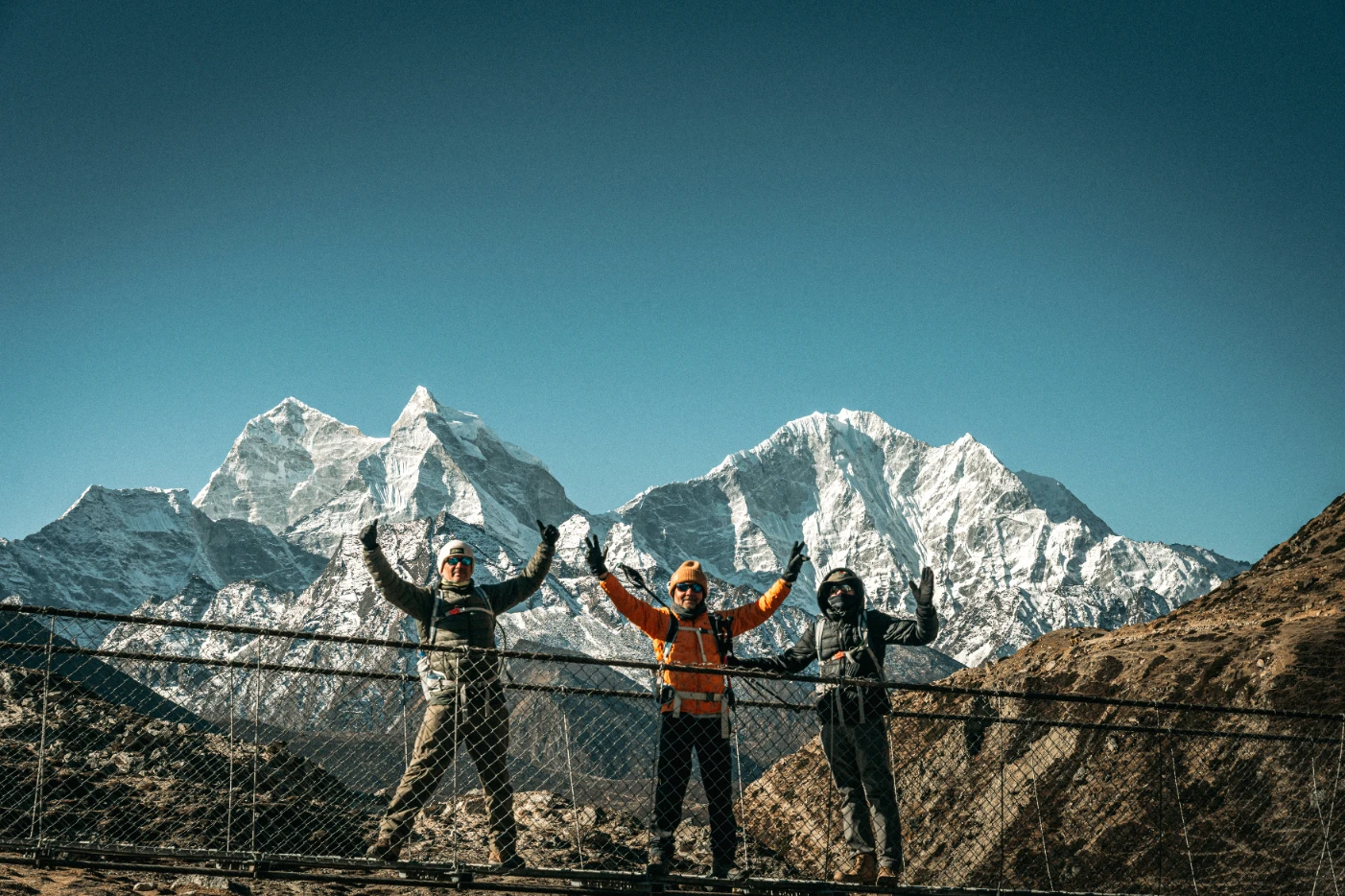
The Hillary Suspension Bridge at 3,440 metres, one of the highest on the trail, is the first clear illustration of Himalayan engineering pragmatism: a wire bridge swaying above a considerable drop, routinely shared with heavily laden yak caravans moving goods up to the high villages. The first clear view of Everest appears on the steep climb above the river before Namche, a brief window through the valley head that prepares the eye for the extended views above.
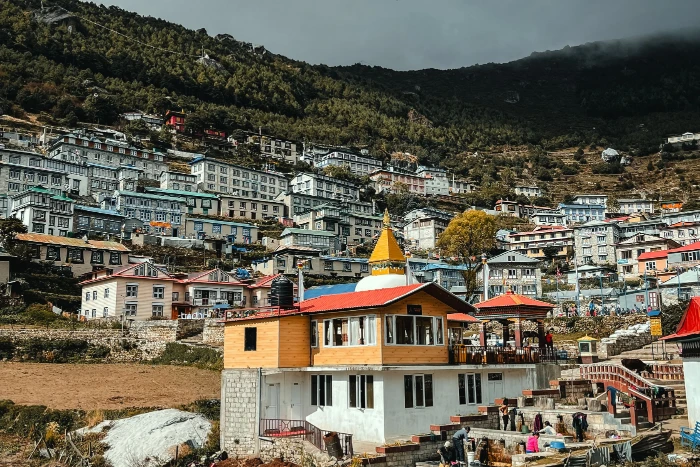
Namche Bazaar is the commercial and cultural capital of the Khumbu, a horseshoe-shaped market town of stone and timber buildings carved into a south-facing hillside at 3,440 metres. It has been a trading centre for Sherpa communities for centuries, historically at the crossroads of the salt and wool trade between Tibet and the lowlands of Nepal. In the modern trekking era it has evolved to accommodate the demands of international trekkers without losing the substance of its Sherpa identity. The weekly Namche market, held on Saturdays, still draws Sherpa, Rai, and Tamang traders from surrounding villages alongside the trekking equipment shops and espresso cafes that now share the main street.
The Acclimatisation Days at Namche
Two nights at Namche are built into the standard itinerary. The rest day hike from Namche to the Everest View Hotel ridge at 3,880 metres is the standard acclimatisation day walk, following the ridge above town to a viewpoint that provides the first full panorama of the upper Khumbu peaks: Everest above the Lhotse-Nuptse ridge, Ama Dablam to the south, Thamserku and Kantega to the southeast.
The Sherpa Culture Museum in Namche, housed in a traditional building near the main square, is worth the morning it takes to move through it properly. The collection covers Sherpa migration history from Tibet, the development of the mountaineering relationship between Sherpa guides and international expedition teams, and the cultural and religious life of the Khumbu community in a way that contextualises everything the trail presents above.
Namche to Tengboche
The trail from Namche to Tengboche crosses the Dudh Koshi at Phunki Tenga and climbs through rhododendron and birch forest to the Tengboche ridge at 3,860 metres. The monastery at Tengboche is the most significant Nyingma Buddhist institution in the Khumbu and one of the most architecturally striking buildings accessible on a standard trekking route in Nepal. The main assembly hall contains a large statue of Guru Rinpoche (Padmasambhava), the eighth-century Indian master credited with establishing Buddhism in the Himalayan region, alongside painted silk thangkas and the butter lamp offerings that are maintained throughout the day by the resident monks.
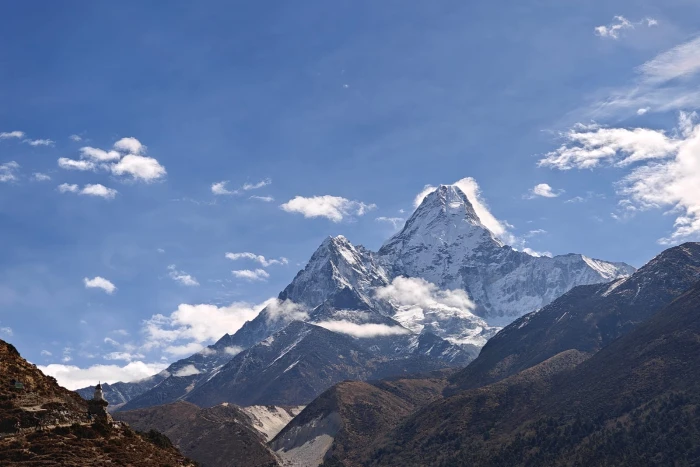
The view of Ama Dablam from the Tengboche ridge is the most frequently photographed single mountain view on the EBC circuit and one of the finest mountain portraits available from any accessible viewpoint in Nepal. Ama Dablam at 6,812 metres rises in a near-perfect pyramidal form above the valley, its southern ridge carrying the distinctive hanging glacier formation that gives the mountain its name (ama means mother, dablam means the double pendant the mother holds).
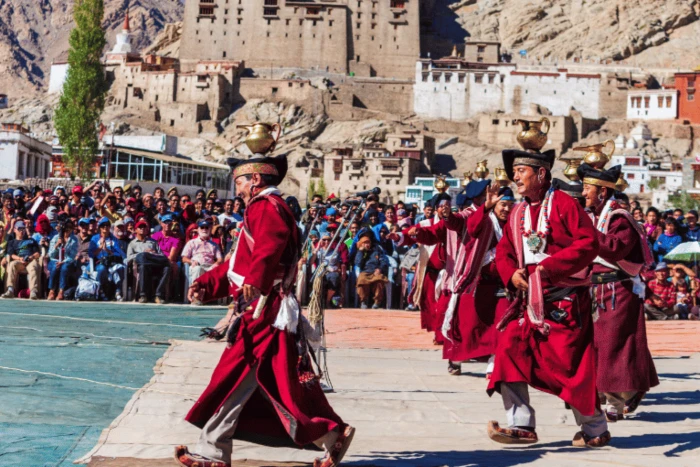
The Mani Rimdu festival at Tengboche, held each November, is one of the most significant religious festivals in the Khumbu calendar: three days of masked dance performances by monks representing the Nyingma Buddhist cosmology, attended by Sherpa communities from across the region. Trekkers present during Mani Rimdu are welcome to observe and photograph respectfully. Hiking Nepal plans specific EBC departures around the Mani Rimdu dates each year for clients who want to include the festival in their circuit.
Tengboche to Dingboche
The trail from Tengboche descends to the Imja Khola valley and climbs to Dingboche at 4,410 metres, a summer grazing village that serves as one of the two principal acclimatisation bases on the EBC route. Dingboche is higher than Tengboche but its open, sunny aspect and south-facing position make it warmer in the morning than many higher-altitude stops. The surrounding potato fields are harvested by Sherpa families in early October, and the small village of Chhukung visible on the ridge to the east is the departure point for the Island Peak approach.
The acclimatisation day hike from Dingboche to the ridge above the village at approximately 5,100 metres provides the first view of Makalu to the east and Island Peak directly across the Imja Valley. More practically, it tells the guide and the trekker how the individual body is responding to altitude above 4,000 metres, which is the most directly useful information available at this point in the circuit.
Dingboche to Lobuche
The trail from Dingboche to Lobuche climbs over the Thokla Pass at 4,830 metres, passing the memorial chortens above the pass that mark the deaths of climbers in the Khumbu. The memorials are for Sherpa and international climbers alike, arranged on a hillside above the pass with the peaks they climbed visible above. It is a sobering passage that most trekkers experience as a reminder of the environment they are moving through rather than a deterrent to continuing.
Lobuche at 4,940 metres is a high-altitude settlement used primarily as a staging point for EBC and Pumori approaches. The teahouses are basic and can be crowded in peak season. The terrain above Lobuche, the Khumbu moraine, has a quality of lunar austerity that is unlike anything on the lower sections of the circuit.
Lobuche to Gorak Shep and Everest Base Camp
Gorak Shep at 5,140 metres is the final overnight stop before Base Camp, a flat sandy plateau above the glacier formed by an ancient glacial lake. From Gorak Shep the trail to Everest Base Camp follows the lateral moraine of the Khumbu Glacier for approximately three kilometres to the Base Camp area at 5,364 metres.
In spring during the main Everest climbing season, Base Camp is a city of several hundred tents representing the various commercial and expedition teams attempting the South Col route. The camp has a specific energy of organised ambition: the equipment, the communication systems, the medical tents, and the accumulated human determination visible in the faces of people preparing for one of the most demanding technical undertakings available.
In autumn the camp is empty of expedition teams. The moraine is quieter, the glacier more visible without the tent infrastructure, and the atmosphere more solitary. The choice between spring and autumn for EBC is partly a choice between these two versions of the destination itself.
The view from Base Camp is not the view most people expect. Everest is not fully visible from its own base: the Khumbu Icefall directly above, a chaotic jumble of ice seracs and crevasses through which the climbing route ascends, dominates the view northward. The mountain's upper sections disappear behind the icefall and the Western Cwm above it. What is visible is the immediate scale of the glacier and the walls of ice above, which is a different kind of impressive from the panoramic summit view available from Kalapatthar.
Kalapatthar: The Best View of Everest on the Circuit
Kalapatthar at 5,545 metres is reached the morning after the Base Camp visit, with a pre-dawn departure from Gorak Shep. The summit is a rocky ridge above the settlement, reached in one to two hours of sustained uphill walking at altitude. The pre-dawn departure is driven by the window of morning clarity before cloud builds around the peaks from mid-morning: the window of clear Everest visibility from Kalapatthar is typically between 6:00 and 9:00 am.
The view from Kalapatthar at sunrise is the image most commonly associated with the EBC circuit. Everest's south face fills the northern horizon, its upper slopes illuminated by the first light in the specific amber and rose tones of high-altitude dawn. Lhotse to the right, Nuptse to the left, the Khumbu Glacier below. This is the moment that the circuit's fourteen days have been building towards, and it is reliably extraordinary regardless of how many photographs of it you have seen beforehand.
Day-by-Day EBC Trek Itinerary 2027
The following is Hiking Nepal's recommended fourteen-day itinerary for the Everest Base Camp trek, designed with the correct acclimatisation profile and appropriate daily distances.
Day 1: Fly Kathmandu to Lukla (2,840m), Trek to Phakding (2,610m)
Departure from Kathmandu domestic terminal at approximately 6:30 am on Buddha Air or Yeti Airlines. The 35-minute flight over the Khumbu foothills deposits trekkers at Lukla in time for a morning departure on the trail. The walk to Phakding takes approximately three hours on a well-maintained path that descends gradually alongside the Dudh Koshi. Overnight at a family teahouse in Phakding.
Day 2: Phakding to Namche Bazaar (3,440m)
Five to six hours of walking including the national park entrance at Monjo, multiple suspension bridge crossings, and the steep two-hour climb from the river to Namche. The steepest section begins at the Hillary Bridge and continues without significant respite until the upper town. The first view of Everest appears briefly above the ridge on this ascent. Overnight in Namche Bazaar.
Day 3: Namche Bazaar Acclimatisation Day
Morning hike to the Everest View Hotel ridge at 3,880 metres. Return to Namche for the afternoon. Visit the Sherpa Culture Museum and the Saturday market if the timing aligns. Two consecutive nights at 3,440 metres establish the physiological foundation for the ascent above. Do not attempt to progress the itinerary by moving to a higher sleep altitude on this day regardless of how well you feel.
Day 4: Namche Bazaar to Tengboche (3,860m)
Four to five hours of walking through forest and along the Imja Khola valley to the Tengboche ridge. Visit to the monastery on arrival. The trail descends significantly from Namche before climbing back to Tengboche, which means the net altitude gain of 420 metres understates the physical demand of the day.
Day 5: Tengboche to Dingboche (4,410m)
Five to six hours following the Imja Khola valley eastward through the villages of Pangboche and Shomare to Dingboche. The Pangboche monastery, one of the oldest in the Khumbu, is worth a brief stop on the way through. The increase in altitude from Tengboche to Dingboche is the largest single-day gain on the route and the first overnight above 4,000 metres. Pay attention to how you feel on arrival and communicate any headache or nausea to the guide immediately.
Day 6: Dingboche Acclimatisation Day
Morning hike to the ridge above Dingboche at approximately 5,100 metres. The ascent takes two to three hours and the return the same. The view from the ridge covers Makalu, Island Peak, and the upper Imja Valley. Afternoon rest in Dingboche. Two consecutive nights at 4,410 metres. This is the second of the two scheduled acclimatisation days and it is as important as the first.
Day 7: Dingboche to Lobuche (4,940m)
Four to five hours crossing the Thokla Pass at 4,830 metres and descending to Lobuche. The memorial chortens above the pass mark a natural pause point. The terrain above the pass transitions to the high moraine character of the upper Khumbu. Overnight at Lobuche, the highest overnight stop before the Base Camp area.
Day 8: Lobuche to Gorak Shep (5,140m) and Everest Base Camp (5,364m)
The most significant day on the circuit. Morning walk from Lobuche to Gorak Shep takes two to three hours along the Khumbu moraine. Drop luggage at the teahouse and continue to Everest Base Camp, reached in two to three hours return from Gorak Shep. Total walking time of six to eight hours. Return to Gorak Shep for overnight. Appetite suppression, mild headache, and disturbed sleep are common at this altitude and should be monitored without alarm unless they worsen significantly overnight.
Day 9: Kalapatthar (5,545m) then Descent to Pheriche (4,240m)
Pre-dawn departure from Gorak Shep at approximately 4:30 am for the Kalapatthar summit. One to two hours of uphill walking to the summit ridge. Sunrise panorama of Everest, Lhotse, and Nuptse. Descent back to Gorak Shep for breakfast, then full descent to Pheriche at 4,240 metres. The descent from Gorak Shep to Pheriche covers 900 metres of altitude loss in approximately four to five hours. The lower altitude produces an almost immediate improvement in energy and wellbeing that most trekkers experience as a physical release.
Day 10: Pheriche to Namche Bazaar (3,440m)
A long descent day covering the route from Pheriche back through Tengboche and the Phunki Tenga river crossing to Namche, approximately six to seven hours of walking. The trail is entirely familiar from the outbound journey and the lower altitude progressively warmer with each hour of descent.
Day 11: Namche Bazaar to Lukla (2,840m)
Five to six hours of descent from Namche through Phakding to Lukla. The final two kilometres of ascent to the Lukla airstrip are uphill after ten days of predominantly downhill walking and are experienced as noticeably more demanding than the rest of the day. Celebration dinner with the guide and porter team in Lukla. Confirm the morning flight.
Day 12: Fly Lukla to Kathmandu
Weather permitting, the return flight departs between 6:30 and 9:00 am. Mountain views on departure from Lukla are the final Himalayan panorama of the circuit. Transfer to Kathmandu hotel on arrival.
Days 13 and 14 are built into the itinerary as weather contingency days to absorb the flight delays that occur in peak season. Trekkers with fixed international departure dates should not book return flights from Kathmandu on Day 12 of a twelve-day EBC itinerary. The two-day contingency is not pessimism. It is the operational reality of Lukla-dependent travel.
EBC Trek Variations and Extensions
The Standard Return Circuit
The itinerary above follows the same trail on the return as the outbound. This is the most common approach and the one most trekkers take. The familiarity of the return trail is not a drawback: the lower altitude, the accumulated experience of the previous week, and the specific quality of descending through familiar landscape with the summit behind you rather than ahead of you gives the return trail a different character from the outbound.
Gokyo Lakes Combined Circuit
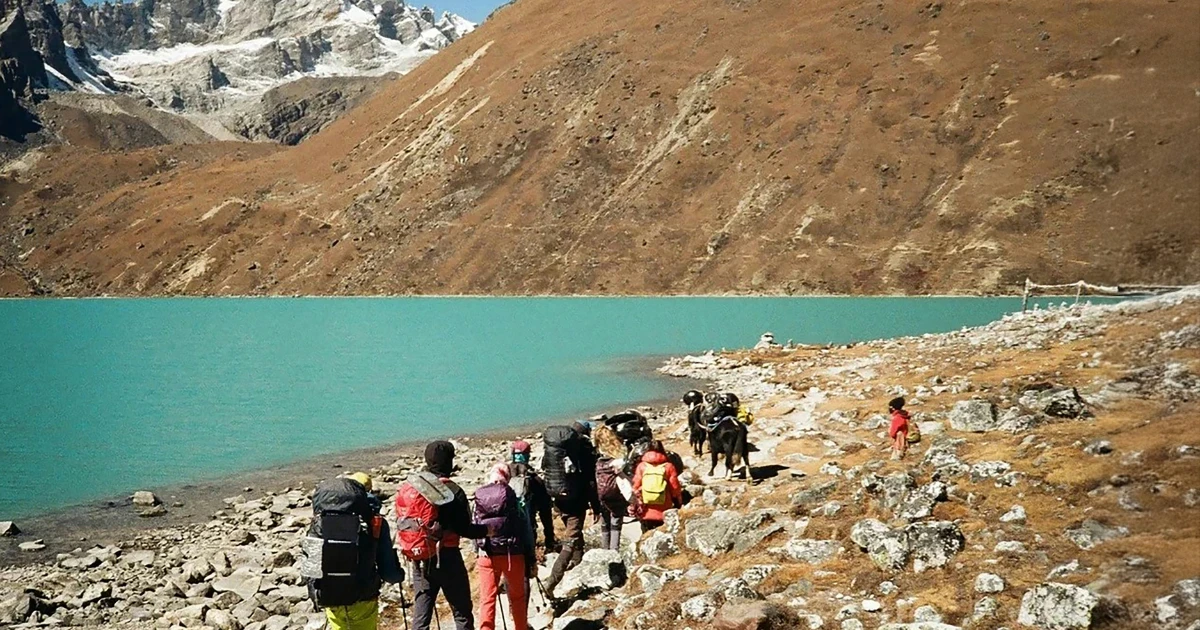
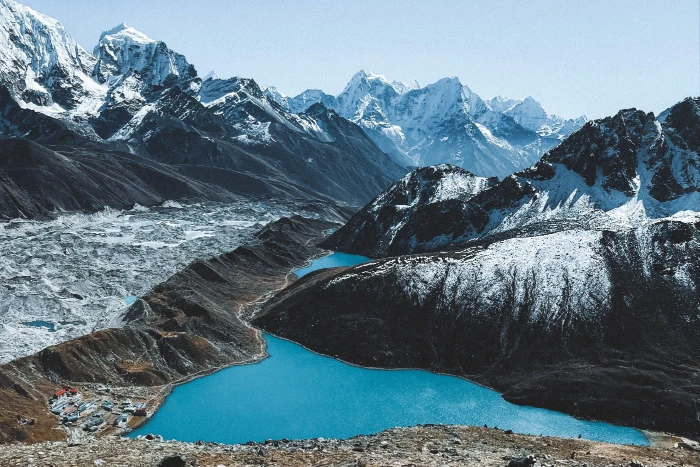
For trekkers with sixteen to eighteen days, the Gokyo Valley can be incorporated by crossing the Cho La Pass at 5,420 metres between the Gokyo basin and the main EBC corridor. This is the most popular EBC extension and adds the Gokyo Lakes, Gokyo Ri summit at 5,357 metres, and the Ngozumpa Glacier to the standard circuit. The Cho La crossing requires crampons in icy conditions and should not be attempted in poor weather or without a guide who knows the pass. See the Hiking Nepal Gokyo Lakes guide for the full route detail.
Three Passes Trek
The most comprehensive Khumbu circuit, adding the Renjo La at 5,360 metres and the Kongma La at 5,535 metres to the Cho La crossing for a complete three-pass circuit that takes eighteen to twenty days. This is the most demanding standard trekking circuit in the Khumbu and is appropriate for experienced trekkers with established high-altitude confidence.
Everest Base Camp with Island Peak
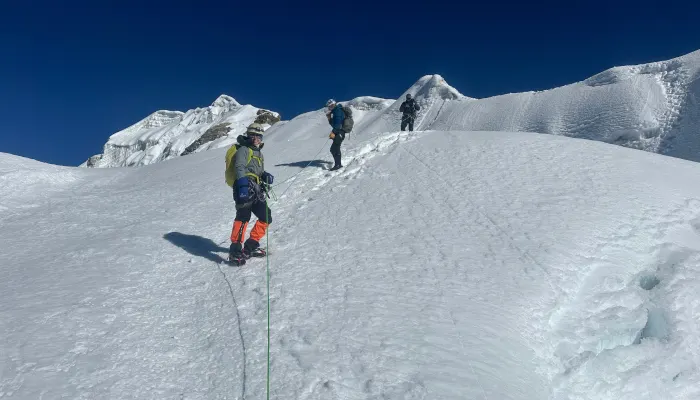
The most popular technical climbing extension, adding the Island Peak summit at 6,189 metres to the EBC circuit for an eighteen-day combined itinerary. Island Peak requires a separate climbing permit and a certified climbing guide but no prior mountaineering experience. See the Hiking Nepal Island Peak guide for the complete planning resource.
Short EBC Alternatives
For trekkers with fewer than twelve days who want a Khumbu experience without the full EBC circuit, the Everest Panorama Trek to the Tengboche ridge and back in seven to eight days delivers the monastery, the Ama Dablam view, and the Sherpa cultural experience without the high-altitude section above Dingboche. The Namche Bazaar market trek, three to four days from Lukla to Namche and return, is the minimum Khumbu experience available and is appropriate for travellers with very limited time or altitude sensitivity concerns.
EBC Trek Difficulty: What You Actually Need
Physical Fitness
The fitness standard required for EBC is not elite but it is specific. You need the ability to walk uphill for four to six hours on uneven terrain on consecutive days, carrying a daypack of five to ten kilograms. You need this ability at altitude, where each step requires measurably more effort than the same step at sea level, and after multiple consecutive days of the same demand.
The most effective preparation combines cardiovascular base building with load-bearing strength work. Three to four weekly cardio sessions including sustained uphill walking with a loaded pack replicate the specific demand of the EBC trail more accurately than running, cycling, or gym cardio alone. The quadriceps and gluteal muscles are the primary load-bearing muscle groups on the trail's steep ascents and the calves and knees manage the extended descents. Strength training targeting these groups, specifically squats, lunges, step-ups, and calf raises, builds the specific muscular endurance the trail demands.
Hiking Nepal provides a twelve-week preparation programme to all EBC clients at booking. Following it consistently is the single most effective thing you can do to improve your summit day performance.
Altitude Preparation
Physical fitness and altitude tolerance are not the same variable and do not correlate reliably. Fit athletes fail EBC for altitude-related reasons. Unfit people complete it with proper acclimatisation. The altitude preparation that matters most is following the itinerary schedule rather than pushing pace on good days.
If you have access to high altitude before your Nepal trip, even moderate altitude above 2,500 metres, spending several days there two to four weeks before departure is useful preparation. If you live at sea level and have no access to altitude, your acclimatisation happens on the trail, which is why the schedule is designed the way it is.
Discuss Diamox (acetazolamide) with your GP before departure if you have a history of altitude sensitivity or if this is your first time above 3,000 metres. Diamox is a prescription medication that reduces AMS risk by stimulating faster breathing. It is not a substitute for correct pacing but it is a useful supplement for appropriate candidates.
Mental Resilience
The mental demand of the EBC trek is underestimated in most planning guides. Fourteen consecutive days of physical effort, cold, disrupted sleep at altitude, limited comfort, and the specific psychological pressure of a high-altitude environment where the consequences of a bad decision are more serious than at lower elevations, creates a different mental environment from a standard holiday.
The days that test mental resilience most consistently on EBC are Day 5 (first night above 4,000 metres, when altitude effects become real), Day 8 (the Gorak Shep overnight, the highest and most basic stop on the circuit), and the pre-dawn Kalapatthar departure (4:30 am in minus ten degrees Celsius after a disturbed night at 5,140 metres). Knowing that these are the hard days before you arrive at them, and that they are followed by the most rewarding moments of the circuit, is the most useful mental preparation available.
EBC Trek Permits 2027
Sagarmatha National Park Permit
Required for all trekkers entering the Khumbu region. Cost: NPR 3,000 plus 13 per cent VAT, totalling NPR 3,390 per person, approximately USD 26. Available at the Nepal Tourism Board office in Kathmandu or at the national park checkpoint at Monjo on the trail. The permit must be carried and presented at checkpoints throughout the route.
Khumbu Pasang Lhamu Rural Municipality Permit
Introduced in 2021 and required for all trekkers entering the Khumbu valley. Cost: NPR 3,000 per person, approximately USD 23. Collected at Lukla on arrival or at the checkpoint below Namche Bazaar. The revenue from this permit is directed to local infrastructure and community development in the Khumbu.
TIMS Card
A TIMS card is not required for the Everest region. The national park permit and the municipality permit together cover the administrative requirements of the route. This is a source of confusion for trekkers who have researched other Nepal circuits where TIMS is required. For EBC specifically in 2027, TIMS is not needed.
Total Permit Cost 2027
Permit | Cost (NPR) | Cost (USD approximate) |
| Sagarmatha National Park Permit | NPR 3,000(including VAT) | USD 23 |
| Khumbu Pasang Lhamu Municipality Permit | NPR 3,000 | USD 23 |
| Total | NPR 6,390 | USD 49 |
Hiking Nepal handles all permit applications for every EBC departure as part of the standard package. Clients provide passport copies and passport-sized photographs and permits are collected by the operations team before the trek begins.
EBC Trek Cost 2027: The Complete Breakdown
The Everest Base Camp trek cost is the most searched Nepal trekking cost query online and the one most poorly served by the existing information. Most published cost figures are either headline package prices that exclude thirty to forty per cent of the actual trip cost, or vague ranges so wide as to be meaningless for planning purposes.
The following is a complete, all-in breakdown for the standard fourteen-day EBC circuit with Hiking Nepal in 2027.
The Hiking Nepal EBC Package
Cost Category | Amount (USD) | Notes |
| Hiking Nepal EBC package (guide, porter, all accommodation, all meals, all transfers) | From USD 1,499 per person | Private departure, 2 persons sharing |
| Sagarmatha National Park Permit | Included | USD 26 per person |
| Khumbu Pasang Lhamu Municipality Permit | Included | USD 23 per person |
| Lukla domestic flight return | USD 180 to 240 | Kathmandu to Lukla return on Buddha Air or Yeti Airlines |
| Travel insurance | USD 100 to 200 | Must cover helicopter evacuation to 6,000m and technical trekking |
| Nepal visa (30 days) | USD 50 | On arrival at Kathmandu airport |
| Equipment hire (sleeping bag, down jacket, trekking poles) | USD 100 to 140 | From Thamel, Kathmandu |
| Tips for guide and porter | USD 150 to 250 | NPR 500 to 1,000 per day per person |
| Personal expenses on trail | USD 80 to 160 | Hot showers, Wi-Fi, battery charging, personal snacks |
| Pre and post-trek accommodation Kathmandu | USD 80 to 300 | Two to three nights each end, budget to mid-range |
| Total realistic all-in per person | USD 2,290 to 2,390 | Private departure, spring or autumn season |
What the Hiking Nepal EBC Package Includes
Every Hiking Nepal EBC private departure includes: a licensed WAFA-certified guide dedicated to your group throughout; a contracted porter on IPPG welfare standards, one per two trekkers, carrying up to 20 kilograms; all accommodation at pre-selected and pre-booked teahouses from Lukla to Lukla; all meals from the first overnight stop to the final morning; all permit fees including the national park permit and municipality permit; private vehicle transfers between your Kathmandu hotel and the domestic terminal; a calibrated pulse oximeter for twice-daily altitude monitoring; supplemental oxygen with a regulator; a full first-aid kit with altitude medications including dexamethasone and nifedipine; satellite communication on sections above 4,000 metres where mobile coverage is unreliable; and 24-hour emergency coordination from the Hiking Nepal operations team throughout the trek.
What Is Not Included
International flights to and from Nepal. Kathmandu hotel accommodation before and after the trek. Nepal visa fees. Domestic flights to and from Lukla. Travel insurance (mandatory, verified at pre-trek briefing). Equipment hire. Tips for guides and porters. Personal spending on trail including hot showers (NPR 300 to 500 per shower), Wi-Fi (NPR 200 to 500 per day at lower stops), battery charging (NPR 100 to 300 per hour), alcohol, and personal snacks beyond the three included daily meals.
Budget Tier vs Premium Tier: What Changes
Budget EBC packages from other operators exist at USD 800 to 1,200 per person. The cost reduction compared to Hiking Nepal's package is achieved through one or more of the following: a guide shared across eight to twelve trekkers rather than four or fewer; a porter with freelance employment terms rather than contracted welfare compliance; unvetted accommodation without pre-booking; exclusion of safety equipment including supplemental oxygen and altitude medications; no emergency coordination infrastructure beyond the guide's personal phone.
The practical consequences of these reductions are invisible when nothing goes wrong and very visible when something does. For a first-time high-altitude trekker on a fourteen-day circuit above 5,000 metres, the infrastructure that the budget tier omits is specifically the infrastructure that matters most on the days when the trekking becomes difficult. Hiking Nepal does not compete on price with budget operators because the standard of care that justifies our pricing is not available at a lower price point. We explain what we include and let the comparison be drawn.
Best Time to Do the Everest Base Camp Trek in 2027
Spring: March to May
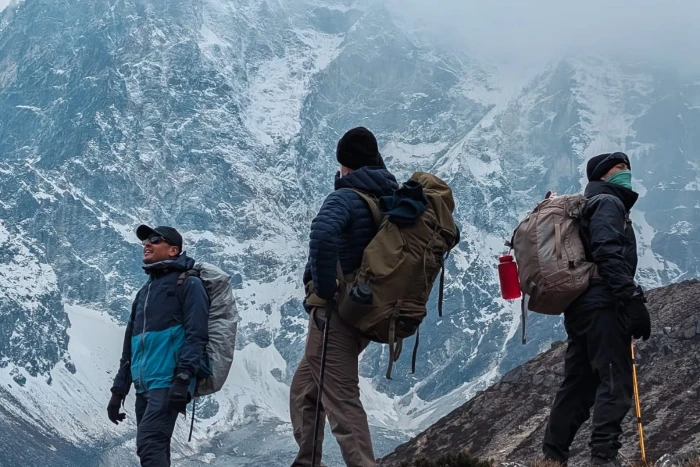
Spring is the main EBC trekking and climbing season. The weather stabilises after the winter cold from mid-March onwards, morning visibility at altitude is consistently good through April, and the rhododendron and magnolia forests on the lower approach below Namche are in bloom through March and early April. The main Everest expedition season runs from April through May, which means Base Camp in spring is a functioning expedition city rather than an empty moraine.
April is the busiest month of the spring season and the trail between Namche and Tengboche sees the highest trekking volumes of the year. The crowding on the main corridor in mid-April is significant by any measure. Groups leaving Namche for Tengboche on the same morning create a trail dynamic more reminiscent of a busy hiking path than a wilderness route. This is the trade-off of the spring season: the best weather and the most vibrant Base Camp experience alongside the highest crowd density.
Early March and late May are quieter spring options with comparable weather. March offers the rhododendron bloom without the peak April crowd. Late May is warmer at lower altitudes and the pre-monsoon haze begins to build, reducing summit visibility from mid-May onwards.
Autumn: October to November
Post-monsoon autumn is the other main EBC season and the one that most experienced Khumbu guides recommend for trekking rather than climbing objectives. The monsoon washes the atmosphere clean through August and the air from late September through mid-November is typically free of the particulate haze that affects spring visibility at the lower altitude bands. The clarity of October light in the Khumbu, the specific quality of post-monsoon air above 4,000 metres, is what makes autumn the preferred photography season on the circuit.
October is the busiest month overall. The first three weeks of October see the highest annual trekking volume on the EBC corridor. The Kalapatthar viewpoint at dawn in mid-October can have fifty to a hundred other trekkers on the ridge simultaneously. This is not an exaggeration. The trail between Namche and Tengboche in the first week of October is consistently described by repeat visitors as more crowded than the previous year.
November is significantly quieter than October with excellent visibility continuing through mid-month. Temperatures drop substantially in November nights: Lobuche in the first week of November can reach minus 12 degrees Celsius after dark. The trade-off of the November window is cold nights requiring more substantial sleeping equipment and the closing of some teahouses in the final weeks of the month.
Winter: December to February
The EBC trail in winter is quiet, cold, and clear. Most teahouses above Dingboche close between late November and late February. Snow on the upper trail above Lobuche adds route-finding complexity and the pre-dawn Kalapatthar departure at minus 15 to minus 20 degrees Celsius requires full expedition-weight cold-weather gear.
Hiking Nepal does not offer standard EBC departures in December through February. Winter EBC is achievable for experienced cold-weather trekkers with appropriate equipment and a guide with winter Khumbu experience, but it is a specialist undertaking rather than a standard trekking circuit.
Monsoon: June to August
The monsoon season from June through August brings persistent cloud, heavy rain, and high humidity to the Khumbu at lower altitudes. The trail above Namche remains largely above the main monsoon precipitation band but the approach from Lukla to Namche is wet and the views from the upper circuit are compromised by cloud cover for most of the season. Hiking Nepal does not recommend the EBC circuit during the core monsoon months.
The Optimal 2027 Windows
For spring 2027: departure from Kathmandu between 20 March and 5 April for the rhododendron bloom and pre-peak crowd levels, or between 20 April and 5 May for the expedition season experience at Base Camp.
For autumn 2027: departure from Kathmandu between 25 September and 5 October for the early autumn clarity and moderate crowd levels, or between 25 October and 5 November for quieter trails and excellent post-peak visibility.
Spring 2027 dates in the late March and April window should be booked by November 2026. Autumn October dates should be booked by April 2027.
Altitude Safety on the EBC Trek
The Physiology of Altitude
The air at 5,364 metres contains approximately half the oxygen available at sea level. The body's response to this reduction, specifically the physiological process of increasing red blood cell production, improving oxygen extraction efficiency, and adjusting breathing patterns, takes days rather than hours. The acclimatisation schedule in the standard EBC itinerary is designed around this timeline. The two nights at Namche, the acclimatisation day at Dingboche, and the gradual daily altitude gains above Dingboche are not conservative choices. They are the physiological minimums for safe ascent to 5,545 metres for most adults.
Recognising Altitude Sickness
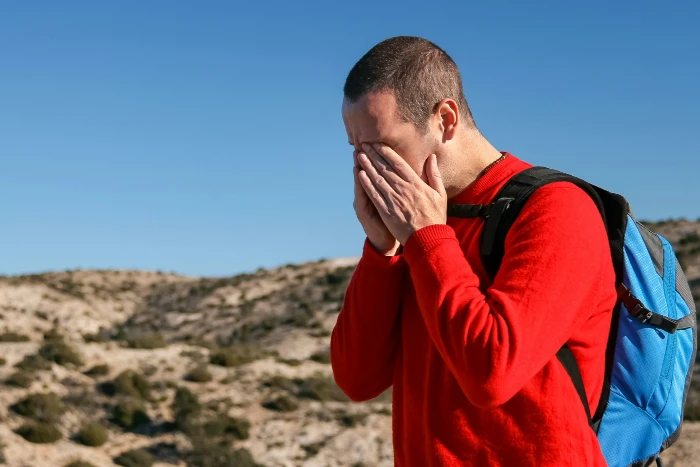
Acute Mountain Sickness is the most common altitude-related health issue on the EBC circuit. The symptoms are persistent headache that does not resolve with rest and hydration, nausea, loss of appetite, unusual fatigue, and disturbed sleep. Mild AMS is common and manageable. It becomes serious when the symptoms are ignored and ascent continues.
The clinical rule is simple: if symptoms do not improve or worsen after resting at the same altitude for several hours, descend. Descent of 300 to 500 metres resolves AMS symptoms in the vast majority of cases. The guide makes this call in consultation with the trekker. On Hiking Nepal departures, the guide has authority to mandate descent and this authority is exercised without pressure to continue for non-safety reasons.
The more serious altitude conditions, High Altitude Pulmonary Oedema and High Altitude Cerebral Oedema, are medical emergencies. HAPE presents with breathlessness at rest, a productive cough, and declining oxygen saturation. HACE presents with severe persistent headache, confusion, loss of coordination, and deteriorating consciousness. Both require immediate descent and in serious cases helicopter evacuation. All Hiking Nepal EBC departures carry dexamethasone for HACE and nifedipine for HAPE as part of the standard first-aid kit.
The Pulse Oximeter Protocol
Hiking Nepal guides conduct formal oxygen saturation checks twice daily using a calibrated pulse oximeter on all EBC departures: once on arrival at each overnight stop and once in the morning before departure. The readings are recorded and compared against the previous day's baseline.
A reading below 80 per cent at altitudes above 4,000 metres warrants attention and discussion. A reading below 70 per cent warrants serious concern and potentially a descent decision. These are guidelines rather than absolute thresholds: the trend in readings over time and the trekker's symptoms are as relevant as any single reading. A guide checking an oximeter twice a day is a different safety proposition from a guide who carries an oximeter for emergencies only.
Helicopter Evacuation
The Khumbu valley has established helicopter landing zones at multiple points along the EBC corridor, including Pheriche, Dingboche, Lobuche, and Gorak Shep. Weather permitting, a helicopter can reach any of these points within 45 to 60 minutes of a distress call and return to Kathmandu in the same time.
The cost of helicopter evacuation from the Khumbu is approximately USD 4,000 to 6,000 depending on the pickup location and the operator. This cost is covered by travel insurance policies that include altitude trekking and helicopter evacuation coverage. It is not covered by standard travel insurance that excludes trekking above 2,000 metres. Hiking Nepal verifies travel insurance documentation at the Kathmandu pre-trek briefing for every EBC departure.
Sherpa Culture: Understanding Where You Are Walking
Who the Sherpa Are
The Sherpa are a Tibetan-origin people who migrated from the Kham region of eastern Tibet into the Khumbu approximately five hundred years ago, establishing the high-altitude agricultural and pastoral communities that the EBC circuit passes through. The word Sherpa means east (sher) person (pa) in Tibetan, referring to their eastern origin.
Sherpa society is organised around extended family networks (ru) and the Buddhist religious institutions of the Khumbu monasteries. The monastery at Tengboche, founded in 1916 and rebuilt after fires in 1934 and 1989, is the most significant Nyingma Buddhist institution in the Khumbu and the spiritual centre of Sherpa religious life. The rituals, festivals, and daily practices of Nyingma Buddhism permeate Sherpa daily life in ways that are visible throughout the EBC circuit: the prayer flags at every high point and pass, the mani walls of carved stone beside the trail, the butter lamps burning in monastery and household shrines, the prayer wheels turned by passing trekkers and local people alike.
The Mountaineering Heritage
The Sherpa relationship with high-altitude mountaineering began in earnest with the early Everest expeditions of the 1920s and 1930s, when British expedition organisers recognised the Sherpa's physiological adaptation to altitude and cultural familiarity with the Khumbu terrain as invaluable assets for high-altitude climbing logistics. Tenzing Norgay's summit of Everest with Hillary in 1953 was the public culmination of three decades of Sherpa mountaineering contribution that the expedition model had consistently underacknowledged.
The contemporary Sherpa guiding community is the most technically accomplished group of high-altitude guides anywhere in the world. Kami Rita Sherpa holds the record for the most Everest summits with 30 ascents. Dozens of Sherpa guides have summited Everest multiple times. The casual assumption that a Sherpa guide on an EBC trek is simply a porter or a route-finder fails to account for the depth of knowledge, the specific cultural authority, and the accumulated mountaineering expertise that the Sherpa guiding tradition represents.
Respecting the Culture
Walk clockwise around mani walls and stupas. Remove footwear before entering monastery buildings. Ask before photographing monks, elders, or religious ceremonies. Do not touch religious objects or offerings. Dress modestly through village sections and at religious sites. These are not complicated requirements and they are not inconvenient. They are the basic gestures of respect that the communities along the EBC corridor have been extending to foreign visitors for decades, and they deserve to be returned in kind.
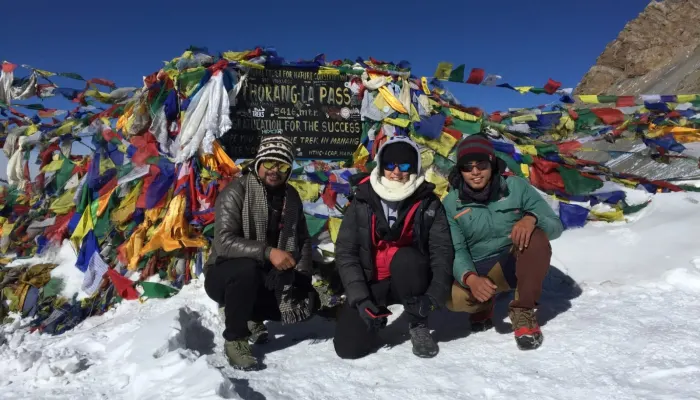
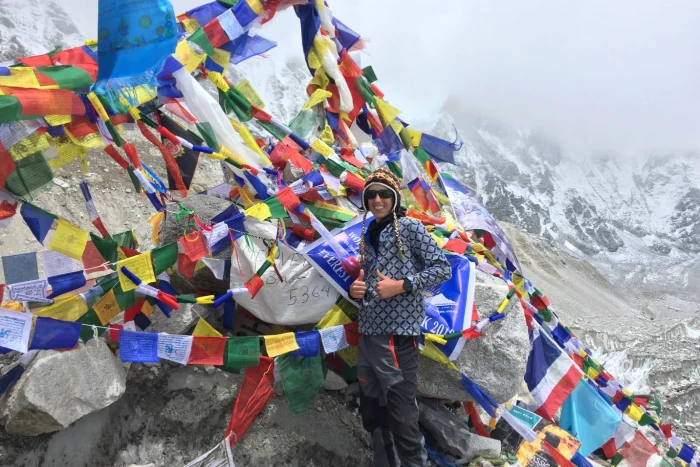
The prayer flags at Kalapatthar and at the high passes of the circuit are not decorative. They carry printed mantras whose recitation by the wind, according to Tibetan Buddhist belief, accumulates merit for all sentient beings in the path of the prayer. Understanding this transforms the visual experience of a flag-covered ridge from a picturesque detail to a specific expression of a living religious practice.
EBC Trek Packing List 2027
The Core Principle
Porters carry your main luggage duffel on all Hiking Nepal EBC departures. Your daypack carries only what you need immediate access to on the trail. The packing list should be built around this division: everything that goes in the duffel (available at the next teahouse stop), and everything that goes in the daypack (accessible while walking).
Clothing
Base layers: merino wool or synthetic thermal top and bottom in two sets. The two-set rotation allows one set to air-dry overnight while you wear the other. Merino wool manages odour better than synthetic over multiple days without washing.
Mid-layer: fleece jacket, easy to add and remove independently on the trail.
Insulation layer: down jacket rated to minus fifteen degrees Celsius minimum. Non-negotiable for any overnight above 4,000 metres and essential for the pre-dawn Kalapatthar departure. Available for hire in Thamel at USD 3 to 6 per day.
Outer shell: waterproof and windproof jacket with a hood. Gore-Tex or equivalent. The hood is specifically important for the pre-dawn summit ascent.
Trekking trousers: two pairs, quick-dry fabric. One pair of waterproof over-trousers.
Thermal hat covering the ears fully. Wide-brimmed sun hat for daytime UV protection. Neck gaiter or buff.
Gloves: liner gloves plus windproof outer gloves or mitts. The Kalapatthar dawn temperature in October can reach minus ten degrees Celsius.
Socks: four to five pairs of merino wool trekking socks. More than you think you need.
Footwear
Waterproof trekking boots, fully broken in before departure. Comfortable camp shoes or sandals for teahouse evenings. The Gorak Shep teahouse floor in the evening is cold enough to require insulated footwear even indoors.
Equipment
Daypack fifteen to twenty litres with a rain cover. Sleeping bag rated to minus ten degrees Celsius (available for hire in Thamel). Trekking poles, two, adjustable. Headtorch with spare batteries: the pre-dawn Kalapatthar departure requires a fully functioning torch. Reusable one-litre water bottle plus a secondary collapsible flask for summit days. Sunglasses with UV400 and Category 3 minimum protection: Himalayan UV at altitude is severe. Portable power bank minimum 20,000 mAh. Small combination padlock for teahouse room security.
Health and Medical
Sunscreen SPF 50 minimum, applied daily above 2,000 metres and reapplied every two hours. Lip balm with SPF. Blister plasters in larger quantities than seem necessary. Paracetamol and ibuprofen. Antihistamine. Oral rehydration sachets, five to six for the circuit. Diamox if prescribed by your GP. Personal prescription medications with a three-day buffer.
Documents
Passport with at least six months validity beyond your return date. Two passport-sized photographs for permit applications. Travel insurance documentation with the helicopter evacuation coverage limit explicitly stated. Emergency contact details for Hiking Nepal and your home contact.
What to Leave at Home
Cotton clothing in any form. Cotton holds moisture and creates a cold-wet combination that is dangerous in the high-altitude cold. Anything you have not tested and are not certain you can use in difficult conditions. More than one luxury item: the weight adds up and the porter carries the consequence.
Teahouse Accommodation and Food on the EBC Circuit
What to Expect at Each Altitude Band
Below Namche, the teahouses at Phakding and the Lukla-adjacent stops are the most comfortable on the circuit with consistent hot water, reliable electricity, and varied menus. This comfort level sets an expectation that the upper circuit does not maintain.
Namche Bazaar is the high point of EBC teahouse quality. Bakeries, good restaurants, reliable Wi-Fi, private rooms with attached bathrooms at the better establishments, and the social energy of a town that has been hosting international visitors for fifty years. Enjoy Namche fully because the two acclimatisation nights there are the last nights of genuine comfort before Lobuche.
Between Namche and Dingboche the teahouse standard is good and improving with each season of investment. Private rooms are available at all main stops. Hot showers exist on solar-heated systems. Menus are varied. The cold of the evenings is the primary discomfort factor rather than accommodation quality.
Above Dingboche the standard becomes genuinely basic. Lobuche and Gorak Shep have limited teahouse options with shared bathrooms, cold bedrooms, and simple menus. The Gorak Shep overnight is the hardest night on the circuit for most trekkers: the highest, the coldest, and the one where altitude effects on sleep quality are most pronounced. A sleeping bag rated for minus ten degrees Celsius, all your down layers, and the knowledge that tomorrow is the summit and the descent begins immediately after are the comfort resources available.
Food at Altitude
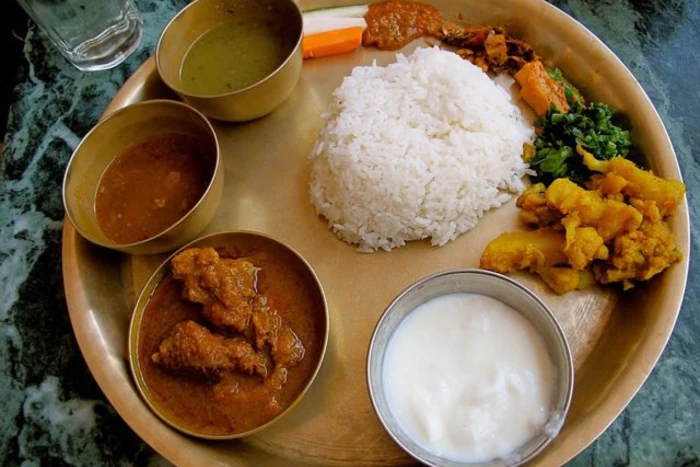
Dal bhat is available at every teahouse on the EBC circuit and is the recommended main meal for all active trekking days. At altitude, appetite typically decreases while caloric needs increase. The unlimited refill convention of dal bhat is the most practical response to this: eat as much as the kitchen will bring out, even if you do not feel hungry, because the fuel is required regardless of appetite signals.
Above 4,500 metres, nausea sometimes reduces appetite to the point where eating anything requires conscious effort. Eating is non-optional at these altitudes. The guide will encourage you to eat on difficult mornings. Accept the encouragement as a medical recommendation rather than social obligation.
Avoid meat above 3,500 metres. The cold chain for meat in the upper Khumbu is not reliable and food poisoning at altitude is considerably more dangerous than at sea level. Eggs, dal, vegetable dishes, and porridge are the safe dietary staples for the upper circuit.
Carry personal snacks from Kathmandu. Energy bars, dried fruit, nuts, and chocolate cost two to three times their Kathmandu price at Namche and above. A two-week snack supply purchased before departure saves NPR 5,000 to 8,000.
Frequently Asked Questions
How hard is the Everest Base Camp trek?
The EBC trek is classified as moderate. It does not involve technical climbing, glacier travel, or specialist equipment. What it requires is sustained cardiovascular fitness, the discipline to follow an acclimatisation schedule, and the mental resilience to perform consistently over fourteen consecutive days at high altitude. Any reasonably fit adult who prepares properly and follows the acclimatisation itinerary can complete it. Physical fitness alone is not a guarantee of success: altitude management is the more important variable.
How long does the EBC trek take?
The standard itinerary is twelve to fourteen days from Lukla. With the two-day weather contingency built in for the Lukla flight, plan for fourteen days as the reliable minimum. The fifteen and sixteen-day versions, adding an extra acclimatisation day at Dingboche or a slower descent, are available and recommended for trekkers who want more buffer on the upper sections.
Do I need a guide for the EBC trek?
Under Nepal's 2026 No Solo Trekking regulation, a licensed guide is required for all foreign nationals trekking in national parks and conservation areas, which includes the Sagarmatha National Park covering the EBC route. Practically, a licensed guide on EBC adds safety monitoring, altitude management, cultural interpretation, teahouse pre-booking, and emergency response that have real value entirely independent of the regulatory requirement.
What is the best time to do the EBC trek?
Late March to early April for the spring window, combining good visibility with manageable crowd levels and the rhododendron bloom on the lower approach. Late October to early November for the autumn window, combining the best post-monsoon clarity with quieter trails than the peak October period. Both windows are excellent for different reasons.
Is the EBC trek dangerous?
The EBC trek carries the inherent risks of high-altitude trekking: altitude sickness, the weather variability of a mountain environment, and the physical demands of fourteen days above 2,000 metres with several nights above 4,000 metres. With a licensed guide, adequate travel insurance, proper preparation, and the discipline to follow acclimatisation guidelines, the risk profile is manageable for the range of people who successfully complete the circuit each year. The risk is not zero but it is proportionate to what a well-prepared adult trekker can manage.
What does the Everest Base Camp trek actually cost?
An honest all-in cost for a standard fourteen-day EBC circuit with Hiking Nepal is USD 2,390 to 2,990 per person on a private two-person departure in spring or autumn 2027. This includes the guided package from USD 1,650, Lukla flights, permits, travel insurance, equipment hire, tips, personal expenses, and Kathmandu accommodation at either end. Budget packages from other operators exist at significantly lower headline prices, but the cost reduction is achieved by reducing the guide-to-trekker ratio, porter welfare standards, and safety equipment, the variables that matter most when something goes wrong at altitude.
How do I prevent altitude sickness on the EBC trek?
Follow the acclimatisation itinerary. Do not skip the Namche rest day or the Dingboche acclimatisation day regardless of how well you feel. Drink three to four litres of fluid per day above 3,000 metres regardless of thirst. Avoid alcohol above 3,000 metres. Walk at the pace set by your guide rather than the pace your fitness suggests. Communicate any symptoms to your guide immediately rather than managing them privately and hoping they resolve.
What is the Lukla flight situation in 2027?
The domestic flight from Kathmandu to Lukla's Tenzing-Hillary Airport is weather-dependent and subject to delays during peak season. The partial restoration of direct Kathmandu to Lukla services has improved the situation relative to the Ramechhap transfer period. Hiking Nepal builds two contingency days into all EBC itineraries. Do not book international departure flights from Kathmandu on Day 12 of a twelve-day EBC itinerary.
Can I do EBC without prior trekking experience?
Yes, but prior experience above 3,000 metres is strongly recommended. The EBC circuit is achievable for adults without prior Himalayan trekking experience who are genuinely fit and follow the acclimatisation schedule. What prior experience provides that preparation alone cannot is a realistic personal understanding of how your body responds to altitude, sustained physical effort, and the specific discomforts of high-altitude teahouse living. If this is your first Nepal trek, a shorter circuit like the Langtang Valley or Poon Hill as preparation one to two years before EBC significantly improves your chances of a successful summit.
What is the difference between EBC and Kalapatthar?
EBC is the campsite at 5,364 metres at the foot of the Khumbu Icefall, used by Everest climbing teams. The view from EBC is close-range and dominated by the icefall directly above. Kalapatthar at 5,545 metres is the rocky summit above Gorak Shep that provides the panoramic view of Everest's south face most commonly associated with the EBC circuit. Most trekkers visit both. If you could only do one, Kalapatthar delivers the better visual experience. Both are standard stops on the Hiking Nepal EBC itinerary.
Book Your Everest Base Camp Trek with Hiking Nepal
Hiking Nepal runs private guided and small group joining departures on the Everest Base Camp circuit throughout the spring and autumn seasons of 2027. Every departure includes a licensed WAFA-certified guide, contracted porter at IPPG welfare standards, all accommodation at pre-selected and pre-booked teahouses from Lukla to Lukla, all meals, all permit fees, private vehicle transfers in Kathmandu, altitude monitoring, supplemental oxygen, a full first-aid kit with altitude medications, satellite communication on the upper circuit, and 24-hour emergency coordination throughout the trek.
Spring 2027 private departures are available from mid-March through early May. The late March to mid-April rhododendron and pre-peak window fills first. Autumn 2027 departures run from late September through mid-November. October departures are the most popular and should be secured by April 2027.
Contact Hiking Nepal on WhatsApp at +977 9802342080 or at [email protected] with your preferred dates, group size, and fitness level. A full personalised itinerary and cost proposal is provided within 48 hours.
There is a place at 5,364 metres that most people spend years thinking about before they go and years thinking about afterwards. The trail to get there is fourteen days of the most consistently extraordinary walking available anywhere on earth. The preparation starts with a conversation.