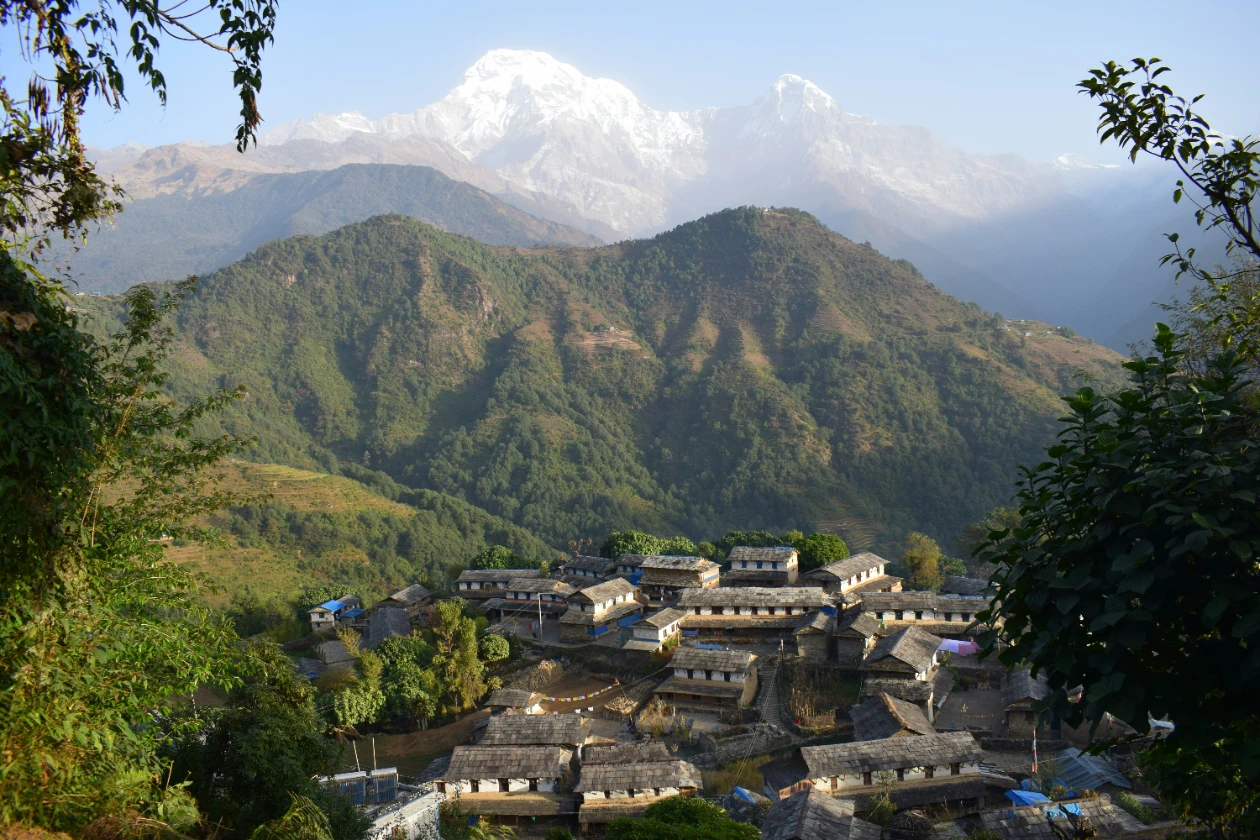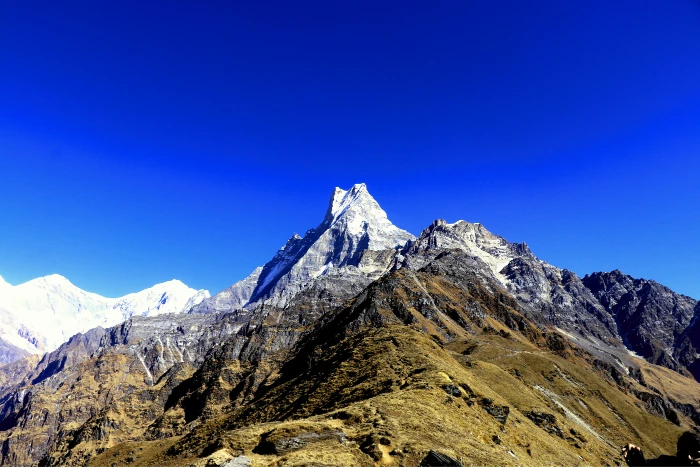
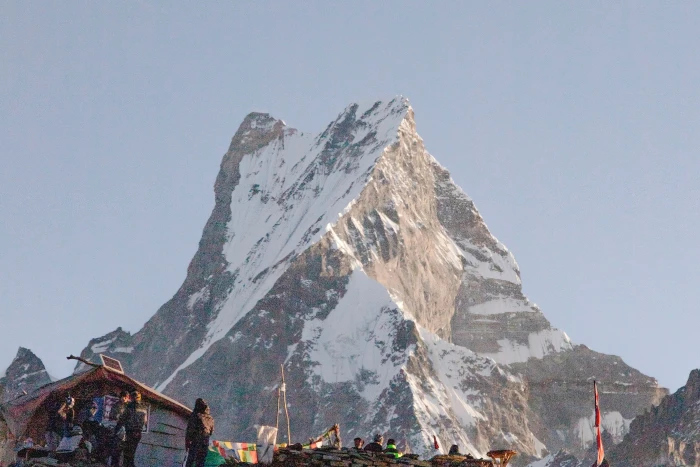
Every trekking company in Nepal will tell you Everest Base Camp is the bucket-list trek and Annapurna Base Camp is the classic alternative. Almost none of them will tell you about the trail that runs quietly between the two, through rhododendron forest so dense the light turns green at midday, up to a ridge where Machhapuchhre's fishtail summit looks close enough to touch and there is no one else on the trail to share the view with.
That is Mardi Himal. Opened as a trekking route only in 2012, carved from paths shepherds and cattle herders had used for generations before that, it remains one of the least crowded base camp treks in Nepal despite sitting almost literally next door to the busiest one. For 2027, with Nepal's tourism numbers climbing again on the back of the Wellness Year campaign and renewed international interest in shorter, less crowded routes, Mardi Himal is shaping up to be the trek people wish they had discovered before everyone else did.
At Hiking Nepal, we have been running guided routes through the Annapurna region for many years, and in recent times Mardi Himal has quietly become one of the treks our guides recommend most often to travellers who ask us, honestly, which trek we would choose if it were our own holiday. This guide covers everything you need to plan a 2027 Mardi Himal trek in proper depth: the complete day-by-day itinerary, realistic costs, difficulty level, permits, best season, training advice, packing guidance, and what genuinely makes this route worth choosing over its more famous neighbours.
What Is the hype with Mardi Himal Trek?
The Mardi Himal Trek is a short, moderate-difficulty trek in Nepal's Annapurna region that climbs from the hills above Pokhara through forest and alpine terrain to Mardi Himal Base Camp at 4,500 metres, offering close-up views of Machhapuchhre, Annapurna South, and Hiunchuli. The full round trip covers roughly 40 to 45 kilometres and can be completed in anywhere from 4 to 12 days depending on how the itinerary is structured and whether it is combined with Kathmandu and Pokhara sightseeing.
Unlike Everest Base Camp or Annapurna Base Camp, Mardi Himal sees a fraction of the foot traffic, largely because it does not appear in most trekkers' initial research and because the trailhead access from Pokhara is quick enough that many companies still market it as a secondary option rather than a destination trek in its own right. That is starting to change for 2027, and it is worth booking this route while it still feels undiscovered.
Feature | Details |
| Max altitude | 4,500m (Mardi Himal Base Camp) |
| Trek duration | 5-7 days trek-only, up to 12 days with Kathmandu/Pokhara |
| Total distance | Approximately 40-45km round trip |
| Difficulty | Moderate |
| Best season | March-May and September-November |
| Starting point | Kande or Hyangja, 30-45 minutes from Pokhara |
| Trek cost | USD 400-1,000 per person (trek-only, group join) |
| Permits required | TIMS card, Annapurna Conservation Area Permit (ACAP) |
| Accommodation | Teahouses/lodges throughout |
| Route opened | 2012 |
| Key peaks visible | Machhapuchhre (6,993m), Annapurna South (7,219m), Hiunchuli (6,441m), Mardi Himal (5,587m), Annapurna I (8,091m), Dhaulagiri (8,167m) |
| Daily walking hours | 4-6 hours average, 6-7 on summit push day |
| Guide required | Yes, recommended and standard with all packages |
Why Mardi Himal Exists as a Trekking Route?
It helps to understand why this trail is so different in character from its neighbours. Before 2012, the ridge leading to Mardi Himal Base Camp was used almost exclusively by local shepherds grazing livestock in the high pastures during summer months, not by trekking groups. The Nepal Tourism Board and local trekking associations opened it as an official route specifically to relieve pressure on the increasingly crowded Annapurna Sanctuary trail and give trekkers a genuine alternative within the same mountain range.
That history matters practically, not just as trivia. It means the trail infrastructure, teahouses, and signage are newer and, in several sections, better maintained than parts of the older, heavily trafficked routes. It also means the villages along the way, largely Gurung communities who have lived in this part of the Annapurna foothills for generations, have had a shorter window of tourism exposure, so interactions along the trail tend to feel less transactional than on routes that have carried trekkers for forty or fifty years.
Complete Mardi Himal Trek Itinerary
The exact day count varies by operator, but the route itself follows a consistent line. Below is the standard 7-day trek-only itinerary, with notes on how it extends when combined with Kathmandu and Pokhara sightseeing.
Day 1: Pokhara to Forest Camp
Drive roughly 45 minutes from Pokhara to Kande (1,770m) or Hyangja, then begin trekking through Australian Camp (2,050m) and Pothana (1,890m) into rhododendron and oak forest, reaching Forest Camp (2,520m). Walking time: approximately 5 to 6 hours.
Day 2: Forest Camp to Low Camp
Continue climbing steadily through denser forest, with the trail narrowing and the air noticeably cooler as you gain altitude, arriving at Low Camp (2,970m). Walking time: approximately 4 to 5 hours. This is typically the first point where Machhapuchhre becomes clearly visible above the treeline.
Day 3: Low Camp to High Camp
The forest thins into rhododendron scrub and then open alpine terrain as you climb to High Camp (3,580m), the last teahouse stop before the summit push. Walking time: approximately 4 hours, though the terrain becomes noticeably steeper in the final stretch. Many trekkers build in a short rest here given the altitude gain.
Day 4: High Camp to Mardi Himal Viewpoint and Base Camp, return to Low Camp or Badal Danda
An early start, usually before dawn, takes you up the exposed ridge to the Mardi Himal viewpoint and onward to Base Camp (4,500m). This is the trek's signature day: Machhapuchhre dominates the skyline at close range, with Annapurna South, Hiunchuli, and the Annapurna massif spread across the horizon. After summiting, most itineraries descend the same day to Low Camp or the alternative return route via Badal Danda (3,300m) to shorten the following day. Walking time: 6 to 7 hours round trip.
Day 5: Descend to Siding village or Pokhara via alternate route
Continue descending, often via Siding, a Gurung village that offers a genuinely different perspective on the trek's lower stretches compared with the ascent route. Walking time: approximately 5 to 6 hours.
Day 6 to 7: Return to Pokhara
Final descent and drive back into Pokhara, with time built in for rest or optional Pokhara sightseeing (Phewa Lake, World Peace Pagoda, Davis Falls) before onward travel.
For travellers combining the trek with Kathmandu and Pokhara cultural touring, Hiking Nepal’s extended 11-day package adds Kathmandu Valley UNESCO site visits (Pashupatinath, Swayambhunath, Kathmandu Durbar Square) and a fuller Pokhara city tour on either end of the trekking days, along with airport transfers throughout.
How Difficult Is the Mardi Himal Trek
Mardi Himal sits at a moderate difficulty level, harder than a short cultural walk but considerably more forgiving than Everest Base Camp or the Annapurna Circuit. Daily walking hours generally run four to six hours on standard days, rising to six or seven hours on the summit push, and while the final approach to Base Camp involves a steep, sustained climb on loose, exposed terrain, it does not require any technical climbing skill, ropes, or prior high-altitude mountaineering experience.
The route suits reasonably fit beginners who have done some hill walking before, though anyone starting from a low fitness baseline should build in at least six to eight weeks of regular walking, stair climbing, or cardio training beforehand, ideally with a loaded daypack to simulate trekking conditions. Because Mardi Himal gains altitude faster than longer routes like EBC, with less built-in acclimatisation buffer by design, the way you pace yourself on the High Camp to Base Camp day matters more here than the trek's overall difficulty rating might suggest at first glance.
Training recommendations: Three to four cardio sessions a week for six to eight weeks before departure, incorporating hill walking or stair climbing where possible, along with two strength sessions focused on legs and core to help manage the steeper, looser sections near High Camp and the summit ridge.
Best Season for Mardi Himal Trek in 2027
March to May (spring) and September to November (autumn) remain the strongest windows, offering the clearest mountain views and most stable weather across the entire route. Spring adds blooming rhododendron forest along the lower sections of the trail, which is a genuine highlight rather than a marketing line, since the forest sections here are denser and more botanically varied than on most other Annapurna routes, with entire hillsides turning red and pink through March and into April.
Autumn brings the clearest visibility of the year, with crisp air and minimal cloud cover typically holding from late September through November, making it the strongest single window for photography and unobstructed mountain views from the summit ridge.
Winter trekking, from December to February, is possible and increasingly popular precisely because Mardi Himal's shorter duration and lower overall altitude compared with EBC make cold-weather trekking more manageable. Daytime temperatures at lower altitudes remain workable, though High Camp and the summit ridge can see snow and ice, and some teahouses run a more limited service with fewer trekkers passing through. Proper cold-weather gear becomes essential rather than optional during these months.
Monsoon season, June to August, is generally not recommended. Forest sections become slippery underfoot, leeches are common on the lower trail, and mountain views are frequently obscured by cloud cover for days at a time, undermining much of the trek's main appeal.
Permits Required for Mardi Himal Trek
Two permits cover the entire route, and both are more straightforward to arrange than the restricted-area permits required for treks like Upper Mustang or Manaslu. The TIMS card (Trekkers' Information Management System) is required for all independent and guided trekking in Nepal and is typically arranged by your trekking company as part of the package, requiring a passport copy and passport photos.
The Annapurna Conservation Area Permit (ACAP) is required since the entire Mardi Himal route falls within the Annapurna Conservation Area, managed by the National Trust for Nature Conservation. This permit also funds conservation work and community development within the region, which is worth knowing if you are curious where your permit fee actually goes.
Neither permit requires advance online application in the way some restricted-area permits do, and both can typically be processed within a day in Pokhara or Kathmandu through a registered trekking company. If you are booking with Hiking Nepal, both permits are arranged for you and included in the package price, so there is nothing to organise separately before departure.
Mardi Himal Trek Cost 2027: Full Breakdown
Trek-only packages from Pokhara typically range from USD 500 to 1,000 per person for a 5 to 7 day itinerary, depending on group size, season, and accommodation standard, with larger group-join departures generally sitting toward the lower end of that range and private or small-group departures toward the higher end. Packages combined with Kathmandu and Pokhara sightseeing over 10 to 12 days cost more but include airport transfers, city hotel stays, and guided sightseeing on top of the trek itself, which is worth factoring in if you are also planning to see Kathmandu Valley's heritage sites during the same trip.
What is typically included: TIMS card and ACAP permit fees, a licensed English-speaking guide, teahouse accommodation during the trek, full board meals (breakfast, lunch, dinner) while trekking, and ground transport between Pokhara and the trailhead.
What is typically excluded: Nepal visa fees on arrival, travel and rescue insurance, personal expenses such as WiFi and hot showers at teahouses, which are usually charged per use, bottled or treated drinking water along the trail, and guide and porter tips, which are customary in Nepal and worth budgeting roughly USD 8 to 12 per day for a guide and slightly less for a porter, if hired separately.
Porter hire is optional but genuinely worth considering for this route, given the steep sections near High Camp. A porter typically carries up to 15 to 20 kilograms and costs considerably less than a second guide, letting you trek with a light daypack rather than your full kit.
Why Choose Mardi Himal Over Annapurna Base Camp or Poon Hill
This is the question most people researching the trek are actually asking, even when the search itself is simpler.
Trek | Duration | Max Altitude | Crowd Level | Best For |
| Mardi Himal | 5-10 days | 4,500m | Low | Quiet trails, close Machhapuchhre views, moderate challenge |
| Annapurna Base Camp | 7-15 days | 4,130m | High | Classic sanctuary views, established teahouse network |
| Poon Hill | 4-7 days | 3,210m | Very high | Easiest option, sunrise viewpoint, minimal altitude risk |
Annapurna Base Camp reaches a lower maximum altitude than many assume relative to its reputation, but sees considerably more trekking traffic, particularly during peak autumn weeks when teahouses fill up and the trail itself can feel genuinely crowded at popular viewpoints and rest stops. Poon Hill, meanwhile, is shorter and easier but caps out at a much lower elevation, and the viewpoint experience, while excellent, does not deliver the same immersive high-altitude arrival that a true base camp does.
Mardi Himal sits in a genuine middle ground: a real base camp experience at 4,500 metres, close-up views of Machhapuchhre that arguably rival ABC's panorama given the proximity, and a trail you can walk for hours without passing another group, all within a timeframe closer to Poon Hill than to the longer classic routes.
Teahouses and Accommodation on Mardi Himal Trek
Accommodation throughout is in teahouses, family-run lodges offering basic twin rooms, shared bathroom facilities at lower elevations, and increasingly basic conditions as you climb toward High Camp, where rooms are simple and heating is typically limited to a communal dining area stove in the evening. This is standard across nearly all Nepal teahouse trekking and not specific to Mardi Himal, though because the route is shorter and less developed than ABC or EBC, teahouse capacity at High Camp can run tighter during peak season, which is one practical reason to book through an established operator with reliable relationships along the route rather than arriving without arrangements.
Meals follow the typical teahouse menu: dal bhat (lentils, rice, and vegetable curry), noodle and pasta dishes, soups, and simple breakfast options. Dal bhat is worth mentioning specifically, since most guides will tell you it is the most reliable, calorie-dense option at altitude, and the traditional unlimited refill custom makes it genuinely practical fuel for trekking days.
What to Pack for Mardi Himal Trek
Layering matters more on this route than the moderate difficulty rating might suggest, given the temperature swing between the forested lower sections and the exposed, often windy summit ridge. Core essentials include a good three-season sleeping bag rated to at least minus 10 degrees Celsius for High Camp nights, a waterproof and windproof outer shell, insulated mid-layers, sturdy broken-in trekking boots rather than new ones, trekking poles for the steeper descents, a headtorch for the pre-dawn summit push, and sun protection given the intensity of high-altitude UV exposure even on cool days.
A water purification method, whether tablets, a filter, or a UV steriliser, is worth carrying, since bottled water becomes increasingly expensive and generates plastic waste the higher you climb. Cash in Nepali rupees is essential too, since there are no ATMs along the trail once you leave Pokhara.
Altitude Sickness and Safety on Mardi Himal Trek
Because Mardi Himal gains altitude more quickly than longer treks, with less gradual acclimatisation built into the standard itinerary compared with routes like EBC, mild AMS symptoms including headache, nausea, dizziness, and breathlessness are worth watching for from Low Camp onward, roughly 3,000 metres and above. Walking at a steady pace rather than rushing the High Camp to Base Camp section, staying well hydrated with 3 to 4 litres of water a day, avoiding alcohol during the trek, and being honest with your guide the moment you feel unwell all matter more here than the overall difficulty rating might suggest.
The standard guidance applies: mild symptoms usually settle with rest and hydration, but worsening symptoms, confusion, loss of coordination, or breathlessness at rest are signs to descend immediately rather than push on to the summit. No summit view is worth ignoring a genuine AMS warning sign.
Rescue insurance covering high-altitude helicopter evacuation is not included in standard packages and should be arranged separately before you fly out, alongside general travel insurance covering medical treatment and trip cancellation. A licensed guide with wilderness first aid training, standard with any reputable trekking company, is the single most important safety factor on a route with fewer other trekkers around to help in an emergency compared with the busier EBC and ABC trails.
Environmental and Cultural Considerations
Because Mardi Himal is a newer, lower-traffic route, the trail and surrounding forest have avoided much of the environmental strain visible on Nepal's older, more heavily trekked paths. Staying on marked trails, carrying out non-biodegradable waste rather than leaving it at teahouses, and using refillable water bottles with a purification method rather than buying bottled water at every stop all help keep it that way.
The Gurung villages along the route, including Siding and the smaller settlements passed on the descent, are still primarily agricultural and pastoral communities rather than tourism-dependent economies, unlike some villages on longer-established routes. A respectful approach, asking before photographing people directly, supporting teahouse-run businesses rather than bypassing them, and engaging with genuine curiosity rather than treating the villages as scenery, goes a long way and reflects well on trekkers and operators alike.
Frequently Asked Questions
How long is the Mardi Himal Trek?
Most itineraries run 5 to 7 days for the trek itself, or up to 12 days when combined with Kathmandu and Pokhara sightseeing.
Is Mardi Himal Trek suitable for beginners?
Yes, with moderate fitness preparation. It is generally considered more accessible than Everest Base Camp or Annapurna Circuit, though the final ascent to Base Camp is steep and should not be underestimated.
What permits do I need for the Mardi Himal Trek?
A TIMS card and an Annapurna Conservation Area Permit (ACAP), both usually arranged by your trekking company as part of the package.
When is the best time to trek Mardi Himal?
March to May and September to November offer the clearest views and most stable weather, with winter trekking increasingly popular given the route's shorter duration and lower overall altitude compared with longer treks.
How much does the Mardi Himal Trek cost?
Trek-only packages typically range from USD 500 to 1,000 per person, with combined Kathmandu-Pokhara-trek itineraries costing more depending on hotel category and duration.
Do I need a guide for the Mardi Himal Trek?
While not always legally mandatory in the way restricted-area treks require, a licensed guide is strongly recommended given the route's steeper, less developed sections and lower trekker volume, which means less immediate help available if something goes wrong.
Can I see Everest from the Mardi Himal Trek?
No. Mardi Himal sits within the Annapurna range, and the peaks visible from the route, Machhapuchhre, Annapurna South, Hiunchuli, and Mardi Himal itself, are entirely separate from the Everest region, which lies in a different part of Nepal.
Ready for the Quiet Side of the Annapurna Region
If Everest Base Camp and Annapurna Base Camp are on your radar but the crowds are not what you are after, Mardi Himal gives you a genuine base camp trek, real high-altitude drama, and forest scenery that few other Annapurna routes can match, all without needing weeks of leave or months of specialist training. With over years guiding trekkers through this exact region, our team can tailor the standard itinerary above to your fitness level, timeframe, and whether you would rather add Kathmandu and Pokhara sightseeing around the trek itself.
Ready to trek Mardi Himal in 2027? Browse Hiking Nepal's Mardi Himal packages and book your preferred departure date, or call or WhatsApp us directly at +977 9802342080, or email [email protected]