Open three browser tabs and search for Nepal trekking packages. Within ten minutes, you will have quotes ranging from USD 280 to USD 1,400 for what appears to be the same route, the same number of days, and the same destination. Every instinct tells you the expensive operators are overcharging, and the affordable ones are the find. That instinct, in the context of Himalayan trekking, will get you into trouble.
Nepal trekking costs vary so dramatically because the thing being sold varies dramatically. The USD 280 quote and the USD 1,400 quote are not two prices for the same product. They are two entirely different products that share a trail name. Understanding what the difference actually means in practical, safety-relevant terms is the single most useful thing you can do before handing over a deposit.
This guide breaks down exactly what drives Nepal trekking costs in 2026, what each price tier genuinely includes, and how to make a decision you will not regret at 4,000 metres.
What Actually Drives the Cost of a Nepal Trek
Before comparing numbers, you need to understand the variables underneath them. Most travellers focus on the headline price and ignore the line items. The line items are where the real comparison happens.
Guide Qualification and Licensing
A licensed trekking guide in Nepal has completed a formal training programme through the Nepal Tourism Board covering trail navigation, altitude medicine, emergency first aid, and cultural heritage. A licensed high-altitude guide carries additional specialist training for routes above 5,000 metres. Beyond licensing, certifications like Wilderness Advanced First Aid (WAFA) and Wilderness First Responder (WFR) require substantial investment in training time and ongoing renewal costs.
Guides without these certifications are cheaper to employ. Their clients notice the difference when it matters most, which is not on a flat trail in good weather but on a remote section at 4,500 metres when a member of the party stops making sense in conversation, which is one of the early signs of High Altitude Cerebral Oedema.
Porter Welfare and Employment Terms
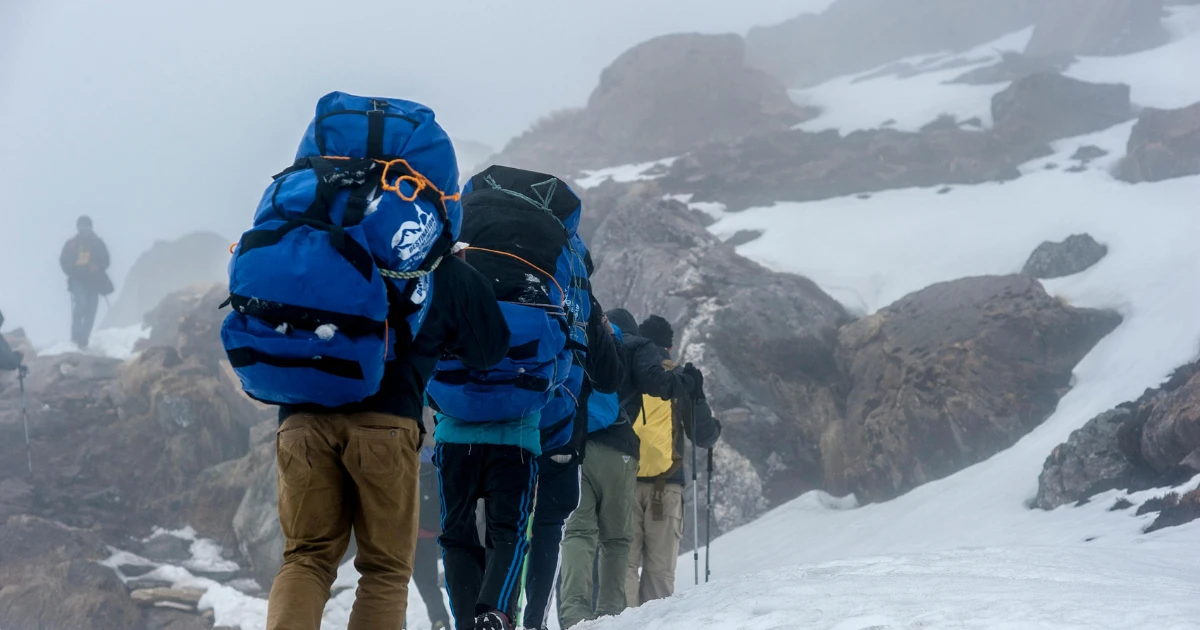
A properly employed porter in Nepal has a written contract, is paid above the International Porter Protection Group (IPPG) minimum wage for the relevant region, carries no more than 20 kilograms, is provided with altitude-appropriate clothing and sleeping equipment for the route's conditions, and sleeps and eats in the same teahouses as the trekking clients. A freelance porter hired informally at the trailhead may have none of these protections.
The cost difference between the two arrangements is real, and it appears directly in your quote. When a package price looks significantly lower than comparable operators, porter welfare is frequently where the saving comes from. That saving has a human cost that the headline price does not show.
Lodge Selection and Pre-Booking
Teahouses on Nepal's major trekking routes range from clean, well-maintained family lodges with filtered water, solar-heated bathrooms, and inspected kitchens to damp, overcrowded rooms with shared pit latrines and cooking water of uncertain provenance. Both types appear on the same trail, sometimes within 200 metres of each other. The difference between them is selection, and selection requires ongoing inspection visits, direct relationships with lodge owners, and the operational investment to pre-book rather than arrive and hope.
Budget packages often include no lodge pre-booking, which means you get whatever is available when you arrive. During peak season in October and March, this can mean sharing a four-person room with six strangers or sleeping in the dining room. On a private or premium package, your accommodation is confirmed before you leave Kathmandu.
Safety Equipment
Every Hiking Nepal departure above 3,000 metres carries a calibrated pulse oximeter for twice-daily oxygen saturation monitoring, supplemental oxygen with a regulator and appropriate masks, a comprehensive first-aid kit including altitude medications (dexamethasone, nifedipine, and acetazolamide), and a satellite communication device on remote routes where mobile coverage is absent. On routes above 4,000 metres, a portable altitude chamber (Gamow bag) is carried as standard.
This equipment costs money to purchase, maintain, and replace. It does not appear as a line item in most quoted prices. Whether it is being carried on your trek is something you need to ask directly.
Group Size and Guide Attention
A licensed guide managing a group of twelve trekkers is, practically speaking, managing an average. Some members are moving too fast. Some are showing early altitude symptoms that are being masked by the group's overall energy. The individual who is quieter than usual today, eating less than yesterday, and slightly slower on the ascent may be the person who needs to descend tomorrow, but in a group of twelve, that pattern is very hard to catch early.
A private guide attending to you or your family is monitoring one set of people continuously. The safety benefit of that ratio is not abstract. It is the difference between catching altitude sickness on Day 3 and managing it safely versus missing it until Day 5 when it has progressed.
The Three Tiers of Nepal Trekking: An Honest Comparison
The Nepal trekking market organises itself into three broadly recognisable tiers. The boundaries between them are not rigid, and individual operators vary, but this framework gives you a working model for evaluating any quote.
Variable | Budget Tier (USD 250 to 500) | Mid-Range Tier (USD 500 to 950) | Premium Guided (USD 950 to 1,600+) |
| Guide certification | Basic licence, variable | Licensed, some WAFA certified | Licensed, WAFA, or WFR certified |
| Guide to trekker ratio | 1 to 10 or higher | 1 to 6 to 8 | 1 to 1 to 4 (private or small group) |
| Porter employment | Freelance, Trailhead hire | Contracted, variable welfare standards | Contracted, full IPPG welfare standards |
| Porter load limit | Often unverified | Approximately 25kg | 20kg maximum, enforced |
| Lodge selection | Unvetted, first available | Preferred list, some pre-booking | Inspected, fully pre-booked |
| Safety equipment | Pulse oximeter only | Oximeter, basic first aid | Full kit including supplemental oxygen |
| Satellite comms | Not standard | Not standard | Standard on remote routes |
| Dietary accommodation | Standard menu only | Advance notice possible | Pre-arranged with every lodge |
| Emergency support | Guide's personal phone | Operator office hours | 24-hour coordination line |
| Permit handling | Included | Included | Included |
| Trip insurance verified | Rarely checked | Sometimes checked | Always verified at briefing |
The budget tier is not inherently dangerous. Thousands of trekkers complete the Everest Base Camp route and the Annapurna Circuit every year on budget packages without incident. What the budget tier does is transfer risk from the operator to the trekker. If you are fit, experienced, altitude-aware, and travelling during stable weather on a well-trafficked route, that transferred risk may be acceptable to you. If you are trekking above 4,000 metres for the first time, travelling with children or older family members, or moving into a restricted or remote region, it is not a trade worth making.
What Does a Nepal Trek Actually Cost in 2026?
The following figures reflect all-inclusive pricing for the main trekking circuits in 2026. All-inclusive means licensed guide, contracted porter, hand-selected accommodation, all meals on trek, permits, and private ground transfers. International flights and travel insurance are separate in every case.
Trek | Duration | Budget Tier (per person) | Mid-Range Tier (per person) | Hiking Nepal Private Rough Cost (per person) |
| Poon Hill Circuit | 5 to 7 days | USD 280 to 380 | USD 420 to 580 | From USD 650 |
| Mardi Himal Trek | 5 to 7 days | USD 300 to 420 | USD 450 to 620 | From USD 680 |
| Langtang Valley | 8 to 10 days | USD 400 to 560 | USD 620 to 820 | From USD 950 |
| Annapurna Base Camp | 10 to 13 days | USD 500 to 700 | USD 800 to 1,050 | From USD 1,050 |
| Everest Base Camp | 12 to 14 days | USD 600 to 850 | USD 950 to 1,300 | From USD 1,450 |
| Annapurna Circuit | 14 to 16 days | USD 650 to 900 | USD 1,000 to 1,350 | From USD 1,600 |
| Pikey Peak Trek | 7 to 10 days | Not available | USD 750 to 1,000 | From USD 900 |
| Manaslu Circuit | 14 to 16 days | USD 900 to 1,200 | USD 1,300 to 1,700 | From USD 1700 |
| Upper Mustang (restricted) | 14 to 16 days | USD 1,500 to 1,900 | USD 2,000 to 2,600 | From USD 2,200 |
First, the Hiking Nepal private price reflects a dedicated licensed guide, IPPG-compliant contracted porter, inspected and pre-booked accommodation, full safety equipment, and 24-hour emergency coordination. The budget tier price frequently excludes several of these. The all-inclusive label is only meaningful if you ask each operator what it actually covers.
Second, for couples and families of three or four, the per-person premium between the mid-range tier and a fully private Hiking Nepal departure typically narrows to USD 80 to 150 per person per day. That is the cost of knowing your guide's full attention is on your group and no one else.
The Hidden Costs That Most Quotes Leave Out
Beyond the package price, every Nepal trek carries additional costs that budget quotes frequently omit or understate. Knowing these before you travel prevents unpleasant surprises on arrival.
Permits. The Annapurna Conservation Area Permit (ACAP) costs NPR 3,000 per person. The TIMS card costs NPR 2,000 for agency trekkers. The Sagarmatha National Park entry permit for EBC costs NPR 3,000. Restricted area permits for Mustang and Tsum Valley run to USD 500 per person for ten days. These should be included in any reputable package price. If they are not itemised, ask specifically.
Travel insurance. Non-negotiable on any trek above 2,000 metres. A policy that covers helicopter evacuation from altitude, emergency medical treatment in Nepal, and repatriation costs between USD 80 and USD 200 for a two-week trip, depending on your nationality and provider. Standard high-street travel insurance frequently excludes trekking above 2,000 metres. World Nomads, True Traveller, and BUPA Adventure are commonly used by Hiking Nepal clients and include the necessary coverage. Hiking Nepal verifies insurance documentation at the pre-trek briefing for every departure.
Tips for guides and porters. Customary and expected. The standard range is NPR 500 to 3,000 per guide or porter per day for a satisfied group. On a 12-day EBC trek with one guide and one porter, this adds approximately USD 120 to 360 to your total cost. It is not included in any package price.
Personal expenses on trail. Hot showers at teahouses (NPR 200 to 500 each), battery charging (NPR 100 to 500 per device), Wi-Fi (NPR 200 to 800 per day at lower altitude lodges), additional snacks and drinks beyond the three included meals, and any gear hired or purchased in Pokhara or Kathmandu.
Accommodation and meals before and after the trek. Most packages begin and end at the trailhead. Two or three nights in Kathmandu or Pokhara at either end, at USD 40 to 150 per night depending on hotel standard, adds USD 160 to 900 to the total, depending on how many nights and what level of comfort you choose.
A realistic total budget for a 12-day EBC trek in 2026, including all of the above, sits between USD 1,400 and USD 3,500 per person, depending on the tier of operator and the standard of pre- and post-trek accommodation.
What the Cheapest Quote Cannot Include
Some things simply cannot be delivered at the lowest price point, regardless of how the operator structures their package. Understanding these is the clearest way to evaluate whether a quote is genuinely competitive or whether it is cheap because something important has been left out.
A licensed, WAFA-certified guide costs more to employ than an unlicensed one. A contracted porter with full IPPG welfare compliance costs more than a trailhead hire. A lodge network that has been physically inspected and pre-booked costs more to maintain than an open-ended accommodation arrangement. Supplemental oxygen, a Gamow bag, and a satellite communication device cost money to carry. A 24-hour emergency coordination service costs money to staff.
None of these is a luxury extra. They are the operational infrastructure that determines what happens when something goes wrong. And in the Himalayas, something going wrong is not a theoretical risk. It is a statistical probability across a sufficient number of treks, and the question is not whether it will happen to someone but whether you will be adequately supported when it does.
How to Evaluate Any Nepal Trek Quote
When you receive a package quote from any Nepal trekking operator, the following questions will tell you everything the headline price does not.
Is the guide licensed by the Nepal Tourism Board, and what is their altitude medicine certification? Is the porter contracted with a written employment agreement or hired at the trailhead? What is the maximum porter load limit, and how is it enforced? Are lodges pre-booked or allocated on arrival? What safety equipment is carried and who carries it? Is there a 24-hour emergency contact line? Does the price include all permits, or are they billed separately? Is travel insurance verified before departure?
A reputable operator answers all of these questions without hesitation and with specifics rather than generalities. An operator who deflects, provides vague answers, or treats these questions as unreasonable is telling you something important about their operating standards.
The Hiking Nepal Approach to Transparent Pricing
Hiking Nepal publishes pricing across all programme tiers because we believe an informed client makes a better trekking decision and has a better experience. Our private guided packages include every item described in this guide as standard: WAFA-certified guide, contracted porter with full IPPG welfare compliance, hand-selected and pre-booked accommodation, all meals, all permits, complete safety equipment, satellite communication on appropriate routes, and 24-hour emergency coordination throughout your trek.
The price difference between a Hiking Nepal departure and the cheapest available quote for the same route is real. So is everything that difference buys.
Frequently Asked Questions: Nepal Trek Costs 2026
What is the minimum budget for a Nepal trek in 2026? A basic teahouse trek on the Poon Hill circuit with a licensed guide and standard porter can be completed for approximately USD 280 to 350 per person, all-inclusive from Pokhara. Add USD 80 to 150 for travel insurance, USD 60 to 100 for tips, and USD 150 to 300 for Kathmandu accommodation, and a realistic minimum total sits around USD 570 to 900 per person.
Is it cheaper to arrange a Nepal trek on arrival in Kathmandu? Often yes in headline price terms, and often at a meaningful cost to quality and safety. Guides and porters hired informally in Thamel are usually unlicensed or carry only basic licences and are rarely covered by operator insurance or welfare standards. For budget-conscious travellers, booking with a reputable mid-range operator in advance almost always produces better value than informal Kathmandu arrangements at a similar price point.
Does Nepal trekking cost more in spring than autumn? Peak season pricing in March, April, October, and November is broadly consistent across reputable operators, though accommodation scarcity during the highest-demand weeks of April and October can push lodging costs upward on unbooked itineraries. Hiking Nepal's private packages use pre-booked accommodation, so pricing is not affected by seasonal availability pressure.
What is not included in most Nepal trek packages? International flights, airport transfers to Pokhara or the trailhead, travel and medical evacuation insurance, personal snacks and drinks beyond included meals, hot shower and battery charging fees at teahouses, Wi-Fi charges, pre and post-trek hotel accommodation in Kathmandu or Pokhara, and tips for guides and porters.
How much should I budget for tips on a Nepal trek? NPR 500 to 1,000 per guide or porter per day is the standard range for a satisfied group. On a 12-day EBC trek with one guide and one porter, budget approximately USD 120 to 200 for tips in addition to your package cost.
Ready to Trek Nepal in 2026?
The right Nepal trek is not the cheapest one on the results page. It is the one where the guide knows what to do at 4,500 metres when the situation changes, where the porter is employed and equipped with dignity, where the lodge has been checked, and the room is waiting for you, and where someone is available at any hour if the plan needs to change.
That is what Hiking Nepal builds into every departure. View our 2026 private and small group packages, request a personalised quote for any itinerary in this guide, or speak to the Hiking Nepal team at +977 9802342080 (Nava) or [email protected] for a free planning consultation before you book anything.
Your Himalayas are worth doing properly.