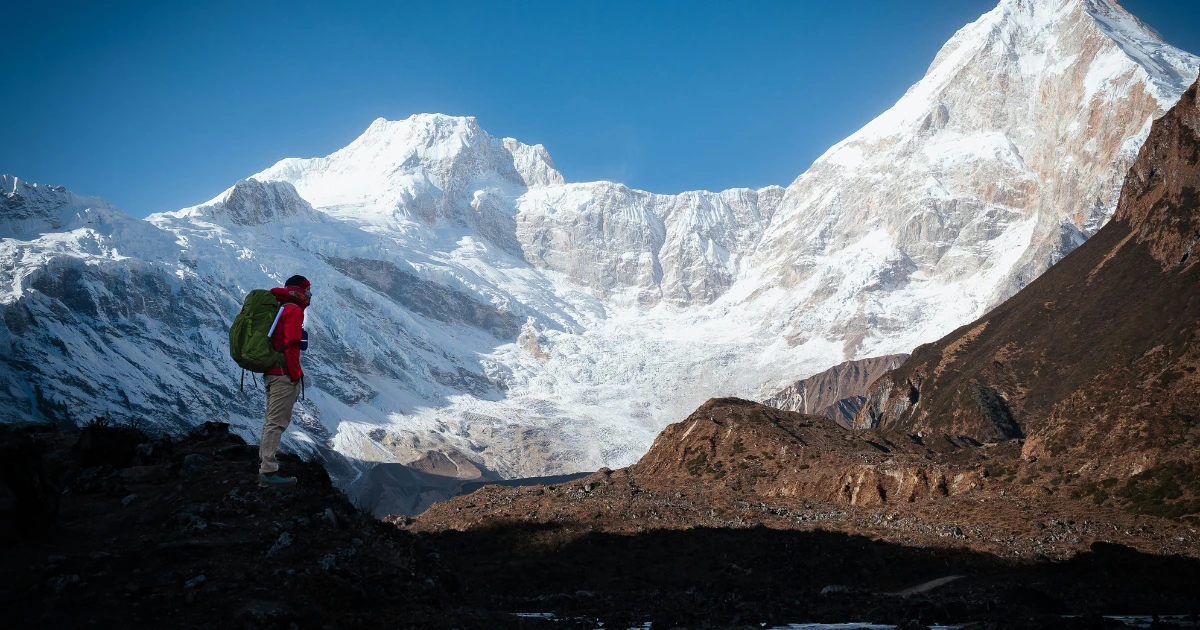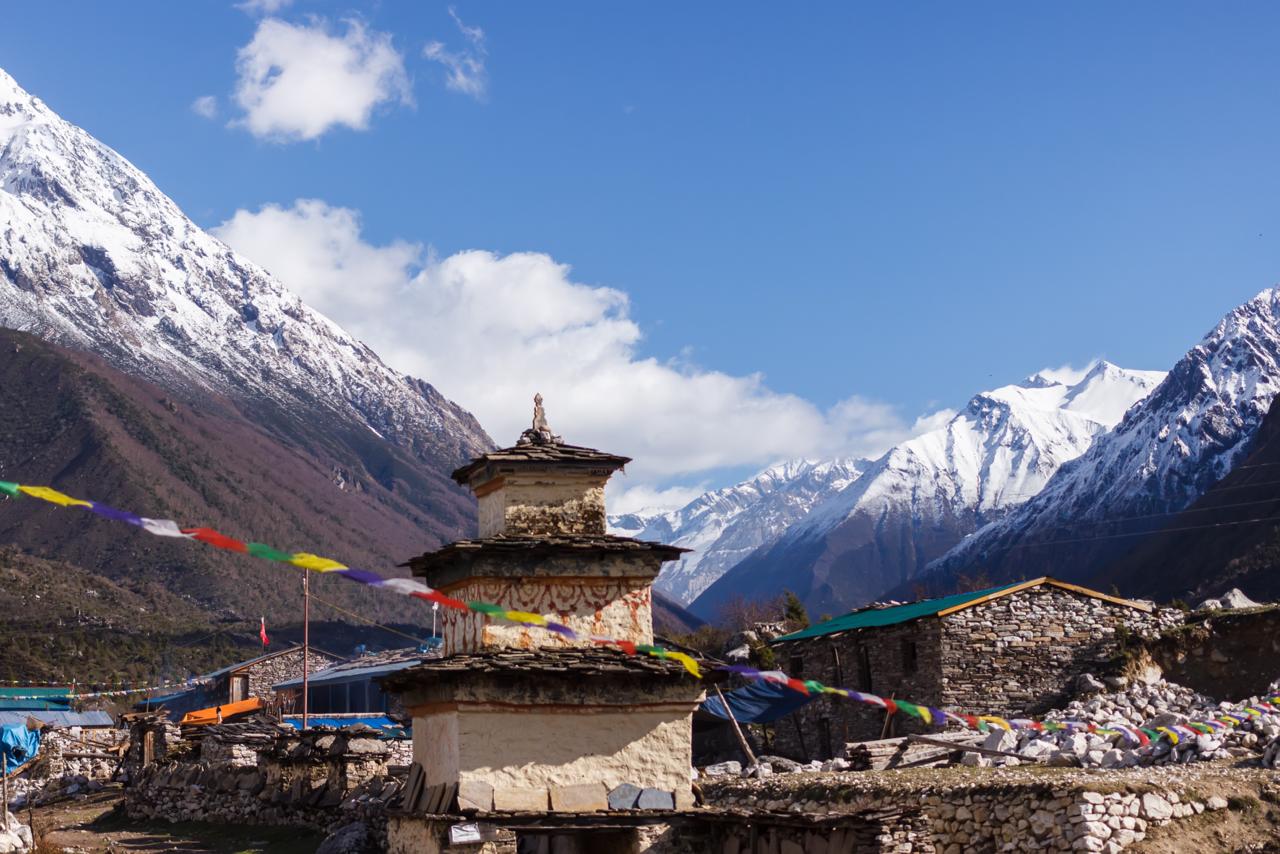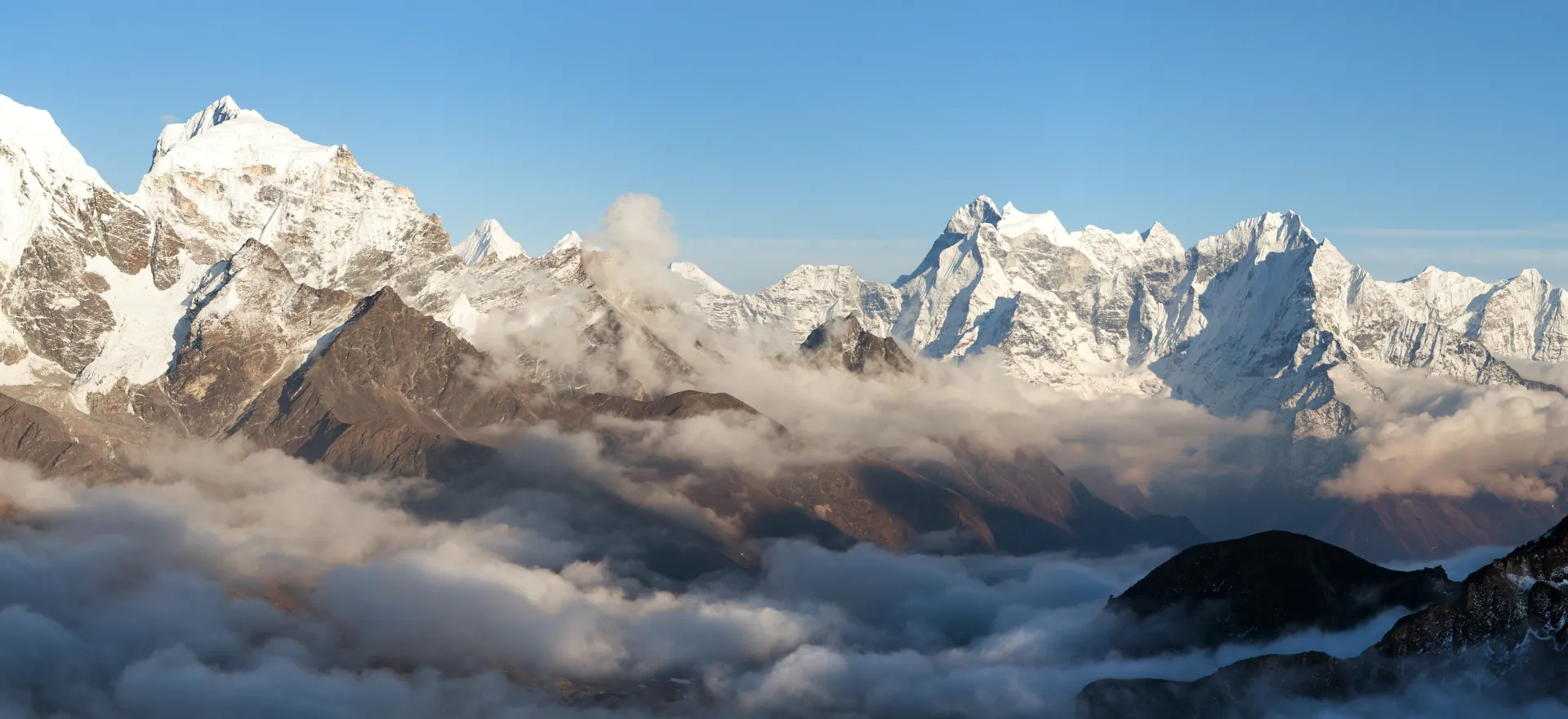
There is a specific category of experience that most people who have trekked to Everest Base Camp describe when they return home. They speak about the trail, the teahouses, the Sherpa culture, the acclimatisation days in Namche Bazaar, and the moment at Kalapatthar when the full scale of Everest becomes visible for the first time. What a smaller number of them describe, usually with a different quality of voice, is what happened when they added Island Peak.
Island Peak, known in Nepali as Imja Tse, sits at 6,189 metres in the Khumbu region, nine kilometres south of Lhotse. It is classified as a trekking peak by the Nepal Mountaineering Association, which places it in the accessible end of the technical climbing category rather than the expedition end. The summit requires crampons, an ice axe, a fixed rope ascent on the upper headwall, and a pre-dawn start from high camp. It does not require prior mountaineering experience, although it rewards prior fitness preparation and altitude acclimatisation very directly.
What it provides in return is the first genuinely technical summit that most people will ever stand on. A Himalayan peak above 6,000 metres, reached by your own effort, with the Lhotse face directly above you and the panorama from the summit ridge taking in Makalu, Baruntse, Ama Dablam, Nuptse, and Lhotse in a single 360-degree sweep. The difference between this and standing at Everest Base Camp or even Kalapatthar is not one of degree. It is one of kind.
This is why Island Peak should be on your list for 2027, and this guide covers everything you need to plan it properly.
What Is Island Peak?
Island Peak takes its name from the way early Everest expedition members described it in the 1950s: seen from the Imja Valley below, it appears to float above the surrounding glaciers like an island in a sea of ice. The name stuck, although the Nepal Mountaineering Association officially renamed it Imja Tse in 1983 in line with the broader Nepali naming convention for the country's peaks. Most climbers and guides still use Island Peak.
At 6,189 metres, it is the most popular trekking peak in Nepal, attracting approximately 1,500 permitted climbers per year across the spring and autumn seasons. It was first climbed in 1953 by a British team as part of the preparation activities for the Everest expedition that same year, and its accessibility relative to higher objectives has made it the standard gateway into technical Himalayan climbing for two generations of mountaineers.
The route to the summit from Island Peak High Camp at approximately 5,800 metres involves a glacier crossing, a rocky moraine section, and a steep snow and ice headwall of 200 to 300 metres where fixed ropes are placed by expedition teams. The technical difficulty on the headwall is approximately Alpine PD (peu difficile) in standard mountaineering grading, which means it is within range for a fit and motivated trekker with basic crampon training and good altitude acclimatisation. It is not within range for someone who is physically unprepared or who has not acclimatised properly.
The distinction matters. Island Peak is accessible, but it is not trivial. Approximately 30 to 40 per cent of attempted summit days on Island Peak do not reach the top, with the most common causes being poor acclimatisation, inadequate physical preparation, or adverse weather on summit day. A well-planned itinerary with a qualified guide and realistic preparation eliminates most of the preventable causes.
Why 2027 Is a Good Year to Climb Island Peak
The Khumbu Is Improving Its Infrastructure
The trail network and teahouse infrastructure in the Khumbu region have continued to improve through 2025 and 2026. New lodge upgrades at Dingboche and Chhukung, the villages most commonly used for Island Peak acclimatisation and base camp preparation, have expanded the quality and availability of comfortable accommodation at the altitudes where the most useful acclimatisation days are spent.
The domestic aviation situation in Nepal is also improving. The Ramechhap transfer requirement for Lukla-bound flights, introduced in the 2019 to 2023 period to manage Kathmandu airport congestion, has been variably applied since 2024. The direct Kathmandu to Lukla service is more reliably available in 2026 and 2027 than it was in the intervening years, reducing the logistical friction of reaching the Khumbu trailhead.
The 2027 Permit Structure Remains Accessible
The Island Peak climbing permit issued by the Nepal Mountaineering Association costs USD 250 per person for the spring season (February to May) and USD 125 for the autumn season (September to November). These fees have remained stable and are among the most accessible permit costs for any technical climbing objective in Nepal. The combined cost of the Island Peak permit alongside the standard Khumbu trekking permits (Sagarmatha National Park and Khumbu Pasang Lhamu Rural Municipality) adds USD 300 to 350 to the total budget, which remains modest relative to what a permit costs for higher peaks.
The Island Peak permit can be obtained in Kathmandu through a registered trekking and climbing agency. Hiking Nepal handles all permit applications for Island Peak departures as part of the standard package.
The Window After EBC Season Is Well-Timed
Spring 2027 falls in a global travel calendar that continues to favour Nepal as a primary adventure destination. Post-pandemic travel patterns have normalised and the April to May spring window in the Khumbu, traditionally the most popular period for both EBC trekking and Island Peak climbing, is expected to see strong demand. Booking spring 2027 Island Peak packages through Hiking Nepal is recommended by November 2026 at the latest for groups wanting the most favourable weather windows.
Who Island Peak Is For
This is the most important section of the guide for most readers, because Island Peak is genuinely suited to a wider range of people than most assume before investigating it, and genuinely unsuitable for a narrower range than some marketing materials suggest.
The Right Candidate for Island Peak
You do not need prior mountaineering experience to attempt Island Peak. You do need the following, honestly assessed.
Physical fitness well above the trekking baseline. The Island Peak summit day involves ten to fourteen hours of total activity, beginning at approximately 1:00 to 2:00 am from high camp and including the glacier approach, the technical headwall ascent, the summit, and the full descent back to base camp or a lower camp. The altitude on summit day ranges from 5,800 metres at the camp to 6,189 metres at the top. This is genuinely demanding. Trekkers who find the Everest Base Camp approach trail moderately challenging are at the limit of what is appropriate for Island Peak without additional fitness preparation.
Prior acclimatisation above 5,000 metres. The single most reliable predictor of Island Peak summit success is the quality of acclimatisation in the two weeks before summit day. Trekkers who have spent nights at Dingboche (4,410m), Chhukung (4,730m), and Island Peak High Camp (5,800m) in the correct sequence, and who have taken an acclimatisation day hike to Chhukung Ri (5,546m) or a comparable altitude, are physiologically prepared in a way that a faster ascent profile does not replicate.
A realistic attitude to the technical section. The headwall above the glacier on Island Peak requires ascending a fixed rope using a jumar (ascender device) on a steep snow and ice slope. This is taught by the Hiking Nepal guide during a pre-climb skills briefing, is not technically complex, and is completed successfully by the majority of adequately prepared clients. It does, however, require comfort with exposure and with physical effort at altitude. If the description of ascending a fixed rope on a steep snow slope at 6,000 metres causes immediate anxiety rather than engaged interest, Island Peak may not be the right first objective.
Good mental resilience on a hard day. The summit morning is cold, dark, physically demanding, and long. The combination of altitude, pre-dawn start, physical exertion, and the specific psychological demand of technical terrain at height tests a different aspect of a person's character from a long day of walking on a standard trek. Most people rise to it. Some discover it is not what they wanted. The honest pre-trip assessment of which category you are likely to fall into is valuable.
The Profile That Succeeds Most Consistently
Based on Hiking Nepal's guiding history on Island Peak, the profile of trekkers who summit most consistently is as follows: physically fit adults who exercise regularly including some form of sustained cardio activity; people who have completed at least one multi-day trek above 4,000 metres before attempting Island Peak; those who follow the recommended acclimatisation itinerary rather than trying to compress it; and those who approach the summit attempt with genuine motivation rather than as an add-on to a standard EBC trip decided at the last moment.
Age is not a limiting factor in the expected range. Hiking Nepal has guided Island Peak summits by clients in their early twenties and clients in their mid-sixties with approximately equal success rates within the adequately-prepared cohort.
The Standard Island Peak Itinerary
Island Peak is almost always combined with the Everest Base Camp trek, which serves the dual purpose of providing the Khumbu cultural experience and establishing the acclimatisation foundation on which a successful summit attempt is built. The following is Hiking Nepal's recommended 18-day combined itinerary.
Day 1 and 2: Kathmandu
Arrival, pre-climb briefing with the Hiking Nepal guide and climbing team, gear check and hire, permit collection. The briefing covers the full itinerary, acclimatisation science, crampon and jumar technique (preliminary instruction), emergency protocols, and weather monitoring.
Day 3: Fly Kathmandu to Lukla (2,840m), Trek to Phakding (2,610m)
The 35-minute domestic flight to Lukla's Tenzing-Hillary Airport is the gateway to the Khumbu. Lukla sits at 2,840 metres and the short descent to Phakding at 2,610 metres on the first day is a deliberate altitude management decision: begin the route slightly lower than the arrival altitude rather than immediately ascending.
Day 4: Phakding to Namche Bazaar (3,440m)
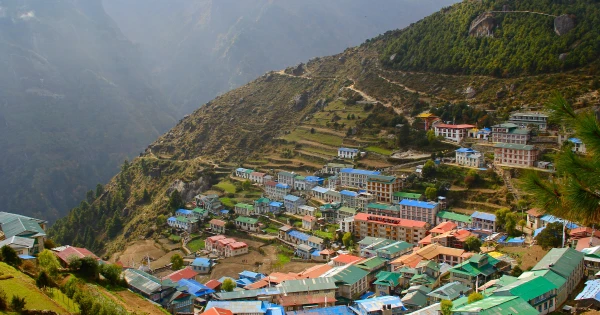
The trail crosses the Dudh Koshi river on multiple suspension bridges, the highest of which hangs above a considerable drop and is crossed with laden yak caravans as often as with trekking groups. Namche Bazaar appears at the top of a long steep climb from the valley, a horseshoe-shaped market town built into the hillside that serves as the commercial, cultural, and administrative centre of the Khumbu.
Day 5: Namche Bazaar Acclimatisation Day
The first designated acclimatisation day. The recommended activity is the morning walk to the Everest View Hotel ridge at 3,880 metres, which offers a clear view of Everest, Lhotse, Ama Dablam, and Thamserku above the Namche bowl, before returning to the same sleeping altitude. This pattern of climbing high and sleeping low is the practical application of acclimatisation science, and it is applied at each designated rest day throughout the itinerary.
Day 6: Namche Bazaar to Tengboche (3,860m)
The trail climbs from Namche, crosses the Dudh Koshi on the high bridge at Phunki Tenga, and ascends to the Tengboche ridge where the monastery at 3,860 metres commands the finest view of Ama Dablam available from the main EBC trail. The monastery is the most significant Nyingma Buddhist institution in the Khumbu and the site of the Mani Rimdu festival each November.
Day 7: Tengboche to Dingboche (4,410m)
The trail descends into the Imja Khola valley and climbs to Dingboche, a summer grazing village that serves as one of the two main acclimatisation bases on the EBC and Island Peak routes. Dingboche at 4,410 metres is the first overnight stop where altitude effects become relevant for some trekkers.
Day 8: Dingboche Acclimatisation Day
The second acclimatisation day involves a hike to the ridge above Dingboche at approximately 5,100 metres for views of Makalu, Lhotse, and Island Peak itself, visible to the south. The descent returns to the same sleeping altitude. This is the day where many trekkers get their first clear view of Island Peak and the perspective from the ridge confirms that it is a genuinely imposing objective rather than an accessible-sounding theoretical one.
Day 9: Dingboche to Lobuche (4,940m)
The trail crosses the Khumbu moraines and climbs to Lobuche, a high-altitude settlement used primarily as a staging point for EBC and Pumori approaches. The trail passes the Thokla memorial chortens above the pass, a collection of stone memorials to climbers who have died in the Khumbu, which is a sobering passage that most trekkers experience as a reminder rather than a deterrent.
Day 10: Lobuche to Gorak Shep (5,140m) and Everest Base Camp (5,364m)
The day most trekkers have thought about since booking. Gorak Shep at 5,140 metres is the final overnight stop before Base Camp, a bleak and beautiful high plateau above the Khumbu Glacier. The walk to EBC follows the lateral moraine of the glacier for two hours to the Base Camp area, which in spring climbing season is a city of tents and equipment servicing the Everest expedition teams. In autumn the site is quiet, the glacier more visible, and the atmosphere more solitary.
Day 11: Kalapatthar (5,545m) then Trek to Chhukung (4,730m)
The pre-dawn ascent of Kalapatthar is the standard EBC sunrise ritual and the best available view of Everest's south face. Return to Gorak Shep for breakfast, then the route diverges from the standard EBC return and heads south and east towards the Imja Valley and the village of Chhukung at 4,730 metres. This deviation begins the Island Peak-specific section of the itinerary.
Day 12: Chhukung Acclimatisation Day and Chhukung Ri (5,546m)
The ascent of Chhukung Ri at 5,546 metres is the most important single acclimatisation day in the Island Peak itinerary. It takes the climber to a height above Island Peak High Camp and provides a close-range view of the Island Peak approach route from above. Equally important, it tells the guide and the climber directly how the individual's body is responding to altitude above 5,000 metres on a demanding climb, which is the most reliable indicator available of summit day readiness.
The view from Chhukung Ri encompasses Island Peak, Imja Tse, Lhotse's south face, Makalu, Baruntse, Amphu Lapcha, and the full arc of the Imja Valley glacier complex. On a clear morning in spring, it is one of the finest viewpoints accessible without technical climbing equipment in Nepal.
Day 13: Chhukung to Island Peak Base Camp (5,100m)
A relatively short day designed to preserve energy for summit day. The trail crosses moraines and boulder fields above the Imja Khola to reach Island Peak Base Camp at approximately 5,100 metres. The afternoon is used for a final crampon and jumar skills session, a review of the summit day plan, equipment checks, and an early dinner before a very early sleep.
Day 14: Island Peak High Camp (5,800m)
The walk to high camp takes three to four hours and gains 700 metres. The camp is established on a rocky platform above the glacier, exposed to wind, with views directly across to the Lhotse face. Dinner, final briefing, and a target of sleeping by 7:30 pm for a 1:00 am departure.
Day 15: Summit Day, Island Peak (6,189m) then Descent to Chhukung
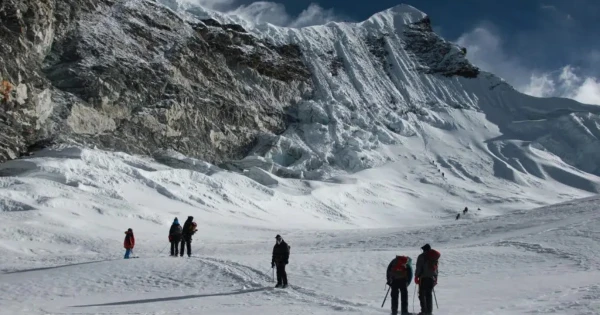
Departure at 1:00 to 2:00 am from high camp. Head torches on, crampons fitted, harness and ice axe in hand. The first section crosses a boulder field to the glacier, where roped travel begins. The glacier approach leads to the base of the headwall, where the fixed ropes begin.
The headwall section involves ascending the fixed rope using a jumar on a slope of approximately 45 to 55 degrees. This is the technical crux of the climb. At altitude, with cold hands and the accumulated effort of the approach in the legs, it requires steady breath management and a reliable technique rather than strength. The guide leads, demonstrating and supporting. Each section of the rope takes fifteen to twenty minutes to ascend.
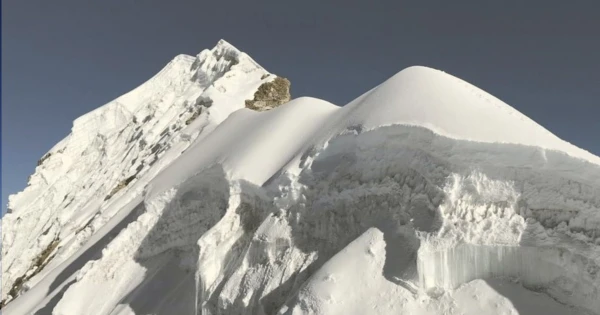
The summit ridge at 6,189 metres is a narrow snow crest with a spectacular 360-degree panorama: Lhotse's 8,516-metre south wall directly above to the north, Makalu at 8,481 metres to the east, Baruntse at 7,129 metres, Ama Dablam at 6,812 metres to the southwest, Nuptse at 7,861 metres to the west, and Everest partially visible above the Lhotse-Nuptse ridge. The light in the early morning from this height, before the sun has risen fully, is a specific quality of Himalayan illumination that does not exist at lower elevations.
Descent from the summit reverses the headwall on the fixed ropes using a figure-eight abseil device, returns across the glacier, and completes the full descent to Chhukung by mid-afternoon. Total summit day time from high camp to Chhukung is typically eleven to fourteen hours.
Day 16: Chhukung to Namche Bazaar
A long descent day following the Imja and Dudh Koshi valleys back through Tengboche to Namche. The legs are tired. The accomplishment is settled. Most trekkers describe this day as one of the most pleasant of the whole trip, the combination of physical tiredness, downhill terrain, and the specific satisfaction of having done something they were not entirely certain they could do.
Day 17: Namche Bazaar to Lukla
Final descent to Lukla through Phakding. The lower altitude feels almost warm compared to the high camp nights. Final dinner with the guide and porter team in Lukla.
Day 18: Fly Lukla to Kathmandu
Return flight to Kathmandu. Debrief with the Hiking Nepal team. The rest of the day is yours.
Island Peak Climbing Cost in 2027
The following breakdown covers a private guided Island Peak with EBC combination departure with Hiking Nepal over 18 days.
Cost Category | Amount (USD) | Notes |
| Island Peak Climbing Permit | USD 250 (spring) / USD 125 (autumn) | Per person, NMA |
| Sagarmatha National Park Permit | USD 30 | Per person |
| Khumbu Pasang Lhamu Municipality Permit | USD 23 | Per person |
| Lukla domestic flight return | Around USD 250 | Weather-dependent rebooking possible |
| Hiking Nepal package (guide, climbing guide, porter, accommodation, meals, transfers) | From USD 2,800 per person | Private departure, 2 persons sharing |
| Equipment hire (crampons, harness, ice axe, jumar) | USD 100 to 120 | From Kathmandu or Namche |
| Travel insurance with altitude and technical climbing coverage | USD 100 to 500 | Must explicitly cover technical climbing to 6,500m |
| Tips for guide, climbing guide, and porter | USD 250 to 500 | NPR 500 to 1,000 per day |
| Personal expenses | USD 100 to 300 | Hot showers, charging, snacks, Wi-Fi |
| Nepal visa (30 days) | USD 50 | On arrival at Kathmandu |
| Total estimated per person | USD 4000 to 5000 | Private departure, spring season |
The Hiking Nepal private Island Peak with EBC package starts at USD 2,800 per person based on two climbers sharing a private departure. It includes a licensed trekking guide for the EBC and approach sections, a certified high-altitude climbing guide for the technical sections from Chhukung onwards, contracted porters at full IPPG welfare standards, all accommodation from Lukla to Lukla, all meals, all permit fees, pre-climb skills training, safety equipment including supplemental oxygen, and 24-hour emergency coordination.
The climbing guide provided by Hiking Nepal on Island Peak departures holds a Nepal Mountaineering Association climbing guide licence, has a minimum of fifteen Island Peak summits of personal experience, and is WAFA-certified. The distinction between a trekking guide and a certified climbing guide matters on the technical sections of Island Peak and it is worth asking any operator explicitly which qualification their Island Peak guide carries.
Permits Required for Island Peak in 2027
Island Peak Climbing Permit
Issued by the Nepal Mountaineering Association (NMA). Cost is USD 250 per person for the spring season (February to May) and USD 125 per person for the autumn season (September to November). The permit is issued for a specific climbing period, and the summit attempt must fall within that window. Applications require passport copies, passport photographs, and a medical fitness certificate. All of this is handled by Hiking Nepal as part of the package.
Sagarmatha National Park Permit
NPR 3,000 per person (approximately USD 23). This is the standard park entry permit for all trekking and climbing in the Khumbu and is obtained in Kathmandu or at the park entrance at Monjo.
Khumbu Pasang Lhamu Rural Municipality Permit
NPR 3,000 per person (approximately USD 23). This is a local government permit introduced in 2021 and is required for all trekkers and climbers entering the Khumbu valley. It is collected at Lukla or Monjo.
No TIMS card is required for the Everest region. The municipality permit and park permit together serve the same administrative function.
Equipment for Island Peak: What You Need
Technical Climbing Gear
The following technical items are required for the Island Peak summit attempt. All are available for hire in Kathmandu's Thamel gear district or in Namche Bazaar, and Hiking Nepal arranges hire as part of the pre-climb logistics.
Crampons: twelve-point steel crampons compatible with your boots. Hire cost approximately USD 3 to 5 per day. Plastic mountaineering boots or stiff-soled trekking boots are both compatible; running shoes and soft-soled boots are not.
Harness: a standard sit harness for glacier travel and headwall fixed rope ascent. Hire cost approximately USD 2 to 3 per day.
Ice axe: a standard walking-length ice axe for use on the glacier and as a self-arrest tool on the headwall. Hire cost approximately USD 2 to 3 per day.
Jumar (ascender): a handled mechanical ascender for use on the fixed ropes on the headwall. One per climber, fitted to the dominant hand. Hire cost approximately USD 2 per day.
Carabiners and slings: a minimum of two locking carabiners and two slings for connecting to the fixed rope system. Provided by the climbing guide as part of the Hiking Nepal technical kit.
Helmet: for the rocky sections below the glacier. Hire cost approximately USD 2 per day.
Clothing for the Summit Day
The summit day departure temperature at high camp is typically between minus 10 and minus 20 degrees Celsius in both spring and autumn. The wind chill on the headwall and summit ridge can reduce the effective temperature significantly further. The clothing system must be rated for genuine cold rather than the moderate cold of lower teahouse nights.
The recommended layering for summit day is a full merino wool or synthetic base layer set; a mid-layer fleece or lightweight down jacket; a high-loft down jacket rated to minus 20 degrees Celsius as the primary insulation layer; a Gore-Tex or equivalent hardshell outer jacket and trousers rated for wind and precipitation; liner gloves plus insulated mountaineering outer gloves; a balaclava or full-face warm hat under the helmet; and mountaineering-weight gaiters over the boots.
All of these items are available for hire in Thamel and Namche. For trekkers planning Island Peak as a first technical climb, hiring the entire technical clothing and equipment kit from Kathmandu rather than purchasing specialist mountaineering gear for a single objective is the economically rational choice.
Training and Preparation for Island Peak
Physical Training
The fitness required for Island Peak is greater than for the EBC trek alone and should be treated accordingly. A twelve-week preparation programme that Hiking Nepal provides to all Island Peak clients at booking covers three elements.
Cardiovascular base: sustained aerobic exercise three to four times per week including long hikes with a loaded pack, stair climbing, cycling, or running. The target is the ability to sustain four to five hours of moderate-intensity cardiovascular output without significant distress. This is the best predictor of summit day performance available below altitude.
Leg strength: squats, lunges, step-ups, and leg press exercises targeting the quadriceps, hamstrings, and gluteal muscles. The descent from Island Peak High Camp to Chhukung covers approximately 1,100 metres of altitude loss, much of it on steep rocky ground after a twelve-hour summit effort. Strong legs manage this without injury. Weak legs on a tired body at altitude on steep ground is where ankle sprains and knee problems occur.
Sustained effort capacity: one or two longer training days per month covering eight to ten hours of walking or hiking with a loaded pack on uneven terrain. This builds the mental and physical resilience for the sustained effort of summit day rather than building fitness for average days on the trail.
Technical Skills Preparation
No prior technical climbing experience is required. Hiking Nepal provides a technical skills session in Chhukung before the Island Peak approach that covers crampon fitting and walking technique, ice axe use for balance and self-arrest, jumar technique on a practice rope, harness fitting and carabiner management, and moving on a glacier roped to other climbers.
This briefing is sufficient preparation for Island Peak for the majority of clients. Trekkers who want to feel more confident before arrival can take an introductory rock climbing or indoor climbing course in their home country beforehand, which builds relevant physical patterns and comfort with exposure that carries directly into the Island Peak technical sections.
Safety on Island Peak
Weather and Summit Day Decisions
The summit day decision is made by the climbing guide in consultation with the Hiking Nepal operations team based on a weather forecast review the evening before departure. Wind speed is the primary variable: sustained winds above 40 kilometres per hour on the summit ridge make the headwall technically very demanding and the summit ridge genuinely dangerous. The Hiking Nepal guide has authority to postpone or cancel a summit attempt based on conditions, and this authority is exercised without pressure to push ahead for non-safety reasons.
The 18-day itinerary includes one weather contingency day at Island Peak Base Camp or High Camp, which absorbs the most common weather delay without requiring a significant change to the return logistics. For summit attempts that cannot proceed within the planned weather window, Hiking Nepal works with clients on rescheduling options where time permits.
Medical Emergencies on Island Peak
The Island Peak approach and base camp area have helicopter landing zones accessible from Chhukung and from the base camp area in good weather. Helicopter evacuation from this location to Kathmandu takes approximately 45 to 60 minutes. The standard helicopter evacuation cost from the Khumbu region is USD 3,000 to 5,000 depending on the operator and the pickup location.
All Hiking Nepal Island Peak departures carry supplemental oxygen, a full altitude first-aid kit including dexamethasone and nifedipine, and a satellite communication device. The 24-hour Hiking Nepal emergency coordination line is staffed throughout the climbing season and manages communication between the climbing guide, the helicopter operator, the receiving hospital in Kathmandu, and the client's family or emergency contact.
Travel insurance for Island Peak must explicitly cover technical climbing to at least 6,500 metres. Standard adventure travel policies that cover trekking above 6,000 metres frequently exclude technical climbing with ropes and harnesses. World Nomads, True Traveller, and Global Rescue offer policies that cover Island Peak specifically. Verify the exact coverage language before purchasing.
Frequently Asked Questions
Do I need prior climbing experience for Island Peak?
No. Prior technical climbing experience is not required. The skills needed for the Island Peak headwall section are taught by the Hiking Nepal climbing guide during a briefing in Chhukung before the approach begins. What is required is physical fitness above the standard trekking baseline, good altitude acclimatisation, and a realistic attitude to a technically demanding summit day. Prior trekking experience above 4,000 metres is strongly recommended.
What is the success rate on Island Peak?
Across all operators and all clients, the Island Peak summit success rate is approximately 60 to 70 per cent of attempted summit days. On Hiking Nepal departures specifically, the rate is higher among clients who follow the recommended 18-day itinerary with full acclimatisation days rather than attempting a compressed schedule. The most common causes of unsuccessful summit attempts are inadequate acclimatisation, adverse weather, and physical fatigue from insufficient preparation.
What is the best season for Island Peak in 2027?
Spring from late April through mid-May is the optimal summit window. This aligns with stable high-pressure systems over the Khumbu and the clearest summit day weather statistically available in the year. Autumn from mid-October through early November is the second best window. The spring season is more popular, and spring permit slots for Island Peak book out earlier.
Can Island Peak be combined with Everest Base Camp?
Yes. The combination is the standard Hiking Nepal itinerary for Island Peak and the one described in this guide. EBC provides the Sherpa cultural experience and the acclimatisation foundation for the technical climb. The combined 18-day itinerary is the most time-efficient way to experience both and the one with the highest summit success rate.
What happens if I do not summit?
Several outcomes are possible. In some cases, a weather window opens for a second attempt within the permitted climbing period. In other cases, the team descends from high camp or base camp without a summit and continues the planned trek back to Lukla. Hiking Nepal does not refund permit fees for unsuccessful summit attempts as these are issued by the Nepal Mountaineering Association regardless of outcome, but the full trekking and guiding package delivers its value regardless of whether the summit is reached.
Is Island Peak dangerous?
Island Peak has a strong safety record relative to higher objectives in Nepal. The main risks are altitude sickness managed through correct acclimatisation, falls on the technical headwall managed through guide supervision and fixed rope systems, and weather-related cold injury managed through appropriate clothing and summit day decision protocols. Hiking Nepal's safety infrastructure, including the climbing guide qualification standards, the emergency equipment carried on every departure, and the operational judgment exercised on summit day decisions, addresses each of these risk categories directly.
How does Island Peak compare to Mera Peak?
Mera Peak at 6,476 metres is the other most commonly attempted trekking peak in Nepal and is often discussed alongside Island Peak as an alternative first technical objective. Mera is higher but less technically demanding: the standard route involves glacier travel and a steep but non-technical snow slope without fixed ropes. Island Peak is lower but more technically demanding, with the headwall fixed rope section requiring genuine crampon and jumar technique. For trekkers specifically interested in a first taste of technical Himalayan climbing with rope systems and technical gear, Island Peak is the more appropriate objective. For trekkers whose primary goal is altitude above 6,000 metres without significant technical content, Mera is the better choice.
Book Your Island Peak Climb with Hiking Nepal
Island Peak in 2027 represents the most accessible technical Himalayan summit available to a motivated, well-prepared trekker. The 18-day combined EBC and Island Peak itinerary delivers the complete Khumbu experience alongside a genuine high-altitude summit that the majority of adequately prepared participants reach.
Hiking Nepal runs private Island Peak departures on fixed dates throughout the spring and autumn seasons. Spring 2027 dates are available from late April through mid-May. Autumn 2027 dates run from mid-October through early November. Spring dates in the first week of May, which typically align with the most stable post-monsoon weather window, fill earliest.
Every Hiking Nepal Island Peak departure includes a licensed NMA-certified climbing guide with a minimum of fifteen personal Island Peak summits, a WAFA-certified trekking guide for the EBC and approach sections, contracted porters at IPPG welfare standards, all accommodation from Lukla to Lukla, all meals, all permit fees, a full technical skills briefing in Chhukung, safety equipment including supplemental oxygen, crampon training, and 24-hour emergency coordination throughout the expedition.
Contact Hiking Nepal on WhatsApp at +977 9802342080 and you will reach our Manager, Mr. Navaraj Wagle, or at [email protected] to discuss your fitness level, preferred dates, and the right preparation approach for your specific profile. A full itinerary and cost proposal is provided within 48 hours.
The summit is 6,189 metres above sea level. The preparation starts now.