Everything parents need to plan, prepare, and execute the Poon Hill family trek with confidence: ages, itineraries, altitude safety, food, packing, and culture all in one place.
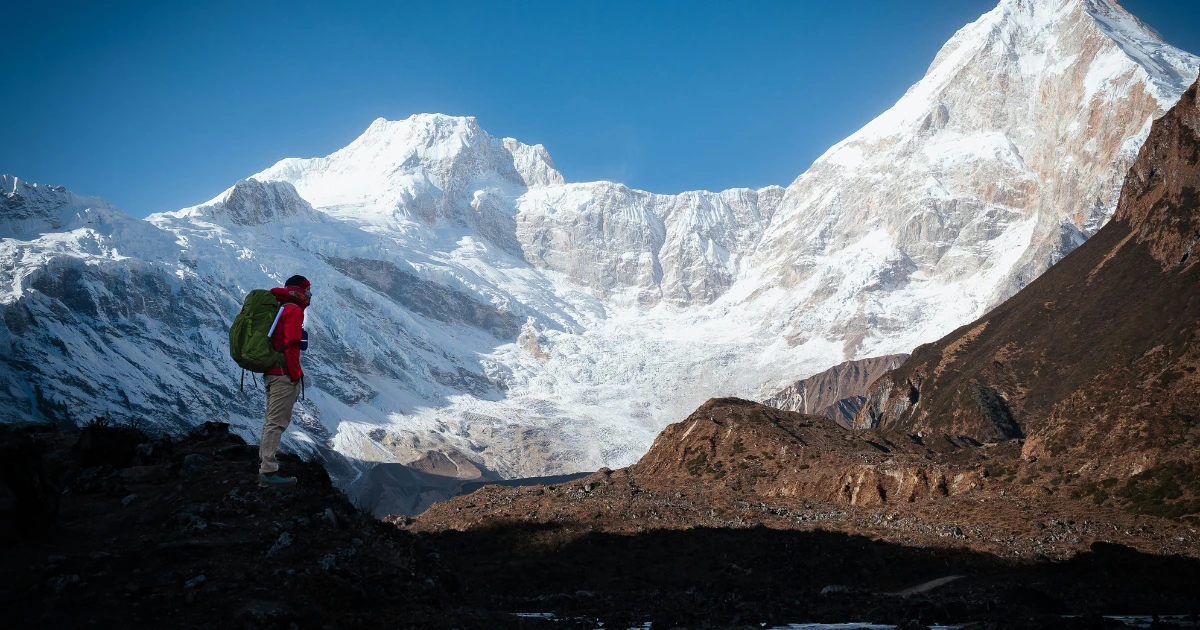
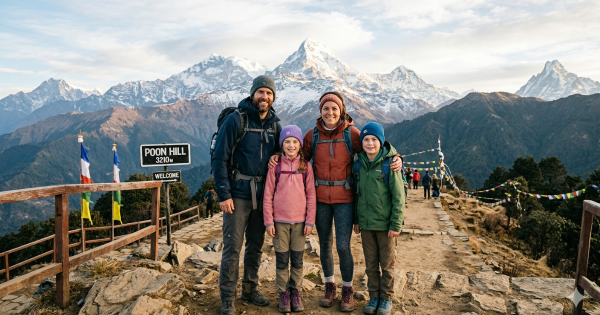
There is a moment on the Poon Hill ridge at 3,210 metres, just before full sunrise, when the Annapurna and Dhaulagiri ranges ignite in sequence from east to west. The light moves slowly at first, then all at once. Every family that has stood there together , parents, children, sometimes grandparents , describes the same thing: this is the trek that made their children fall in love with the mountains.
Poon Hill is Nepal's most beloved family trek for good reason. The trails are well-graded and clearly marked. The teahouses are warm, well-stocked, and increasingly comfortable. The maximum altitude sits at a manageable 3,210 metres. The entire circuit can be completed in five to seven days depending on your family's pace, fitness, and appetite for cultural stops along the way. And in 2026, with improved lodge infrastructure throughout the Annapurna foothills, it has become the undisputed starting point for families introducing children to Himalayan trekking.
This guide covers every question a parent asks before booking the Poon Hill circuit with children. We have structured it to move from the big picture down to the granular detail , from whether your child is old enough, through the day-by-day itinerary options, into altitude safety, food, packing, culture, and the best time of year. By the time you finish reading, you will have everything you need to plan a Poon Hill family trek that works for children of every age.
Children as young as five have stood on the Poon Hill viewpoint at sunrise and watched the Himalayas appear from the darkness. The question is never whether your child can do it. The question is whether you have prepared correctly.
Why Poon Hill is Nepal's Best Family Trek
Nepal has more than 40 established trekking circuits ranging from gentle valley walks to technically demanding high-altitude expeditions. Among all of them, the Poon Hill circuit , formally known as the Ghorepani Poon Hill trek , occupies a specific and irreplaceable position for families with children. Here is what makes it different from every other option.
The Altitude Is Right
The maximum altitude on the standard Poon Hill circuit is 3,210 metres at the viewpoint itself, with the overnight stop at Ghorepani sitting at 2,860 metres. For healthy children who gain altitude gradually over three to four days, this profile presents a low risk of Acute Mountain Sickness. Compare this to Everest Base Camp at 5,364 metres, Annapurna Base Camp at 4,130 metres, or even the Langtang Valley at 3,870 metres, and the advantage is clear. Poon Hill gives families a genuine Himalayan experience , high-altitude forests, Himalayan panoramas, Sherpa and Gurung culture , without the altitude risks that make other circuits unsuitable for younger children.
The Trail Is Manageable for Children
The Poon Hill circuit uses well-established trails through the Annapurna Conservation Area that have been walked by trekkers for over 40 years. The paths are stone-paved on the steeper sections, well-signed at junctions, and free of any technical climbing or scrambling. The hardest single section , the Tikhedhunga to Ulleri stone staircase , is steep and sustained but not dangerous. Every other section of the circuit is appropriate for children aged five and above walking independently.
The Teahouse Infrastructure Is Family-Friendly
The lodges on the Poon Hill circuit are among the best-maintained in Nepal outside the Everest corridor. In 2026, the main teahouses at Tikhedhunga, Ulleri, Ghorepani, Tadapani, and Ghandruk all offer private rooms with attached or nearby bathrooms, reliable hot showers on solar-heated systems, extensive menus catering to international tastes, and heating in common dining areas. Families travelling with Hiking Nepal have pre-booked accommodation at hand-selected lodges along the route, which means no uncertainty about room quality or availability.
The Views Are World-Class
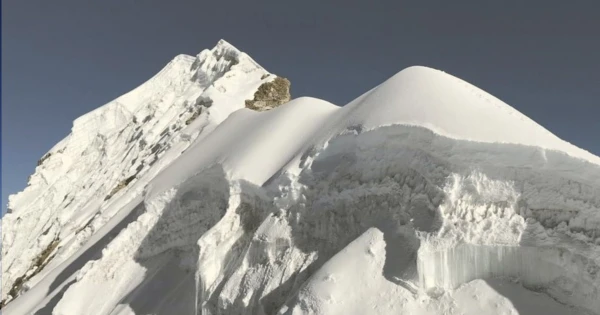
The Poon Hill viewpoint offers one of the most photographed Himalayan panoramas in Nepal: a 180-degree arc taking in Dhaulagiri (8,167m), Tukuche Peak, Nilgiri, Annapurna South (7,219m), Hiunchuli, Machhapuchhre (the sacred Fishtail peak, 6,993m), Annapurna I (8,091m), Annapurna III, Gangapurna, and Annapurna IV. For a child who has never seen an 8,000-metre peak, this moment is formative. For a parent watching their child see it for the first time, it is something else entirely.
The Culture Is Accessible and Genuine
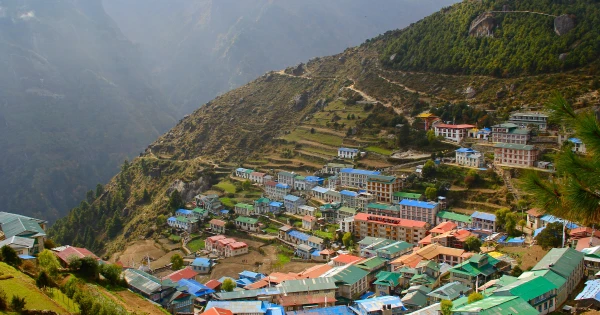
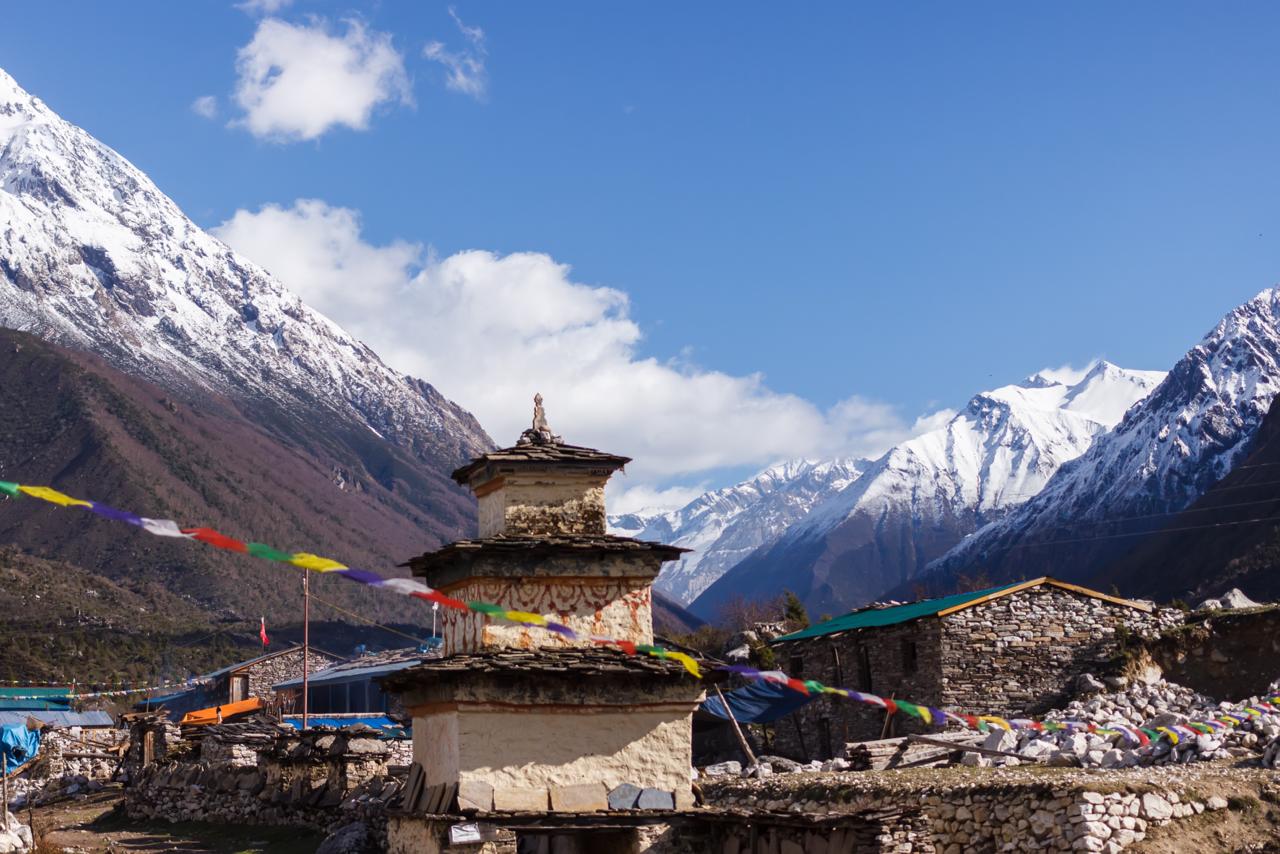
The Poon Hill circuit passes through the heartland of Gurung Nepal. Villages like Ulleri, Nangethanti, Ghorepani, Tadapani, and Ghandruk are living Gurung communities with traditional architecture, festivals, weaving traditions, and a cultural calendar that continues regardless of trekking season. The Gurung Heritage Museum in Ghandruk is one of the most accessible cultural destinations on any trekking route in Nepal. Hiking Nepal's guides , ethnically Gurung or Magar in the majority of cases , provide cultural context, introductions to village families, and insights that no guidebook replicates.
Minimum Age for the Poon Hill Trek: The Honest Answer
Most trekking websites give you a number , usually five or six , and move on. The truth is more useful than a number, because the relevant factors are not purely about age. They are about fitness, temperament, preparation, and the support structure around the child on trail.
Hiking Nepal has been guiding families on the Poon Hill circuit since 2009. The youngest child we have guided to the Poon Hill sunrise viewpoint was four years and two months old, carried in a specialised child-carrier frame by a dedicated porter for the steep sections and walking independently on the gentler terrain. The oldest family group on a single departure included a grandmother aged 74 and a granddaughter aged six. Both completed the trek.
What follows is an honest breakdown of what each age group can realistically expect from the Poon Hill circuit, and what support structures are appropriate for each.
Under 5 Years: Achievable with Full Porter Support
Children under five can experience Poon Hill, but parents need to be honest that their child will be carried for the majority of gradient sections. The Tikhedhunga to Ulleri stone staircase (approximately 3,000 steps) and the pre-dawn Poon Hill summit climb are not suitable for unassisted walking by most children under five. A specialist child-carrying frame, a strong dedicated porter, and a slow itinerary with short daily targets make this achievable. It is not the child's trek in the athletic sense. It is a shared family experience that the child will experience partly on foot and partly from the carrier, with mountain views, fresh air, and cultural stimulation at every stop.
Ages 5 to 7: Achievable with Realistic Expectations
Children in this band can walk most of the trail independently if daily walking time is kept to three to four hours maximum. Trekking poles (available for hire in Pokhara), consistent snack access, and a guide experienced with young trekkers are essential. Hiring a second porter to carry the child on steep sections when energy drops is strongly recommended. Children aged five to seven who complete the Poon Hill circuit with Hiking Nepal consistently describe it as the best thing they have ever done. Parents consistently describe it as the best decision they nearly did not make.
Ages 8 to 12: The Sweet Spot
Fit children aged 8 to 12 with regular physical activity at home can complete the 5-day family itinerary comfortably and often enthusiastically. This age group tends to be the most engaged on trail , responding to the teahouse culture, the novelty of sleeping in mountain lodges, the communal dinner tables shared with trekkers from other countries, and the genuine sense of physical accomplishment that builds over the circuit. Daily distances of five to six hours walking are achievable. The sunrise at Poon Hill is genuinely transformative for children in this range.
Ages 13 and Above: Full Circuit and Beyond
Teenagers can handle the standard circuit and may be ready for extensions. For highly active teenagers, Hiking Nepal offers a combined Poon Hill and Ghorepani circuit that adds two to three days and reaches the Khopra Ridge at 3,660 metres. For teenage trekkers pushing for their first high-altitude experience, a Poon Hill circuit followed by a partial Annapurna Base Camp extension is available and forms the basis of Hiking Nepal's Annapurna Family Progression itinerary.
The Best Poon Hill Family Itinerary: 5 Days vs 7 Days
The standard Poon Hill circuit runs four days at a pace designed for fit adult trekkers. Families with children need more time, shorter daily walking distances, and deliberate rest moments built into the structure. Hiking Nepal offers two family itineraries: the 5-day fast-track, which covers the essential circuit with manageable daily distances, and the 7-day slow travel version, which adds cultural depth and breathing room for younger children.
The choice between them comes down to a single honest question: what is your youngest or least-fit family member genuinely capable of on day three, when they are tired, at altitude, and still have the biggest viewpoint day ahead of them?
| Factor | Choose 5 Days | Choose 7 Days |
| Child's age | 8 to 14 years | Under 8 years |
| Child's fitness | Regularly active, 5+ km walks at home | Moderate or variable activity |
| Group dynamic | Fit, motivated family unit | Mixed ages or grandparents included |
| Trek goal | Summit focus, Himalayan views | Cultural immersion, relaxed pace |
| Budget | Lower (fewer nights) | Higher (2 additional lodge nights) |
| Daily walking time | Up to 6 hours | 3 to 4 hours maximum |
The 5-Day Poon Hill Family Itinerary
This itinerary is perfect for families with older children or those accustomed to regular hiking. It balances physical challenge with breathtaking rewards.
Day 01: Pokhara to Tikhedhunga
- Elevation: 1,540m
- Duration: 3 to 4 hours
- Difficulty: Easy to moderate
Your journey begins with a 90-minute private drive from Pokhara to Nayapul. The trek starts along the Modi Khola valley, passing through Birethanti where ACAP permits are registered. The trail is largely flat to moderate, winding through terraced farmlands and riverside forests. A brief steep section leads you into Tikhedhunga. This gentle introduction allows children to settle into the rhythm of the trail. Overnight: Family-friendly teahouse in Tikhedhunga.
Day 02: Tikhedhunga to Ghorepani
- Elevation: 2,860m
- Duration: 5 to 6 hours
- Difficulty: Hard (early start recommended)
This is the most demanding day of the circuit. We recommend departing by 7:00 am to tackle the famous Ulleri stone staircase (approximately 3,000 steps) before the mid-morning heat. After a substantial snack stop in Ulleri, you will continue through rhododendron forests via Banthanti and Nangethanti. Overnight: Ghorepani.
Day 03: Poon Hill Sunrise then Trek to Tadapani
- Elevation: 3,210m (summit) / 2,630m (overnight)
- Duration: 6 hours total
- Difficulty: Moderate (long day)
A 4:45 am start with headtorches is required to reach the Poon Hill summit for sunrise over the Annapurna and Dhaulagiri ranges. After returning to Ghorepani for a cooked breakfast, you will trek through forests to Tadapani. On clear evenings, Annapurna South is visible directly above the village. Overnight: Tadapani.
Day 04: Tadapani to Ghandruk
- Elevation: 1,940m
- Duration: 3 to 4 hours
- Difficulty: Moderate (mostly descent)
A shorter day consisting mostly of descent through forests and open hillsides. You will arrive at the large Gurung village of Ghandruk by noon. Use the afternoon to visit the Gurung Heritage Museum, explore the stone-paved lanes, or watch traditional weaving demonstrations. Overnight: Ghandruk.
Day 05: Ghandruk to Nayapul, Drive to Pokhara
- Elevation: Down to 1,070m
- Duration: 3 hours
- Difficulty: Easy (gradual descent)
The final descent takes you through terraced farmland to Kimche and Nayapul. A private vehicle will meet you for the 90-minute drive back to Pokhara, arriving in time for a late lunch by the lakeside.
The 7-Day Poon Hill Family Itinerary
The 7-day version is the Hiking Nepal recommended structure for children under eight, mixed-generation groups, or first-time trekking families. It ensures no single day exceeds four hours of walking, keeping children engaged rather than exhausted.
Day 01: Pokhara to Nayapul, Trek to Tikhedhunga
- Elevation: 1,540m
- Duration: 3 hours
- Difficulty: Easy
A gentle introductory walk following the drive from Pokhara. There is plenty of time to explore the village in the late afternoon.
Day 02: Tikhedhunga to Ulleri
- Elevation: 2,010m
- Duration: 2 to 2.5 hours
- Difficulty: Hard but short
This day focuses solely on the stone staircase. By arriving in Ulleri by 10:30 am, children have the entire afternoon to recover and play, which is the most important structural change for a successful family trek.
Day 03: Ulleri to Ghorepani
- Elevation: 2,860m
- Duration: 3.5 hours
- Difficulty: Moderate
A relaxed pace through the rhododendron forest. During the spring bloom, this is arguably the most beautiful section of the entire trek.
Day 04: Poon Hill Sunrise, then Trek to Banthanti
- Elevation: 3,210m (summit) / 2,310m (overnight)
- Duration: 3 hours (after sunrise)
- Difficulty: Moderate
After the pre-dawn summit ascent and breakfast in Ghorepani, you will enjoy a short, gentle descent to Banthanti. This quiet, forested stop provides a genuine rest for younger children.
Day 05: Banthanti to Tadapani
- Elevation: 2,630m
- Duration: 3 hours
- Difficulty: Moderate
Continue through the upper rhododendron forest to Tadapani. Because of the relaxed pace, children usually arrive here with surplus energy and high spirits.
Day 06: Tadapani to Ghandruk
- Elevation: 1,940m
- Duration: 3 hours
- Difficulty: Easy
Descent to the cultural heart of the region. The full afternoon is dedicated to the Ghandruk Heritage Museum and village exploration.
Day 07: Ghandruk to Nayapul, Drive to Pokhara
- Elevation: Down to 1,070m
- Duration: 3 hours
- Difficulty: Easy
The final leg of the journey. Your family completes the trek with a gradual descent to your waiting vehicle at Nayapul.
Altitude Safety for Children on the Poon Hill Trek
Altitude sickness does not discriminate by age, fitness, or previous trekking experience. Children are not more susceptible to Acute Mountain Sickness (AMS) than adults, but they are less reliably able to describe what they are experiencing, which means the monitoring responsibility falls entirely on the accompanying adults and the guide.
The good news for Poon Hill families is that the circuit's altitude profile is one of the safest in Nepal. The maximum overnight altitude of 2,860 metres at Ghorepani is well below the 3,000-metre threshold at which AMS begins to become a meaningful statistical risk, and the gradual ascent over three or four days from 1,070 metres gives the body , at any age , adequate time to acclimatise.
Understanding the Altitude Profile
| Overnight Stop | Altitude | Altitude Gain from Previous Stop | AMS Risk |
| Nayapul (start) | 1,070m | Starting point | None |
| Tikhedhunga | 1,540m | +470m | Very low |
| Ulleri (7-day only) | 2,010m | +470m | Very low |
| Ghorepani | 2,860m | +850m / +470m (7-day) | Low |
| Poon Hill viewpoint | 3,210m | Day visit only, no overnight | Low |
| Tadapani | 2,630m | Descent from Ghorepani | Very low |
| Ghandruk | 1,940m | Descent | None |
Recognising AMS Symptoms in Children
The challenge with young children is that the symptoms of mild AMS overlap almost exactly with the symptoms of a tired, cold, or hungry child on a long trekking day. The key is not any single symptom in isolation, but a cluster of symptoms that persists after rest, food, warmth, and hydration.
- A headache that does not resolve within 30 minutes of rest, rehydration, and a snack.
- Nausea or vomiting in a child who has been eating and drinking normally throughout the day.
- Unusual fatigue , wanting to stop and sit down when they were walking confidently an hour earlier.
- Loss of appetite at mealtimes when the child is normally a reliable eater.
- Complaints of dizziness or visual disturbance.
- A notable change in behaviour: unusual irritability, withdrawal, or uncharacteristic quietness.
Any three of these symptoms presenting simultaneously, particularly in the evening at Ghorepani, should be taken seriously regardless of the child's stated willingness to continue.
Prevention: The Only Strategy That Reliably Works
The Poon Hill circuit's gradual ascent profile is the primary preventive factor, and the reason Hiking Nepal structures family itineraries to stay within the 300-metre-per-day altitude gain guideline recommended by the Wilderness Medical Society for children. Beyond the itinerary structure, the two most important preventive measures are pace and hydration.
Pace: Children should never be pushed to walk faster than their natural comfortable pace. The guide sets the rhythm; the slowest family member determines the speed. This is not a courtesy , it is a medical principle. Rapid ascent is the single biggest AMS risk factor.
Hydration: Children lose more water relative to body weight through exertion and altitude-dry air than adults. The target is pale yellow urine at every toilet stop. Dark urine is a dehydration warning that must be addressed immediately with oral rehydration solution, not just water.
Diamox (acetazolamide), the most widely used pharmaceutical AMS preventive, is not recommended for children under 12 except under specific paediatric medical supervision. Parents with children who have relevant cardiac, respiratory, or neurological history should discuss altitude trekking with their GP or a travel medicine physician before departure.
What Hiking Nepal Does on Every Family Departure
- Every guide carries a calibrated pulse oximeter and monitors children's oxygen saturation at each overnight stop.
- All Hiking Nepal guides are WAFA (Wilderness Advanced First Aid) certified and trained in paediatric altitude assessment.
- Supplemental oxygen is carried on all departures above 2,500 metres as a precautionary measure.
- The Hiking Nepal emergency contact line operates 24 hours a day throughout trekking season.
- Helicopter evacuation insurance coordination is included in all Hiking Nepal family packages , guests must carry their own policy, and we verify this at pre-trek briefing.
The Poon Hill Sunrise: What to Expect with Children
At 4:45 am on a clear March morning at Ghorepani, the teahouse courtyard fills with trekkers layering up in the dark. Among them are children, bundled into every warm item they own, torchlight bouncing off the stone walls, some excited and some still half-asleep, all of them about to walk uphill for an hour in the dark to watch the sun rise over the Himalayas.
This moment , the pre-dawn walk, the cold, the darkness, and then the sudden eruption of light across the entire Himalayan chain , is the centrepiece of the Poon Hill circuit. For most children, it is the most dramatic single experience of their lives to that point. Managing it well makes the difference between a memory they carry for decades and a miserable cold walk.
The Logistics
Sunrise at Poon Hill varies from 5:55 am in winter to 6:20 am in spring and autumn. Hiking Nepal departs Ghorepani between 4:30 and 5:00 am depending on the season, the group's walking pace, and the morning's weather forecast. The ascent from Ghorepani to the viewpoint covers approximately 300 metres of altitude gain over a well-maintained stone path and takes between 45 and 75 minutes for family groups.
The viewpoint has a small teahouse that opens before dawn and serves hot tea, coffee, and snacks. During peak season (March, April, October, and November) the viewpoint is shared with 150 to 300 other trekkers. Arriving 15 minutes before the main crowd secures a front position on the viewing platform , Hiking Nepal guides factor this into departure time.
Temperature at the Summit
| Month | Approximate Sunrise Temp at 3,210m | What Children Need |
| December to February | -5 to -10 degrees Celsius | Full winter kit, chemical hand warmers |
| March to April | 0 to +5 degrees Celsius | Down jacket, layered gloves, warm hat |
| May | +5 to +10 degrees Celsius | Fleece, windproof layer, hat |
| October | 0 to +5 degrees Celsius | Down jacket, layered gloves, warm hat |
| November | -3 to +2 degrees Celsius | Full winter kit recommended |
How Hiking Nepal Manages the Pre-Dawn Ascent with Children
The most common failure point for children on the Poon Hill summit morning is not physical but motivational. Interrupted sleep, darkness, cold, and the inability to see the end of the trail trigger a reluctance response in many children that has nothing to do with their fitness or determination.
- Clothes are laid out the evening before in the order they go on. A child dressing in the dark is a child who loses a glove and starts the day frustrated.
- Guides break the ascent into ten-minute sections with named landmarks as micro-goals. Children respond to 'we stop at the big flat rock, then ten more minutes to the teahouse at the top' far better than 'about 45 minutes to the summit'.
- Every child gets their own headtorch as a personal responsibility. The sense of ownership is immediate and effective.
- One guide leads the group, a second walks at the rear. No child can fall behind without being noticed.
- Hot sweet tea at the summit teahouse, within minutes of arrival, is the reward that most children name unprompted when asked what they remember about the trek.
Teahouse Food on the Poon Hill Circuit: What Children Will Actually Eat
Food anxiety before a Nepal family trek is normal and almost universally resolved by the end of Day 1. Teahouse kitchens on the Poon Hill circuit are more varied, fresher, and more child-accommodating than most parents expect. The child who refuses anything unfamiliar at home frequently develops a passionate enthusiasm for fried rice and momos at 2,500 metres. The mountain air, the exercise, and the novelty of ordering from a real menu in a different country do extraordinary things to children's appetites.
That said, preparation matters. Understanding what is available, what to bring from home as backup, and how to communicate dietary requirements in advance transforms food from a potential source of daily stress into a non-issue.
What Is Available at Every Teahouse on the Circuit
- Dal bhat: Nepal's national dish of steamed rice, lentil soup, seasonal vegetables, and pickle. Unlimited refills are standard practice. Nutritionally complete, genuinely delicious, and the recommended main meal for all trekkers including children.
- Fried rice: available plain, with vegetables, or with egg. The most universally accepted meal for children who are uncertain about local food. Reliably prepared and reliably edible at every stop.
- Noodle soup (thukpa): warm broth with soft noodles, vegetables, and optionally egg. Excellent for cold evenings at altitude and for children who are suppressing nausea from fatigue.
- Momo dumplings: steamed or fried, usually filled with vegetables or buffalo meat. Children are almost universally enthusiastic about momos from the first encounter.
- Potato dishes: boiled, fried, or curried. Potatoes are grown locally throughout the Annapurna foothills and are reliably fresh on this circuit.
- Omelettes and fried eggs: available at all teahouses for breakfast and often as a dinner option.
- Chapati or roti with honey, peanut butter, or jam: a reliable breakfast choice for children who want something familiar first thing in the morning.
- Porridge: available at most teahouses, often made with local rolled oats and served with honey.
- Pasta with tomato sauce or butter: quality varies between teahouses but is generally acceptable.
What to Bring From Home for Cautious Eaters
Even with a varied teahouse menu, a personal snack supply transforms the energy and morale dynamic on trail. Pack enough for three to four snack stops per trekking day, plus emergency supplies for delayed arrivals or days when altitude suppresses appetite.
- Cereal bars, flapjacks, or energy bars at a minimum of two per child per trekking day.
- Dry fruit and nut mix in individual portion bags.
- Chocolate , it melts above 2,000 metres in spring, so pack in an insulated pouch or eat it first.
- Crackers or rice cakes with individual-serving peanut butter pouches.
- Squash concentrate or electrolyte powder to make rehydration more appealing to children who resist plain water.
Communicating Dietary Requirements
Hiking Nepal collects comprehensive dietary information at booking and sends a written brief to every teahouse owner along the family's specific route at least one week before departure. A child with a gluten sensitivity, a dairy-free requirement, or a nut allergy is not an unrehearsed surprise to the kitchen at each stop.
Severe allergies require an honest conversation with the Hiking Nepal booking team before confirming a departure. Cross-contamination controls in teahouse kitchens are not equivalent to certified allergen-free restaurant standards. For anaphylaxis-risk allergies, a full written allergen protocol and a supply of prescribed emergency medication carried by the guide are non-negotiable requirements.
Poon Hill Family Packing List: What Children Need at 3,000 Metres
Packing for children on a mountain trek requires a fundamentally different approach from packing for adults. Children thermoregulate less efficiently, fatigue faster, and need more frequent snack access. They also outgrow kit rapidly, which means hiring in Pokhara is often more practical than buying specialist gear for a single trip.
The guiding principle for the Poon Hill family packing list is layered simplicity: enough gear to keep children comfortable in all conditions, light enough that children aged six and above can carry their own daypacks without complaint, and organised so that critical items are immediately accessible on trail without stopping to unpack the main luggage.
Clothing , Non-Negotiable Items for Each Child
- Merino wool or synthetic thermal base layer set (top and bottom). Two sets recommended for the circuit duration.
- Mid-layer fleece jacket , the layer children reach for most often. It must be easy to put on and remove independently.
- Down jacket rated to minus 10 degrees Celsius minimum. Non-negotiable for Ghorepani nights and the pre-dawn summit ascent.
- Waterproof and windproof outer shell jacket. The Ulleri to Ghorepani section passes through forest that is frequently wet and windy.
- Waterproof over-trousers.
- Two pairs of trekking trousers , lightweight convertible styles are not warm enough above 2,500 metres.
- Warm hat covering the ears fully.
- Sun hat with a full brim , UV exposure at altitude is significantly higher than at sea level.
- Neck gaiter or buff.
- Liner gloves plus windproof outer gloves.
- Five pairs of merino wool trekking socks minimum. Wet socks on a child are a morale emergency.
- Waterproof trekking boots, properly broken in before the trek. This is the single most important item on the entire list.
- Camp shoes or sandals for teahouse evenings.
Equipment
- Daypack 15 to 20 litres with a rain cover , each child aged six and above should carry their own.
- Trekking poles, child-sized , significantly reduce knee strain on steep descents. Hire in Pokhara for approximately NPR 150 per day.
- Personal headtorch for each child, with spare batteries.
- Sunglasses with UV400 and Category 3 protection , essential above 2,000 metres.
- One-litre reusable water bottle per person. Hiking Nepal operates a plastic-free policy on all departures.
Health and First Aid
- Plasters and blister pads , bring twice as many as you expect to need.
- Paracetamol in child-appropriate dosage.
- Antihistamine in child-appropriate dosage.
- Oral rehydration sachets , five to six per child.
- SPF 50 minimum sunscreen. Apply before the morning walk every day.
- Lip balm with SPF protection.
- Personal medications in sufficient quantity for the trek duration plus a three-day buffer.
- Prescribed emergency medication where relevant , EpiPen, asthma inhaler, and so on.
What to Leave at Home
- Cotton clothing of any kind. Cotton holds moisture against the skin and creates a hypothermia risk in wet or cold conditions.
- Heavy boots that require significant effort to walk in. If you cannot walk comfortably on a flat surface for two hours in them, they are not suitable for a child.
- Unnecessary electronics. One family device for photography is sufficient and eliminates the charging anxiety that comes with multiple devices at lodges with limited power outlets.
Gurung Culture and the Villages of the Poon Hill Circuit
The Poon Hill circuit passes through the heartland of Gurung Nepal. The Gurung , also known as Tamu in their own language , are a Tibeto-Burman people indigenous to the Gandaki region of central Nepal, historically renowned as farmers, traders, and soldiers. A significant proportion of the Gurkha regiments that served in the British and Indian armies were drawn from Gurung communities in precisely the villages that line the Poon Hill route.
For families who take the time to engage with these communities rather than simply trekking through them, the cultural dimension of the Poon Hill circuit is as rich and memorable as the mountain views. It is also the dimension of the trek that children most often describe in school projects, family conversations, and social media posts years after the trip.
Ghandruk: The Cultural Heart of the Circuit
The village of Ghandruk at 1,940 metres is the largest and most accessible Gurung settlement on the Poon Hill route and has been continuously inhabited for over 400 years. Its traditional architecture , flat-roofed stone and slate houses on south-facing slopes, narrow stone-paved lanes, communal water sources fed by mountain springs , is largely unchanged from the pre-tourism era, partly because the village has maintained deliberate control over its own development.
The Gurung Heritage Museum in the village centre is a thoughtfully curated collection of traditional tools, jewellery, clothing, weapons, and household objects displayed in a restored traditional house. Entry is NPR 200. For families, it provides an accessible 45 to 60-minute introduction to Gurung daily life. Children respond particularly well to the Gurkha kukri weapons display, the opportunity to try on traditional dress items (museum staff are consistently generous about this), and the historical photographs showing the village before trekking tourism began.
What Families Can Experience in Gurung Villages
- Weaving demonstrations at household looms, where Gurung women produce traditional wool fabric. Most families are invited to try the loom with guidance , a five-minute experience that children describe for weeks afterwards.
- Butter-churning and local dairy practices at households that keep livestock.
- Natural interaction with village children, which Hiking Nepal facilitates through guides who have personal connections in the communities and make genuine introductions.
- The Gurung Rodhi tradition , informal community singing and socialising gatherings , if timing aligns with an evening in a Gurung village.
- Buddhist gompas and mani walls throughout the route, with guides providing context on Nyingma and Bon practice in the Gurung community.
Why Your Guide Makes the Difference
The majority of Hiking Nepal's Poon Hill guides are ethnically Gurung or Magar , indigenous to the Annapurna foothills , and have family connections in the villages on the circuit. Their ability to make genuine introductions to local families, explain what you are seeing in real time with cultural authority, and translate not just language but context and meaning is something no guidebook, audio tour, or internet research replaces. When a Gurung guide tells a child the history of his own grandfather's house, it is a different kind of education from any classroom.
Best Time to Do the Poon Hill Trek with Kids
The Poon Hill circuit has two main trekking seasons and two shoulder periods that each offer distinct advantages. The choice between them depends on what your family prioritises , rhododendron colour, mountain visibility, trail conditions, crowd levels, or temperature comfort.
Spring: Mid-March to Mid-May (Recommended for Most Families)
Spring is the premium season for the Poon Hill family trek for three compounding reasons. First, the rhododendron forests between Tikhedhunga and Ghorepani are in full sequential bloom from late February through April, creating a corridor of colour , red at lower altitudes, pink and white higher up , that transforms the approach trail into something children genuinely gasp at. Second, morning Himalayan visibility is statistically highest in late March and early April, before pre-monsoon haze builds in the valleys. Third, temperatures are warm enough that the pre-dawn summit ascent does not require extreme cold-weather gear, which simplifies the logistics for families.
The optimal window within spring is the third week of March through the second week of April, when rhododendron blooms overlap across all altitude bands and the weather is settled. This window books out quickly. Departure dates should be reserved at least eight weeks in advance.
Autumn: October to Mid-November
Post-monsoon autumn offers the sharpest Himalayan visibility of the year , the air is washed clean by the monsoon, the peaks are freshly snow-covered, and the light has the crystalline quality that makes mountain photography at its best. Trail conditions are dry and firm, which makes the stone staircase sections easier underfoot for children. Crowd levels are higher than spring on the main trail between Ulleri and Ghorepani during the first two weeks of October, but subside considerably from late October onwards.
The disadvantages for families are the absence of the rhododendron display and the rapidly dropping temperatures in November. Night temperatures at Ghorepani in mid-November can fall to minus 8 degrees Celsius, which requires more substantial cold-weather gear for children.
Shoulder and Monsoon Seasons
The monsoon season from June through September brings heavy and persistent rainfall to the Annapurna foothills, with leeches on the lower trail sections, reduced visibility, and consistently wet conditions. Hiking Nepal does not recommend the Poon Hill circuit for families with children during the core monsoon months of July and August. May and early June offer a brief pre-monsoon window with rhododendrons at very high altitude and generally manageable weather, but require flexibility around rainfall.
December through February is the winter season. Trails are quiet, visibility on clear days is exceptional, and the rhododendrons are not yet blooming. Cold-weather gear requirements are significant, and the pre-dawn Poon Hill summit in January requires full winter kit for adults and children alike. For families whose children are comfortable in cold conditions and who prefer empty trails, winter is a genuine option.
| Season | Best For | Avoid If | Crowd Level |
| Spring (Mar to May) | Rhododendrons, good visibility, mild temperatures | You dislike crowds in April | Moderate to high in April |
| Autumn (Oct to Nov) | Best clarity, dry trails, photography | Cold-averse children, late November | High in Oct, low in Nov |
| Winter (Dec to Feb) | Quiet trails, clear days | Very young children, cold sensitivity | Very low |
| Monsoon (Jun to Sep) | Lush green scenery, lower prices | Families with children (not recommended) | Very low |
Poon Hill vs Annapurna Base Camp: Which Trek Is Right for Your Family?
The most common question the Hiking Nepal booking team receives from parents planning a Nepal family trek is whether to choose Poon Hill or push on to Annapurna Base Camp. The romantic pull of ABC is understandable: 4,130 metres, a natural amphitheatre ringed by seven peaks above 6,000 metres, the sense of having reached something genuinely remote. But the route is longer, higher, harder, and more logistically demanding than Poon Hill in every dimension that matters when children are involved.
| Factor | Poon Hill Circuit | Annapurna Base Camp |
| Maximum altitude | 3,210m (day visit) | 4,130m (overnight) |
| Recommended minimum age | 5 years with porter support | 12 to 14 years, fit |
| Duration for families | 5 to 7 days | 10 to 14 days |
| Max daily walking time | 5 to 6 hours | 7 to 8 hours |
| AMS risk for children | Low | Moderate to high above 3,500m |
| Teahouse quality | High throughout the circuit | Variable above Chomrong |
| Himalayan panorama | Full arc: Dhaulagiri to Annapurna IV | Annapurna amphitheatre close-up |
| Cultural depth | Rich: Gurung villages, Ghandruk museum | Limited above Chomrong |
| Crowd levels (peak) | Moderate: Ulleri to Ghorepani corridor | High: Chhomrong to MBC corridor |
| Cost per person, guided | USD 450 to 750 | USD 700 to 1,200 |
The Hiking Nepal Recommendation
Poon Hill is the right choice for families with any child under 12, any family with mixed ages including children under 10, any first-time trekking family regardless of adult fitness, and any family for whom the cultural village experience and the rhododendron forest are as important as the mountain views.
ABC becomes a genuine option when the youngest child is 12 or above, when all family members can sustain six to seven hours of walking with a loaded daypack on consecutive days, and when the family has at least one previous multi-day trekking experience , ideally including a night above 2,500 metres.
Hiking Nepal's recommended family progression is Poon Hill first, with ABC as a follow-up trek one to three years later. The confidence, altitude awareness, and trail skills that develop on the Poon Hill circuit are genuinely useful preparation for ABC. The families who arrive at ABC having done Poon Hill the previous year are categorically better prepared , in terms of physical conditioning, realistic expectations, and the children's own understanding of how they respond to altitude , than families attempting ABC as a first Himalayan trek.
Practical Information: Permits, Cost, and Booking with Hiking Nepal
Permits Required for the Poon Hill Circuit
- Annapurna Conservation Area Permit (ACAP): NPR 3,000 per person. Children under 10 are exempt. Issued at the Nepal Tourism Board office in Kathmandu or Pokhara, or at the Birethanti checkpoint at the trailhead.
- TIMS Card (Trekkers' Information Management System): NPR 2,000 per person for trekkers with a registered agency (which applies to all Hiking Nepal departures), or NPR 4,000 for independent trekkers. Children under 10 are exempt.
- No additional restricted area permits are required for the standard Poon Hill circuit.
What the Hiking Nepal Family Package Includes
- Licensed, WAFA-certified guide throughout the trek.
- Standard porter allocation (one porter per two trekkers) for luggage up to 15-20kg per porter.
- All accommodation at hand-selected family-friendly teahouses with pre-booked rooms.
- All meals on trek: breakfast, lunch (packed or teahouse), and dinner.
- ACAP and TIMS permit fees.
- Private vehicle transfers: Pokhara to Nayapul and return.
- Pulse oximeter monitoring at all overnight stops.
- Supplemental oxygen carried on all departures.
- Pre-trek briefing in Pokhara covering gear check, altitude safety, and daily schedule.
- 24-hour Hiking Nepal emergency contact line throughout the trek.
What Is Not Included
- International flights and airport
- Travel and medical evacuation insurance (mandatory , Hiking Nepal verifies this at pre-trek briefing).
- Child-carrier porter service for children under seven (available as an add-on, priced separately).
- Personal snacks and drinks beyond the three main daily meals.
- Tips for guides and porters
2026 Pricing
| Package | Duration | 2026 Price Per Person (USD) | Minimum Group |
| 5-Day Family Circuit | 5 days trekking | From USD 480 | 2 trekkers |
| 7-Day Slow Travel Family | 7 days trekking | From USD 650 | 2 trekkers |
| Private Family Departure | Either itinerary | From USD 620 (5-day) / USD 800 (7-day) | 1 family |
| Child-Carrier Porter Add-On | Per day of trek | USD 30 to 38 per day | As required |
Frequently Asked Questions about Poon Hill Trek with Kids
How fit does my child need to be for the Poon Hill trek?
A child who can walk for two to three hours on uneven terrain without significant complaint, and who does this type of walking regularly (at least once a week), is fit enough for the Poon Hill circuit on the 7-day family itinerary. For the 5-day version, a child who regularly walks five kilometres or more over hilly ground is the baseline. The most important fitness factor is not speed or strength but sustained walking ability over consecutive days , which is different from a single long walk on a Sunday.
Do we need travel insurance for the Poon Hill trek?
Yes, and it is non-negotiable. Every member of the family, including children, must carry comprehensive travel insurance that explicitly covers: helicopter evacuation from altitude, emergency medical treatment in Nepal, and trip cancellation. Standard travel insurance from high-street providers frequently excludes trekking above 2,000 metres. Specialist adventure travel policies (World Nomads, True Traveller, and BUPA Adventure are commonly used by Hiking Nepal clients) include the necessary altitude and evacuation coverage. Hiking Nepal verifies insurance documentation at the pre-trek briefing.
Can we do the Poon Hill trek without a guide?
The Poon Hill circuit is technically possible without a guide , trails are well-marked and teahouses are frequent. However, for families with children, a licensed guide is strongly recommended rather than optional. Beyond the route-finding and teahouse management value, a guide on a family trek provides real-time altitude monitoring, emergency response capability, cultural context, motivation management for children on hard days, and a direct communication line to Hiking Nepal's operations team if anything goes wrong. The cost difference between guided and unguided is modest relative to the total trip investment; the safety and experience difference is significant.
What happens if a child cannot complete the trek?
Hiking Nepal plans for this scenario on every family departure. Guides are briefed on turn-back procedures, and the itinerary includes natural exit points where a family member who cannot continue can descend with a porter to the nearest road access point while the rest of the group continues at their own pace. No family is locked into continuing if a child's health or wellbeing makes stopping the right decision. The guide's primary responsibility is the safety of every individual in the group, which includes making and supporting turn-back decisions without pressure or disappointment.
What is the best souvenir a child can bring home from the Poon Hill trek?
The Gurung Heritage Museum in Ghandruk sells a small range of locally produced items including hand-woven wool bookmarks, Gurung-pattern fabric pouches, and small thangka prints. Trekking certificates for children (available from some teahouses and from the Hiking Nepal office in Pokhara) are popular with primary school-aged children and serve as conversation starters in show-and-tell for months afterwards. Pokhara's Lakeside market has a wide range of trekking-themed souvenirs, Nepali paperback books for children, and handcraft items produced by women's cooperatives in the Annapurna region.
Ready to Plan Your Poon Hill Family Trek?
The Poon Hill circuit is not a consolation prize for families who could not manage Everest Base Camp. It is, for most families, the better trek , better views relative to effort, richer cultural depth, more appropriate altitude, and a trail that rewards rather than punishes the fact that you are travelling with children.
Hiking Nepal runs fixed group family departures every week from mid-March to mid-May and from October through mid-November, with private family departures available on any date throughout the trekking seasons. Spring 2026 dates are open for booking from November 2025 and the popular late-March to mid-April window fills early.
Contact the Hiking Nepal team for a free 15-minute planning conversation, a custom itinerary based on your children's ages and fitness levels, or a detailed quote for any of the family packages described in this guide. We have been taking families to the mountains since 2009. We know what works.
Everything parents need to plan, prepare, and execute the Poon Hill family trek with confidence: ages, itineraries, altitude safety, food, packing, and culture all in one place.
There is a moment on the Poon Hill ridge at 3,210 metres, just before full sunrise, when the Annapurna and Dhaulagiri ranges ignite in sequence from east to west. The light moves slowly at first, then all at once. Every family that has stood there together , parents, children, sometimes grandparents , describes the same thing: this is the trek that made their children fall in love with the mountains.
Poon Hill is Nepal's most beloved family trek for good reason. The trails are well-graded and clearly marked. The teahouses are warm, well-stocked, and increasingly comfortable. The maximum altitude sits at a manageable 3,210 metres. The entire circuit can be completed in five to seven days depending on your family's pace, fitness, and appetite for cultural stops along the way. And in 2026, with improved lodge infrastructure throughout the Annapurna foothills, it has become the undisputed starting point for families introducing children to Himalayan trekking.
This guide covers every question a parent asks before booking the Poon Hill circuit with children. We have structured it to move from the big picture down to the granular detail , from whether your child is old enough, through the day-by-day itinerary options, into altitude safety, food, packing, culture, and the best time of year. By the time you finish reading, you will have everything you need to plan a Poon Hill family trek that works for children of every age.
Children as young as five have stood on the Poon Hill viewpoint at sunrise and watched the Himalayas appear from the darkness. The question is never whether your child can do it. The question is whether you have prepared correctly.
Why Poon Hill is Nepal's Best Family Trek
Nepal has more than 40 established trekking circuits ranging from gentle valley walks to technically demanding high-altitude expeditions. Among all of them, the Poon Hill circuit , formally known as the Ghorepani Poon Hill trek , occupies a specific and irreplaceable position for families with children. Here is what makes it different from every other option.
The Altitude Is Right
The maximum altitude on the standard Poon Hill circuit is 3,210 metres at the viewpoint itself, with the overnight stop at Ghorepani sitting at 2,860 metres. For healthy children who gain altitude gradually over three to four days, this profile presents a low risk of Acute Mountain Sickness. Compare this to Everest Base Camp at 5,364 metres, Annapurna Base Camp at 4,130 metres, or even the Langtang Valley at 3,870 metres, and the advantage is clear. Poon Hill gives families a genuine Himalayan experience , high-altitude forests, Himalayan panoramas, Sherpa and Gurung culture , without the altitude risks that make other circuits unsuitable for younger children.
The Trail Is Manageable for Children
The Poon Hill circuit uses well-established trails through the Annapurna Conservation Area that have been walked by trekkers for over 40 years. The paths are stone-paved on the steeper sections, well-signed at junctions, and free of any technical climbing or scrambling. The hardest single section , the Tikhedhunga to Ulleri stone staircase , is steep and sustained but not dangerous. Every other section of the circuit is appropriate for children aged five and above walking independently.
The Teahouse Infrastructure Is Family-Friendly
The lodges on the Poon Hill circuit are among the best-maintained in Nepal outside the Everest corridor. In 2026, the main teahouses at Tikhedhunga, Ulleri, Ghorepani, Tadapani, and Ghandruk all offer private rooms with attached or nearby bathrooms, reliable hot showers on solar-heated systems, extensive menus catering to international tastes, and heating in common dining areas. Families travelling with Hiking Nepal have pre-booked accommodation at hand-selected lodges along the route, which means no uncertainty about room quality or availability.
The Views Are World-Class
The Poon Hill viewpoint offers one of the most photographed Himalayan panoramas in Nepal: a 180-degree arc taking in Dhaulagiri (8,167m), Tukuche Peak, Nilgiri, Annapurna South (7,219m), Hiunchuli, Machhapuchhre (the sacred Fishtail peak, 6,993m), Annapurna I (8,091m), Annapurna III, Gangapurna, and Annapurna IV. For a child who has never seen an 8,000-metre peak, this moment is formative. For a parent watching their child see it for the first time, it is something else entirely.
The Culture Is Accessible and Genuine
The Poon Hill circuit passes through the heartland of Gurung Nepal. Villages like Ulleri, Nangethanti, Ghorepani, Tadapani, and Ghandruk are living Gurung communities with traditional architecture, festivals, weaving traditions, and a cultural calendar that continues regardless of trekking season. The Gurung Heritage Museum in Ghandruk is one of the most accessible cultural destinations on any trekking route in Nepal. Hiking Nepal's guides , ethnically Gurung or Magar in the majority of cases , provide cultural context, introductions to village families, and insights that no guidebook replicates.
Minimum Age for the Poon Hill Trek: The Honest Answer
Most trekking websites give you a number , usually five or six , and move on. The truth is more useful than a number, because the relevant factors are not purely about age. They are about fitness, temperament, preparation, and the support structure around the child on trail.
Hiking Nepal has been guiding families on the Poon Hill circuit since 2009. The youngest child we have guided to the Poon Hill sunrise viewpoint was four years and two months old, carried in a specialised child-carrier frame by a dedicated porter for the steep sections and walking independently on the gentler terrain. The oldest family group on a single departure included a grandmother aged 74 and a granddaughter aged six. Both completed the trek.
What follows is an honest breakdown of what each age group can realistically expect from the Poon Hill circuit, and what support structures are appropriate for each.
Under 5 Years: Achievable with Full Porter Support
Children under five can experience Poon Hill, but parents need to be honest that their child will be carried for the majority of gradient sections. The Tikhedhunga to Ulleri stone staircase (approximately 3,000 steps) and the pre-dawn Poon Hill summit climb are not suitable for unassisted walking by most children under five. A specialist child-carrying frame, a strong dedicated porter, and a slow itinerary with short daily targets make this achievable. It is not the child's trek in the athletic sense. It is a shared family experience that the child will experience partly on foot and partly from the carrier, with mountain views, fresh air, and cultural stimulation at every stop.
Ages 5 to 7: Achievable with Realistic Expectations
Children in this band can walk most of the trail independently if daily walking time is kept to three to four hours maximum. Trekking poles (available for hire in Pokhara), consistent snack access, and a guide experienced with young trekkers are essential. Hiring a second porter to carry the child on steep sections when energy drops is strongly recommended. Children aged five to seven who complete the Poon Hill circuit with Hiking Nepal consistently describe it as the best thing they have ever done. Parents consistently describe it as the best decision they nearly did not make.
Ages 8 to 12: The Sweet Spot
Fit children aged 8 to 12 with regular physical activity at home can complete the 5-day family itinerary comfortably and often enthusiastically. This age group tends to be the most engaged on trail , responding to the teahouse culture, the novelty of sleeping in mountain lodges, the communal dinner tables shared with trekkers from other countries, and the genuine sense of physical accomplishment that builds over the circuit. Daily distances of five to six hours walking are achievable. The sunrise at Poon Hill is genuinely transformative for children in this range.
Ages 13 and Above: Full Circuit and Beyond
Teenagers can handle the standard circuit and may be ready for extensions. For highly active teenagers, Hiking Nepal offers a combined Poon Hill and Ghorepani circuit that adds two to three days and reaches the Khopra Ridge at 3,660 metres. For teenage trekkers pushing for their first high-altitude experience, a Poon Hill circuit followed by a partial Annapurna Base Camp extension is available and forms the basis of Hiking Nepal's Annapurna Family Progression itinerary.
The Best Poon Hill Family Itinerary: 5 Days vs 7 Days
The standard Poon Hill circuit runs four days at a pace designed for fit adult trekkers. Families with children need more time, shorter daily walking distances, and deliberate rest moments built into the structure. Hiking Nepal offers two family itineraries: the 5-day fast-track, which covers the essential circuit with manageable daily distances, and the 7-day slow travel version, which adds cultural depth and breathing room for younger children.
The choice between them comes down to a single honest question: what is your youngest or least-fit family member genuinely capable of on day three, when they are tired, at altitude, and still have the biggest viewpoint day ahead of them?
| Factor | Choose 5 Days | Choose 7 Days |
| Child's age | 8 to 14 years | Under 8 years |
| Child's fitness | Regularly active, 5+ km walks at home | Moderate or variable activity |
| Group dynamic | Fit, motivated family unit | Mixed ages or grandparents included |
| Trek goal | Summit focus, Himalayan views | Cultural immersion, relaxed pace |
| Budget | Lower (fewer nights) | Higher (2 additional lodge nights) |
| Daily walking time | Up to 6 hours | 3 to 4 hours maximum |
The 5-Day Poon Hill Family Itinerary
This itinerary is perfect for families with older children or those accustomed to regular hiking. It balances physical challenge with breathtaking rewards.
Day 01: Pokhara to Tikhedhunga
- Elevation: 1,540m
- Duration: 3 to 4 hours
- Difficulty: Easy to moderate
Your journey begins with a 90-minute private drive from Pokhara to Nayapul. The trek starts along the Modi Khola valley, passing through Birethanti where ACAP permits are registered. The trail is largely flat to moderate, winding through terraced farmlands and riverside forests. A brief steep section leads you into Tikhedhunga. This gentle introduction allows children to settle into the rhythm of the trail. Overnight: Family-friendly teahouse in Tikhedhunga.
Day 02: Tikhedhunga to Ghorepani
- Elevation: 2,860m
- Duration: 5 to 6 hours
- Difficulty: Hard (early start recommended)
This is the most demanding day of the circuit. We recommend departing by 7:00 am to tackle the famous Ulleri stone staircase (approximately 3,000 steps) before the mid-morning heat. After a substantial snack stop in Ulleri, you will continue through rhododendron forests via Banthanti and Nangethanti. Overnight: Ghorepani.
Day 03: Poon Hill Sunrise then Trek to Tadapani
- Elevation: 3,210m (summit) / 2,630m (overnight)
- Duration: 6 hours total
- Difficulty: Moderate (long day)
A 4:45 am start with headtorches is required to reach the Poon Hill summit for sunrise over the Annapurna and Dhaulagiri ranges. After returning to Ghorepani for a cooked breakfast, you will trek through forests to Tadapani. On clear evenings, Annapurna South is visible directly above the village. Overnight: Tadapani.
Day 04: Tadapani to Ghandruk
- Elevation: 1,940m
- Duration: 3 to 4 hours
- Difficulty: Moderate (mostly descent)
A shorter day consisting mostly of descent through forests and open hillsides. You will arrive at the large Gurung village of Ghandruk by noon. Use the afternoon to visit the Gurung Heritage Museum, explore the stone-paved lanes, or watch traditional weaving demonstrations. Overnight: Ghandruk.
Day 05: Ghandruk to Nayapul, Drive to Pokhara
- Elevation: Down to 1,070m
- Duration: 3 hours
- Difficulty: Easy (gradual descent)
The final descent takes you through terraced farmland to Kimche and Nayapul. A private vehicle will meet you for the 90-minute drive back to Pokhara, arriving in time for a late lunch by the lakeside.
The 7-Day Poon Hill Family Itinerary
The 7-day version is the Hiking Nepal recommended structure for children under eight, mixed-generation groups, or first-time trekking families. It ensures no single day exceeds four hours of walking, keeping children engaged rather than exhausted.
Day 01: Pokhara to Nayapul, Trek to Tikhedhunga
- Elevation: 1,540m
- Duration: 3 hours
- Difficulty: Easy
A gentle introductory walk following the drive from Pokhara. There is plenty of time to explore the village in the late afternoon.
Day 02: Tikhedhunga to Ulleri
- Elevation: 2,010m
- Duration: 2 to 2.5 hours
- Difficulty: Hard but short
This day focuses solely on the stone staircase. By arriving in Ulleri by 10:30 am, children have the entire afternoon to recover and play, which is the most important structural change for a successful family trek.
Day 03: Ulleri to Ghorepani
- Elevation: 2,860m
- Duration: 3.5 hours
- Difficulty: Moderate
A relaxed pace through the rhododendron forest. During the spring bloom, this is arguably the most beautiful section of the entire trek.
Day 04: Poon Hill Sunrise, then Trek to Banthanti
- Elevation: 3,210m (summit) / 2,310m (overnight)
- Duration: 3 hours (after sunrise)
- Difficulty: Moderate
After the pre-dawn summit ascent and breakfast in Ghorepani, you will enjoy a short, gentle descent to Banthanti. This quiet, forested stop provides a genuine rest for younger children.
Day 05: Banthanti to Tadapani
- Elevation: 2,630m
- Duration: 3 hours
- Difficulty: Moderate
Continue through the upper rhododendron forest to Tadapani. Because of the relaxed pace, children usually arrive here with surplus energy and high spirits.
Day 06: Tadapani to Ghandruk
- Elevation: 1,940m
- Duration: 3 hours
- Difficulty: Easy
Descent to the cultural heart of the region. The full afternoon is dedicated to the Ghandruk Heritage Museum and village exploration.
Day 07: Ghandruk to Nayapul, Drive to Pokhara
- Elevation: Down to 1,070m
- Duration: 3 hours
- Difficulty: Easy
The final leg of the journey. Your family completes the trek with a gradual descent to your waiting vehicle at Nayapul.
Altitude Safety for Children on the Poon Hill Trek
Altitude sickness does not discriminate by age, fitness, or previous trekking experience. Children are not more susceptible to Acute Mountain Sickness (AMS) than adults, but they are less reliably able to describe what they are experiencing, which means the monitoring responsibility falls entirely on the accompanying adults and the guide.
The good news for Poon Hill families is that the circuit's altitude profile is one of the safest in Nepal. The maximum overnight altitude of 2,860 metres at Ghorepani is well below the 3,000-metre threshold at which AMS begins to become a meaningful statistical risk, and the gradual ascent over three or four days from 1,070 metres gives the body , at any age , adequate time to acclimatise.
Understanding the Altitude Profile
| Overnight Stop | Altitude | Altitude Gain from Previous Stop | AMS Risk |
| Nayapul (start) | 1,070m | Starting point | None |
| Tikhedhunga | 1,540m | +470m | Very low |
| Ulleri (7-day only) | 2,010m | +470m | Very low |
| Ghorepani | 2,860m | +850m / +470m (7-day) | Low |
| Poon Hill viewpoint | 3,210m | Day visit only, no overnight | Low |
| Tadapani | 2,630m | Descent from Ghorepani | Very low |
| Ghandruk | 1,940m | Descent | None |
Recognising AMS Symptoms in Children
The challenge with young children is that the symptoms of mild AMS overlap almost exactly with the symptoms of a tired, cold, or hungry child on a long trekking day. The key is not any single symptom in isolation, but a cluster of symptoms that persists after rest, food, warmth, and hydration.
- A headache that does not resolve within 30 minutes of rest, rehydration, and a snack.
- Nausea or vomiting in a child who has been eating and drinking normally throughout the day.
- Unusual fatigue , wanting to stop and sit down when they were walking confidently an hour earlier.
- Loss of appetite at mealtimes when the child is normally a reliable eater.
- Complaints of dizziness or visual disturbance.
- A notable change in behaviour: unusual irritability, withdrawal, or uncharacteristic quietness.
Any three of these symptoms presenting simultaneously, particularly in the evening at Ghorepani, should be taken seriously regardless of the child's stated willingness to continue.
Prevention: The Only Strategy That Reliably Works
The Poon Hill circuit's gradual ascent profile is the primary preventive factor, and the reason Hiking Nepal structures family itineraries to stay within the 300-metre-per-day altitude gain guideline recommended by the Wilderness Medical Society for children. Beyond the itinerary structure, the two most important preventive measures are pace and hydration.
Pace: Children should never be pushed to walk faster than their natural comfortable pace. The guide sets the rhythm; the slowest family member determines the speed. This is not a courtesy , it is a medical principle. Rapid ascent is the single biggest AMS risk factor.
Hydration: Children lose more water relative to body weight through exertion and altitude-dry air than adults. The target is pale yellow urine at every toilet stop. Dark urine is a dehydration warning that must be addressed immediately with oral rehydration solution, not just water.
Diamox (acetazolamide), the most widely used pharmaceutical AMS preventive, is not recommended for children under 12 except under specific paediatric medical supervision. Parents with children who have relevant cardiac, respiratory, or neurological history should discuss altitude trekking with their GP or a travel medicine physician before departure.
What Hiking Nepal Does on Every Family Departure
- Every guide carries a calibrated pulse oximeter and monitors children's oxygen saturation at each overnight stop.
- All Hiking Nepal guides are WAFA (Wilderness Advanced First Aid) certified and trained in paediatric altitude assessment.
- Supplemental oxygen is carried on all departures above 2,500 metres as a precautionary measure.
- The Hiking Nepal emergency contact line operates 24 hours a day throughout trekking season.
- Helicopter evacuation insurance coordination is included in all Hiking Nepal family packages , guests must carry their own policy, and we verify this at pre-trek briefing.
The Poon Hill Sunrise: What to Expect with Children
At 4:45 am on a clear March morning at Ghorepani, the teahouse courtyard fills with trekkers layering up in the dark. Among them are children, bundled into every warm item they own, torchlight bouncing off the stone walls, some excited and some still half-asleep, all of them about to walk uphill for an hour in the dark to watch the sun rise over the Himalayas.
This moment , the pre-dawn walk, the cold, the darkness, and then the sudden eruption of light across the entire Himalayan chain , is the centrepiece of the Poon Hill circuit. For most children, it is the most dramatic single experience of their lives to that point. Managing it well makes the difference between a memory they carry for decades and a miserable cold walk.
The Logistics
Sunrise at Poon Hill varies from 5:55 am in winter to 6:20 am in spring and autumn. Hiking Nepal departs Ghorepani between 4:30 and 5:00 am depending on the season, the group's walking pace, and the morning's weather forecast. The ascent from Ghorepani to the viewpoint covers approximately 300 metres of altitude gain over a well-maintained stone path and takes between 45 and 75 minutes for family groups.
The viewpoint has a small teahouse that opens before dawn and serves hot tea, coffee, and snacks. During peak season (March, April, October, and November) the viewpoint is shared with 150 to 300 other trekkers. Arriving 15 minutes before the main crowd secures a front position on the viewing platform , Hiking Nepal guides factor this into departure time.
Temperature at the Summit
| Month | Approximate Sunrise Temp at 3,210m | What Children Need |
| December to February | -5 to -10 degrees Celsius | Full winter kit, chemical hand warmers |
| March to April | 0 to +5 degrees Celsius | Down jacket, layered gloves, warm hat |
| May | +5 to +10 degrees Celsius | Fleece, windproof layer, hat |
| October | 0 to +5 degrees Celsius | Down jacket, layered gloves, warm hat |
| November | -3 to +2 degrees Celsius | Full winter kit recommended |
How Hiking Nepal Manages the Pre-Dawn Ascent with Children
The most common failure point for children on the Poon Hill summit morning is not physical but motivational. Interrupted sleep, darkness, cold, and the inability to see the end of the trail trigger a reluctance response in many children that has nothing to do with their fitness or determination.
- Clothes are laid out the evening before in the order they go on. A child dressing in the dark is a child who loses a glove and starts the day frustrated.
- Guides break the ascent into ten-minute sections with named landmarks as micro-goals. Children respond to 'we stop at the big flat rock, then ten more minutes to the teahouse at the top' far better than 'about 45 minutes to the summit'.
- Every child gets their own headtorch as a personal responsibility. The sense of ownership is immediate and effective.
- One guide leads the group, a second walks at the rear. No child can fall behind without being noticed.
- Hot sweet tea at the summit teahouse, within minutes of arrival, is the reward that most children name unprompted when asked what they remember about the trek.
Teahouse Food on the Poon Hill Circuit: What Children Will Actually Eat
Food anxiety before a Nepal family trek is normal and almost universally resolved by the end of Day 1. Teahouse kitchens on the Poon Hill circuit are more varied, fresher, and more child-accommodating than most parents expect. The child who refuses anything unfamiliar at home frequently develops a passionate enthusiasm for fried rice and momos at 2,500 metres. The mountain air, the exercise, and the novelty of ordering from a real menu in a different country do extraordinary things to children's appetites.
That said, preparation matters. Understanding what is available, what to bring from home as backup, and how to communicate dietary requirements in advance transforms food from a potential source of daily stress into a non-issue.
What Is Available at Every Teahouse on the Circuit
- Dal bhat: Nepal's national dish of steamed rice, lentil soup, seasonal vegetables, and pickle. Unlimited refills are standard practice. Nutritionally complete, genuinely delicious, and the recommended main meal for all trekkers including children.
- Fried rice: available plain, with vegetables, or with egg. The most universally accepted meal for children who are uncertain about local food. Reliably prepared and reliably edible at every stop.
- Noodle soup (thukpa): warm broth with soft noodles, vegetables, and optionally egg. Excellent for cold evenings at altitude and for children who are suppressing nausea from fatigue.
- Momo dumplings: steamed or fried, usually filled with vegetables or buffalo meat. Children are almost universally enthusiastic about momos from the first encounter.
- Potato dishes: boiled, fried, or curried. Potatoes are grown locally throughout the Annapurna foothills and are reliably fresh on this circuit.
- Omelettes and fried eggs: available at all teahouses for breakfast and often as a dinner option.
- Chapati or roti with honey, peanut butter, or jam: a reliable breakfast choice for children who want something familiar first thing in the morning.
- Porridge: available at most teahouses, often made with local rolled oats and served with honey.
- Pasta with tomato sauce or butter: quality varies between teahouses but is generally acceptable.
What to Bring From Home for Cautious Eaters
Even with a varied teahouse menu, a personal snack supply transforms the energy and morale dynamic on trail. Pack enough for three to four snack stops per trekking day, plus emergency supplies for delayed arrivals or days when altitude suppresses appetite.
- Cereal bars, flapjacks, or energy bars at a minimum of two per child per trekking day.
- Dry fruit and nut mix in individual portion bags.
- Chocolate , it melts above 2,000 metres in spring, so pack in an insulated pouch or eat it first.
- Crackers or rice cakes with individual-serving peanut butter pouches.
- Squash concentrate or electrolyte powder to make rehydration more appealing to children who resist plain water.
Communicating Dietary Requirements
Hiking Nepal collects comprehensive dietary information at booking and sends a written brief to every teahouse owner along the family's specific route at least one week before departure. A child with a gluten sensitivity, a dairy-free requirement, or a nut allergy is not an unrehearsed surprise to the kitchen at each stop.
Severe allergies require an honest conversation with the Hiking Nepal booking team before confirming a departure. Cross-contamination controls in teahouse kitchens are not equivalent to certified allergen-free restaurant standards. For anaphylaxis-risk allergies, a full written allergen protocol and a supply of prescribed emergency medication carried by the guide are non-negotiable requirements.
Poon Hill Family Packing List: What Children Need at 3,000 Metres
Packing for children on a mountain trek requires a fundamentally different approach from packing for adults. Children thermoregulate less efficiently, fatigue faster, and need more frequent snack access. They also outgrow kit rapidly, which means hiring in Pokhara is often more practical than buying specialist gear for a single trip.
The guiding principle for the Poon Hill family packing list is layered simplicity: enough gear to keep children comfortable in all conditions, light enough that children aged six and above can carry their own daypacks without complaint, and organised so that critical items are immediately accessible on trail without stopping to unpack the main luggage.
Clothing , Non-Negotiable Items for Each Child
- Merino wool or synthetic thermal base layer set (top and bottom). Two sets recommended for the circuit duration.
- Mid-layer fleece jacket , the layer children reach for most often. It must be easy to put on and remove independently.
- Down jacket rated to minus 10 degrees Celsius minimum. Non-negotiable for Ghorepani nights and the pre-dawn summit ascent.
- Waterproof and windproof outer shell jacket. The Ulleri to Ghorepani section passes through forest that is frequently wet and windy.
- Waterproof over-trousers.
- Two pairs of trekking trousers , lightweight convertible styles are not warm enough above 2,500 metres.
- Warm hat covering the ears fully.
- Sun hat with a full brim , UV exposure at altitude is significantly higher than at sea level.
- Neck gaiter or buff.
- Liner gloves plus windproof outer gloves.
- Five pairs of merino wool trekking socks minimum. Wet socks on a child are a morale emergency.
- Waterproof trekking boots, properly broken in before the trek. This is the single most important item on the entire list.
- Camp shoes or sandals for teahouse evenings.
Equipment
- Daypack 15 to 20 litres with a rain cover , each child aged six and above should carry their own.
- Trekking poles, child-sized , significantly reduce knee strain on steep descents. Hire in Pokhara for approximately NPR 150 per day.
- Personal headtorch for each child, with spare batteries.
- Sunglasses with UV400 and Category 3 protection , essential above 2,000 metres.
- One-litre reusable water bottle per person. Hiking Nepal operates a plastic-free policy on all departures.
Health and First Aid
- Plasters and blister pads , bring twice as many as you expect to need.
- Paracetamol in child-appropriate dosage.
- Antihistamine in child-appropriate dosage.
- Oral rehydration sachets , five to six per child.
- SPF 50 minimum sunscreen. Apply before the morning walk every day.
- Lip balm with SPF protection.
- Personal medications in sufficient quantity for the trek duration plus a three-day buffer.
- Prescribed emergency medication where relevant , EpiPen, asthma inhaler, and so on.
What to Leave at Home
- Cotton clothing of any kind. Cotton holds moisture against the skin and creates a hypothermia risk in wet or cold conditions.
- Heavy boots that require significant effort to walk in. If you cannot walk comfortably on a flat surface for two hours in them, they are not suitable for a child.
- Unnecessary electronics. One family device for photography is sufficient and eliminates the charging anxiety that comes with multiple devices at lodges with limited power outlets.
Gurung Culture and the Villages of the Poon Hill Circuit
The Poon Hill circuit passes through the heartland of Gurung Nepal. The Gurung , also known as Tamu in their own language , are a Tibeto-Burman people indigenous to the Gandaki region of central Nepal, historically renowned as farmers, traders, and soldiers. A significant proportion of the Gurkha regiments that served in the British and Indian armies were drawn from Gurung communities in precisely the villages that line the Poon Hill route.
For families who take the time to engage with these communities rather than simply trekking through them, the cultural dimension of the Poon Hill circuit is as rich and memorable as the mountain views. It is also the dimension of the trek that children most often describe in school projects, family conversations, and social media posts years after the trip.
Ghandruk: The Cultural Heart of the Circuit
The village of Ghandruk at 1,940 metres is the largest and most accessible Gurung settlement on the Poon Hill route and has been continuously inhabited for over 400 years. Its traditional architecture , flat-roofed stone and slate houses on south-facing slopes, narrow stone-paved lanes, communal water sources fed by mountain springs , is largely unchanged from the pre-tourism era, partly because the village has maintained deliberate control over its own development.
The Gurung Heritage Museum in the village centre is a thoughtfully curated collection of traditional tools, jewellery, clothing, weapons, and household objects displayed in a restored traditional house. Entry is NPR 200. For families, it provides an accessible 45 to 60-minute introduction to Gurung daily life. Children respond particularly well to the Gurkha kukri weapons display, the opportunity to try on traditional dress items (museum staff are consistently generous about this), and the historical photographs showing the village before trekking tourism began.
What Families Can Experience in Gurung Villages
- Weaving demonstrations at household looms, where Gurung women produce traditional wool fabric. Most families are invited to try the loom with guidance , a five-minute experience that children describe for weeks afterwards.
- Butter-churning and local dairy practices at households that keep livestock.
- Natural interaction with village children, which Hiking Nepal facilitates through guides who have personal connections in the communities and make genuine introductions.
- The Gurung Rodhi tradition , informal community singing and socialising gatherings , if timing aligns with an evening in a Gurung village.
- Buddhist gompas and mani walls throughout the route, with guides providing context on Nyingma and Bon practice in the Gurung community.
Why Your Guide Makes the Difference
The majority of Hiking Nepal's Poon Hill guides are ethnically Gurung or Magar , indigenous to the Annapurna foothills , and have family connections in the villages on the circuit. Their ability to make genuine introductions to local families, explain what you are seeing in real time with cultural authority, and translate not just language but context and meaning is something no guidebook, audio tour, or internet research replaces. When a Gurung guide tells a child the history of his own grandfather's house, it is a different kind of education from any classroom.
Best Time to Do the Poon Hill Trek with Kids
The Poon Hill circuit has two main trekking seasons and two shoulder periods that each offer distinct advantages. The choice between them depends on what your family prioritises , rhododendron colour, mountain visibility, trail conditions, crowd levels, or temperature comfort.
Spring: Mid-March to Mid-May (Recommended for Most Families)
Spring is the premium season for the Poon Hill family trek for three compounding reasons. First, the rhododendron forests between Tikhedhunga and Ghorepani are in full sequential bloom from late February through April, creating a corridor of colour , red at lower altitudes, pink and white higher up , that transforms the approach trail into something children genuinely gasp at. Second, morning Himalayan visibility is statistically highest in late March and early April, before pre-monsoon haze builds in the valleys. Third, temperatures are warm enough that the pre-dawn summit ascent does not require extreme cold-weather gear, which simplifies the logistics for families.
The optimal window within spring is the third week of March through the second week of April, when rhododendron blooms overlap across all altitude bands and the weather is settled. This window books out quickly. Departure dates should be reserved at least eight weeks in advance.
Autumn: October to Mid-November
Post-monsoon autumn offers the sharpest Himalayan visibility of the year , the air is washed clean by the monsoon, the peaks are freshly snow-covered, and the light has the crystalline quality that makes mountain photography at its best. Trail conditions are dry and firm, which makes the stone staircase sections easier underfoot for children. Crowd levels are higher than spring on the main trail between Ulleri and Ghorepani during the first two weeks of October, but subside considerably from late October onwards.
The disadvantages for families are the absence of the rhododendron display and the rapidly dropping temperatures in November. Night temperatures at Ghorepani in mid-November can fall to minus 8 degrees Celsius, which requires more substantial cold-weather gear for children.
Shoulder and Monsoon Seasons
The monsoon season from June through September brings heavy and persistent rainfall to the Annapurna foothills, with leeches on the lower trail sections, reduced visibility, and consistently wet conditions. Hiking Nepal does not recommend the Poon Hill circuit for families with children during the core monsoon months of July and August. May and early June offer a brief pre-monsoon window with rhododendrons at very high altitude and generally manageable weather, but require flexibility around rainfall.
December through February is the winter season. Trails are quiet, visibility on clear days is exceptional, and the rhododendrons are not yet blooming. Cold-weather gear requirements are significant, and the pre-dawn Poon Hill summit in January requires full winter kit for adults and children alike. For families whose children are comfortable in cold conditions and who prefer empty trails, winter is a genuine option.
| Season | Best For | Avoid If | Crowd Level |
| Spring (Mar to May) | Rhododendrons, good visibility, mild temperatures | You dislike crowds in April | Moderate to high in April |
| Autumn (Oct to Nov) | Best clarity, dry trails, photography | Cold-averse children, late November | High in Oct, low in Nov |
| Winter (Dec to Feb) | Quiet trails, clear days | Very young children, cold sensitivity | Very low |
| Monsoon (Jun to Sep) | Lush green scenery, lower prices | Families with children (not recommended) | Very low |
Poon Hill vs Annapurna Base Camp: Which Trek Is Right for Your Family?
The most common question the Hiking Nepal booking team receives from parents planning a Nepal family trek is whether to choose Poon Hill or push on to Annapurna Base Camp. The romantic pull of ABC is understandable: 4,130 metres, a natural amphitheatre ringed by seven peaks above 6,000 metres, the sense of having reached something genuinely remote. But the route is longer, higher, harder, and more logistically demanding than Poon Hill in every dimension that matters when children are involved.
| Factor | Poon Hill Circuit | Annapurna Base Camp |
| Maximum altitude | 3,210m (day visit) | 4,130m (overnight) |
| Recommended minimum age | 5 years with porter support | 12 to 14 years, fit |
| Duration for families | 5 to 7 days | 10 to 14 days |
| Max daily walking time | 5 to 6 hours | 7 to 8 hours |
| AMS risk for children | Low | Moderate to high above 3,500m |
| Teahouse quality | High throughout the circuit | Variable above Chomrong |
| Himalayan panorama | Full arc: Dhaulagiri to Annapurna IV | Annapurna amphitheatre close-up |
| Cultural depth | Rich: Gurung villages, Ghandruk museum | Limited above Chomrong |
| Crowd levels (peak) | Moderate: Ulleri to Ghorepani corridor | High: Chhomrong to MBC corridor |
| Cost per person, guided | USD 450 to 750 | USD 700 to 1,200 |
The Hiking Nepal Recommendation
Poon Hill is the right choice for families with any child under 12, any family with mixed ages including children under 10, any first-time trekking family regardless of adult fitness, and any family for whom the cultural village experience and the rhododendron forest are as important as the mountain views.
ABC becomes a genuine option when the youngest child is 12 or above, when all family members can sustain six to seven hours of walking with a loaded daypack on consecutive days, and when the family has at least one previous multi-day trekking experience , ideally including a night above 2,500 metres.
Hiking Nepal's recommended family progression is Poon Hill first, with ABC as a follow-up trek one to three years later. The confidence, altitude awareness, and trail skills that develop on the Poon Hill circuit are genuinely useful preparation for ABC. The families who arrive at ABC having done Poon Hill the previous year are categorically better prepared , in terms of physical conditioning, realistic expectations, and the children's own understanding of how they respond to altitude , than families attempting ABC as a first Himalayan trek.
Practical Information: Permits, Cost, and Booking with Hiking Nepal
Permits Required for the Poon Hill Circuit
- Annapurna Conservation Area Permit (ACAP): NPR 3,000 per person. Children under 10 are exempt. Issued at the Nepal Tourism Board office in Kathmandu or Pokhara, or at the Birethanti checkpoint at the trailhead.
- TIMS Card (Trekkers' Information Management System): NPR 2,000 per person for trekkers with a registered agency (which applies to all Hiking Nepal departures), or NPR 4,000 for independent trekkers. Children under 10 are exempt.
- No additional restricted area permits are required for the standard Poon Hill circuit.
What the Hiking Nepal Family Package Includes
- Licensed, WAFA-certified guide throughout the trek.
- Standard porter allocation (one porter per two trekkers) for luggage up to 15-20kg per porter.
- All accommodation at hand-selected family-friendly teahouses with pre-booked rooms.
- All meals on trek: breakfast, lunch (packed or teahouse), and dinner.
- ACAP and TIMS permit fees.
- Private vehicle transfers: Pokhara to Nayapul and return.
- Pulse oximeter monitoring at all overnight stops.
- Supplemental oxygen carried on all departures.
- Pre-trek briefing in Pokhara covering gear check, altitude safety, and daily schedule.
- 24-hour Hiking Nepal emergency contact line throughout the trek.
What Is Not Included
- International flights and airport
- Travel and medical evacuation insurance (mandatory , Hiking Nepal verifies this at pre-trek briefing).
- Child-carrier porter service for children under seven (available as an add-on, priced separately).
- Personal snacks and drinks beyond the three main daily meals.
- Tips for guides and porters
2026 Pricing
| Package | Duration | 2026 Price Per Person (USD) | Minimum Group |
| 5-Day Family Circuit | 5 days trekking | From USD 480 | 2 trekkers |
| 7-Day Slow Travel Family | 7 days trekking | From USD 650 | 2 trekkers |
| Private Family Departure | Either itinerary | From USD 620 (5-day) / USD 800 (7-day) | 1 family |
| Child-Carrier Porter Add-On | Per day of trek | USD 30 to 38 per day | As required |
Frequently Asked Questions about Poon Hill Trek with Kids
How fit does my child need to be for the Poon Hill trek?
A child who can walk for two to three hours on uneven terrain without significant complaint, and who does this type of walking regularly (at least once a week), is fit enough for the Poon Hill circuit on the 7-day family itinerary. For the 5-day version, a child who regularly walks five kilometres or more over hilly ground is the baseline. The most important fitness factor is not speed or strength but sustained walking ability over consecutive days , which is different from a single long walk on a Sunday.
Do we need travel insurance for the Poon Hill trek?
Yes, and it is non-negotiable. Every member of the family, including children, must carry comprehensive travel insurance that explicitly covers: helicopter evacuation from altitude, emergency medical treatment in Nepal, and trip cancellation. Standard travel insurance from high-street providers frequently excludes trekking above 2,000 metres. Specialist adventure travel policies (World Nomads, True Traveller, and BUPA Adventure are commonly used by Hiking Nepal clients) include the necessary altitude and evacuation coverage. Hiking Nepal verifies insurance documentation at the pre-trek briefing.
Can we do the Poon Hill trek without a guide?
The Poon Hill circuit is technically possible without a guide , trails are well-marked and teahouses are frequent. However, for families with children, a licensed guide is strongly recommended rather than optional. Beyond the route-finding and teahouse management value, a guide on a family trek provides real-time altitude monitoring, emergency response capability, cultural context, motivation management for children on hard days, and a direct communication line to Hiking Nepal's operations team if anything goes wrong. The cost difference between guided and unguided is modest relative to the total trip investment; the safety and experience difference is significant.
What happens if a child cannot complete the trek?
Hiking Nepal plans for this scenario on every family departure. Guides are briefed on turn-back procedures, and the itinerary includes natural exit points where a family member who cannot continue can descend with a porter to the nearest road access point while the rest of the group continues at their own pace. No family is locked into continuing if a child's health or wellbeing makes stopping the right decision. The guide's primary responsibility is the safety of every individual in the group, which includes making and supporting turn-back decisions without pressure or disappointment.
What is the best souvenir a child can bring home from the Poon Hill trek?
The Gurung Heritage Museum in Ghandruk sells a small range of locally produced items including hand-woven wool bookmarks, Gurung-pattern fabric pouches, and small thangka prints. Trekking certificates for children (available from some teahouses and from the Hiking Nepal office in Pokhara) are popular with primary school-aged children and serve as conversation starters in show-and-tell for months afterwards. Pokhara's Lakeside market has a wide range of trekking-themed souvenirs, Nepali paperback books for children, and handcraft items produced by women's cooperatives in the Annapurna region.
Ready to Plan Your Poon Hill Family Trek?
The Poon Hill circuit is not a consolation prize for families who could not manage Everest Base Camp. It is, for most families, the better trek , better views relative to effort, richer cultural depth, more appropriate altitude, and a trail that rewards rather than punishes the fact that you are travelling with children.
Hiking Nepal runs fixed group family departures every week from mid-March to mid-May and from October through mid-November, with private family departures available on any date throughout the trekking seasons. Spring 2026 dates are open for booking from November 2025 and the popular late-March to mid-April window fills early.
Contact the Hiking Nepal team for a free 15-minute planning conversation, a custom itinerary based on your children's ages and fitness levels, or a detailed quote for any of the family packages described in this guide. We have been taking families to the mountains since 2009. We know what works.