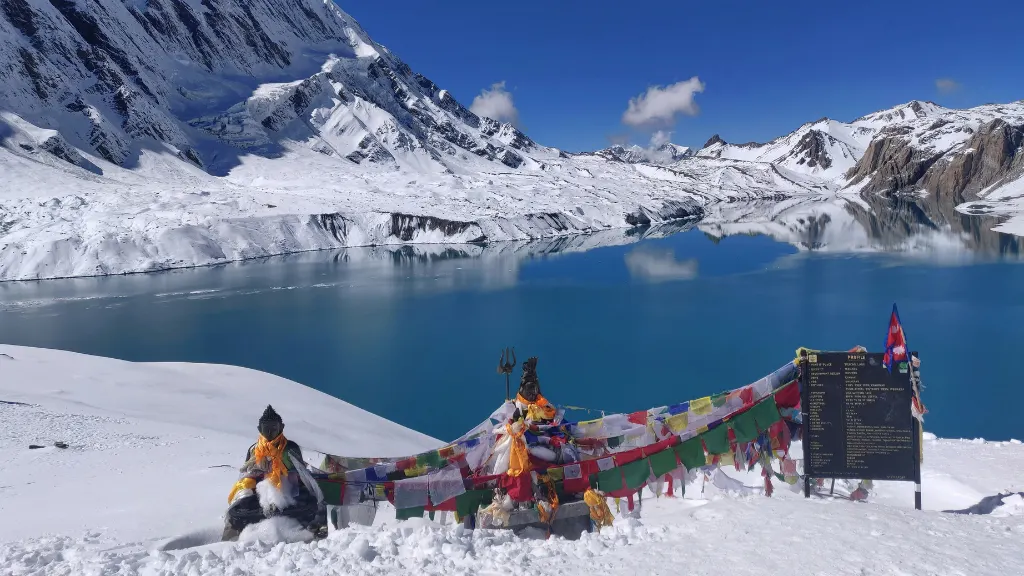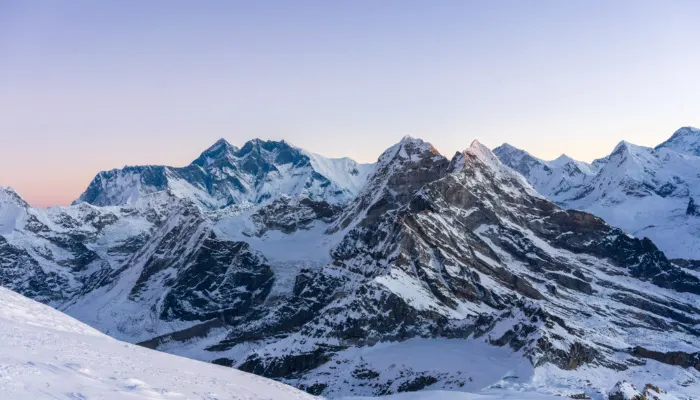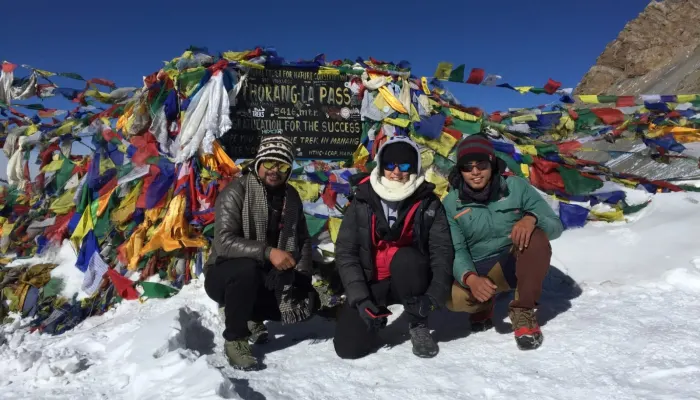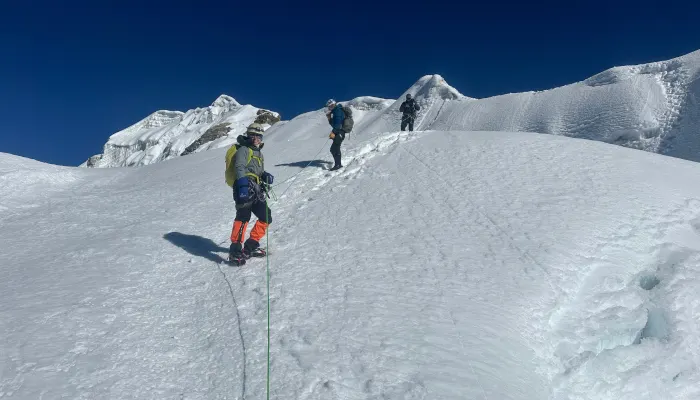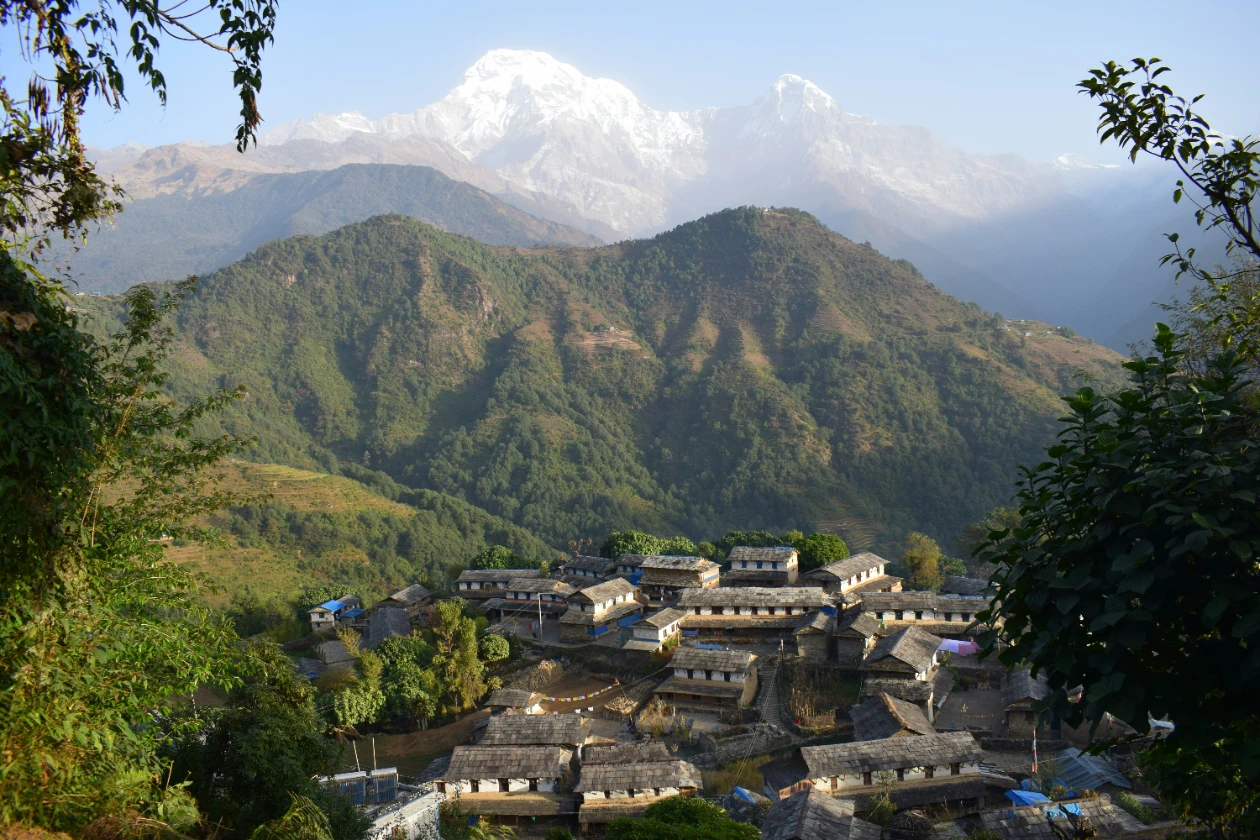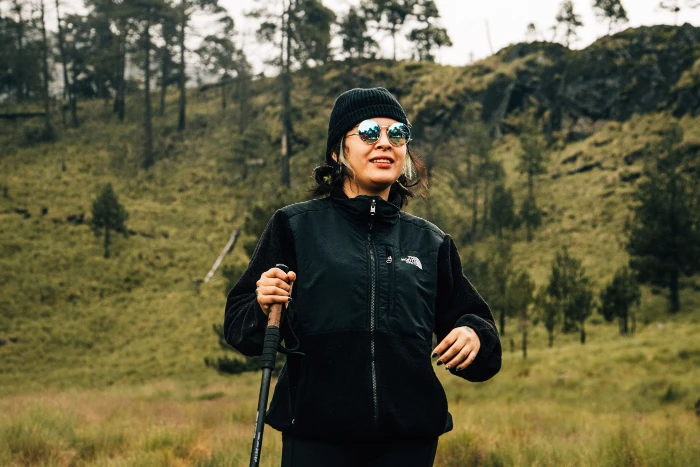
She arrived at the Poon Hill viewpoint fifteen minutes before anyone else. The trail had been empty from Ghorepani in the dark, just her headtorch and her guide walking the stone path through the rhododendron forest, and when the ridge opened up there was nobody there. She stood in the cold and watched the first light touch Kanchanjunga to the east and move westward along the entire Himalayan chain for nearly twenty minutes before the first group appeared behind her on the path.
That kind of experience is available to solo female trekkers in Nepal in 2027. It is more accessible, more straightforward, and more consistently enjoyable than the volume of cautionary online advice suggests. Nepal has a stronger track record of safe solo female trekking than almost any other mountain destination in Asia, and the structural reasons for this, the teahouse system, the trail community, the licensed guide infrastructure, the cultural warmth of the communities along the main circuits, are specific and durable rather than incidental.
This guide covers everything a solo female trekker needs to plan a Nepal trek in 2027: the honest safety assessment, the social dimension of trail life, the cultural considerations that shape the experience, the best itineraries by experience level, a complete gender-specific gear list, the all-in costs, and the practical details that most guides either omit or treat in a single paragraph.
The History of Female Solo Travel in Nepal
The first recorded solo female trekkers in Nepal arrived in the late 1960s, in the earliest years of the open trekking era. The Himalayan trekking industry at that point was dominated by expedition teams, and the first individual trekkers were almost exclusively male, but women appeared in the independent trekking community from the beginning.
By the 1980s solo female trekkers were a consistent presence on the Annapurna and Everest circuits. The development of the teahouse network through the 1990s made independent solo trekking significantly more accessible for women by eliminating the need for camping logistics, which had been the primary practical barrier to truly independent female travel in the region. A solo woman with a tent, a cooking setup, and the need to source food and water independently in remote mountain terrain faced a different logistical challenge from a solo woman walking between warm, family-run teahouses.
The current era, from approximately 2015 onwards, has seen a substantial increase in solo female trekking in Nepal. Social media has played a significant role. The visibility of women's trekking experiences online has normalised solo female travel in Nepal in a way that general guidebook advice never achieved. Female-specific trekking groups on Facebook and Reddit have created pre-trip communities of information and support. Nepal-specific women's travel forums have replaced the anecdotal word-of-mouth that previously constituted most solo female trekkers' safety research.
The result is a trail community in which the solo female trekker is not an anomaly. She is a standard participant in the Himalayan trekking ecosystem, supported by a mature infrastructure of licensed guides, family-run teahouses, trail safety networks, and experienced operators who have been managing solo female departures for long enough to understand what works.
Is Nepal Safe for Female Solo Travellers? The Honest Answer
Nepal consistently ranks among the safer destinations in Asia for solo female travellers in published safety indices and in the accumulated reporting of the solo female travel community online. Violent crime against foreign women is rare. The incidents that do occur are concentrated in specific circumstances, particularly late-night situations in Kathmandu's Thamel district, that are avoidable with straightforward awareness.
The safety dynamic on the trekking trails is genuinely different from the urban environment. Understanding the distinction between the two is more useful than a general Nepal safety verdict.
Urban Safety: Kathmandu and Pokhara
Kathmandu and Pokhara have the normal urban safety considerations of any South Asian city. Awareness of your surroundings after dark, caution with unfamiliar male acquaintances in bar environments, and avoidance of poorly lit side streets late at night are sensible precautions rather than indicators of unusual risk. The tourist districts of Thamel in Kathmandu and Lakeside in Pokhara are busy, well-lit, and populated with other international travellers throughout the evening. The side streets adjacent to these areas become quieter after 10 pm and are less appropriate for solo walking at that hour.
These are not Nepal-specific concerns. They are the same awareness that an experienced solo female traveller applies in any major city. Nepal's urban environment is not more hostile to solo female travellers than the equivalent areas of Bangkok, Delhi, or Istanbul. In most comparative assessments it is considerably less hostile.
Trail Safety: A Different Environment
On the trekking trails, the safety dynamic changes substantially. The teahouse network means a solo female trekker is sleeping in family-run lodges, eating in communal dining rooms, and moving through a trail corridor where other trekkers, lodge owners, and local community members are consistently present. She is never genuinely alone in the way that a solo hiker in a wilderness area without established infrastructure might be.
The 2026 No Solo Trekking regulation, which requires foreign nationals to trek with a licensed guide in national parks and conservation areas, has formalised what experienced female trekkers were already recommending. A licensed local guide from a registered agency, whose professional responsibility includes the safety and wellbeing of the client, is the single most effective safety variable available to a solo female trekker in Nepal. The guide knows the trail, knows the teahouse network, speaks the language, has relationships with community members along the route, and is accountable to the agency that employs them.
Specific Safety Considerations
Guide selection is the most important decision. A licensed, certified guide from a reputable registered agency eliminates the risk of the informal trailhead hire whose background is unverified. Hiking Nepal matches solo female clients with guides based on experience, communication skills, and cultural sensitivity. Female guide requests are accommodated where availability allows.
Room security at teahouses. Bring a small combination padlock. Lock quality varies significantly across the teahouse network and a personal padlock addresses the inconsistency simply and cheaply.
Night movement. The pre-dawn summit ascents are the standard exception to the general principle of not being on the trail in darkness alone. These are managed with a guide and other trekkers making the same ascent. Outside summit mornings, there is no practical reason to be on the trail in darkness independently.
Trust your instincts. If a teahouse feels wrong, move to another one. If an interaction makes you uncomfortable, tell your guide immediately. The teahouse owner network along the main circuits is a genuine community with strong mutual awareness. A lodge owner who has been hosting trekkers for twenty years responds effectively to a guest who reports a problem.
Emergency Resources
Himalayan Rescue Association medical post, Pheriche (Everest region): staffed by volunteer physicians during the main trekking seasons.
Himalayan Rescue Association medical post, Manang (Annapurna region): same.
Pokhara Rescue Centre: +977 61 462981
Tourist Police Kathmandu: +977 1 4226359
Hiking Nepal 24-hour emergency line: +977 9802342080
The Social Dimension of Solo Female Trekking in Nepal
Why You Are Never Really Alone
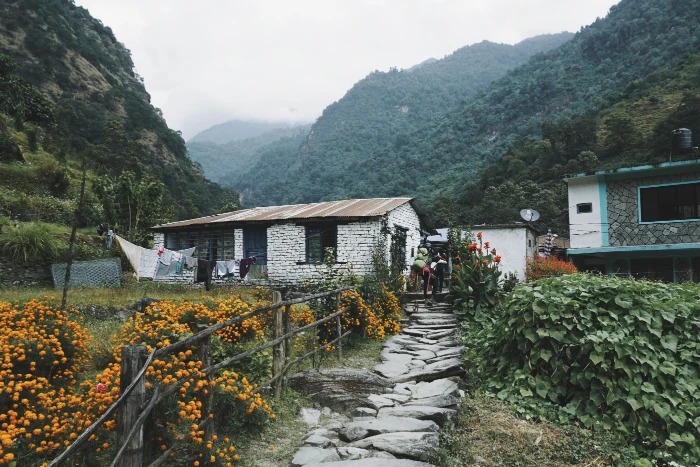
The teahouse circuit format creates a social structure that makes solo trekking in Nepal fundamentally different from solo hiking in wilderness environments. A solo female trekker on the Poon Hill circuit shares the trail with dozens of other trekkers moving at similar speeds, stays in the same sequence of teahouses as other travellers she has been meeting at two or three stops per day, and eats in communal dining rooms where conversations begin without requiring formal introduction.
The social rhythm of a teahouse circuit develops within the first two days and is one of the most consistently reported pleasures of solo trekking in Nepal. The people you have lunch with at a trail-side teahouse in Ulleri are likely to be the people eating dinner at Ghorepani, sharing the pre-dawn walk to Poon Hill, and comparing notes over breakfast the following morning. These connections form quickly and often last beyond the trail.
The People You Meet
Other solo female trekkers are present on every major circuit in every season. They are easy to identify by the shared experience of navigating the same social and logistical questions, and often the source of the most practically useful trail information. The informal network of solo female trekkers on the Annapurna and Everest circuits functions as a real-time safety and recommendation system that no published guide replicates. The woman you meet at a teahouse in Machhermo knows the current trail condition above because she came from there yesterday. The woman you share a table with in Namche knows which lodge in Dingboche has the best-maintained hot showers because she slept there two nights ago.
Your guide is typically the person a solo female trekker spends the most time with on the trail. A good guide functions as cultural translator, safety monitor, logistics manager, and in many cases the most interesting conversation partner of the entire trip. Guides from rural Nepal who have been guiding for fifteen or twenty years carry a depth of knowledge about the land, the culture, and the people of the Himalayan region that is rarely matched in any other travel context. Many solo female trekkers describe the guide relationship as the defining human connection of the Nepal trip, a friendship that develops over days of shared physical effort in an extraordinary landscape and maintains itself long after the circuit is complete.
Lodge families are the human infrastructure of the teahouse circuit and the least-written-about dimension of the Nepal trekking experience. The female members of lodge families, typically the mothers and daughters who manage the kitchen, the rooms, and the supply logistics, often form the most natural and direct connections with solo female trekkers. These women manage extraordinary operational complexity in conditions that would be considered exceptional by most visitors' standards: the firewood arrives by yak from forests below, the vegetables come up by porter from the market town, the water comes from a glacier melt stream above the village, and this entire supply chain is managed daily by women whose working day begins before the first trekkers are awake and ends after the last are asleep.
Asking about this life, through your guide where language is a barrier, is one of the most rewarding exchanges available on any Nepal trek. It shifts the interaction from the transactional to the genuinely human, and it is the encounter that most solo female trekkers describe as among the most memorable of the trip.
Porters carry the logistical weight of the trekking industry with physical capability that most trekkers find humbling. The relationship between a trekker and their porter is often warm and quiet, built on the mutual awareness of shared physical effort rather than verbal communication. Learning the porter's home village and something of their life outside the trekking season costs very little effort and returns it significantly.
International trekking groups on the major circuits create one of the more genuinely international social environments available in any form of travel. The communal dining room of a Namche teahouse in October, where the group at the next table might be from South Korea, the couple at the corner from Germany, the pair by the window from Australia, and the solo trekker arriving late from Israel, is a specific kind of social space that the teahouse circuit produces consistently and that most participants value more than they expected.
Building Your Pre-Trek Community
Facebook groups dedicated to solo female travel in Nepal, including Solo Female Trekkers Nepal and Nepal Trekking Women, are a useful pre-trip resource for current trail conditions, guide recommendations, and whether other solo female trekkers are planning departures in a similar window. Women planning the same route in the same season regularly connect through these groups and choose to walk sections of the trail together for company or safety.
Hiking Nepal's pre-departure WhatsApp thread connects clients on the same group joining departure before the trek begins, allowing solo female trekkers to introduce themselves to their co-trekkers before arrival in Nepal.
Managing Unwanted Attention
Nepal is not a country where solo female travellers are subject to the persistent street harassment that characterises solo female travel in some other South Asian countries. The cultural dynamic on the trekking trails specifically is one of respectful curiosity rather than predatory attention. Occasional unwanted attention occurs primarily in the urban tourist districts rather than on the trail. The standard management approach is direct and polite firmness: a clear statement that the attention is unwanted, followed by physical movement away from the situation. Your guide is the immediate resource if a verbal boundary does not resolve the situation.
Cultural Considerations for Female Solo Trekkers
Nepal's Cultural Landscape
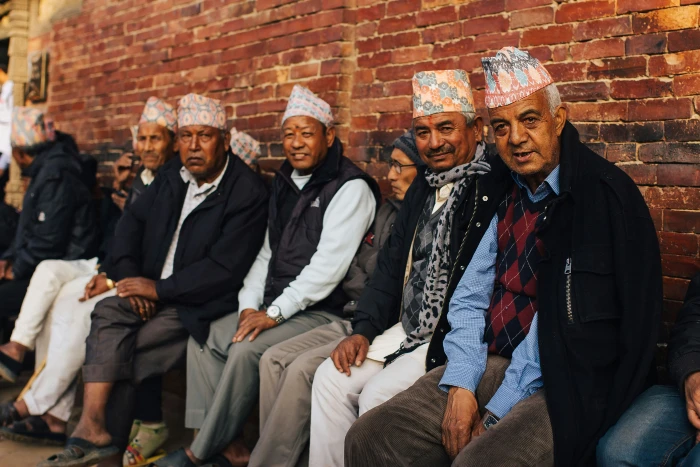
Nepal is predominantly Hindu with a significant Buddhist minority, particularly in the mountain regions where most trekking takes place. The cultural values that shape daily life include a strong emphasis on family and community, respect for elders and religious figures, modest dress in public and religious spaces, and a degree of gender role differentiation that differs from Western norms without being hostile to female independence.
Foreign women travelling independently in Nepal are not a cultural novelty. The trekking industry has been established for sixty years and the communities along the main circuits have been interacting with international female travellers for most of that period. The cultural response when it exists is curiosity rather than disapproval.
Dress and Modesty
The dress code for trekking in Nepal is primarily practical rather than culturally restrictive, but specific contexts require specific awareness.
In Kathmandu and Pokhara, shoulders and knees should be covered when visiting temples, monasteries, and religious sites. In the tourist districts, Western dress is unremarkable. On local streets away from the tourist areas, slightly more conservative dress is respectful and reduces attention.
On the trail, standard trekking clothing including shorts and moisture-wicking tops is entirely acceptable. When entering villages, particularly in the more traditional communities of the upper Manaslu, Tsum Valley, and Mustang regions, covering shoulders and knees is a respectful gesture that is noticed and appreciated even when not required.
At monasteries: remove footwear before entering. Cover shoulders. Ask before photographing monks, religious ceremonies, or monastery interiors. In some monasteries, women are not permitted in certain inner sanctums during specific ceremonies. Follow your guide's direction on this without requiring detailed explanation.
Interacting with Local Men
Nepali men on the trekking circuits, including guides, porters, teahouse staff, and villagers, are generally respectful in their interaction with foreign female travellers. The common Western assumption that all male attention in South Asia carries sexual intent does not accurately describe the interaction dynamic on Nepal's trekking trails.
Greet with Namaste, hands pressed together, which is the universal respectful greeting and establishes the correct social register for any interaction. Accept tea when it is offered in a home or monastery context: declining is occasionally interpreted as disapproval and accepting costs nothing. Avoid prolonged physical contact in formal cultural contexts, including handshakes with monks or elderly village men, who may prefer the Namaste gesture.
Photography and Respectful Observation
Ask before photographing people. The Nepali phrase your guide can teach you is Tasvir khichna paincha? Some people will agree readily. Some will ask for a printed copy, which a Kathmandu photo shop can produce from a phone image inexpensively if you pass back through the city.
Avoid giving gifts directly to children who request them on the trail. The habit of asking foreign trekkers for sweets, pens, or money has been encouraged in some areas by previous trekkers who found the request charming. The communities themselves often discourage it. If you want to contribute to the places you pass through, buying from local producers, staying in family-run teahouses, and tipping your guide and porter well are the mechanisms with the most direct positive effect.
Female Guides: Availability and Value
Female trekking guides are a growing but still minority presence in Nepal's guiding community. Organisations including 3 Sisters Adventure Trekking in Pokhara specifically train and employ female guides on the Annapurna region routes. Hiking Nepal accommodates female guide requests where availability allows.
A female guide changes the dynamic of teahouse interactions in specific ways that many solo female trekkers value. The ease of communication with female lodge family members, the specific cultural conversations about women's lives in mountain communities that are more naturally facilitated by a female guide, and the simple comfort of sharing a physical space with another woman in the remote sections of a multi-day circuit are all cited reasons for this preference.
The Lives of Women in Trekking Communities
The women who run the teahouses on Nepal's trekking circuits are among the most capable and hardworking people you will encounter in any travel context. Understanding something of their lives, and asking about it through your guide, shifts the interaction from the transactional to the genuinely human. The specific pride that a Sherpa or Gurung woman takes in her kitchen, her hospitality, and her management of the extraordinary logistics of a high-altitude teahouse is worth understanding on its own terms rather than as a background detail of your trek experience.
The Best Trekking Itineraries for Female Solo Travellers in 2027
How to Choose
Solo female trekkers choosing a Nepal circuit should consider the same variables as any trekker, specifically fitness level, available time, altitude ceiling, and the kind of experience they are looking for, alongside one additional consideration: social infrastructure density on the route. For a first solo trek in Nepal, a route with higher teahouse density and more consistent trekker traffic is a more comfortable starting point than a remote restricted area circuit where the guide is the primary social companion for days at a time.
For First-Time Solo Female Trekkers
Australian Camp and Dhampus, 2 to 3 days
The most accessible introduction to Himalayan trekking from Pokhara. Australian Camp at 2,065 metres is three to four hours from the Kande trailhead, a 30-minute taxi from Lakeside. The view from the ridge is a direct line of sight to the Annapurna range. The Dhampus extension adds one day and a Gurung village homestay experience that the Australian Camp out-and-back does not include. An evening in a family kitchen in Dhampus with a Gurung host is a different order of experience from a teahouse dinner and the kind of cultural encounter most solo female trekkers describe as the most memorable of a short circuit.
Suitable for: first-time Nepal visitors, travellers with two to three days available, those wanting a cultural village experience alongside mountain views without altitude risk.
Poon Hill Circuit, 4 to 5 days
The standard recommendation for a first Nepal trek regardless of gender, and specifically excellent for solo female trekkers because of the consistent teahouse density, the culturally engaging Gurung village stops, and the high proportion of solo trekkers of all backgrounds on the route. The four to five-day circuit is short enough to be completed with confidence on a first Nepal trip and long enough to feel genuinely transformative.
The pre-dawn Poon Hill sunrise ascent, shared with other trekkers making the same climb from Ghorepani, is one of the most naturally social experiences on any short circuit. The shared cold, the shared darkness, and the shared moment when the light arrives over the peaks create the specific trail solidarity that Nepal trekking is known for. For a solo female trekker on her first Nepal circuit, this is the morning that most often converts a good experience into a defining one.
Specific note for solo female trekkers: Ghorepani and Ghandruk are both large teahouse settlements where a solo female trekker has multiple lodge options if her first choice feels uncomfortable. The Gurung women managing the Ghandruk teahouses are among the most communicative and warmly hospitable hosts on any circuit near Pokhara. In spring, the rhododendron forest between Tikhedhunga and Ghorepani blooms in successive waves of red, pink, and white that turn the approach trail into something children and experienced trekkers alike stop walking to look at.
For Intermediate Solo Female Trekkers
Langtang Valley Trek, 7 to 9 days
The best moderate-length circuit for solo female trekkers based in Kathmandu. The Tamang communities of the Langtang Valley have a particularly warm history of interaction with foreign female travellers, and the valley's ecological richness, including red panda habitat and old-growth temperate forest, appeals to trekkers with a natural history interest that the higher-altitude circuits do not satisfy as directly.
The cultural visit to Langtang village, rebuilt after the 2015 earthquake with substantial support from the international trekking community, adds a dimension of community connection and resilience that gives the trek an emotional quality beyond the standard mountain and village experience. The women managing the rebuilt teahouses in Langtang village are among the most genuinely interesting hosts on any Nepal circuit, and a conversation about the earthquake and the rebuild facilitated by your guide is one of the more powerful human exchanges available on a Nepal trek.
Annapurna Base Camp Trek, 7 to 10 days
The Annapurna Sanctuary at 4,130 metres is one of the most visually extraordinary environments in Nepal and the ABC trek delivers it within a window that suits solo female travellers with one week to ten days available. The route through Chhomrong and the lower Annapurna villages has a particularly active female guide community, with the 3 Sisters agency sending female guides on this route more than any other circuit.
The hot spring pools at Jhinu Danda on the descent, a natural thermal pool above the Modi Khola river, are one of the specific pleasures of the ABC route and a genuinely restorative experience after the high-altitude nights. The pool is used by trekkers of all backgrounds and the social dynamic is relaxed and warm.
For Experienced Solo Female Trekkers
Everest Base Camp, 12 to 14 days
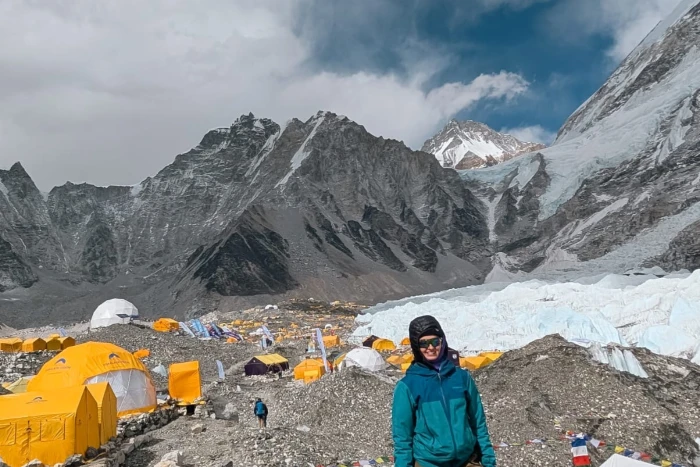
The EBC route has the highest proportion of solo female trekkers of any major circuit in Nepal, which makes the social infrastructure for solo female travel particularly well-developed. Female-specific EBC Facebook groups, female-only group departure options from Hiking Nepal, and the high trekker density on the route collectively create a social environment that is specifically supportive for solo female trekkers who want company without having to seek it actively.
The Sherpa cultural dimension of the EBC route is one of its most distinctive features. The Khumbu is the heartland of Sherpa Nepal and the communities of Namche Bazaar, Khumjung, Khunde, Tengboche, and Pangboche carry a living cultural identity shaped by their relationship with the highest mountains in the world. The specific pride and composure that characterises Sherpa social interaction, a cultural inheritance from generations of high-altitude work in extreme conditions, is visible in the teahouse owners, the guides, and the ordinary daily life of the villages along the circuit.
Gokyo Lakes Trek, 12 to 14 days
For solo female trekkers who want a Khumbu circuit with more visual variety and significantly less trail congestion than EBC, the Gokyo route offers the finest mountain panorama in the region alongside the glacial lake scenery that has no equivalent on the standard EBC approach. The Gokyo Valley sees a fraction of the trekker volume of the main EBC corridor, and the upper valley from Machhermo to the Gokyo Lakes has a quality of quiet that is increasingly rare on accessible Himalayan trekking routes.
Manaslu Circuit, 13 to 15 days
The restricted area and mandatory guide requirement make the Manaslu Circuit a formally guided experience, but for solo female trekkers who want the depth of Tibetan Buddhist cultural immersion and the genuine wilderness of a restricted circuit, it is the strongest choice in Nepal. The guide relationship on the Manaslu Circuit, sustained over thirteen to fifteen days through culturally distinct Tibetan Buddhist territory with active monasteries, mani walls, and communities whose daily life has not been reorganised around trekking tourism, tends to develop into one of the most substantive human connections available on any Nepal trek.
The Larkya La crossing at 5,160 metres is the circuit's physical and psychological centrepiece. The pre-dawn departure from Dharamsala, the headwall section of the glacier approach, the summit ridge with the full Himalayan panorama, and the long descent to Bimthang combine into the kind of day that most trekkers describe as the hardest and most memorable of the circuit. The sense of shared accomplishment with the guide team at the end of that day, over soup in a Bimthang teahouse, is one of the specific pleasures of the Manaslu Circuit that is difficult to replicate on any other Nepal route.
Upper Mustang, 10 to 14 days
The most culturally distinctive solo female trekking experience available in Nepal. The combination of the restricted area permit, the mandatory guide, the extraordinary Tibetan plateau landscape, and the ancient walled city of Lo Manthang at 3,840 metres creates an experience that most solo female trekkers describe as genuinely unlike any other travel they have done.
The permit cost of USD 500 for ten days in the restricted zone is the primary financial barrier to the Upper Mustang circuit, but the traveller density it keeps off the trail is part of what makes the destination what it is. The cave monasteries above Lo Manthang, the Tiji festival if your timing aligns with this extraordinary three-day ritual, and the conversations in traditional Tibetan homes facilitated by a guide with genuine regional knowledge are the specific rewards of a route that rewards the investment of its permit cost.
Hiking Nepal Female-Only Group Departures 2027
Hiking Nepal offers female-only group departures on the Poon Hill circuit, the Annapurna Base Camp route, and the Langtang Valley in spring and autumn 2027. These departures use female guides where available and are structured specifically around the social and logistical preferences of solo female trekkers. Contact Hiking Nepal for specific 2027 dates.
Gear List for Female Solo Trekkers in Nepal
The Guiding Principle
The gear list for a solo female trekker in Nepal follows the same layered-simplicity principle as for any trekker, with two additional considerations. First, women's-specific fit in trekking gear is genuinely important rather than a marketing category. A base layer sized for a male body does not thermoregulate as effectively on a female body. Trekking boots designed for female foot geometry, specifically narrower in the heel and wider in the forefoot, significantly reduce blister risk compared to gender-neutral sizing. These are practical distinctions that affect comfort and safety on a multi-day circuit.
Second, the specific items that address the particular hygiene and safety requirements of solo female travel at altitude deserve explicit attention rather than being treated as a footnote.
Clothing
Base Layers
Merino wool or synthetic thermal top and leggings, women's-specific fit, in two sets. Merino wool is the recommended material for Nepal trekking because it thermoregulates across the wide temperature range of a multi-altitude circuit, remains wearable for multiple days without washing, and manages odour without chemical treatment. Icebreaker, Smartwool, and Ortovox all make well-regarded women's-specific merino base layers.
Mid-Layer
Women's fit fleece jacket. The mid-layer is the layer reached for most frequently on the trail: it goes on during rest stops, comes off during sustained uphill sections, and is the primary warmth layer in teahouse dining rooms where the stove heats the room unevenly.
Insulation Layer
Women's down jacket rated to minus ten degrees Celsius minimum. Non-negotiable for any circuit with overnight stops above 3,000 metres. Women's-specific down jackets have a different baffle pattern from men's to provide effective warmth coverage for female body geometry. Patagonia, Arc'teryx, and Mountain Hardwear all make good women's-specific options. Available for hire in Thamel at approximately USD 3 to 6 per day.
Outer Shell
Women's waterproof and windproof jacket with a full hood. Gore-Tex or equivalent. The hood is specifically important for pre-dawn summit ascents where wind-driven cold is the primary comfort issue.
Trekking Trousers
Two pairs of women's-fit quick-dry trekking trousers. The fit consideration is particularly important here: trousers cut for male proportions sit incorrectly on female hips and create specific discomfort that compounds over multi-day circuits. Fjällräven Keb trousers, Craghoppers women's trekking range, and the Patagonia women's hiking trousers are consistently recommended.
Waterproof Over-Trousers
One pair, packable, women's-fit. Used on wet descent days and for cold pre-dawn ascents.
Underwear
Three to four pairs of merino wool or synthetic quick-dry underwear designed for active use. This is one of the most commonly compromised items in Nepal trekking packing lists and one of the most practically significant for multi-day comfort. Cotton underwear becomes damp and stays damp. Merino or technical synthetic manages moisture effectively and dries quickly hung overnight in a teahouse room.
Sports Bras
Two or three, depending on circuit length. Technical sports bras in merino wool or synthetic fabric. Underwired bras are not appropriate for the terrain and physical demands of multi-day trekking.
Warm Hat
Covering the ears fully. Non-negotiable for pre-dawn summit ascents. Merino wool or fleece.
Sun Hat
Wide-brimmed, covering the face and ideally the neck. UV exposure at altitude is significantly more intense than at sea level. A hat with a neck drape or an integrated buff is more practical than reapplying sunscreen to the neck on exposed sections.
Neck Gaiter or Buff
Multi-purpose: sun shield on exposed sections, warmth layer under the hat on cold mornings, dust filter on dry trail sections in rain-shadow regions.
Gloves
Liner gloves in merino wool plus windproof outer gloves. The layered system is more versatile than a single heavy glove for circuits that move between moderate and extreme cold.
Socks
Four to five pairs of merino wool hiking socks, women's-specific sizing. Sock fit is one of the most consequential gear decisions on a multi-day trek. Too loose and heel blisters develop within the first day. Too tight and circulation is restricted on long descents. Darn Tough, Smartwool, and Icebreaker all make women's-specific merino hiking socks in the relevant weight range.
Footwear
Trekking Boots
Women's-specific waterproof trekking boots, properly fitted and fully broken in before departure. This is the single most important gear item on the list and the one most often compromised by buying too late or failing to break in adequately. Women's boots that consistently receive positive reviews from Nepal trekkers include the Salomon X Ultra 4 Mid GTX Women's, the Scarpa Kailash GTX Women's, the Lowa Renegade GTX Mid Women's, and the Merrell Moab 3 Mid Waterproof Women's.
Break them in with at least five to ten full-day walks before departure. This is not a suggestion. Boots that are not broken in produce blisters within the first two days. Blisters on a trekking foot are a morale problem on Day 2 and a genuine physical limitation by Day 5.
Camp Shoes
Lightweight sandals or slip-on shoes for teahouse evenings. The feet need to come out of the trekking boots for several hours each evening and dedicated camp shoes are worth the small additional pack weight. Crocs are the most commonly used and practically convenient option.
Equipment
Daypack
Women's-specific daypack with a torso-length suspension adjusted for female proportions. The shorter torso length on a women's-specific pack keeps the load closer to the centre of gravity and reduces lower back strain on long days. Osprey Tempest (28 to 40 litres), Gregory Jade, and Deuter Futura Pro Women's are well-regarded options with a track record on Nepal trekking circuits.
Sleeping Bag
Women's-specific sleeping bag rated to minus ten degrees Celsius for circuits with overnight stops above 3,000 metres. Women's bags are cut with more room in the hip and shoulder area and with enhanced insulation in the footbox and torso. Available for hire in Thamel at approximately USD 3 to 5 per day. Sea to Summit, Rab, and Western Mountaineering make good women's-specific options for purchase.
Trekking Poles
Adjustable poles sized for your height. Specifically valuable for the steep descents that follow high-altitude summits and for the rocky moraine sections on the Khumbu and Manaslu routes. The handle grip should fit comfortably in a closed fist. Available for hire in Pokhara and Kathmandu gear shops.
Headtorch
A lightweight headtorch with a red light mode for use in shared teahouse spaces without disturbing other occupants. Replace batteries before departure. Carry one spare set.
Water Bottle
One-litre insulated stainless-steel bottle plus a secondary collapsible soft flask for summit days when two litres is the minimum recommended intake. The insulated bottle prevents water from freezing on cold summit mornings.
Portable Power Bank
Minimum 20,000 mAh for a twelve-day circuit. Teahouse charging above 4,000 metres is solar-dependent and unreliable. Charging costs NPR 100 to 300 per device per hour where available.
Padlock
A small combination padlock for teahouse room doors with inadequate locks and for securing the main luggage duffel. Standard equipment for solo trekkers of all genders.
Pee Funnel
A Shewee or equivalent device allows standing urination, which is significantly more practical than squatting on exposed rocky terrain at altitude and in cold temperatures. Many female trekkers consider this one of the most significant practical purchases for Nepal trekking and are surprised it is not mentioned more prominently in pre-trip advice. Practice using it before the trek begins.
Female-Specific Health and Hygiene
This section deserves more space than most Nepal trekking guides give it.
Menstrual Management at Altitude
Altitude affects menstrual cycles in ways that are individual and often unpredictable. Some women experience early periods at altitude, others experience delays, and others notice no change at all. Planning for unpredictability is the practical approach.
A menstrual cup is the most practical solution for multi-day trekking in Nepal. It eliminates the waste disposal problem that applies to disposable products in teahouse environments where rubbish management infrastructure is limited, and it reduces the volume of supplies to carry. Lunette, Moon Cup, and DivaCup are widely used by female trekkers. Practice using the cup before the trek in conditions that are comfortable and familiar. Using it for the first time on Day 3 at 3,000 metres is not ideal.
If disposable products are preferred, carry enough for the full circuit plus additional buffer days. Carry a small sealed bag for used products and dispose of them at the first managed waste facility below the trekking zone. Do not leave disposable menstrual products at trail-side disposal points in protected areas.
For cramp management at altitude, note that ibuprofen is also used for altitude headaches and interactions with any altitude medicine protocol should be discussed with your GP before departure.
UTI Prevention
UTIs are more common on multi-day treks than in normal life because hydration discipline, clothing changes, and washing access are all compromised. Drink three to four litres per day, change underwear daily, and carry cranberry supplements or D-mannose tablets as a preventive measure if you have personal UTI susceptibility. Carry an antibiotic course prescribed by your GP before departure. A UTI at altitude without treatment access is a serious situation that the preparation cost of a GP appointment prevents entirely.
Thrush Treatment
Antifungal cream and oral fluconazole. The combination of synthetic clothing, reduced hygiene access, and cold temperatures creates conditions that increase thrush risk on extended circuits. Carrying treatment is practical prevention and adds negligible pack weight.
Skin and Sun Protection
SPF 50 minimum sunscreen applied daily above 2,000 metres and reapplied every two hours on exposed sections. Lip balm with SPF protection is a specific daily requirement. At altitude the combination of cold, wind, and UV exposure produces lip cracking faster than almost any other skin surface. A lightweight balaclava for pre-dawn summit ascents provides both cold and UV protection simultaneously.
Medical Kit
Beyond the standard trekking first-aid kit, carry the following.
Diamox (acetazolamide), prescribed by your GP and discussed in terms of dosage and contraindications. Diamox is a sulfa drug and cannot be used by anyone with a sulfa allergy. Ibuprofen for altitude headache management. UTI antibiotic course as discussed above. Thrush treatment as above. Diarrhoea treatment (loperamide) for symptom management. All personal prescription medications in sufficient quantity for the circuit duration plus a three to four-day buffer, in original labelled packaging.
Cost Guide for Female Solo Trekkers in Nepal 2027
The Solo Supplement
The primary cost consideration specific to female solo trekkers is the solo supplement that applies on itineraries designed for two or more people. A private guided Poon Hill departure with Hiking Nepal is priced from USD 650 per person based on two trekkers sharing. A solo trekker on the same departure pays a higher per-person cost because the guide and porter allocation is not shared. This applies equally to any solo trekker regardless of gender.
The most cost-effective approach for a solo female trekker is to join a group departure where the guide cost is shared across four to eight trekkers. Hiking Nepal's group joining departures include all the safety and logistics infrastructure of a private departure at a significantly lower per-person cost.
All-In Cost Estimates by Route
Trek | Duration | Group Joining | Private Solo | Notes |
| Australian Camp and Dhampus | 2 to 3 days | From USD 320 | From USD 420 | No domestic flight |
| Poon Hill Circuit | 4 to 5 days | From USD 650 | From USD 820 | No domestic flight |
| Mardi Himal | 5 to 7 days | From USD 720 | From USD 950 | |
| Langtang Valley | 7 to 9 days | From USD 950 | From USD 1,200 | Drive to Syabrubesi |
| Annapurna Base Camp | 7 to 10 days | From USD 1,100 | From USD 1,400 | |
| Gokyo Lakes | 12 to 14 days | From USD 1,200 | From USD 1,650 | Includes Lukla flight |
| Everest Base Camp | 12 to 14 days | From USD 1,650 | From USD 2,100 | Includes Lukla flight |
| Manaslu Circuit | 13 to 15 days | From USD 1,800 | From USD 2,400 | Restricted permit |
| Upper Mustang | 10 to 14 days | From USD 2,200 | From USD 2,800 | USD 500 permit included |
All prices include licensed guide, contracted porter at IPPG welfare standards, pre-selected accommodation, all meals, permit fees, and transfers. Not included: international flights, Nepal visa (USD 50 for 30 days), travel insurance (USD 100 to 200 for a specialist adventure policy), tips (NPR 500 to 1,000 per guide or porter per day), and personal trail spending.
Female-Specific Additional Costs
Female guide premium: Female guides command a modest premium of approximately USD 5 to 10 per day over standard male guide rates, reflecting current supply-demand in the female guiding community. For a fourteen-day circuit, this adds USD 70 to 140 to the total guide cost.
Single room supplement: Available on group joining departures at NPR 500 to 1,000 per night where single rooms exist. For a twelve-day circuit, this adds approximately USD 48 to 96. Request this at booking rather than on arrival.
Menstrual products: Carry everything from home. Products available in Nepal are expensive and limited in variety. Budget NPR 2,000 to 5,000 for any supplementary purchases needed in Kathmandu.
Money-Saving Approaches
Join a group departure. The single most effective cost reduction for a solo female trekker, saving USD 170 to 450 depending on the circuit compared to a private solo departure.
Travel in shoulder season. Late September, the first two weeks of November, and the first two weeks of March offer near-peak conditions with lower accommodation demand pressure and in some cases lower food costs at teahouses.
Hire equipment in Thamel rather than buying. Full equipment hire for a fourteen-day circuit costs USD 100 to 140, compared to USD 280 to 600 for equivalent gear purchased new. For a single Nepal trip, hire is the economically rational choice.
Practical Pre-Trip Planning
Before You Book
Research the current guide requirement for your specific route and confirm that your chosen operator provides licensed, registered guides rather than informal trailhead hires. Ask specifically about guide certification (Nepal Tourism Board licence and WAFA certification as minimum), porter welfare standards (IPPG compliance), and whether a female guide is available for your specific route and dates.
If you want a female guide, confirm availability at the time of booking rather than on arrival. Female guide availability is limited on some routes and cannot always be accommodated at short notice on popular departure dates.
Kathmandu Arrival
Allow at least one full day in Kathmandu before your trek begins. The pre-trek briefing with Hiking Nepal takes a full evening. Gear hire requires a morning of fitting and deposit payment. Permit photographs need to be taken or printed. The cultural adjustment to Kathmandu's density after a long international flight benefits from at least one night of rest before adding logistical tasks.
The Thamel district is the most convenient base for pre-trek logistics and the area where the urban safety considerations discussed earlier are most relevant. The main tourist streets are busy and well-lit throughout the evening. The side streets become quieter after 10 pm. Apply the same awareness you would in any unfamiliar urban environment after dark.
Communication with Home
Establish a check-in protocol before departure: a specific time and method for confirming your daily location. WhatsApp works reliably as far as Namche Bazaar on the EBC circuit and to Sama Gaon on the Manaslu Circuit. Above these points, mobile coverage is intermittent. Hiking Nepal provides satellite communication on all departures above 3,500 metres for emergency use. A pre-agreed daily check-in message with family or a trusted contact at home provides ongoing confirmation of wellbeing without requiring detailed communication every evening.
Frequently Asked Questions
Do I need a guide as a female solo trekker in Nepal?
Under the 2026 No Solo Trekking regulation, a licensed guide is legally required for all trekking in national parks and conservation areas, which covers most of the major circuits. For solo female trekkers specifically, the guide is a safety, cultural access, and logistical resource that the majority of experienced solo female travellers recommend regardless of the regulatory requirement. The guide is not a restriction on your independence. She or he is the mechanism through which the deepest and most rewarding version of the Nepal trekking experience is accessed.
Can I find other female trekkers to walk with?
Yes, reliably on the main circuits in peak season. The Facebook groups Solo Female Trekkers Nepal and Nepal Trekking Women connect travellers planning similar routes in similar windows. Hiking Nepal's group joining departures regularly include multiple solo female trekkers on the same departure. The trail community on the Poon Hill and EBC circuits is specifically well-populated with solo female trekkers in April and October.
What do I do if I feel unsafe in a teahouse?
Tell your guide immediately. If you are in a section without a guide, speak to the teahouse owner, who has the local network and the direct interest in your safety to respond appropriately. Moving to a different teahouse is always an option and is always the correct decision if a situation makes you uncomfortable. There is no social obligation to remain in a lodge that feels wrong.
How do I manage periods on the trail?
A menstrual cup is the most practical solution. Practice before the trek. If using disposable products, carry enough for the full circuit plus buffer days and carry used products out of protected areas for disposal at managed waste facilities below the trekking zone.
Is Nepal safe for female solo travellers over 50?
Yes, and this audience is significantly underserved by Nepal trekking advice that implicitly assumes a young traveller. Older solo female trekkers are a growing presence on the main circuits and bring specific advantages: more consistent fitness discipline, more realistic altitude expectations, and a cultural openness that comes from broader travel experience. The circuits accessible to fit adults in their fifties and sixties, including the Poon Hill circuit, the Langtang Valley, the Annapurna Base Camp route, and the Gokyo Lakes circuit, cover the full range of what Nepal's trekking environment offers. Hiking Nepal runs regular private departures for solo female travellers over 50 with itineraries designed around appropriate pacing and altitude management for this specific profile.
What is the cancellation policy if I need to change plans?
Hiking Nepal's cancellation terms for all departures: full refund minus permit processing costs already incurred for cancellations 60 or more days before departure; 50 per cent refund for cancellations between 30 and 59 days before departure; no refund for cancellations within 30 days of departure, though Hiking Nepal will make reasonable efforts to transfer the booking to an alternative departure date.
Trek with Hiking Nepal in 2027
Hiking Nepal runs private guided departures and female-only group joining departures on all routes described in this guide throughout the spring and autumn seasons of 2027. Every departure includes a licensed WAFA-certified guide, contracted porter at IPPG welfare standards, pre-booked accommodation at inspected teahouses, all meals, all permit fees, private vehicle transfers, safety equipment, and 24-hour emergency coordination.
Female guide requests, single room requests, and dietary requirements are all confirmed at booking rather than managed on arrival.
Spring 2027 departures open from mid-March. Autumn 2027 departures run from late September through mid-November. Female-only group departure dates for Poon Hill, Annapurna Base Camp, and Langtang Valley are available on request.
Contact Hiking Nepal on WhatsApp at +977 9802342080 or at [email protected] to discuss your preferred route, dates, and any specific requirements. A personalised itinerary and cost proposal are provided within 48 hours of your initial message.
The Himalayas are not reserved for any particular kind of trekker. They are available to anyone willing to show up and walk towards them. The solo female trekkers who come back to Nepal, and most of them do come back, describe the experience not as something they survived but as something they grew into. The mountains have a way of returning exactly what you bring to them.