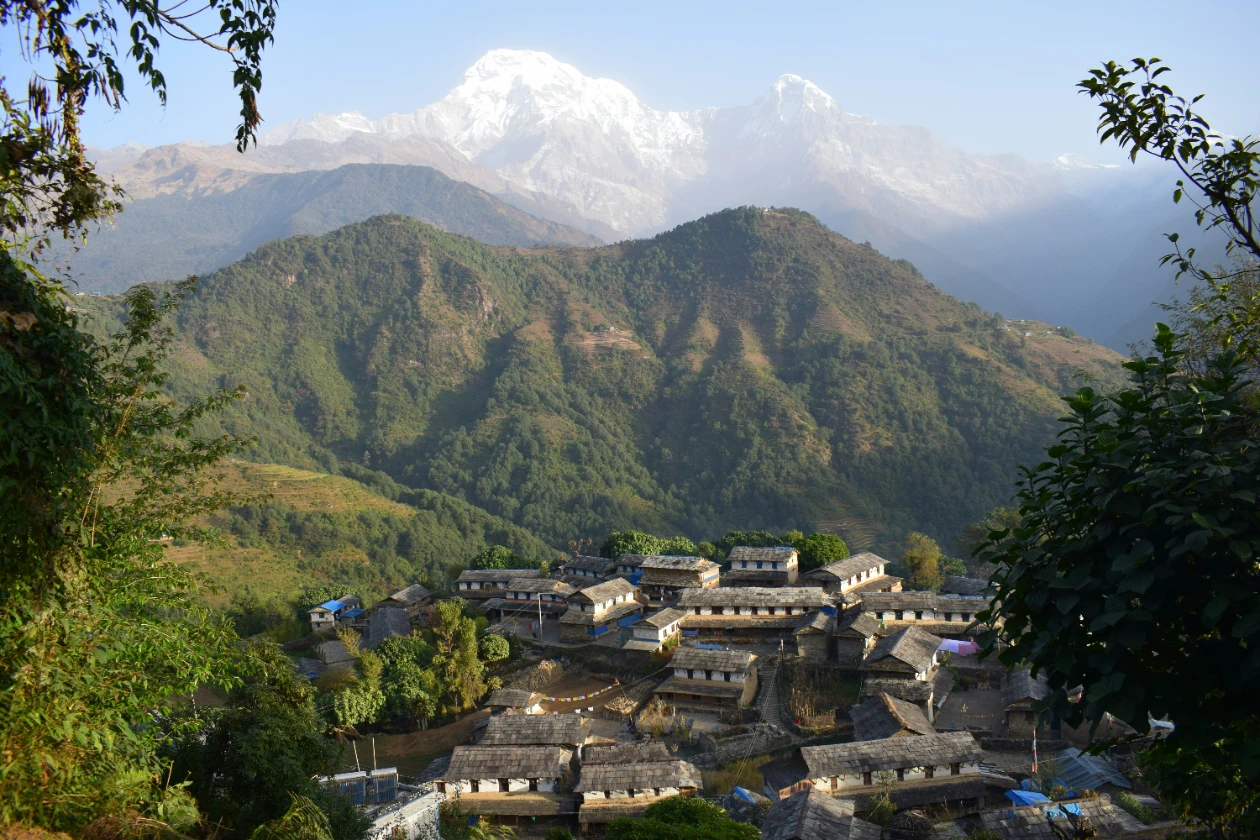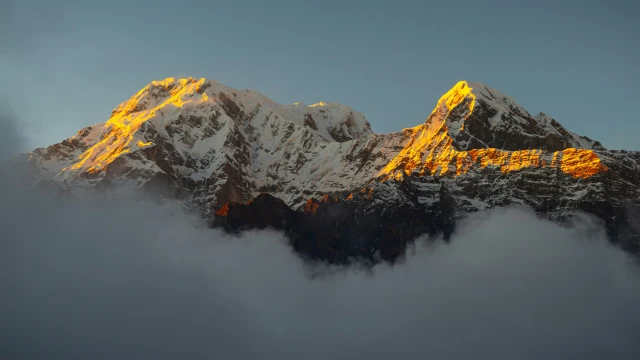
Most people spend more time researching a Nepal trek than they spend on the trail. They read conflicting blog posts, compare operator websites, scroll through Reddit threads where three different people give three different answers to the same question, and eventually arrive at a decision they are not entirely confident in. They pick a route based on an article written by someone who has never been to Nepal, or a recommendation from a friend whose fitness level and interests are completely different from their own.
There is a simpler approach. Talk to someone who has guided the trail you are considering, knows the permit system from current experience, understands what different fitness levels can realistically achieve at altitude, and has no interest in selling you a route that does not suit you.
Hiking Nepal offers a free fifteen-minute consultation with an experienced guide for anyone planning a Nepal trek in 2027. No cost. No obligation. No sales pressure. Just a direct conversation with someone who knows the ground and can give you an honest, personalised answer to the question most trekkers spend weeks trying to answer on their own: which trek is actually right for me?
This page explains what the consultation covers, who it is for, what you will walk away with, and how to book your slot.
Why Planning a Nepal Trek Without Expert Input Is Harder Than It Needs to Be
Nepal has over 1,400 mapped trekking routes, five major geographic regions, four distinct seasons with meaningfully different conditions in each, a permit system with multiple tiers that varies by route, and a cost structure that ranges from USD 400 for a short circuit near Pokhara to USD 3,000 and above for a fully supported private departure on a restricted area route.
The volume of information available online about Nepal trekking is immense and, in significant portions, unreliable. Permit fees quoted in blog posts are frequently outdated. Difficulty descriptions are often calibrated to a fitness level the writer does not specify. Cost estimates exclude items that represent thirty to forty per cent of the actual trip cost. Seasonal advice is given without the specific regional nuance that makes the difference between arriving in the rhododendron bloom window and arriving two weeks after it has ended.
The result is that most people planning a Nepal trek independently, without local expertise, make at least one significant planning error. The most common are choosing a route that does not match their actual fitness level, planning an itinerary that moves too fast at altitude, budgeting for headline permit costs without accounting for guides, porters, insurance, and personal expenses, and timing the trip outside the optimal seasonal window for their specific route.
A fifteen-minute conversation with a Hiking Nepal guide who has current, direct knowledge of the route you are considering eliminates the most common of these errors before you book anything.
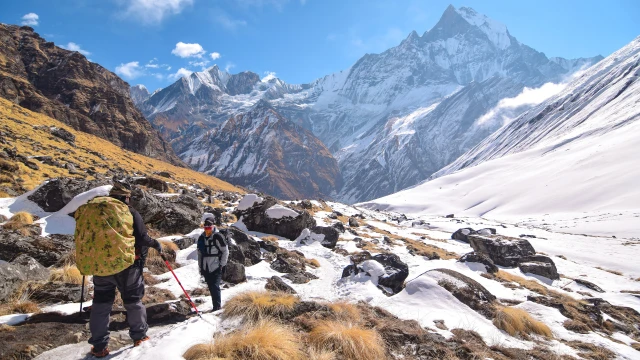
Who the Free Consultation Is For
The consultation is available to anyone planning a Nepal trek in 2027, regardless of experience level, intended budget, or how certain or uncertain they currently feel about their plans.
First-time trekkers are the group that benefits most directly. If you have never trekked at altitude before and you are trying to assess whether the Everest Base Camp route is within your capability, or whether Poon Hill would be more appropriate as a first experience, that question has a specific answer that depends on your fitness history, your available preparation time, and your expectations. A guide who has taken first-time trekkers on both routes can give you that answer in three minutes of conversation.
Solo travellers arriving in Nepal without a pre-arranged group have a specific set of logistical questions around joining a group departure, permit requirements for travelling independently versus with a registered agency, and safety considerations for specific routes. These are practical questions with practical answers that the consultation covers directly.
Experienced trekkers planning a return to Nepal or moving into more challenging territory, including restricted area circuits like Manaslu or Upper Mustang, or technical objectives like Island Peak, benefit from current route-specific knowledge that cannot be reliably obtained from published sources more than a few months old. Permit fee changes, teahouse upgrades or closures, trail conditions after the 2027 pre-monsoon season, and current guide availability for restricted area routes are all things a Hiking Nepal guide knows, and a general blog post does not.
Families and groups with multiple people at different fitness levels, including mixed-age groups with children or older participants, need itinerary planning that accounts for the realistic capability of the least fit or most altitude-sensitive member of the party. This is not a standard calculation, and it benefits significantly from a conversation rather than a generic route description.
Budget-conscious travellers frequently underestimate the total cost of a Nepal trek by focusing on headline package prices rather than the full cost including permits, insurance, tips, personal expenses, and pre- and post-trek accommodation. The consultation provides a realistic all-in cost estimate for the specific route and service level you are considering.
Luxury travellers wanting a fully private, high-service departure need to understand what is actually available at the premium end of the Nepal trekking market in 2027, including boutique lodge availability on specific routes, helicopter integration options, and what a genuinely well-organised private departure includes beyond what a standard package provides.
What the Consultation Covers
Fifteen to thirty minutes is enough time to cover the four questions that determine ninety per cent of a Nepal trek's success or failure, when approached directly and efficiently by someone with current knowledge.
The Right Route for Your Profile
The single most important decision in Nepal trek planning is route selection, and it is the decision most commonly made on inadequate information. The consultation begins with a specific set of questions about your fitness baseline, your previous altitude experience if any, the time you have available, the kind of experience you are looking for, and your budget range.
The answers to these questions narrow the field quickly. A person who can walk four hours on uneven terrain with moderate gradient but has never spent a night above 2,000 metres is a different planning case from a person who runs half-marathons and has previously trekked to 4,000 metres. The Poon Hill circuit is appropriate for the first person as a first Nepal trek. The Annapurna Base Camp route or the Langtang Valley is appropriate for the second. Everest Base Camp is achievable for both with proper preparation and an acclimatisation-focused itinerary, but the preparation conversations are different.
The guide on your consultation has taken clients from every fitness starting point on every major Nepal trekking circuit. They can match your profile to the right route, identify the preparation you need before departure, and tell you honestly if your planned dates and itinerary are realistic or if adjustments would significantly improve your chances of a successful summit or circuit completion.
What can you really expect?
The consultation provides a realistic all-in cost estimate for the specific route and service level you are considering. This includes the package cost with a guide and porter, all permit fees, equipment hire if needed, travel insurance specification, tips, personal expenses on trail, domestic flights where required, and pre and post-trek accommodation in Kathmandu or Pokhara.
This is different from a quoted headline price. The headline price for most Nepal trek packages covers the guide, porter, accommodation, meals, permits, and ground transfers. It does not cover travel insurance, which is non-negotiable and costs USD 80 to 200 depending on your nationality, coverage level, and provider. It does not cover the domestic flight to Lukla for the Everest region, which adds USD 180 to 240 per person return. It does not cover tips for the guide and porter, which are customary and amount to USD 80 to 200 for a standard fourteen-day circuit. It does not cover personal spending on hot showers, Wi-Fi, battery charging, snacks, and any gear hired in Kathmandu.
A realistic all-in budget for a fourteen-day EBC circuit with Hiking Nepal in 2027 is USD 3,200 to 3,800 per person when all of these items are included. A realistic all-in budget for a five-day Poon Hill circuit is USD 900 to 1,200 per person. These are the numbers that allow you to plan a trip you can actually afford rather than booking a package price and discovering the additional costs on arrival.
Permits and Logistics
Nepal's permit system has three tiers and varies significantly between routes. The consultation explains exactly which permits are required for the specific route you are considering, what each costs, and how and when they are obtained. For restricted area routes including Manaslu, Upper Mustang, Tsum Valley, and Kanchenjunga, the permit process involves advance applications through a registered agency with specific documentation requirements and timelines that are worth understanding before you book.
The logistics discussion covers the transport options to the trailhead, whether domestic flights are involved and how weather-dependency affects scheduling, the teahouse accommodation situation on the specific route including what to expect at different overnight stops, and any logistical specifics that affect preparation, such as the gear hire situation in Kathmandu, the currency and ATM situation on the trail, and the charging and connectivity infrastructure at key overnight stops.
Seasonal Timing
The optimal departure window for a Nepal trek is more specific than the general spring and autumn advice that most published sources offer. The best window for the Poon Hill rhododendron bloom is mid-March through mid-April. The optimal EBC summit of Kalapatthar is late October for the post-monsoon clarity that outperforms the spring window for most photography purposes. The Manaslu Circuit is excellent in late September when the crowds are lower than October and the weather is stable. Upper Mustang is at its best in June and July when the rain-shadow creates clear conditions that the monsoon prevents on most other routes.
If your departure dates are fixed, the consultation identifies which route performs best in that specific window. If your dates are flexible, the consultation identifies the optimal window for the route you have already decided on. If neither is fixed yet, the combination of route and timing that offers the best possible experience within your constraints is the outcome you leave with.
Trek Recommendations by Profile
The following gives a starting point for the route recommendation conversation, based on the most common trekker profiles Hiking Nepal advises in consultations.
Your Profile | Starting Recommendation | Why | What to Discuss in the Consultation |
| First-time trekker, one week | Poon Hill Circuit, 4 to 5 days | Accessible, complete, culturally rich | Fitness assessment, spring vs autumn timing, family group considerations |
| First-time trekker, ten days | Langtang Valley or Annapurna Base Camp | More altitude, manageable first circuit | Prior walking experience, acclimatisation history |
| Experienced trekker, two weeks | EBC or Manaslu Circuit | Significant objective, strong cultural dimension | Permit timeline for Manaslu, acclimatisation itinerary for EBC |
| Limited time, maximum views | Mardi Himal, 5 to 7 days | Machhapuchhre perspective, quiet trail | Current trail conditions, late season availability |
| Cultural priority, two weeks | Upper Mustang or Tsum Valley | Unique cultural access, restricted area | Permit cost and quota, jeep vs helicopter approach |
| Technical ambition | Island Peak with EBC | First technical summit, Khumbu circuit | Physical preparation, climbing guide qualification |
| Family with mixed ages | Dhampus and Australian Camp or Poon Hill | Altitude-appropriate, culturally engaging | Children's ages, porter carrier options, family lodge availability |
| Solo, social priority | Poon Hill or Annapurna Base Camp group joining | High solo trekker density, warm group dynamic | Group departure dates, group size, female guide availability |
| Budget, maximum impact | Poon Hill or Langtang | Lowest permit costs, accessible trailheads | Cost breakdown, equipment hire options |
| Luxury, private departure | Pikey Peak luxury circuit or EBC private | Boutique lodge network, dedicated guide | Lodge availability, helicopter integration, dietary accommodation |
How the Consultation Works
Booking Your Slot
Contact Hiking Nepal directly by WhatsApp at +977 9802342080 or by email at [email protected] to request a consultation slot. Specify your preferred time window and time zone, and a confirmed slot will be provided within 24 hours. Consultations are available seven days a week between 7:00 am and 9:00 pm Nepal Standard Time, which is UTC plus five hours and forty-five minutes.
The consultation takes fifteen minutes by WhatsApp call, Zoom, or standard phone call depending on your preference. WhatsApp is the most commonly used platform for consultations with Hiking Nepal, particularly for travellers who want to be able to follow up with specific questions by message after the call.
Before the Call
To make the fifteen minutes as useful as possible, it helps to have the following ready before your call begins.
Your approximate available travel dates or the range of dates you are considering. The number of people in your group, including their ages if relevant. Your most honest assessment of your current fitness level, specifically whether you can walk for four to five hours on uneven terrain with gradient changes without significant difficulty. Your approximate budget range per person for the total trip, all-inclusive. Any relevant medical history including previous altitude illness if applicable, current medications, or conditions that might affect altitude tolerance or trekking pace. The routes or regions you are already considering, even if tentatively.
You do not need to have decided anything before the call. Some clients arrive with a clear preferred route and want validation or refinement. Others arrive with no specific route in mind and leave with a specific itinerary recommendation and a cost estimate. Both are valid starting points.
During the Call
The guide handling your consultation will ask you the questions listed above if you have not already covered them, then spend the majority of the fifteen minutes giving you specific, direct answers. The consultation is not a sales call. The guide will tell you honestly if a route you are considering does not match your profile and recommend an alternative that does, including alternatives that cost less than the one you were considering if those alternatives are the better fit.
Common questions that come up in consultations and the kind of answers you can expect include the following.
Is EBC realistic for me? The honest answer depends on your fitness and acclimatisation history. If you exercise regularly, can sustain five to six hours of walking on consecutive days, and are prepared to follow the acclimatisation schedule strictly, EBC is achievable for most adults in reasonable health. If you are largely sedentary, have a history of altitude sensitivity, or have two weeks including travel days rather than twelve dedicated trekking days, a different route is a better fit. The guide will tell you which applies to your situation.
Should I do the Manaslu Circuit or Annapurna Circuit? The practical answer is that Manaslu offers more solitude and deeper Tibetan cultural access at a higher permit cost, while Annapurna offers more landscape variety and a more developed teahouse network at a lower cost. If crowd levels and cultural authenticity are priorities, Manaslu. If landscape variety and infrastructure are priorities, Annapurna. The guide will ask which of these matters more to you and give you the specific comparison relevant to your profile.
Can I trek with children? The answer depends on the children's ages and the specific circuit. Australian Camp and Dhampus are appropriate for children aged five and above. Poon Hill suits children aged seven and above on the standard itinerary and five and above on the slower family version. The guide will give you specific porter carrier options, lodge family room availability, and pacing adjustments relevant to your children's ages.
After the Call
Within 24 hours of your consultation, Hiking Nepal sends a follow-up message summarising the route recommendation, a detailed all-in cost estimate for the specific departure, available dates for the recommended option, and any specific preparation notes relevant to your profile. This gives you a written record of the advice to refer back to rather than relying on notes taken during the call.
There is no obligation to book following the consultation. If you decide to trek with a different operator, to go in a different season, or to take a different approach entirely, the advice remains yours to use however you choose. The purpose of the consultation is to give you the information you need to make a good decision, not to close a sale.
If you do decide to book with Hiking Nepal following the consultation, the booking process is as follows. A deposit of 20 to 30 per cent of the total package cost secures your departure date. The balance is due 30 days before the start of the trek. All permit applications are managed by Hiking Nepal from the point of booking confirmation.
Common Questions Answered in Consultations
These are the questions Hiking Nepal guides answer most frequently in consultations, grouped by category. Reading through them before your call gives you a useful baseline and helps you identify which questions are most relevant to your specific situation.
Choosing the Right Trek
Which trek is best for a complete beginner?
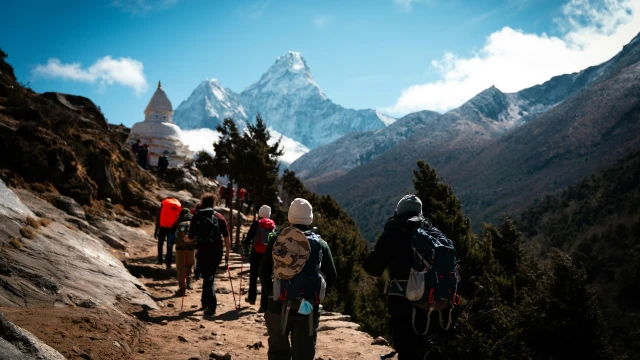
The Poon Hill circuit is the standard recommendation for a first Nepal trek. It is four to five days, reaches 3,210 metres, passes through Gurung villages with genuine cultural depth, and delivers the Annapurna and Dhaulagiri panorama from the Poon Hill viewpoint at sunrise. It is accessible to any reasonably active adult and requires no prior trekking experience. For someone with even less time or physical confidence, the Australian Camp and Dhampus circuit at two to three days and 2,065 metres maximum altitude is the appropriate starting point.
Is Everest Base Camp harder than Annapurna Circuit?
They are comparably demanding in different ways. Annapurna Circuit's Thorong La Pass at 5,416 metres is 52 metres higher than Kalapatthar on the EBC route at 5,545 metres and the same as Kalapatthar, with the circuit's longer overall duration making it a bigger physical commitment. EBC's altitude ceiling and the sustained acclimatisation demands of multiple nights above 4,000 metres make it the more altitude-intensive experience. The guide will ask which aspects of difficulty concern you most and give you the relevant comparison.
Do I need a guide for the Manaslu Circuit?
Yes. The Manaslu Restricted Area Permit legally requires foreign trekkers to travel with a licensed guide through a registered trekking agency. This applies without exception and is enforced at permit checkpoints throughout the route. Hiking Nepal provides licensed, WAFA-certified guides for all Manaslu Circuit departures.
What is the best time of year to trek in Nepal?
The general answer is spring from mid-March through May and autumn from late September through November. The specific answer depends on the route. The Poon Hill circuit in late March captures the rhododendron bloom at its peak. The EBC route in late October offers the best post-monsoon visibility. Upper Mustang is best in June and July. The guide will give you the specific optimal window for your route.
Can I do a short trek and then extend to a longer one?
Yes, and this is a common approach for first-time Nepal visitors. The Poon Hill circuit can be followed directly by the Annapurna Base Camp approach since the trails converge in the lower Annapurna region. The EBC standard circuit can be extended with the Gokyo Valley or Three Passes options for those with more time. The consultation can plan a combined itinerary if this is what you are considering.
Costs and Logistics
How much does a Nepal trek actually cost all-in?
The all-in cost, including the package price, permits, travel insurance, domestic flights where required, equipment hire, tips, and personal expenses, ranges from approximately USD 900 to 1,200 for a five-day Poon Hill circuit to USD 3,200 to 3,800 for a fourteen-day EBC private departure. The consultation provides a specific cost breakdown for the route and service level you are considering.
Do I need travel insurance for Nepal trekking?
Yes, and the policy must specifically cover helicopter evacuation from altitude, emergency medical treatment in Nepal, and repatriation. Standard high-street travel insurance frequently excludes trekking above 2,000 metres. Specialist adventure travel policies from World Nomads, True Traveller, and Global Rescue include the necessary coverage. Hiking Nepal verifies insurance documentation at the pre-trek briefing for every departure.
Can I hire trekking gear in Kathmandu?
Yes. Sleeping bags, down jackets, trekking poles, crampons for technical routes, harnesses, and most other equipment are available for hire in Thamel's gear shops at USD 2 to 6 per item per day. For a fourteen-day circuit, hiring rather than buying saves USD 200 to 400 for a full equipment set. The consultation can advise on which items are worth hiring versus bringing from home for your specific route.
What permits do I need and how much do they cost?
The permits required depend entirely on the route. The TIMS card at approximately USD 15 through a registered agency, is required for all routes. The ACAP permit at approximately USD 23 covers the Annapurna region including Poon Hill, Mardi Himal, and the Annapurna Circuit and Base Camp routes. The Sagarmatha National Park permit at approximately USD 30 covers the Everest region. The Langtang National Park permit at approximately USD 23 covers the Langtang Valley. Restricted area permits for Manaslu, Upper Mustang, Tsum Valley, and Kanchenjunga are additional and range from USD 40 to USD 500 per person depending on the region. All permits are handled by Hiking Nepal as part of every guided package.
How far in advance do I need to book?
For peak season departures in April and late October, three to four months is advisable for private departures and six to eight weeks for group joining spots. For restricted area routes, permit processing requires a minimum of two to four weeks before departure. Outside peak windows, most standard circuits can be confirmed within one to two weeks and some within 48 hours.
Safety and Health
How do I prevent altitude sickness?
The most effective measure is following an itinerary with the correct acclimatisation profile, specifically gaining no more than 300 to 500 metres of sleeping altitude per day above 3,000 metres and incorporating rest days at specific altitude thresholds. Drinking three to four litres of fluid per day regardless of thirst, avoiding alcohol above 3,000 metres, and following the guide's pace rather than your own ambition are the practical daily measures. Diamox (acetazolamide) is a pharmaceutical supplement that some trekkers use and is worth discussing with a GP before departure. The guide on your consultation can explain the acclimatisation profile of your specific route and identify whether the itinerary you are considering is appropriately paced.
Is Nepal safe for solo female travellers?
Nepal has a consistently strong safety record for solo female travellers and ranks among the safer trekking destinations in Asia in this regard. The group trek format provides an additional safety structure of a licensed guide, pre-booked accommodation, and co-trekkers. Hiking Nepal can arrange female guides on request and offers female-only group departure dates on the Poon Hill, Annapurna Base Camp, and Langtang routes for 2027.
What vaccinations do I need for Nepal?
Recommended vaccinations for most international travellers to Nepal include Hepatitis A, Typhoid, and a Tetanus booster. Depending on your travel history and specific itinerary, Hepatitis B and Japanese Encephalitis may also be recommended. Consult a travel medicine clinic or your GP at least six weeks before departure, as some vaccinations require multiple doses over a period of weeks.
What happens if I get sick on the trail?
All Hiking Nepal guides are WAFA-certified and carry a full first-aid kit with altitude medications. For serious conditions including High Altitude Pulmonary Oedema, High Altitude Cerebral Oedema, or significant injury, helicopter evacuation from most major trekking routes can be arranged within one to three hours of a distress call in good weather conditions. The Hiking Nepal 24-hour emergency coordination line is staffed throughout the trekking season and manages the full evacuation process. This is why travel insurance with helicopter evacuation coverage is non-negotiable rather than advisory.
Group and Solo Travel
Can I join a group trek as a solo traveller?
Yes. Hiking Nepal's group joining departures are specifically structured to accommodate solo travellers. The departure dates, route selections, and group matching process are all designed with the solo joining trekker in mind. Spring Poon Hill and autumn EBC group departures typically include three to six solo trekkers per departure and the social dynamic is consistently one of the most valued aspects of the experience for participants.
What if I have questions after the consultation?
The Hiking Nepal team is available by WhatsApp and email throughout your planning process. Most clients have follow-up questions after the initial consultation, typically once they have reviewed the written summary and discussed the options with travel companions. Follow-up messages are answered within 24 hours on working days and within 48 hours over weekends.
Can I customise the itinerary discussed in the consultation?
Yes. The consultation recommendation is a starting point rather than a fixed plan. Hiking Nepal builds all private itineraries around the specific brief provided by the client, including additional cultural stops, rest days, side trips, accommodation upgrades, helicopter integration for the return journey, and any other preferences identified during the consultation.
What a Good Consultation Tells You That Research Cannot
There is specific knowledge that a current, active guide carries about a trekking route that published sources, however well-written and recently updated, cannot reliably convey.
The teahouse at the Ghorepani overnight stop that has upgraded its bathroom facilities since the guidebook went to print. The section of the Langtang trail above Lama Hotel that was rerouted after the 2015 earthquake and has not been updated on the most commonly used trail maps. The October departure date that avoids the Everest region's peak crowd density by one week without compromising visibility. The specific permit quota situation for Upper Mustang in the spring 2027 season that makes early booking particularly important. The acclimatisation day hike from Chhukung that is more valuable for Island Peak preparation than the standard Dingboche hike that most itineraries specify.
These are the pieces of information that come from guiding the same route repeatedly over multiple seasons. They are the difference between a trip planned from a desk and a trip planned by someone who was on the trail three months ago.
The free consultation is the mechanism for accessing this information before you commit to any specific route, operator, or departure date.
Book Your Free Consultation
Contact Hiking Nepal to book a free fifteen-minute consultation at a time that suits your schedule.
WhatsApp: +977 9802342080 (available 7:00 am to 9:00 pm Nepal Standard Time, seven days a week)
Email: [email protected] (response within 24 hours)
Website: www.hikingnepal.com
Send a message with your name, the dates you are considering, the number of people in your group, and any routes you are already thinking about. A confirmed slot with a senior Hiking Nepal guide is provided within 24 hours of your request.
The consultation is free. The advice is specific. The obligation is zero.
If you already know which trek you want and are ready to move directly to a booking enquiry, the same contact details apply and a full itinerary and cost proposal is provided within 48 hours of your initial message.
The mountains are waiting. The planning starts with one conversation.