The best trek in Nepal does not exist. Ask ten guides to name it, and you will get ten answers, and each one will be right for the trekker asking and wrong for the one standing next to them. A retired couple who want a gentle week, a runner who wants a pass above 5,000 meters, and a photographer who wants a village with no road need three different routes.
What exists is a short list of routes that consistently deliver: reliable trails, strong scenery, good lodges, and a record of getting ordinary people to extraordinary places. This guide to the top 10 treks in Nepal ranks those routes by what they actually offer, with honest notes on difficulty, altitude, season, permits and cost. It is written by the team at Hiking Nepal in Thamel, who send trekkers up these trails every season, so you will also find the awkward details that brochures leave out.
What are the top 10 treks in Nepal?
The top 10 treks in Nepal are Everest Base Camp, the Annapurna Circuit, Annapurna Base Camp, the Manaslu Circuit, Langtang Valley, Upper Mustang, Gokyo Lakes, Ghorepani Poon Hill, Mardi Himal and the Tilicho Lake trek. Between them, they cover every level of fitness, from a four-day introduction to a three-week pass crossing, and every kind of landscape, from rhododendron forest to Tibetan desert.
Top 10 treks in Nepal at a glance
Rank | Trek | Days | Highest point | Difficulty | Best seasons |
| 1 | Everest Base Camp | 12 to 14 | 5,545 m (Kala Patthar) | Moderate to hard | Mar to May, Oct to Nov |
| 2 | Annapurna Circuit | 12 to 18 | 5,416 m (Thorong La) | Hard | Mar to May, Sep to Nov |
| 3 | Annapurna Base Camp | 7 to 12 | 4,130 m | Moderate to hard | Mar to May, Sep to Nov |
| 4 | Manaslu Circuit | 14 to 18 | 5,160 m (Larkya La) | Hard | Mar to May, Sep to Nov |
| 5 | Langtang Valley | 7 to 9 | 3,870 m (Kyanjin Gompa) | Moderate | Mar to May, Oct to Nov |
| 6 | Upper Mustang | 10 to 14 | about 4,010 m (Nyi La) | Moderate | May to Oct |
| 7 | Gokyo Lakes | 12 to 14 | 5,357 m (Gokyo Ri) | Moderate to hard | Mar to May, Oct to Nov |
| 8 | Ghorepani Poon Hill | 4 to 5 | 3,210 m | Easy to moderate | Mar to May, Oct to Nov |
| 9 | Mardi Himal | 4 to 6 | 3,580 m to 4,500 m | Moderate | Mar to May, Oct to Nov |
| 10 | Tilicho Lake | 12 to 16 | about 4,919 m | Hard | Mar to May, Sep to Nov |
How we ranked these treks
We looked at five things: scenery and culture, trail and lodge reliability, how well the route suits a range of trekkers, how often it works in practice (weather, flights, roads), and whether it offers good value for the days and money spent. The order is a guide, not a verdict. A trek ranked tenth may be the best choice for you.
1. Everest Base Camp Trek
Duration: 12 to 14 days
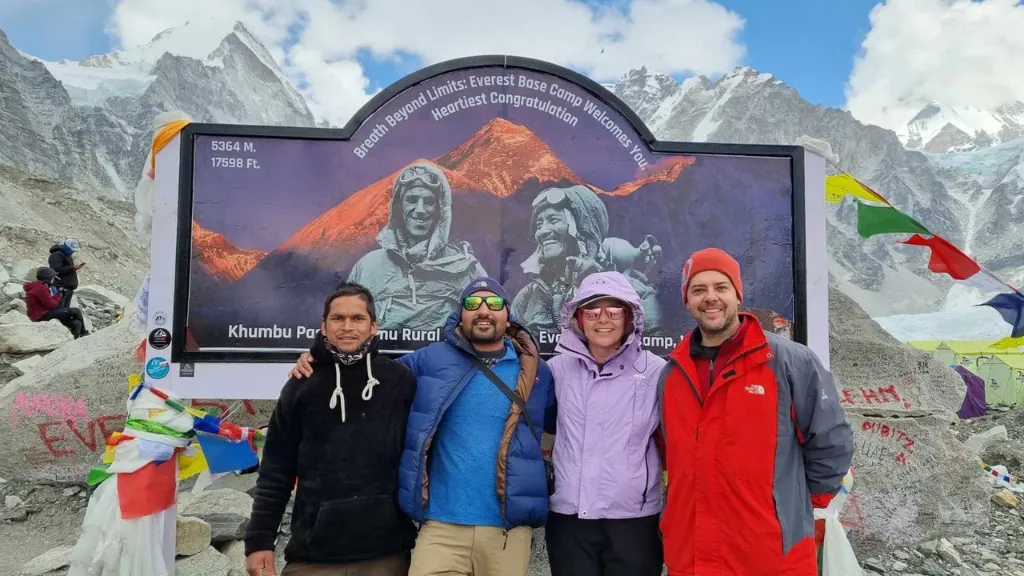
Highest point: 5,364 m (Base Camp), 5,545 m (Kala Patthar)
Difficulty: Moderate to hard
Best seasons: March to May, October to November
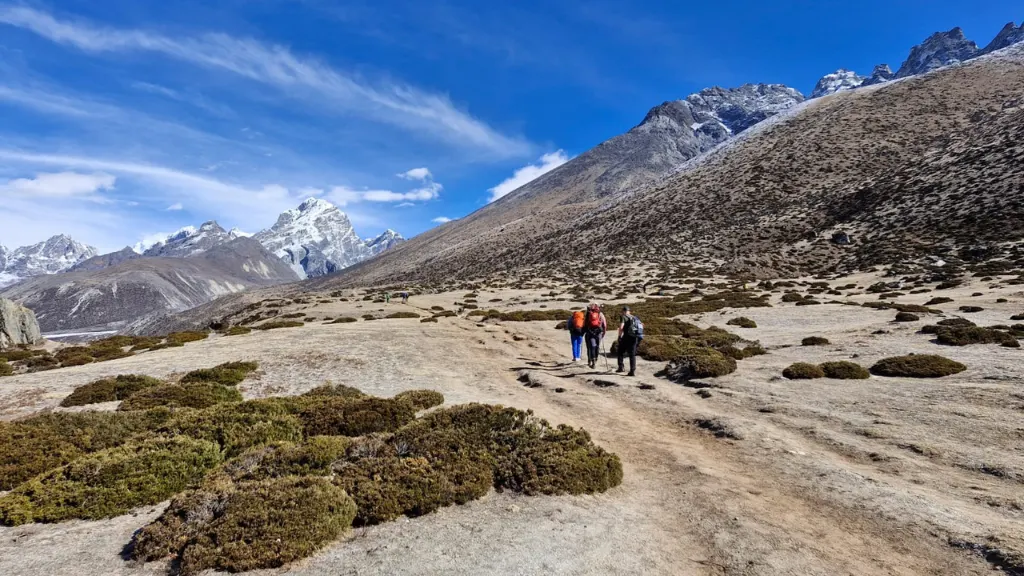
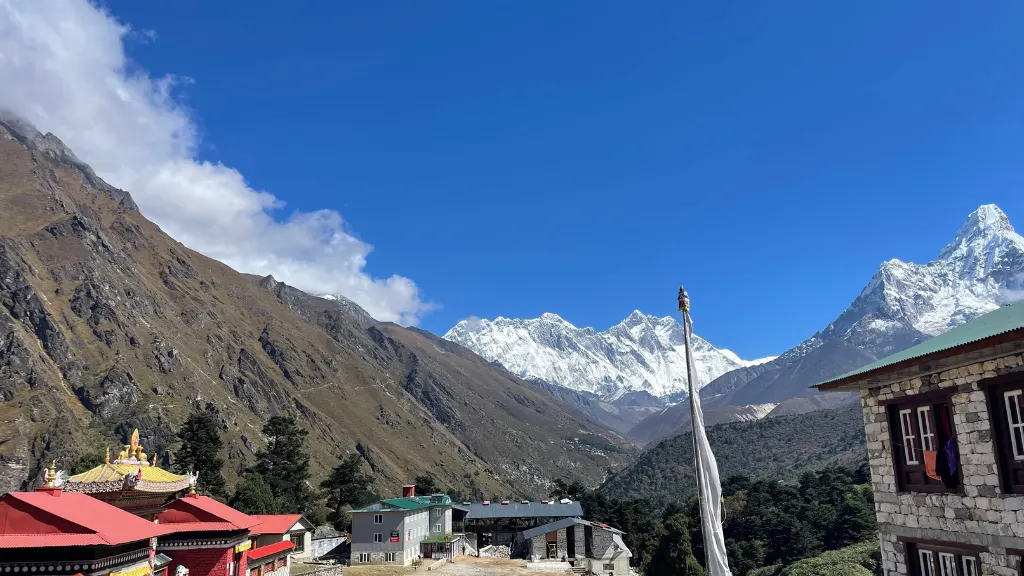
The Everest Base Camp trek is the most famous walk in the Himalaya, and it earns its place at the top of the list. You fly to Lukla, follow the Dudh Koshi valley across swaying suspension bridges to Namche Bazaar, the market town of the Khumbu, and continue through Tengboche, Dingboche and Lobuche to Gorak Shep. Most trekkers walk to Base Camp in one day and climb Kala Patthar for sunrise on another, which is the best view of Everest.
The trail runs through Sherpa villages with stupas, mani walls and monasteries, and the tea is hot at every stop. Altitude is the real challenge. You sleep above 4,900 meters at Gorak Shep, so a gradual itinerary with two acclimatization days, at Namche and Dingboche, is essential. The Lukla flight is weather-dependent and often departs from Ramechhap in peak season, so allow a spare day at each end.
Permits: Sagarmatha National Park permit (around NPR 3,000) and a local Khumbu municipality fee. We arrange both.
Typical guided cost: about USD 1,400 to 2,000 per person.
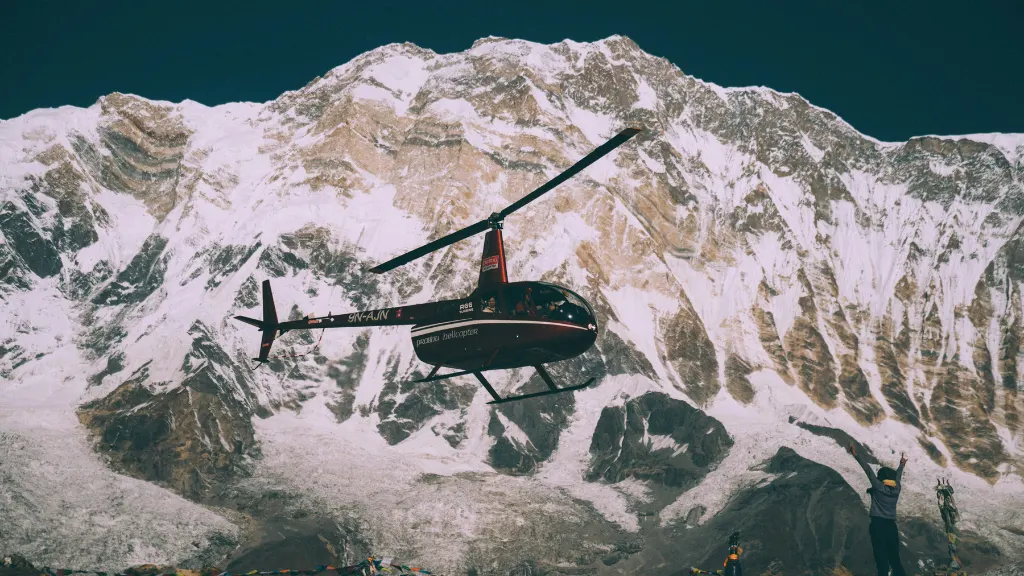
Who it suits: fit first-time high-altitude trekkers, anyone wanting the classic. If you prefer to walk up and fly down, look at our Everest Base Camp helicopter return itinerary and our guide to helicopter tours in Nepal.
2. Annapurna Circuit
Duration: 12 to 18 days
Highest point: 5,416 m (Thorong La)
Difficulty: Hard
Best seasons: March to May, September to November
The Annapurna Circuit is a great variety trek. In two weeks you pass from subtropical rice terraces to pine forest, then to the dry, windswept Manang valley, over Thorong La at 5,416 meters, and down into the deep Kali Gandaki gorge past the apple orchards of Marpha. Few routes change character so completely.
Roads have altered the lower sections. Jeep tracks now run well into the valley, so many trekkers, and many operators, start the walk higher up and use a vehicle for the least interesting stretch. That shortens the trek, reduces dust, and leaves the best sections untouched. The pass itself is the test. Crossing day starts around 4 am from Thorong Phedi or High Camp and takes seven to nine hours, in cold wind, so acclimatization in Manang matters.
Permits: Annapurna Conservation Area Permit (around NPR 3,000). TIMS requirements have changed in recent seasons, so we confirm the current rule.
Typical guided cost: about USD 1,200 to 2,000 per person.
Who it suits: experienced walkers who want a long, varied trek with a big pass. Our Annapurna Circuit guide has the day-by-day plan.
3. Annapurna Base Camp Trek
Duration: 7 to 12 days
Highest point: 4,130 m
Difficulty: Moderate to hard
Best seasons: March to May, September to November
Annapurna Base Camp (ABC) takes you into a natural amphitheater of peaks: Annapurna I, Annapurna South, Hiunchuli, Gangapurna and Machhapuchhre, the fishtail mountain, all within a few kilometers. The route starts near Pokhara, climbs through Ghandruk, Chhomrong and Himalaya Hotel, and enters the sanctuary through bamboo and rhododendron forest.
The walk is not technical, but it is long and often steep, with thousands of stone steps and a final climb above the tree line. The altitude is moderate, and the biggest risk is going too fast from Chhomrong to the sanctuary. Winter and early spring bring avalanche risk above Deurali, so we monitor conditions. A shorter version, the rapid ABC trek, trims days by using vehicles at the start and end.
Permits: ACAP (around NPR 3,000).
Typical guided cost: about USD 900 to 1,500 per person.
Who it suits: fit beginners and anyone wanting a classic mountain amphitheater without a pass crossing. For a helicopter version, see our helicopter tours guide.
4. Manaslu Circuit Trek
Duration: 14 to 18 days
Highest point: 5,160 m (Larkya La)
Difficulty: Hard
Best seasons: March to May, September to November
The Manaslu Circuit circles the eighth-highest mountain in the world (8,163 meters). It runs through the Budhi Gandaki gorge, past Tibetan Buddhist villages, to Samagaon and Samdo, over Larkya La, then down to Bimthang and Dharapani. It is the closest thing left to the Annapurna Circuit of thirty years ago, with stone villages, prayer walls and fewer crowds.
Manaslu is a restricted area, so a licensed guide through a registered agency is required. Recent reports say the restricted-area permit costs roughly USD 100 a week in peak autumn and USD 75 a week off-season, and solo trekkers can apply since March 2026, though the guide requirement remains. You also need a Manaslu Conservation Area Permit and an Annapurna Conservation Area Permit. Lodges are simpler than on Everest or Annapurna, so expect basic rooms and short menus on higher stages.
One guide we work with described arriving in Samagaon as the moment trekkers stop talking about their phones. The valley opens, a monastery clings to the hillside, and Manaslu fills the sky. You tend to remember it.
Typical guided cost: about USD 1,600 to 2,800 per person.
Who it suits: strong trekkers with previous altitude experience who want a quieter alternative to the busiest trails.
5. Langtang Valley Trek
Duration: 7 to 9 days
Highest point: 3,870 m (Kyanjin Gompa), 4,773 m (Kyanjin Ri)
Difficulty: Moderate
Best seasons: March to May, October to November
Langtang is the nearest big mountain trek to Kathmandu, with the trailhead at Syabrubesi reached by a long day's drive. The path follows the Langtang Khola through oak and rhododendron forest into open yak pastures, ending at Kyanjin Gompa, where you can visit a small cheese factory and climb Kyanjin Ri for views of Langtang Lirung.
The 2015 earthquake and landslide devastated the valley, and the community has rebuilt its villages and lodges. Walking here supports that recovery directly. The trek is moderate, with a gentle gradient and a manageable altitude for most fit trekkers, and it works well as a first step up from a short trek. You can extend it with Gosaikunda Lake or the Tamang Heritage route, which we cover in our beginner treks guide.
Permits: Langtang National Park permit (around NPR 3,000) and a local fee.
Typical guided cost: about USD 700 to 1,200 per person.
Who it suits: trekkers with a week to spare, first-timers who want more than Poon Hill, and anyone who wants mountain scenery close to Kathmandu.
6. Upper Mustang Trek
Duration: 10 to 14 days
Highest point: about 4,010 m (Nyi La), Lo Manthang about 3,840 m
Difficulty: Moderate
Best seasons: May to October
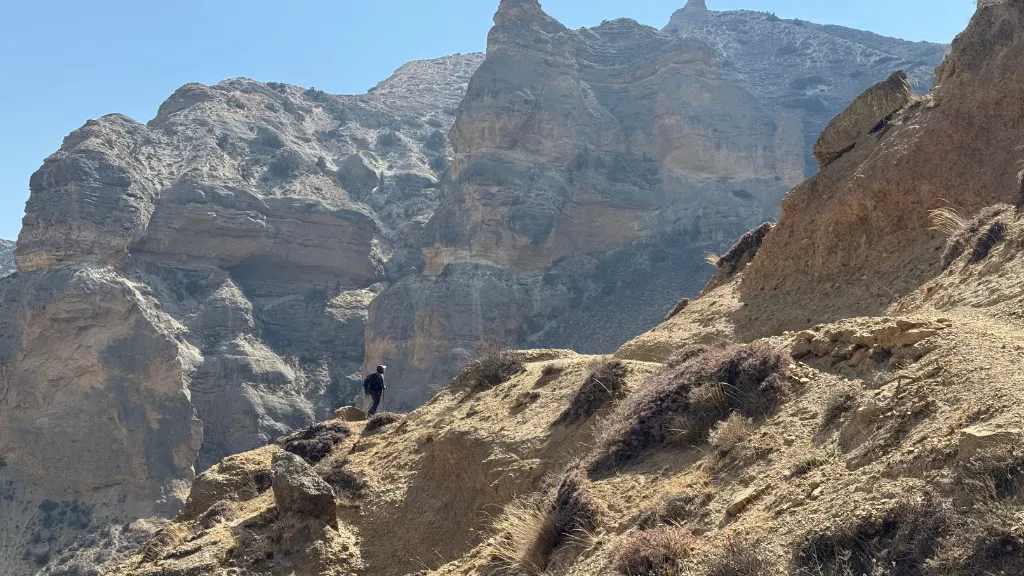
Upper Mustang is a high desert of red cliffs, sky caves, and whitewashed villages, ending at the walled city of Lo Manthang, the former capital of the Kingdom of Lo. The culture is Tibetan Buddhist; the monasteries hold centuries-old murals, and the landscape is unlike anything else in Nepal. Because it lies in the Himalayas' rain shadow, it stays dry through the monsoon, making it the best trek in Nepal from June to August.
Wind and dust are the main challenges, along with some long days and a few high passes. The restricted area permit is now charged per day inside the restricted zone (around USD 50), a licensed guide is required, and solo trekkers can apply. The Tiji Festival in late spring, with its masked dances, is worth building a trip around, and 2027 dates are provisional, so confirm before you book. Our Upper Mustang guide covers the permit, itinerary and cost in detail.
Typical guided cost: about USD 2,000 to 3,500 per person.
Who it suits: culture lovers, monsoon-season travelers, and anyone wanting a remote walk that is not too high.
7. Gokyo Lakes Trek
Duration: 12 to 14 days
Highest point: 5,357 m (Gokyo Ri)
Difficulty: Moderate to hard
Best seasons: March to May, October to November
The Gokyo Lakes trek follows the Everest trail to Namche Bazaar, then branches west to a chain of turquoise lakes beneath Cho Oyu. The high point is Gokyo Ri at 5,357 meters, where a short pre-dawn climb gives views of Everest, Lhotse, Makalu and Cho Oyu from one summit, and a good case can be made that it is a better viewpoint than Kala Patthar.
The route is quieter than the Base Camp trek, and the altitude gain is steady if you plan it properly. Many trekkers combine Gokyo with Everest Base Camp using the Cho La pass at 5,420 meters, a more demanding crossing that suits experienced walkers. The Ngozumpa glacier, Nepal's longest, crosses the route and adds a different kind of scenery.
Permits: Sagarmatha National Park permit and the local Khumbu fee.
Typical guided cost: about USD 1,500 to 2,200 per person.
Who it suits: second-time Himalayan trekkers and anyone who wants Everest views without the main crowds.
8. Ghorepani Poon Hill Trek
Duration: 4 to 5 days
Highest point: 3,210 m
Difficulty: Easy to moderate
Best seasons: March to May, October to November
Poon Hill is Nepal's best short trek. It starts near Pokhara, climbs the long stone staircase at Ulleri, passes through rhododendron forest and finishes with a 45-minute pre-dawn climb to Poon Hill, where the sun lights Dhaulagiri and Annapurna South. In March and April, the forest blooms red and pink.
The trail is well maintained, the lodges are comfortable, and Pokhara is only hours away if something goes wrong, which makes it ideal for first-timers, families with older children, and couples. The hardest parts are the steps on day one and the cold morning start. Our beginner trek guide covers it in more detail, and our short treks list compares it with similar options.
Permits: ACAP (around NPR 3,000).
Typical guided cost: about USD 300 to 600 per person.
Who it suits: beginners with a few days, couples, and anyone adding a trek to a honeymoon trip in Nepal.
9. Mardi Himal Trek
Duration: 4 to 6 days
Highest point: about 3,580 m at High Camp (4,500 m at the viewpoint on the full route)
Difficulty: Moderate
Best seasons: March to May, October to November
Mardi Himal follows a high ridge through rhododendron and oak forest, with Machhapuchhre rising almost overhead. The short version stops around High Camp at 3,580 meters, and the full route continues to a viewpoint at about 4,500 meters. It is quieter than Poon Hill and feels more like a mountain ridge.
Lodges are simpler than in the main Annapurna foothills, and the ridge can be steep and exposed in places, so it suits trekkers who are comfortable on uneven ground. It also makes a good extension to Poon Hill or a shorter alternative to Annapurna Base Camp when time is tight.
Permits: ACAP.
Typical guided cost: about USD 350 to 900 per person depending on route length.
Who it suits: fit beginners, repeat Poon Hill trekkers, and anyone who wants fewer crowds.
10. Tilicho Lake Trek
Duration: 12 to 16 days (often combined with the Annapurna Circuit)
Highest point: about 4,919 m (Tilicho Lake)
Difficulty: Hard
Best seasons: March to May, September to November
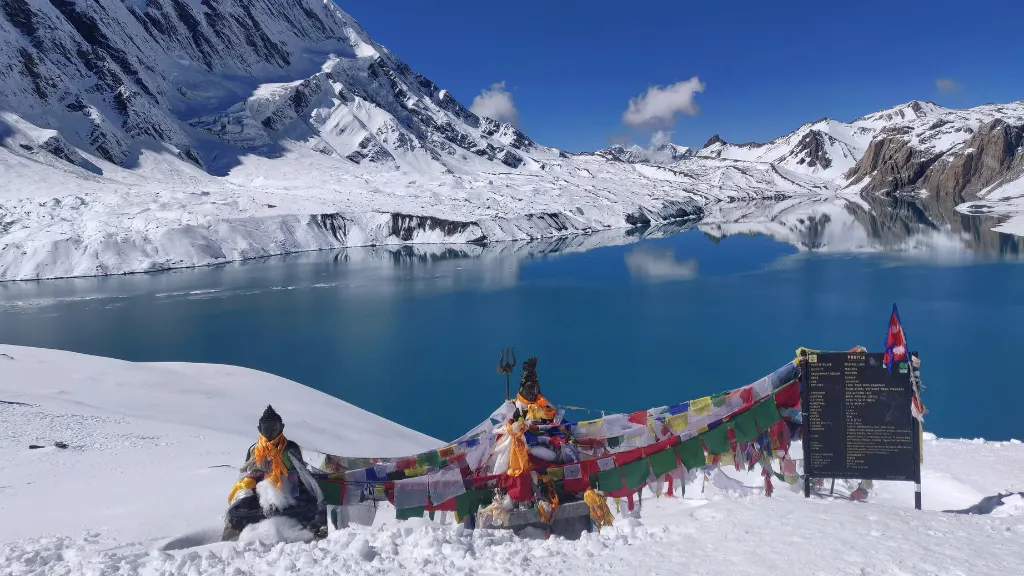
Tilicho Lake is among the world's highest lakes. The trek branches from the Annapurna Circuit at Manang, climbs to Tilicho Base Camp and continues to the lake itself, a frozen turquoise bowl beneath Tilicho Peak. The route includes a section of exposed trail with landslide risk, so it needs good conditions and a competent guide.
The altitude and the terrain make this one of the harder treks on the list, and it suits trekkers who already have experience of 4,000 meters or more. Many walkers use it as a detour on the Annapurna Circuit, returning to Manang before crossing Thorong La. Our Tilicho Lake guide covers the route and conditions.
Permits: ACAP.
Typical guided cost: about USD 1,400 to 2,200 per person, including circuit sections.
Who it suits: experienced trekkers wanting a high, dramatic add-on to the circuit.
Honourable mentions
If these ten don't fit, consider the Kanchenjunga trek for remote, three-week adventures; the Everest Three Passes trek for a demanding circuit; the Tamang Heritage Trek for culture; Upper Dolpo for true wilderness; or a peak such as Mera Peak or Lobuche East for a summit goal. Our guide to the best places for adventure in Nepal covers the wider options.
Which trek is right for you?
If you are... | Choose |
| A first-time trekker with 4 to 5 days | Ghorepani Poon Hill |
| A beginner who wants fewer crowds | Mardi Himal (short) |
| Short on time but want big views | Langtang Valley |
| Fit and want the classic | Everest Base Camp |
| Fit and want a mountain amphitheater | Annapurna Base Camp |
| An experienced walker who likes variety | Annapurna Circuit |
| Looking for culture and monsoon travel | Upper Mustang |
| Wanting a quieter high trek | Gokyo Lakes or Manaslu Circuit |
| Wanting a challenge above 4,500 m | Tilicho Lake |
If you are still undecided, send Nava your dates and fitness level on WhatsApp at +977 9802342080, and we will suggest a match.
Best time to trek in Nepal
Spring (March to May)
Spring is warm, green and colorful, with rhododendrons in bloom and long days. Views are clear in March and April, and haze builds by May. It is also the main season for Everest expeditions, so trails are busy.
Autumn (September to November)
Autumn is the most reliable season, with clear skies, stable weather and the best mountain views. It is also the busiest. October is peak month, so book flights and lodges early.
Winter (December to February)
Winter is cold but quiet. Lower treks such as Poon Hill and Langtang are possible, but snow may close higher routes. Flights are often clearer than in other seasons.
Monsoon (June to August)
The monsoon brings rain, clouds, and leeches to most of Nepal. Upper Mustang, which sits in the rain shadow, is the exception, and Poon Hill is possible but not ideal.
Best season by trek
Trek | Best months |
| Everest Base Camp | Mar to May, Oct to Nov |
| Annapurna Circuit | Mar to May, Sep to Nov |
| Annapurna Base Camp | Mar to May, Sep to Nov |
| Manaslu Circuit | Mar to May, Sep to Nov |
| Langtang Valley | Mar to May, Oct to Nov |
| Upper Mustang | May to Oct |
| Gokyo Lakes | Mar to May, Oct to Nov |
| Poon Hill | Mar to May, Oct to Nov |
| Mardi Himal | Mar to May, Oct to Nov |
| Tilicho Lake | Mar to May, Sep to Nov |
Fitness, altitude and safety
How fit do you need to be?
For easier treks, being able to walk 4 to 5 hours on hilly ground with a light daypack is enough. For routes above 5,000 meters, add a stronger base: six to eight weeks of hill walking, stair training and long weekend hikes with a loaded pack. Wear your boots on every training walk, because blisters ruin more trips than altitude.
Altitude sickness
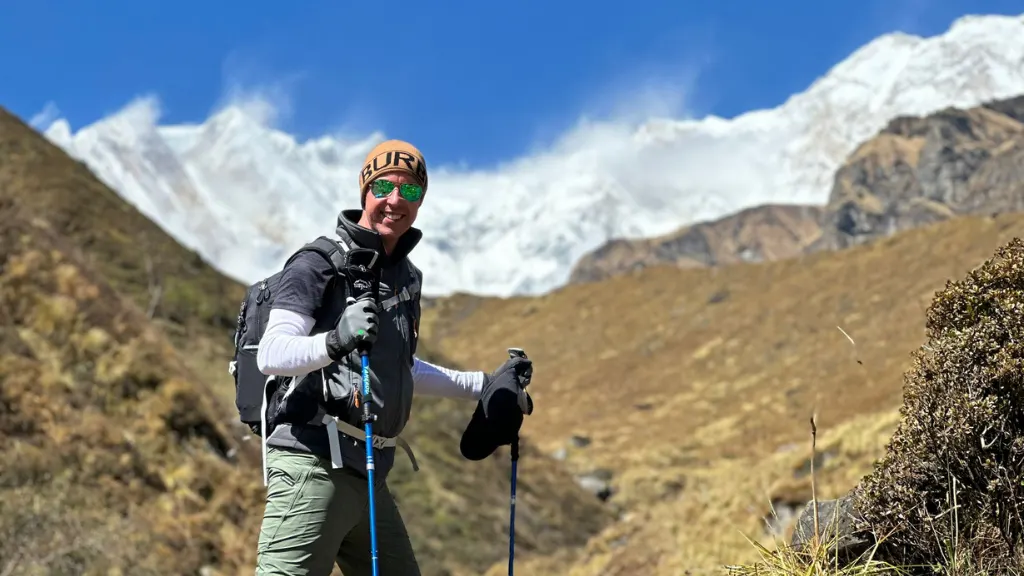
Altitude sickness (AMS) can affect anyone above about 2,500 meters, regardless of fitness. Ascend slowly, drink three to four liters of water a day, include rest days every 1,000 meters of height gain, and tell your guide at the first sign of a headache, nausea, dizziness, or unusual fatigue. If symptoms worsen, with vomiting, confusion, loss of balance or breathlessness at rest, you must descend. Descent is the only reliable treatment. Hiking Nepal guides carry first aid kits and pulse oximeters, and make the final call.
Insurance
Your policy should cover trekking to the maximum altitude of your route, including emergency helicopter evacuation. A rescue from a remote valley can cost thousands of dollars without cover. Check that the wording covers trekking and not just "hiking".
Guides and porters
Rules on independent trekking have changed several times in recent years, and sources disagree on some points, so confirm the current position before you travel. For restricted areas such as Manaslu and Upper Mustang, you must hire a licensed guide through a registered agency. We recommend a guide on every route because they handle permits, lodge bookings and route decisions, recognize altitude symptoms early and add local knowledge. A porter carries your main bag, so you walk with a light daypack and enjoy the day.
Permits at a glance
Trek | Permits usually needed |
| Everest Base Camp and Gokyo | Sagarmatha National Park permit and Khumbu local fee |
| Annapurna Circuit, ABC, Poon Hill, Mardi Himal, Tilicho | Annapurna Conservation Area Permit |
| Manaslu Circuit | Manaslu restricted area permit, Manaslu Conservation Area Permit, ACAP |
| Langtang Valley | Langtang National Park permit and local fee |
| Upper Mustang | Upper Mustang restricted area permit (per day), ACAP |
Fees and rules change often, and TIMS requirements have been inconsistent in recent seasons, so treat any figure in a blog post as a guide. We confirm and arrange permits as part of every package.
How much do treks in Nepal cost?
Typical guided price per person
Trek | Indicative range |
| Ghorepani Poon Hill | USD 300 to 600 |
| Mardi Himal | USD 350 to 900 |
| Langtang Valley | USD 700 to 1,200 |
| Annapurna Base Camp | USD 900 to 1,500 |
| Annapurna Circuit | USD 1,200 to 2,000 |
| Everest Base Camp | USD 1,400 to 2,000 |
| Tilicho Lake | USD 1,400 to 2,200 |
| Gokyo Lakes | USD 1,500 to 2,200 |
| Manaslu Circuit | USD 1,600 to 2,800 |
| Upper Mustang | USD 2,000 to 3,500 |
These are market ranges for a guided trek with guide, porter, accommodation, meals, and permits. Prices rise in October and with flights or helicopters, and fall for larger groups.
What a package usually includes
Airport and trailhead transfers, teahouse accommodation, three meals a day on the trail, a licensed guide, a porter, permits, domestic flights where needed, and government taxes.
What is usually extra
International flights, your Nepal visa, travel insurance, meals in Kathmandu and Pokhara, hot showers and phone charging on the trail, tips and personal equipment. Budget USD 10 to 20 a day on the trail for snacks, drinks and extras, and a tip of around 10 to 15 percent of the package price for your guide and porter team.
What to pack
Pack in layers. For most treks you need a warm down jacket, a waterproof shell, base layers, a fleece, trekking trousers, a sun hat, a warm hat, gloves, broken-in waterproof boots, trekking poles, a headtorch, sunglasses, sun cream, water purification, a 30 to 40 liter daypack and a sleeping bag rated for low temperatures. You can hire heavier items such as down jackets and sleeping bags in Thamel for a small daily fee, which costs less than buying new for one trip.
Teahouse life in brief
Most treks in Nepal use teahouses, which are simple lodges with twin rooms, shared bathrooms, and a communal dining room. Breakfast is at around 6.30 or 7 am, lunch is on the trail, and dinner is early, usually dal bhat, noodles, or fried rice. Boil or treat all water, carry a refillable bottle, and avoid meat at altitude. Hot showers and charging cost extra and get more expensive with height.
Common mistakes to avoid
Choosing a trek that is too ambitious for a first trip, skipping acclimatization days, packing too much, ignoring early altitude symptoms, forgetting buffer days for weather and flights, and buying insurance that excludes trekking. If you are unsure, start with a shorter route and build up.
Why trek with Hiking Nepal
Hiking Nepal is a Kathmandu-based trekking company with its office in Thamel at Dabali Marga. Our guides are licensed, first aid trained, and experienced in altitude management, and we handle permits, transfers, lodges, domestic flights, and weather backups. If a route does not suit your fitness or dates, we say so and suggest a better one. Our team stays reachable on WhatsApp throughout your trip, so a real person is always available when plans change.
Frequently asked questions about the top treks in Nepal
What is the best trek in Nepal?
There is no single best trek. Everest Base Camp is the most famous, the Annapurna Circuit offers the most variety, and Ghorepani Poon Hill is the best short trek. The right choice depends on your fitness, time, and what you want to see.
Which is the easiest of the top 10 treks?
Ghorepani Poon Hill is the easiest, at 3,210 meters over four to five days with comfortable lodges. Mardi Himal (short version) and Langtang Valley are good next steps.
Which trek is best for beginners in Nepal?
Poon Hill is the best first trek. Beginners with a week can try Langtang Valley, and fit beginners can consider Annapurna Base Camp. Avoid passes above 5,000 meters on a first trek.
Which is harder, Everest Base Camp or Annapurna Base Camp?
Everest Base Camp is harder because it is higher (5,364 meters at Base Camp, 5,545 at Kala Patthar compared with 4,130 at Annapurna Base Camp) and longer. Annapurna Base Camp is shorter but steep, with many steps.
What is the best time to trek in Nepal?
March to May and September to November are the best seasons for most treks. Upper Mustang is best from May to October, and winter suits lower routes.
How much does a trek in Nepal cost?
Short treks cost about USD 300 to 900, mid-range treks such as Langtang and Annapurna Base Camp cost about USD 700 to 1,500, and big treks such as Everest Base Camp, the Annapurna Circuit and Manaslu cost about USD 1,400 to 2,800. Ask for an itemized quote.
Do I need a guide for treks in Nepal?
For restricted areas such as Manaslu and Upper Mustang, you must have a licensed guide through a registered agency. On other routes, rules have changed several times, so confirm the current position, but we strongly recommend a guide on every trek.
Can I trek in Nepal in the monsoon?
Some routes work. Upper Mustang sits in the rain shadow and is dry from June to August. Most other treks have rain, clouds, and leeches, so spring and autumn are better.
Plan your Nepal trek with Hiking Nepal
The right trek is the one that fits your fitness, your days and your sense of what a good morning looks like. Tell us how long you have, how you handle altitude, and what you most want to see, and we will match you with a route, a guide, and a pace.
Message Nava on WhatsApp at +977 9802342080, email [email protected], or visit our office at Dabali Marga, Thamel, Kathmandu.
Browse our trekking packages or request a custom itinerary today.